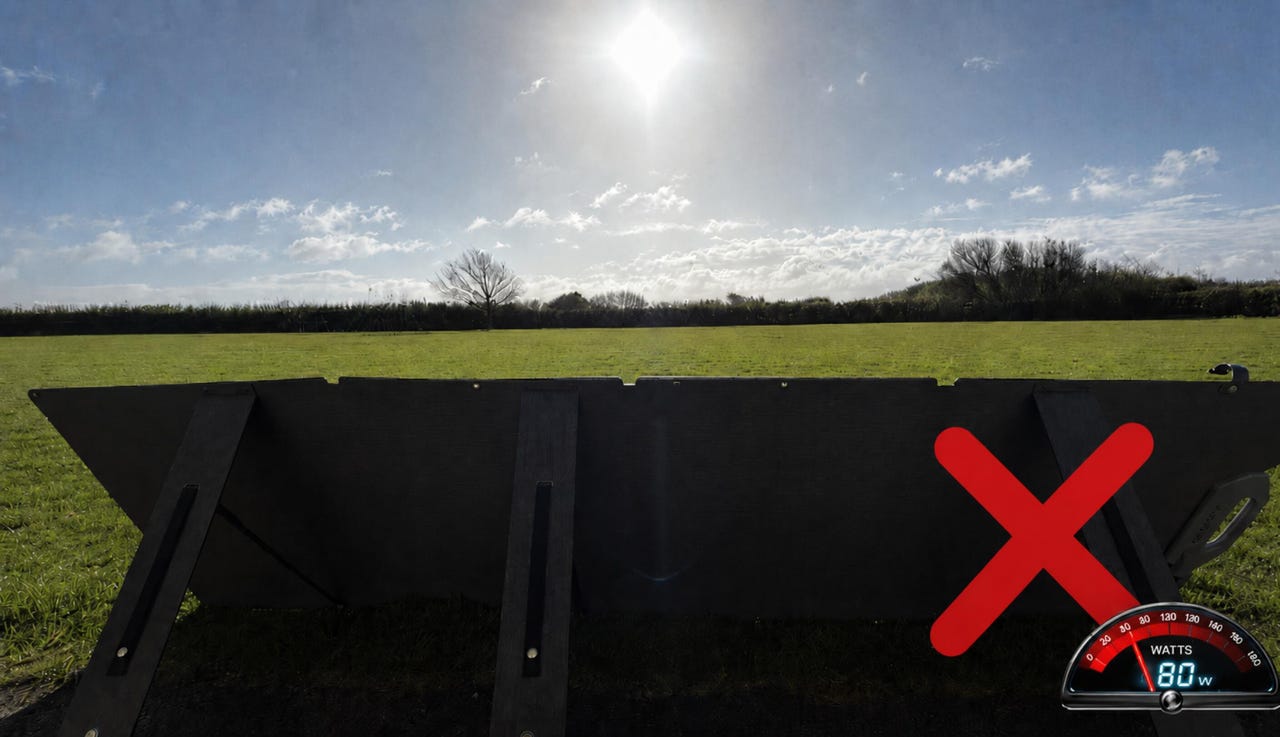
Avoid these 8 solar mistakes that cut your power output in half – I learned the hard way


Avoid these 8 solar mistakes that cut your power output in half - I learned the hard way

Adrian Kingsley-Huges/ZDNET

Follow ZDNET: Add us as a preferred source on Google.


ZDNET’s key takeaways

  • Small solar mistakes can cut output by up to 50%.
  • Poor panel placement is the biggest power killer.
  • Small solar systems may save only cents per day.

I’ve been harvesting and using solar power for several years. My love affair started when I visited Scotland for six weeks, and the only power I had came from my small power station and two solar panels (and those solar panels weren’t waterproof!). Since then, solar has grown into a bit of an obsession, and it’s at the point where I’m in the process of constructing an off-grid cabin that will rely solely on solar.

Also: Considering plug-in solar? My expert advice after setting up the DIY energy tech at home

But solar is a very different technology from using the grid, and the truth is that a lot of solar users lose power and money because of mistakes relating to installation, usage, maintenance, and planning. Simple mistakes can slash your power output by anywhere from 10% to 50% and more, not to mention shorten equipment lifespan, create all sorts of safety hazards, and affect the return you get on your investment.

Let’s take a look at some of the most common issues, as well as easy fixes.

1. Pointing solar panels away from the sun

Seems basic, but you’ll be surprised how often I see panels pointing in all sorts of directions.

Assuming that you’re in the Northern Hemisphere, a general rule of thumb is having the panels facing south at an angle of around 45 degrees as a good start.

Also: How I make my solar panels last long enough to pay for themselves

For portable systems where I’m setting up the system and leaving it for the day, I’ll point the panels due south at 45 degrees, away from anything that might shade them, and hope for the best. 

If I’m in camp, I’ll make the effort to point the panels at the sun and move them every couple of hours. This gives me the best possible chance at getting the most out of panels, especially smaller, portable units.

For balcony “plug-in” solar systems where your panels are fixed, it’s crucial that your panels face south-ish. If your balcony or garden doesn’t face south, or southeasterly or southwesterly, forget about it. Don’t be fooled by people who tell you that solar panels work great when pointed away from the sun; they don’t.

For fixed installations, it’s also vital that the location doesn’t get shaded too much by things like buildings or trees, because even the smallest bit of shade on your panels will dramatically cut their collecting power. 

Bear in mind that trees grow and get leaves. A tree that might be fine now might be problematic in summer or in a few years — so plan for the future.

Also: This is the power backup setup I trust after years of testing – solar panels included

Another factor to consider for balcony solar is that hanging the solar panels over the balcony so they’re perpendicular to the ground is highly inefficient. Again, 45 degrees is a good ballpark to aim for, but if you want to get scientific, and you have a way of controlling the angle, find your latitude (you can find that out here) and set the angle to that.

2. Not being realistic about power

Think that 800W of solar panels is going to give you 800W of power during daylight hours, day in and day out? Think again.

You need to find out peak sunlight hours, or PSH, which is a measure of how many hours the sunlight is strongest at your location. Luckily, you can find tables that will give you the PSH for various locations. Bear in mind this is a theoretical number, and all sorts of factors — weather being the biggest — can affect this. 

Also: Considering plug-in solar at home? How to know if it’s legal in your state – and actually worth it

But as a ballpark way to figure out the maximum your panels can ever achieve, it’s a good start.

Once you have this PSH figure, you will need to do some math. 

Take the power rating of your panels and multiply that by the PSH for your location. For example, if you live in Utah, which gets a PSH of between 6 and 7 (we’ll take the figure in the middle here of 6.4), and have a 400W solar panel, the absolute maximum you’ll get is:

400 Watts x 6.5 Hours = 2,400 Wh or 2.4 kWh

To make this even more realistic, it’s common to factor in a derate figure to smooth out losses through inefficiencies in the system. You’ll find all sorts of derate figures online, but the industry standard seems to be 0.77. This drops the maximum amount of usable power collected as follows:

400 Watts x 6.5 Hours x 0.77 = 1,848 Wh or 1.8 kWh

How much is this amount of power worth if it came from the grid? Well, to work this out, you need to find the cost of power in your area (in Utah, it’s 0.1333 cents per kWh) and multiply the maximum power your panels will deliver by this figure.

1.8 x 0.1333 = 0.24 cents per day.

A decent 400W solar panel will set you back around $400, so you’re looking at it taking about four and a half years from now for the panels alone to pay for themselves.

While aimed at fixed solar panel installations, Google’s Project Sunroof tool can give you some idea of how much power your solar panels could capture.

3. Keeping your panels dirty

OK, so you have your panels pointing in the right direction. The next thing you need to make sure of is that they are clean. Even a thin layer of dust or pollen can slash their energy-collecting potential by as much as 20%, and when you’re dealing with such small margins to begin with, every percentage point counts.

Also: I set up backyard solar panels to save on my electricity bill – here’s my advice 30 days later

While there are all sorts of products for cleaning panels, I’ve never gone wrong with some lightly soapy water and a microfiber cloth. If there’s any stubborn dirt — bird poop is the common culprit here — resist trying to scratch it off, as this could damage the panel. Instead, let the soapy water soak so it lifts off easily.

4. Forgetting to check connectors

I’ve lost count of the number of times I’ve gone to look at someone’s solar panels only to find one is not connected and just pointing at the sun doing nothing. It’s easy to tell if one panel isn’t working when that’s all you’ve got, but when you have two or more, it becomes more tricky to spot when a panel goes offline.

Also: How I boosted my portable solar panels’ power by up to 30% – 11 expert-approved tips

Most solar panels use the MC4 connector, and they’re pretty robust and won’t usually come apart on their own, but on portable systems, it’s always a good idea to check.

MC4 connectors are pretty reliable, but I have seen them come apart.

MC4 connectors are pretty reliable, but I have seen them come apart.

Adrian Kingsley-Hughes/ZDNET

5. Not remembering solar power is dangerous

A lot of people forget that the power coming from their power station is the same sort of AC power that comes from an AC outlet in their wall and is perfectly capable of seriously injuring or even killing people. Be careful when using power stations outdoors, and think carefully before you start trailing extension cables.

Also: Most solar power banks I’ve tested were gimmicks – this one is the real deal

A point worth making about power stations is that because of the fact that they make use of something called a “floating ground,” you can’t rely on using an inline Residual Current Device (RCD) or Ground Fault Circuit Interrupter (GFCI) on any extension cable, and you’re relying on the power station’s own internal safety mechanisms.

6. Fully charging your power station at all times

I know some people who aren’t happy unless their power stations are fully charged at all times and will pump mains AC into them rather than let them charge up slowly over a few days using solar. Remember, solar might be slower, but it’s free.

Also: How my portable wind turbine compares to solar panels – 2 years of testing later

If you have a time-variable power tariff where you can buy power cheaper off-peak to use during peak hours, then if you time things right, it might make sense to timeshift power if you’re a heavy user. 

Otherwise, it’s best to let the solar panels do as much of the work as possible because, after all, your goal is to maximize your return from your solar investment.

7. Buy cheap, buy twice

Beware of cheap “too good to be true” deals on power stations or solar panels, and definitely avoid the secondhand market like the plague. 

Also: I used a single power station to keep my off-grid cabin running – how it all worked out

A good power station or solar panel should give you 10-plus years of service because you need that sort of longevity out of your investment to have any hope of getting your money back.

8. Not being efficient

You need to stop thinking of power as an unlimited resource that flows from AC outlets and start thinking about being efficient. That means replacing high-draw items like incandescent bulbs and old-style water heaters with LED lights and smart heaters, so your solar power goes further.

Also: The hidden metric that makes these portable power stations truly worth your money

Also, I highly recommend using smart outlets that you can control remotely and monitor for energy usage. There’s nothing like seeing how much power things are using to encourage you to switch them off. Smart plugs are cheap — about $8 apiece — and they’re a great complement to your solar power endeavors.




Source link

Leave a Reply

Subscribe to Our Newsletter

Get our latest articles delivered straight to your inbox. No spam, we promise.

Recent Reviews


Deer Valley’s new terrain expansion is one of the most ambitious projects in modern skiing. The resort plans to nearly double its skiable terrain while maintaining the industry-leading standards it’s known for. We spent an extended trip in early 2026 skiing the new footprint alongside Deer Valley representatives and Olympic skier Fuzz Feddersen to see how it all came together.

Construction is still ongoing, and this season marked the worst snow year in Deer Valley’s history. Even so, we found the new terrain diverse and distinct, yet seamlessly integrated into the legacy Deer Valley experience.

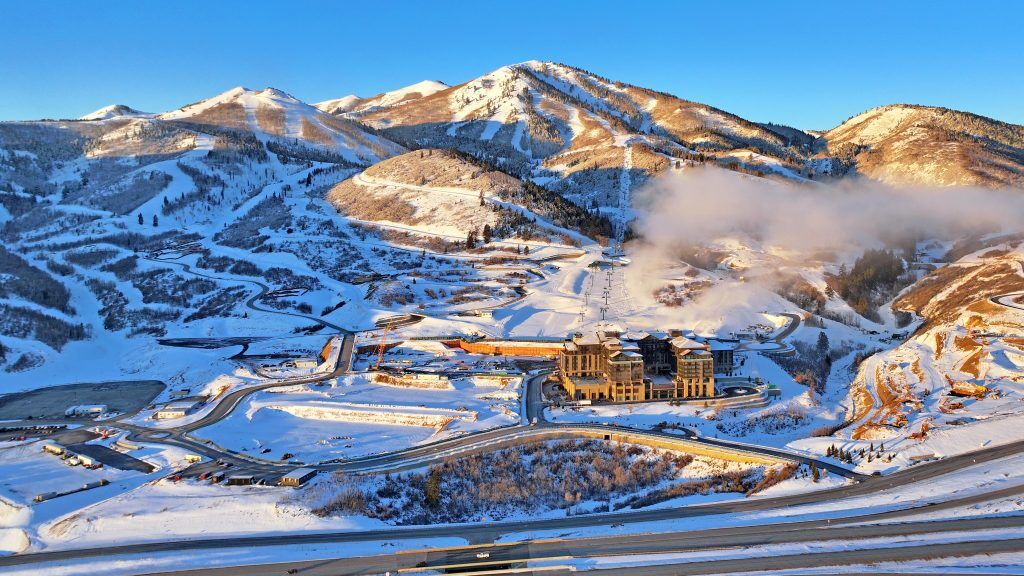
This guide introduces the terrain, lifts, and base-area amenities in Deer Valley’s East Village so you can make the most of the Expanded Excellence initiative.

East Village: A Second Front Door

Keetley Express Opening Day
Photo Credit: Deer Valley Resort.

Deer Valley East Village is seamlessly connected on the slopes, but geographically separate from the main resort, and that separation works in its favor. Accessed via US-189, it bypasses Park City traffic entirely.

Yes, it’s still a work in progress. You’ll see active construction throughout the base area. But the core infrastructure is already in place, and it functions like a fully supported ski base. What’s here now works and what’s coming will only enhance it.

The East Village base area delivers the Deer Valley essentials: free parking, rental shop, ski valet, and East Village Restaurant, where a bowl of the resort’s signature chili tastes especially good on a cold afternoon.

Where to Stay in East Village (25/26 Season)

High hot chocolate at Grand Hyatt Deer Valley Utah
Photo Credit: Jenn Coleman.

For the 25/26 season, the clear lodging choice is the newly completed Grand Hyatt. It offers a signature restaurant, on-site Ski Butlers rentals, a full spa, and shuttle service to Park City and Snow Park. There’s no ski-in/ski-out access yet, but a short shuttle brings you directly to the East Village base.

Additional hotels are expected to open for 26/27, which will further transform East Village into a true walkable ski hub.

We found the Grand Hyatt welcoming and highly functional, particularly with Ski Butlers on-site and a massive locker room that makes gearing up painless. Their High Hot Chocolate service, modeled after high tea but featuring locally processed cocoa, may become a new tradition for us. It’s indulgent enough to stand in for a light meal or serve as a sweet reset between Park City’s famously rich dinners.

The only logistical wrinkle is shuttle coverage. Service does not extend to Empire Canyon (Fireside Dining) or Silver Lake (Stein Eriksen Lodge, Mariposa), so a bit of planning is required. Still, between Snow Park (St. Regis, Cast & Cut) and downtown Park City, dining options are abundant. With new hotels opening next season, you may soon be able to walk to a different restaurant every night and still not try them all.

Snow Science: The Engine Behind the Expansion

Expanded Terrain snowmaking gun
Photo Credit: Deer Valley Resort.

Deer Valley’s reputation has always been built on snow quality, from immaculate corduroy to sophisticated snowmaking. The expansion continues that legacy in a serious way.

The new terrain draws most of its water from Jordanelle Reservoir. Roughly 80 miles of new snowmaking pipe now support more than 1,200 high-efficiency snow guns. The reservoir isn’t just scenic, it’s foundational.

What’s more impressive is the sustainability loop. Deer Valley is allocated just 1% of the reservoir’s available water. Through dedicated irrigation channels, approximately 80% of that allotment is returned by season’s end. Combined with an expanded grooming fleet, that system allowed the resort to open a record number of runs during a historically hot and dry winter.

If you’re wondering how the terrain skied so well in a lean year, this is your answer.

East Village Gondola: The Spine of the New Terrain

East Village Gondola
Photo Credit: Deer Valley Resort.

The 10-passenger high-speed East Village Gondola is one of the two primary lifts out of the base area. It’s a 15-minute, 3,000-vertical-foot ride to Park Peak (9,350’), with a mid-station at Big Dutch Peak (8,170’).

From Park Peak, you access some of Utah’s longest runs along with terrain served by Pinyon Express and the Vulcan Express / Revelator Express lifts.

Green Monster is the headline act: a 4.85-mile green descent between Park Peak and Baldy Mountain, nearly 40% longer than Park City Mountain’s Home Run. It weaves between two blues: Carbonite, which drops along the ridge, and Age of Reason, which follows the valley floor.

Deer Valley partnered with longtime Mountain Host Michael O’Malley to name the new terrain in ways that honor both local mining history and the resort’s evolving identity. “Green Monster” references a Wasatch County copper mine, though you’ll never convince me there isn’t a double entendre for the 37-foot-tall wall in Fenway Park that has foiled many home runs. Common sense tells us that “Age of Reason” is an homage to Thomas Paine, and I could imagine cruising down the exposed ridge would freeze you like the compound that imprisoned Han Solo. However, “Carbonite” is a nod to Park City’s silver mining legacy. 

Names aside, the terrain progression is smart. Carbonite offers a manageable ridge experience before committing to Redemption Ridge. And if confidence wavers, Green Monster provides a bailout.

Another thoughtful touch is Corduroy Lunch. Select freshly groomed terrain off the gondola’s mid-station remains roped until noon. Carving fresh tracks midday is a true afternoon delight. 

Keetley Express: The Connector

Keetley Express lift Deer Valley Ski Resort Utah
Photo Credit: Deer Valley Resort.

Keetley Express is the other primary East Village lift and likely the fastest gateway back to legacy Deer Valley terrain. After the 1.25-mile ride up, a short ski down Road to Sultan brings you to Sultan Express.

Of course, you have to take Sultan up the mountain before you get back to skiing. That sets you up for over 5 continuous miles of green runs if you combine Homeward Bound with McHenry, or take a run on the classic black Stein’s Way. You could also use connectors to access the lower half of Green Monster or McHenry directly, or try the plethora of intermediate runs off Keetley Point.

Advanced skiers should keep Keetley on their radar as well. When conditions align, it’s a sneaky access point to Mayflower Bowl and its quiet pocket of expert terrain.

Aurora: Small but Essential

McHenry / Aurora area Deer Valley Ski Resort Utah
Photo Credit: Jenn Coleman.

Aurora is easy to underestimate. It’s only about 700 feet long and takes two minutes to ride, but it plays a crucial role.

It’s the return lift from McHenry, which connects directly to Silver Lake Lodge, and it services Keetley Point terrain. There’s also a confusing sign near the top of Aurora on Green Monster directing skiers left toward East Village. If you follow it, you’ll earn a short Aurora ride, and remember to hang right next time if you want to return directly to Keetley and the gondola.

Tiny lift. Big utility.

Vulcan Express & Revelator Express: Commitment Terrain

Woman carving Ridgeline at Deer Valley
Photo Credit: Deer Valley Resort.

These lifts rise from one of the steepest valleys in the Deer Valley footprint, so steep that lift towers had to be installed by helicopter.

Redemption Ridge is the signature descent, often described as Stein’s Way on steroids. At roughly twice the length of Stein’s, it drops 2,700 vertical feet over 2.5 miles. Once you commit, you’re in it, with steeper, more technical lines breaking off the ridgeline into the valley.

If that feels ambitious, start on Stein’s to calibrate. Carbonite also offers a similar exposed-ridge experience that’s much more forgiving. But If the snow is right and you can hang, Redemption could be your saving grace from the Bambi Basin blues.

Pinyon Express: High-Alpine Access for Everyone

Pinyon Express Chairlift
Photo Credit: Deer Valley Resort.

Pinyon Express and Revelator both reach Park Peak, but their personalities diverge from there.

Pinyon serves a beginner-friendly zone on the north side of Park Peak, allowing newer skiers to experience high-mountain terrain without intimidation. Clipper stands out because it also connects the East Village Gondola back into legacy Deer Valley terrain, but there are multiple easy route options.

Because Pinyon sits right at the boundary between old and new terrain, it functions as a seamless crossover point. Novice skiers and ski classes can access this alpine playground from either side of the resort.

The Future of Deer Valley Is Already Underfoot

Fuzz_Ski_with_a_Champion
Photo Credit: Deer Valley Resort.

It would be easy to judge an expansion like this on acreage alone. Nearly doubling skiable terrain is headline material in any snow year, let alone the driest season in resort history. But what impressed us most wasn’t the scale; it was the intention.

Expanded Excellence doesn’t feel bolted on. It feels studied. Deliberate. The lift placements make sense. The terrain progression makes sense. Even the names tell a story. You can ski a 4.85-mile green down Green Monster, test your mettle on Redemption Ridge, duck into legacy terrain off Keetley, and end the day with corduroy that rivals anything Deer Valley has ever groomed, all without feeling like you’ve left the original footprint of the resort.

That’s no small feat.

Skiing with Olympic veteran Fuzz Feddersen gave us an insider’s lens, but even without that access, the throughline is obvious: Deer Valley isn’t chasing growth for growth’s sake. They’re building a second front door that will eventually feel as iconic as Snow Park or Silver Lake, and they’re doing it with the same snow science, guest service, and meticulous grooming that built their reputation in the first place.

East Village still hums with construction equipment. You’ll see cranes on the skyline and fresh dirt where hotels will soon rise. But beneath that temporary noise is something permanent: infrastructure that works, terrain that skis well in lean years, and a blueprint that positions Deer Valley for the next several decades.

If this was Expanded Excellence in the worst snow year on record, it’s hard to imagine what it will feel like in a banner winter.

One thing is certain: the future of Deer Valley isn’t coming. It’s already here!

Ready to Book Your Trip? These Links Will Make It Easy:

Airfare:

Insurance:

  • Protect your trip and yourself with Squaremouth and Medjet
  • Safeguard your digital information by using a VPN. We love NordVPN as it is superfast for streaming Netflix
  • Stay safe on the go and stay connected with an eSim card through AloSIM

Our Packing Favs:

  • We LOVE Matador Equipment for their innovative products and sustainability focus. Their SEG45 is a game changer when you need large capacity while packing light.
  • Travel in style with a suitcase, carry-on, backpack, or handbag from Knack Bags
  • Packing cubes make organized packing a breeze! We love these from Eagle Creek

Disclosure: A big thank you to Deer Valley Resort for hosting us, setting up a fantastic itinerary, and usage of some of the images throughout (image credit in hover text ).

For more travel inspiration, check out Deer Valley Resort’s InstagramFacebookTwitter, and YouTube accounts.

As always, the views and opinions expressed are entirely our own, and we only recommend brands and destinations that we 100% stand behind.

Like it? Pin it for later on Pinterest!

Hi! We are Jenn and Ed Coleman aka Coleman Concierge. In a nutshell, we are a Huntsville-based Gen X couple sharing our stories of amazing adventures through activity-driven transformational and experiential travel.


Source link


