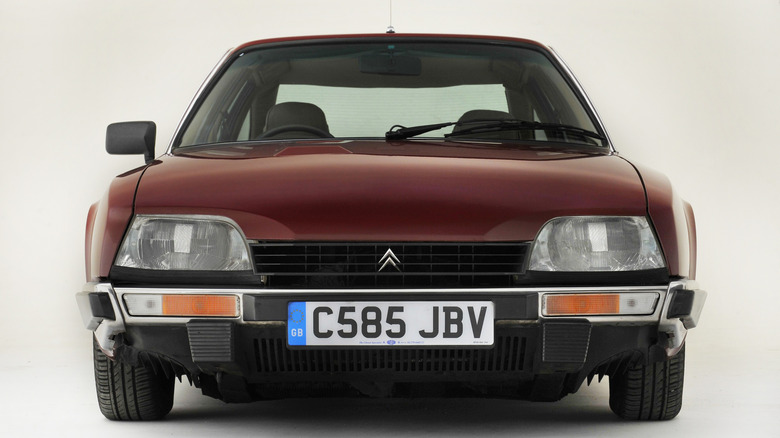

One of the most effective ways to modify a car is changing its color, and we all know this. Whether you don’t like the factory color, you want it to be your favorite color, or even to cover up the damaged old paint that’s a result of common mistakes, a respray or wrap is never a bad idea. It doesn’t necessarily have to be the whole car, either; you can also paint individual components and have them be an accent color to the main one, like the wheels or certain trim pieces.
Let’s say you wanted to paint something that was underneath the skin. Painting brake calipers a different color is pretty common, but what if you decided to paint the engine block itself? Colored engine blocks were the norm in American cars throughout the 60s, so why not? Can it be done? Yes it can, but only with a specific type of paint called powder coat. This is also the same sort of paint used for brake calipers, and it’s able to withstand a lot of heat without sustaining damage. However, the process of painting an engine block is pretty complicated.
Painting the block is an engine-out job
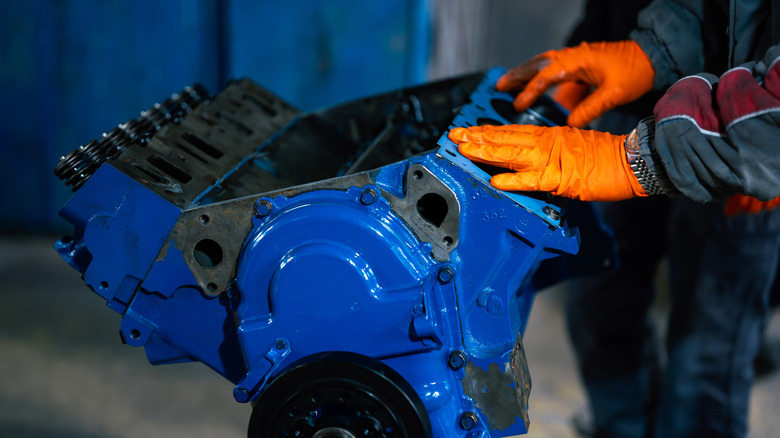
So yes, you can paint your engine block, but it is in no way an easy or straight-forward process. Powder coating isn’t really painting, per se, it’s seen more as a finisher. The powder coat reaches the engine block, in this case, through an electrostatic gun connected to a completely contaminant-free air compressor. Then, the coated engine block is tossed into some type of heat chamber at or over 400 degrees Fahrenheit, allowing the powder coat to bind to the material and effectively look like paint.
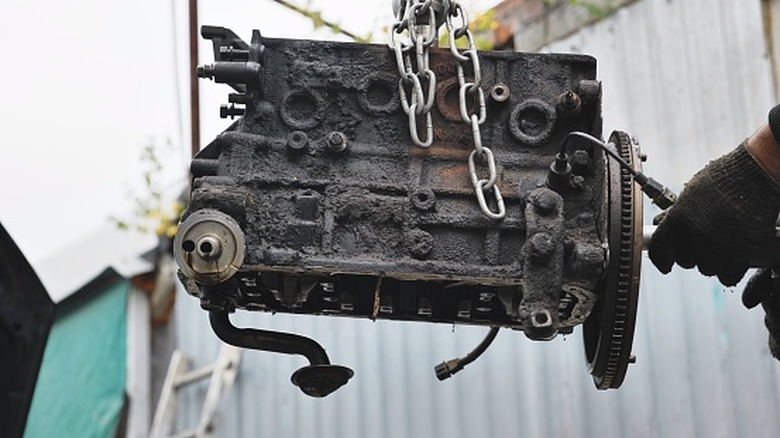
The first and most important step is to remove the engine completely, and the only real way to do that is with an engine hoist. If you don’t have one at your shop, this would be a good time to either invest, or just rent an engine hoist.
Next is removing all the supplementary components. Heads, studs, pistons, crankshaft, oil pan, the works — everything has to come off leaving the bare engine block with nothing else. After that, thorough cleaning is order; degreasing, removing any oil or carbon residue, and so on. The best way to do that is with a chemical bath.
Finally, the powder coat is applied, it’s cured, and then it’s ready to go. As tempting as this may be to try at home, it’s not a good idea due to the specialist equipment needed, and how easy it is to run into trouble. Plenty of shops out there will powder coat your components for you, and very well, if you mail them the parts. That could be the block, yes, but it could also be other metal parts of the engine.

Stephan is the sports journalist for the Maple Grove Report.