For one week, the Twin Cities will host the largest gathering of Ethiopians anywhere outside Ethiopia. From June 27 through July 4, the 43rd annual tournament of the Ethiopian Sports Federation in North America — known across the diaspora simply as ESFNA — will land in Minnesota.
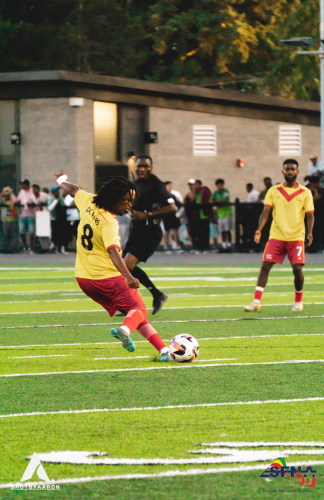
On its surface it is a soccer tournament, as it has been since four clubs from Washington, Dallas, Houston and Atlanta first kicked off in 1984. But anyone who has been to one knows the soccer is only the frame. ESFNA is a homecoming.
Picture something closer to a state fair than a sporting event. Around the stadium each year, organizers set up a small temporary city — rows of food tents staffed by Ethiopian restaurants from across the country, vendors selling traditional clothing, jewelry and crafts. Traditional dance troupes performing under the lights, and booths run by nonprofits raising money for everything from youth scholarships to schools back in Ethiopia.
Related: How a Minnesota paper became one of the world’s leading sources of Ethiopian news
The food will pull in even Minnesotans who have never tried Ethiopian cooking — there is plenty for both meat eaters and vegetarians, served on injera, the soft, slightly tangy flatbread that doubles as plate and utensil, and most of it is the kind of food you eat with your hands at a long table with people you have just met. There is live music every afternoon — songs in Amharic, Oromo and Tigrigna — and coffee ceremonies running all day, the smell of roasted beans and frankincense drifting through the grounds. Last year’s tournament was in Seattle. This year it comes here.
Soccer and more after ICE occupation
The community will arrive carrying this particular year on its shoulders. Across December, January and February, federal agents conducted Operation Metro Surge, the Trump administration’s largest immigration enforcement deployment, concentrated in Minneapolis and St. Paul. The public targets were Somali Minnesotans, but the chill landed across every East African community here.
On Timket — the Ethiopian and Eritrean Orthodox celebration of Epiphany, on Jan. 19 — many families watched ICE movements on WhatsApp instead of walking to church. I spoke that morning to a parishioner who had dressed for the service, then folded her shawl back into the drawer, set her prayer book down and stood at the window watching the street. “God understands,” she said. “But it still hurts.”
The enforcement was only the visible half. Quieter, and no less wounding, has been the visa freeze: Under Trump administration restrictions, 39 African countries — Ethiopia and Eritrea among them — now face partial or total bans on immigrant visas. For Minnesotans who came here legally, who became citizens, who built lives and businesses and bought homes, that has meant husbands separated from wives, parents kept from children, children kept from grandparents, families stuck on the wrong side of an embassy window.
Almost everyone arriving at ESFNA this June will know someone whose family was supposed to be at the table this summer and cannot come. ESFNA arrives as the first big public moment the community has chosen to gather in spite of all of it.
That choice matters because the Twin Cities is not just a host city. Ethiopia is one of the most ethnically diverse countries in the world, and the diaspora here reflects that — Oromo, Amhara, Tigrayan, Somali, Gurage and many other Ethiopian peoples have all built lives in Minnesota, alongside our Eritrean neighbors from the country just to the north. The Oromo community here is the largest anywhere outside Ethiopia. By the most recent counts, somewhere between 35,000 and 50,000 Minnesotans identify as Ethiopian or Ethiopian-American, and after Washington, D.C., the Minneapolis–St. Paul metro is one of the largest Ethiopian population centers in the United States.
Behind those numbers is a generation of quieter work. There are roughly eight active Ethiopian and Eritrean Orthodox Tewahedo congregations across the metro, alongside Catholic, Evangelical and Muslim communities serving the same diaspora. Each is more than a place of worship. Each runs Amharic and Tigrinya language classes for second-generation children. Each maintains mutual-aid funds for funerals, weddings and emergencies. Each runs Sunday schools that double as civic classrooms. To call these institutions simply “religious” is to undercount what they do. They are the schools, social services, support groups and cultural archives of an entire community, run mostly on volunteer labor.
And the community keeps growing — even now. Last month, Debre Selam Medhanealem Ethiopian Orthodox Tewahedo Church opened the doors of its new building at 26th and 30th Avenue South in the Seward neighborhood — three green domes and a row of white arches rising over a stretch of Minneapolis that, 20 years ago, had no Ethiopian institutional presence at all. It is, by community estimates, the largest purpose-built Ethiopian Orthodox church in Minnesota. People raised money for it across two decades, in $50 increments at coffee ceremonies and through fundraising dinners in church basements. Its open house on April 18 drew neighbors from across Seward who had been watching the construction and wondering what was going up.
Why the Twin Cities?
ESFNA chooses host cities partly on logistics — venue capacity, hotel rooms, the practical questions any major event must answer. But it also chooses on community: Where can tens of thousands of visitors actually be hosted, fed, prayed with and welcomed into homes? On that question, the Twin Cities has been ready for a long time. The 2026 tournament is, if anything, late recognition of what has been here.

So — what does this mean if you are a Minnesotan who has never been to ESFNA, who knows a few Ethiopian colleagues at work and has eaten at one or two restaurants, who has never set foot in an Orthodox church?
It means an invitation. ESFNA is open. Walk the vendor lines. Try a coffee ceremony. Listen to a song you don’t understand and let someone next to you translate the chorus. The cultural programming is for everyone. And once the tournament ends, the community that hosted it does not pack up. It will be here next week, and next month, and next year — in the same churches, the same restaurants, the same neighborhoods — doing the same patient work of being part of a city, in good seasons and hard ones.
The Twin Cities you live in already includes us. ESFNA is just the week we are most visible. Come anyway. The rest of the year is even better.
Endalkachew Chala, Ph.D., is an academic and a member of the Twin Cities’ Ethiopian community. His reporting on the 2026 Minneapolis immigration enforcement operation appeared in The Continent.
Related