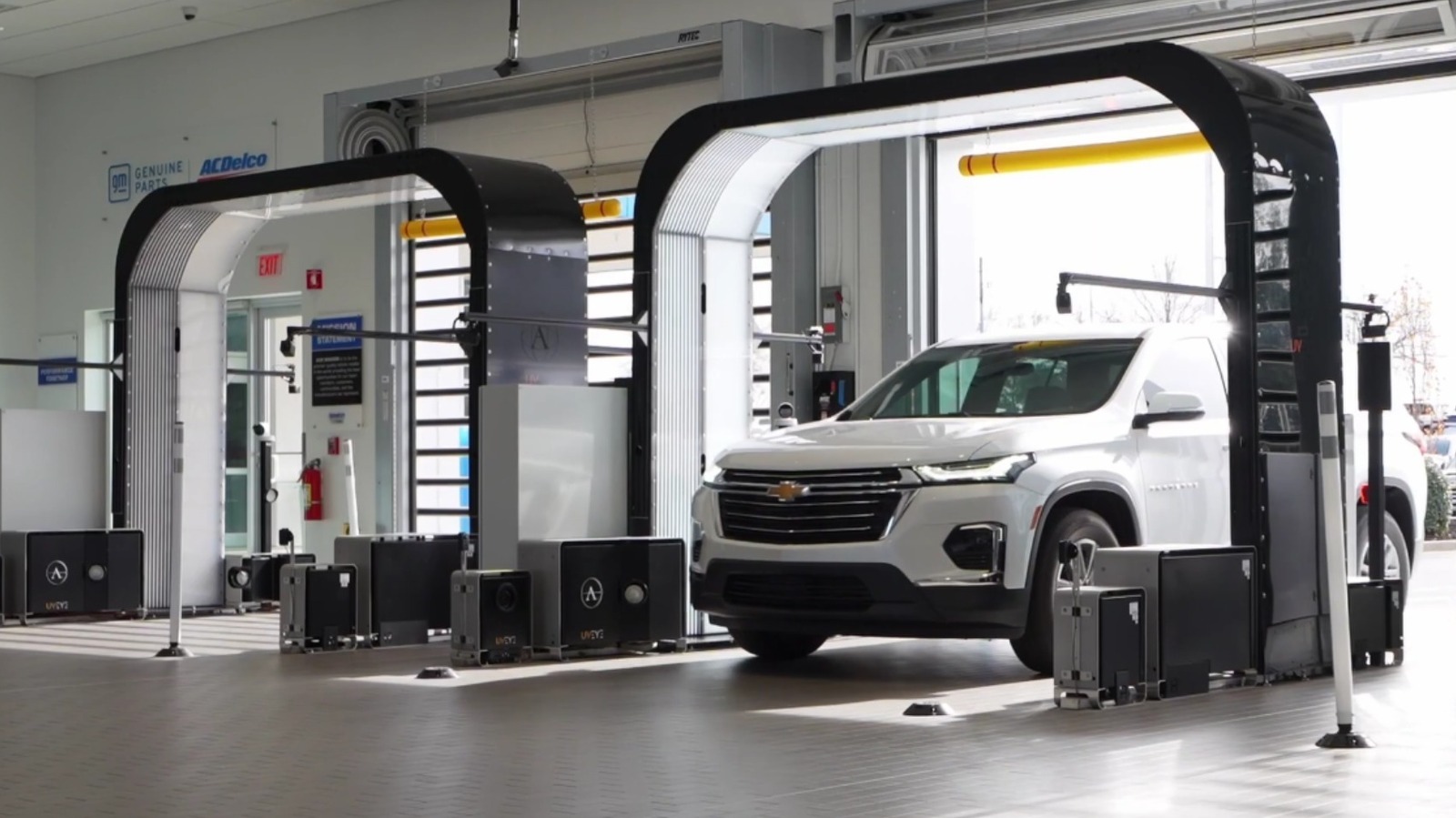

While AI might be killing the job market for young coders, it is also being used in other ways that complement human productivity. Take mechanics, for instance. A huge part of their job is simply exploring a vehicle to determine what the issue is, before applying their expertise and fixing it. A tool such as UVeye, which is developed by the company of the same name and declares itself to be “the MRI for cars,” could prove to be an enormous help in this part of the job.
The concept is simple: A vehicle is driven through a UVeye lane, which is kind of like the scanners you pass through in airport security lines. About 1,000 photographs are taken of the vehicle by more than 20 cameras from all kinds of angles. The end result is an in-depth analysis of everything from wheels that need to be realigned to paint scratches to rust damage, depending on the type of machine used. UVeye boasts that this is achieved “all without lifts or manual checks,” and the final report is uploaded to the cloud for easy reference.
This tool could help a dealership flag whether any of its vehicles have issues. Or, it could help mechanics or other technicians check for any vehicle defects and cross-reference any issues that a model may have had before. Needless to say, it’s quite the process to scan each of the myriad components of a car in mere seconds. Here is how UVeye technology reportedly accomplishes it.
The different functions and types of UVeye scanning machines
According to UVeye, this technology uses three primary systems. “Artemis” thoroughly scans each tire for notable wear or damage. “Helios” inspects the frame for damage or leaks, along with any issues with crucial systems like the brakes that may need to be flagged. Lastly, “Atlas” and “Atlas Lite” determine whether there’s any damage on the outer panels, including small cosmetic issues. Between them, the aim is to provide comprehensive coverage of a vehicle’s condition. In 2022, UVeye produced the below clip, which shows how these elements work together, along with the images they produce for staff members to consult.
In April 2023, UVeye joined forces with manufacturer Hypertec to get these machines built. In September 2025, Heavy Duty Trucking Magazine reported that several hundred UVeye scanners were already at work in U.S. dealerships. The outlet also noted that bigger ones had been developed to provide “Class 6–8 trucks and buses […] an automated 17-point inspection process.”
There are some things you should never use AI for, but UVeye seems to be a versatile and incredibly convenient system. In flagging areas in which maintenance may be needed, it can help technicians focus their time and resources where they will be most needed. UVeye continues to expand its reach, with KCRG reporting that one of its scanners was installed in Iowa for the first time in April 2026.

Stephan is the sports journalist for the Maple Grove Report.