Disappearing Macs? Global RAM Supply Crisis Likely Hits Apple


Several high-end Apple computers are sold out on the company’s online store, and there’s no indication when they’ll be back in stock. Multiple RAM-intensive configurations of the M4 Mac Mini and Mac Studio are now listed as “currently unavailable.”

The affected configurations include the 32GB and 64GB RAM options for the Mac Mini and the 128GB and 256GB options for the Mac Studio. Meanwhile, the available configurations for these computers are experiencing shipping delays, with Apple’s official listings citing up to 18 weeks.

This isn’t a uniquely Apple problem. Some manufacturers warn that the global RAM shortage, driven by the surge in demand for generative AI tools, will persist until at least 2030. With more than 70% of the global RAM supply earmarked for use by AI-compute corporate giants, stocking issues are a common sight across the computing industry right now, with prices for phones and laptops rising amid the supply crisis.

Storefront unavailability can sometimes be chalked up to preparation for a new announcement, but it’s unlikely that an M5 upgrade for these computers would be on the way so soon after Apple’s March event. The Apple M5 processor, first announced in fall 2025, marked a significant leap in AI performance with a next-generation GPU and neural acceleration. While the MacBook Pro and MacBook Air received an M5 chip refresh in recent months, the Mac Mini and Mac Studio rely on the M4 processor.

A more likely scenario is that the global RAM shortage is claiming more victims and that Apple is reallocating resources to other products in its current lineup due to severe supply constraints. 

CNET computing expert Matt Elliott thinks there’s probably a kernel of truth to both theories. Apple may have pulled the high-memory configurations of the M4 Mac Mini and Mac Studio while prepping updates for these computers. He believes that a M5 chip refresh for the Mac Mini and the Mac Studio could be announced sometime in early June, before the start of WWDC 2026.

“Apple usually removes a product in the lead-up to its replacement, but this move generally happens closer to launch than two months out,” Elliott said. “Perhaps the high demand for the higher-end configurations has led to supplies reaching low levels sooner than Apple had anticipated, causing it to accelerate the removal of these configs ahead of the eventual M5 updates.”

A complete removal of multiple Mac Mini and Mac Studio configurations from the store might seem surprising, but Apple has continually tinkered with the pricing and availability of these products as they become a popular budget choice for developers and researchers running AI LLMs locally.

There’s precedent for constraining configuration options for the M4 Mac product lineup. According to The Next Web, Apple recently removed the 512GB RAM configuration for the Mac Studio, while simultaneously increasing the price of the 256GB RAM option by 25%. 

A representative for Apple did not immediately respond to a request for comment.


Source link

Leave a Reply

Subscribe to Our Newsletter

Get our latest articles delivered straight to your inbox. No spam, we promise.

Recent Reviews


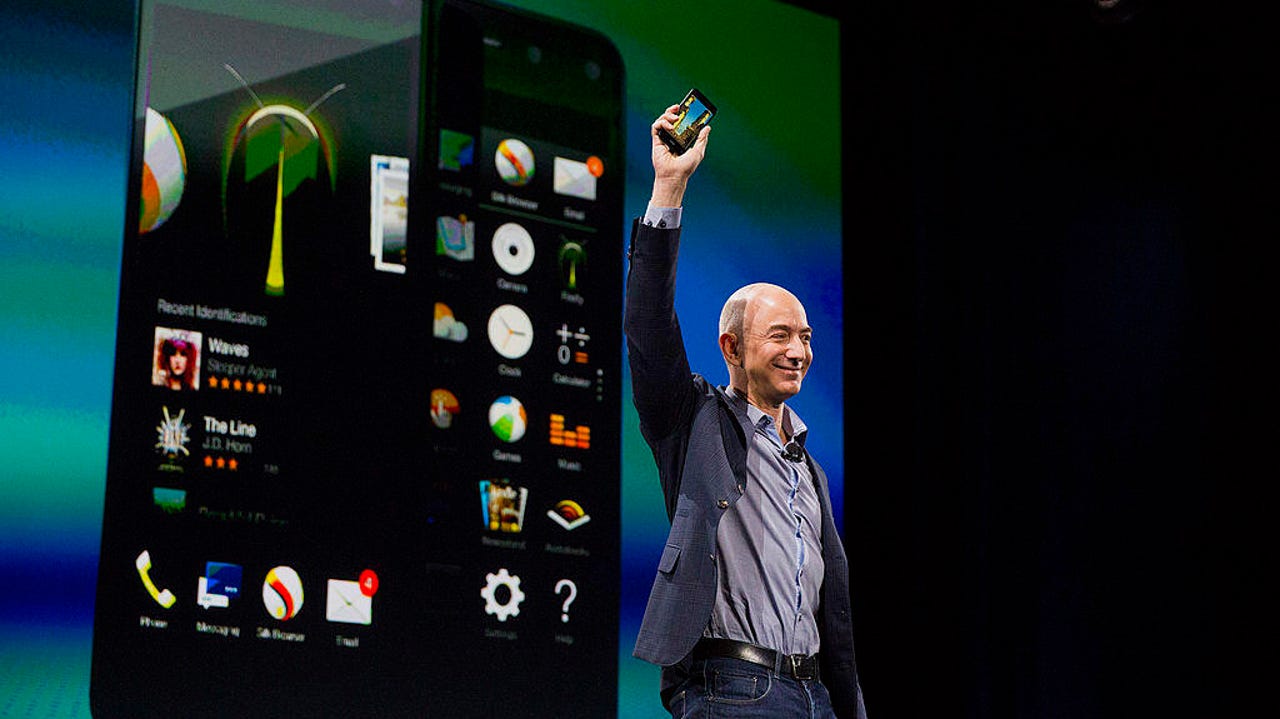
Amazon Fire Phone Jeff Bezos

Bloomberg / Getty Images

Follow ZDNET: Add us as a preferred source on Google.


ZDNET’s key takeaways

  • Amazon is reportedly developing a new Fire Phone.
  • The previous model had several issues, including an inferior app store experience.
  • Under new supervision (and with more experience), Amazon can do better this time.

Well, I don’t know about you, but I certainly didn’t have “new Amazon smartphone” on my 2026 bingo card. As it turns out, according to Reuters, the retailer may be developing a new smartphone, internally known as “Transformer.” 

Those familiar with the industry will instantly draw parallels to Amazon’s previous smartphone effort, the Fire Phone from 2014. Appropriately, that phone ended up as part of a fire sale about a year later.

Now, in 2026, with no fewer than five phone brands in the US — Apple, Samsung, Google, Motorola, and OnePlus — Amazon faces a lot of competition. In fairness, it also has two fewer platforms to compete against. In 2014, Windows Phone and BlackBerry were still very much part of the smartphone conversation; these days, not so much.

The AppStore problem

But there’s one mistake Amazon made in its first effort that will absolutely torpedo its chances at succeeding — the Amazon AppStore and specifically the decision to forego Google Play services. Google is simply too valuable in too many lives to not support the platform. Oh, and the Amazon AppStore is terrible.

Also: What’s right (and wrong) with the Amazon Fire Phone

It has admittedly been a few years since I last inventoried the Amazon AppStore, but when I last checked, the Amazon AppStore was a wasteland of half-supported or unsupported apps, with two notable exceptions. Finance, home control, and communication apps were either absent or had not received updates for years prior.

The only apps in the Amazon AppStore that remained up to date were productivity apps (largely powered by Microsoft) and streaming apps. Those two categories work very well on the cheap, underpowered hardware that Amazon usually launches, and that’s fine. A coffee-table tablet is a nice thing to have lying around.

A spark of hope

Amazon Fire Phone

Liam Tung/ZDNET

But a phone is another animal entirely. If a tablet is a device to entertain, a phone is a device for everything else. One of the key reasons Windows Phone failed was its lack of an app ecosystem. The Senior Vice President of Devices and Services,  Panos Panay, is very familiar with that saga, so I’m hopeful that he will make the same arguments to the powers that be at Amazon. 

Honestly, if there is anyone who I think can pull off an Amazon phone revival, it’s probably Panay, who understands design and product development better than most, and to be perfectly honest, he’s my absolute favorite product presenter.

Also: Amazon Fire Phone review: Not a great smartphone

Of course, all of this is early days. This phone is being worked on internally, and even Reuters reports that it could get the axe long before it sees the light of day. Personally, I’m intrigued by the idea, but I sincerely hope that Amazon doesn’t make this the shopping phone it tried to build in 2014. 

If Amazon just wants to make a nice, well-built smartphone, with a skin that pushes Amazon content to the fore, I’m fine with that. But leaving Google behind is a mistake that Amazon cannot afford to make again. Fool me once, and all that.

So, if this phone is to have a chance at success, it needs to embrace Google services so it can be a phone that everyone can use. Amazon has the brand power to make a phone like this work, even up against juggernauts like Apple and Samsung, but it needs to approach this correctly, lest it end up in yet another Fire phone fire sale.


Source link