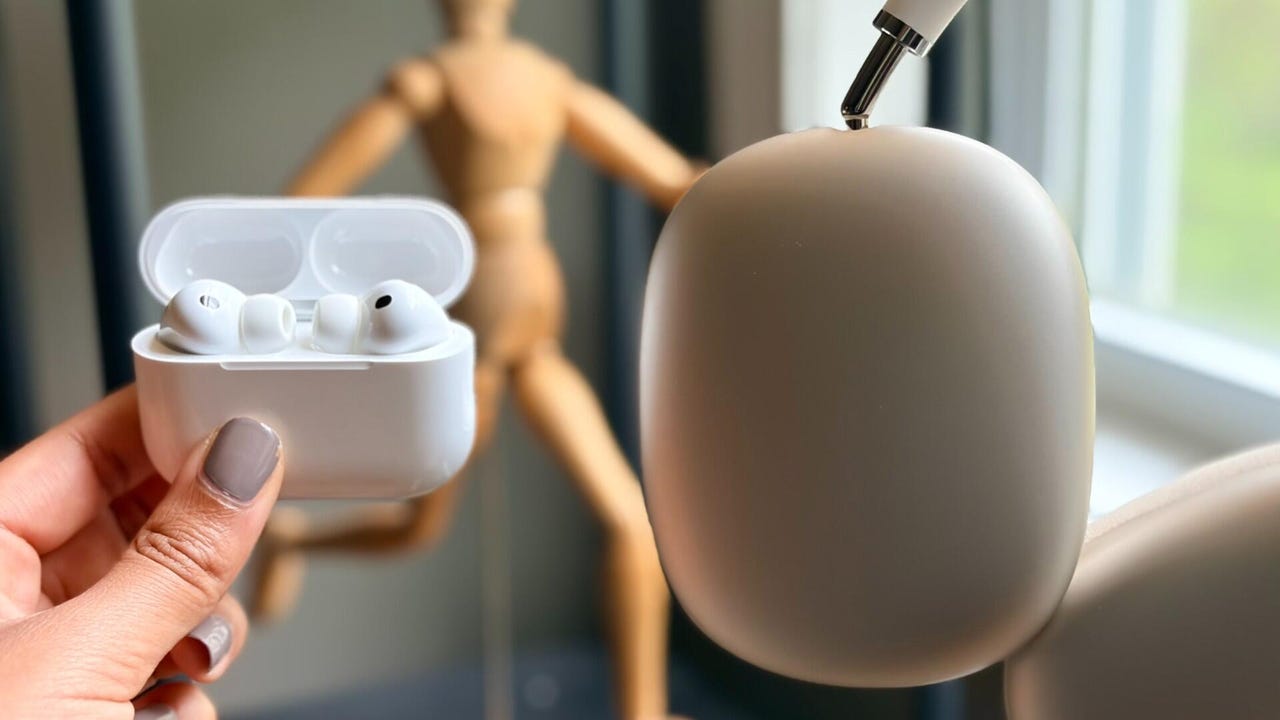

The AirPods Max 2 and AirPods Pro 3 share the same H2 audio chip.
Jada Jones/ZDNET
Follow ZDNET: Add us as a preferred source on Google.
ZDNET’s key takeaways
- The AirPods Max 2 are best-suited for Apple power users.
- Users with only an iPhone will find more utility in the AirPods Pro 3.
- iPhone users with mixed-device ecosystems will find more value in Sony or Bose over-ears.
The AirPods Max 2 are here, and I’m confident several people are weighing whether to buy their first pair of Apple over-ears, but a $549 asking price isn’t one to sneeze at. If it’s solely Apple’s intelligent features like Adaptive Audio, Live Translation, and Conversation Awareness that excite you, I’d say you would most benefit by investing in the AirPods Pro 3, and another brand of over-ears instead. Here’s why.
Software-wise, they’re very similar
The AirPods Pro 3 and the AirPods Max 2 share Apple’s premium H2 audio chip, meaning they offer the same software features and audio processing. Both offer Apple’s host of intelligent features including Live Translation, Adaptive Audio, exceptional noise cancellation and Transparency Mode, Personalized Volume, Camera Remote, Voice Isolation, and Siri Interactions.
Review: AirPods Max 2
Both the AirPods Pro 3 and AirPods Max 2 support Apple’s studio-quality voice recording for enhanced voice clarity across phone calls, FaceTime, Voice Memos, the Camera app, and compatible third-party applications. Additionally, both support Audio Sharing with another pair of AirPods or Beats headphones and connect to an Apple TV 4K in Spatial Audio.
What changed from generation to generation
Apple upgraded the AirPods Pro 3’s acoustic structure, implementing new 10.7mm high-excursion drivers for deeper bass, a high-dynamic-range amplifier for vibrancy, and additional ports for a wider soundstage. The Pro 3’s upgraded microphones, audio processing algorithms, eartips, and acoustic structure result in improved audio performance, noise cancellation, and Transparency Mode.
They also received Apple’s second-gen U2 ultra wideband chip for more precise device location, a new shape for enhanced fit, an IP57 waterproofing upgrade, and infrared sensors to track heart rate and calories burned during a workout.
Also: AirPods Pro 3 fitness feature surprises triathlete tester – here’s what he found
The AirPods Max 2 received Apple’s advanced H2 chip, the same chip inside the AirPods Pro 3, bringing improved audio quality and a high-dynamic-range amplifier. The Max 2’s enhanced audio performance is most evident when listening to music, gaming on Apple devices, and watching with an Apple TV 4K.
Like the 2024 USB-C version, AirPods Max 2 also supports ultra-low latency and 24-bit/48kHz lossless audio via a wired connection, comes with a Smart Case, offers the same weight distribution and fit, promises 20 hours of battery life, and comes in the same colors.
Why I advocate for the AirPods Pro 3
With just an iPhone, you can access almost everything the AirPods Pro 3 have to offer. If it’s the only Apple device you use regularly, you make a lot of phone calls, or you want a pair of Apple headphones to work out in, you’ll find more utility in the AirPods Pro 3.
The AirPods Pro 3 are Apple’s best earbuds yet, offering every smart feature it has to offer in a portable and waterproof form factor. They are highly versatile, as users can maximize their performance in the office, gym, grocery store, and at home — all in the same day. Unlike the AirPods Max 2, the AirPods Pro 3 are waterproof, have a heart rate sensor, and are easier to clean; making a better option for the gym.
Review: AirPods Pro 3
The AirPods Pro 3 have better microphone voice pickup, thanks to their placement at the bottom of the earbud stem, closer to your mouth. Their improved in-ear seal creates solid passive noise cancellation, and their upgraded noise processing creates better algorithmic noise cancellation.
I use these earbuds in all facets of my life: I wear them while I work, grocery shop, take hands-free phone calls while I drive (Transparency Mode is essential for this), and can easily pop them in and out of my pocket for quick insertion or removal.
Who I recommend the AirPods Max 2 for
On the other hand, the AirPods Max 2 are best for people who have an expansive Apple device ecosystem. If you regularly use an iMac, MacBook, and iPad for gaming or professional audio tasks, like to watch Apple TV privately, and have an iPhone, the AirPods Max 2 fit more snugly into your ecosystem.
Also: I used Apple Music’s new AI tool to break out of my music rut – and it worked
You can maximize the AirPods Max 2 by owning multiple Apple devices to connect them to, as each device unlocks new AirPods Max 2 capabilities. These headphones are a high-end Apple product and offer the most utility to Apple power users. Apple’s seamless device switching also lets users switch their AirPods Max’s connectivity based on which device is active, a solid feature for someone with multiple devices.
Which other over-ears to consider
If you’d benefit from investing in the AirPods Pro 3 instead of the AirPods Max 2, I recommend the Bose QuietComfort Ultra (2nd Gen) as your over-ear headphones. I especially recommend this choice if your over-ear checklist includes headphones with high-performing noise cancellation, suitable for the gym and travel.
Also: Bose’s QuietComfort Ultra shows the company still outperforms Apple in one key area
The QC Ultra 2’s lightweight design and 30 hours of battery life make ideal for hours-long wear, and their software agnosticism works just as well for iPhone users a with a tablet or laptop from another brand. Additionally, Bose upgraded the second-generation model with 16-bit/44.1kHz or 48kHz (CD standard) USB-C audio, which is generally fine for everyday listeners and some casual gamers. Any higher resolution is likely to be noticeable to those with trained ears.
Also: I wore 5 different headphones across 8 flights – here’s how each pair handled my stress tests
You can also consider the Sony WH-1000XM6, a feature-rich pair of headphones with great audio and noise-canceling capabilities. These headphones are also lighter and more portable than the AirPods Max 2, making them a better option for exercising and traveling. Sony’s XM6 headphones allow users more control over their device, offering LDAC and LC3 codecs and a detailed equalizer.
ZDNET’s buying advice
To put it simply, if your Apple ecosystem consists solely of an iPhone, the AirPods Pro 3 will give you the most bang for your buck. If you have a broad Apple ecosystem, the AirPods Max 2 deliver deep integration across your devices.
The AirPods Max 2 are compatible with professional-quality audio across your Apple devices, but if you had gripes with the first generation’s fit and weight, battery life, or carrying case for everyday use, consider your over-ear options from Sony and Bose.