Engine Hours Vs. Idle Hours: What’s The Difference?


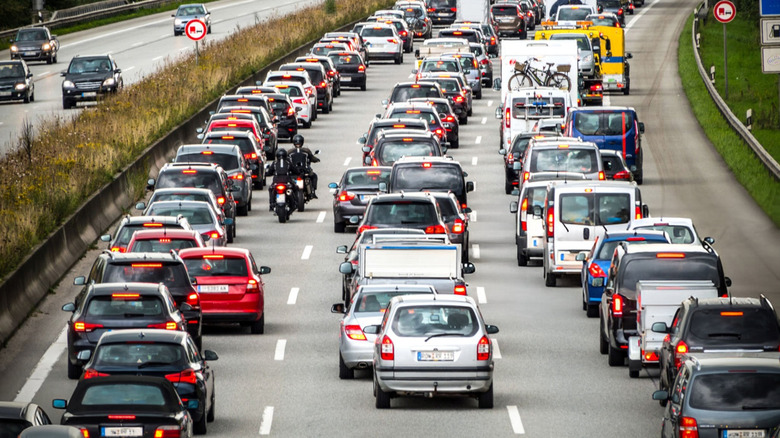
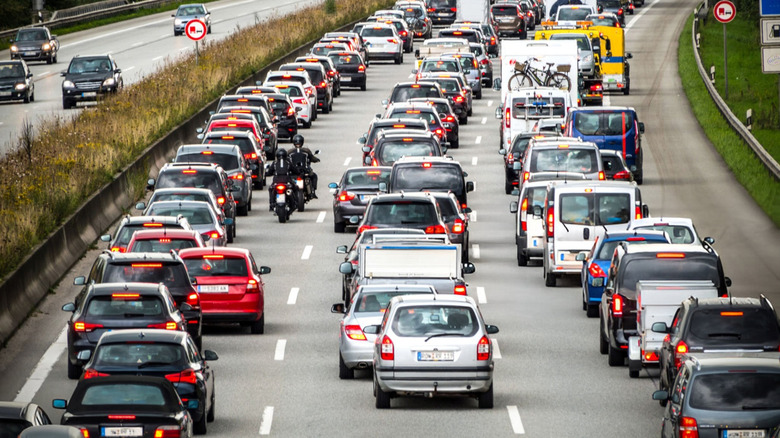
When drivers hear the word “idling,” they may think about sitting in traffic at a stoplight or leaving the car running in a fast food drive-thru. Both situations count as idle time, which refers to any period when an engine is running but the vehicle itself isn’t moving. Unfortunately, excessive idling causes wear and tear on your engine, and that stationary time still contributes to your vehicle’s total engine hours.

By definition, the term “engine hours” refers to the total running time of a vehicle’s engine, whether it’s moving or sitting still. That means every minute you spend driving, warming up your car, sitting in traffic, or just idling in a parking lot contributes to the overall total. Idle hours are simply the portion of that running time spent while your vehicle isn’t moving.

Engine hours are so important that many commercial businesses track them for their vehicle fleets. This is because mileage alone, even in a used diesel truck, isn’t a proper measurement of just how much wear and tear a vehicle’s engine has actually experienced. For example, two cars with similar mileage can have very different engine hours, depending on how they were used. In some cases, heavy idling can add a lot of engine time without adding that many miles overall.

The impact of excessive idling

Continuous idling can lead to a decrease in engine efficiency over time, along with other internal engine issues. That’s because an idling engine is running without the same working load and operating conditions it experiences during normal driving. Without that heat and pressure, the engine’s combustion cycle is less efficient, and internal conditions become less ideal. This is especially true for modern diesel engines, which are designed to perform best while under load.

Idling can eventually lead to carbon buildup in key engine components, including the vehicle’s exhaust system and engine cylinders. It can also reduce oil quality over time. That’s because fuel can mix with the engine oil during low-temperature, low-load operation. This affects how well the oil lubricates and protects internal engine components.

However, mechanical issues aren’t the only problems caused by too much vehicle idling. Unnecessary idling means more harmful exhaust fumes are produced, which contribute to both air pollution and impact the climate. An idling vehicle is also wasting fuel, which can get expensive over the long term. 


Source link

Leave a Reply

Subscribe to Our Newsletter

Get our latest articles delivered straight to your inbox. No spam, we promise.

Recent Reviews


Researchers in South Korea developed a wearable system that uses seven smart rings to read finger and hand motions to translate American Sign Language and International Sign Language into text. The purpose is to make communicating easier between those who sign and nonsigners without needing a separate human interpreter. 

AI Atlas

According to the study, published Friday in the journal Science Advances, the system reliably recognized 100 ASL and ISL words during testing. It also performed well with users the system had not seen before, and it didn’t require recalibration for each person. Because the system detects words in sequence, it can produce sentence-level translations without extra training on grammar. 

ASL and ISL are the everyday languages of more than 72 million deaf and hard-of-hearing people. However, most hearing people do not know any words in these languages or have a very basic understanding. That gap makes certain tasks, like ordering at a restaurant or asking for help, much more difficult. 

A graphic shows two illustrated people talking in sign language, ASL and ISL. The graphic also shows the different components of the ring as well as pictures of hands modeling the rings.

A concept of how the rings work in the real world. 

American Association for the Advancement of Science (AAAS)

Existing sign language translator prototypes often rely on bulky gloves that can distract from or block natural hand movement or feel uncomfortable for the wearer, which limits real word adaption. Camera-based technologies can work well in controlled environments but are often limited to those places where a camera can be set up with a clear line of sight, the researchers wrote. 

To solve these problems, the researchers designed sensing rings for each finger that can capture precise motion and finger position while letting the hands move naturally. The rings can detect both signs that involve movement, like the words for “dance,” “fly” and “sun,” and signs that are held still, like “I” and “you.”

“These advances suggest that [the device could enable] barrier-free public translation systems for unseen users and unrestricted daily assistive interfaces,” the authors wrote in the study. 

The authors are affiliated with Yonsei University, Hankuk University of Foreign Studies and the Korea Institute of Science and Technology, among others. While the technology is still experimental, the authors wrote that the technology has the potential to ease communication difficulties. The underlying idea could also help improve controls for other systems, like virtual or augmented reality.

“Beyond sign language translation, the ring-type, wireless, and modular architecture of (wirelessly connected, ring-type sign language translators) may also be extended to other gesture-driven applications such as virtual or augmented reality control, touchless device interfaces, or rehabilitation monitoring systems where fine-grained hand movement tracking is essential,” they wrote.


Source link