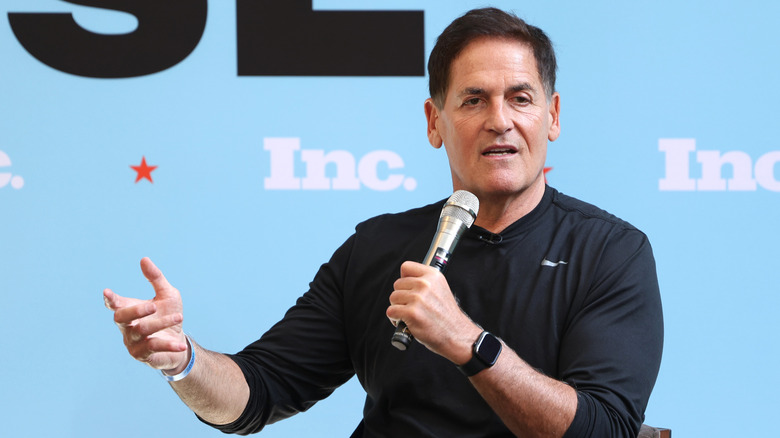

It seems that every other news headline and podcast these days focuses on AI doom-and-gloom. Claude has, after all, said it would kill humans to save itself. For every hot take on its usefulness, there are a dozen others leaning heavily on a fraught future of AI-led dystopia. The news cycle is already rife with triggering stories, but it’s always important to step back and critically consider who is framing the article or podcast in a particular way. It’s usually for clicks. It’s also possible that the person spouting said AI horrors lacks the imagination or track record in innovation, job creation, and cultural impact to offer a meaningful perspective. Mark Cuban, the Pittsburgh-native, boomer billionaire, is more bullish and outwardly optimistic about AI. It makes sense that such a successful entrepreneur would see the business-building potential of a tool like AI.
In a recent interview with Dr. Eric Bricker on the AHealthcareZ YouTube Channel, Cuban speaks of a world where the “kid in a basement” can leverage LLMs to great effect, suggesting future CEOs hiding amongst us. Sure, this isn’t a groundbreaking take, but coming from the likes of Cuban, it could inspire Gen Alpha to create the next big thing. Experts and podcast pundits might focus on potential negatives, but they view this democratization of computation pessimistically. For a clearer perspective here, it’s not “AI will save us” versus “AI will kill us.” It’s about who gets leverage and whether they can stay in control as the leverage expands to bigger audiences, driving larger advances.
Mark Cuban sees opportunity in AI

We’re living through an era of rapid change, with a line drawn in the sand between the pro-AI camp and the AI doomers. This split reflects the intense disruption caused by tools like ChatGPT, Claude, and Gemini. Even those on the inside who help train these large language models have concerns that AI can be a dangerous tool. These worries have always been there, though. In 2023, when the technology was fresh, some experts suggested pausing or halting AI development altogether. We’ve come so far since then, and thankfully, these LLMs haven’t led to the apocalypse. If anything, big changes are coming to ChatGPT, as these chatbots continue to get better and better.
Tapping into Cuban’s mindset, we can see a very optimistic, hopeful view of technology: consider how many young people have learned new things, coded apps, started businesses, and improved certain aspects of their lives since 2023. His championing of the technology’s ability to provide free, tailor-made curricula to that proverbial “kid in the basement” supplants the doom-and-gloom.
Cuban doesn’t claim that AI is perfect — he even acknowledges those dreaded hallucinations — but he’s betting the net effect will vastly improve the landscape for learning and research. The entrepreneurial side is where Cuban’s perspective is most evident, where he imagines someone using LLMs to help with patents, speeding up what was historically quite a lengthy process. Overall, pro-AI advocates like Cuban are just as important as the skeptics in balancing the narrative and hopefully inspiring innovation in the process.

Stephan is the sports journalist for the Maple Grove Report.