Experts Reveal Europe’s 3 Cheapest Beach Destinations Worth Visiting


Share The Article

Let’s face it — some beach destinations are a dud, and there’s nothing more disappointing than spending money to traverse the globe only to be left bored and unimpressed.

As experts ourselves here at Travel Off Path, we know when to hand over the baton to trusted travel outlets such as TimeOut, which just revealed a hefty list of cheap beach getaways in Europe.
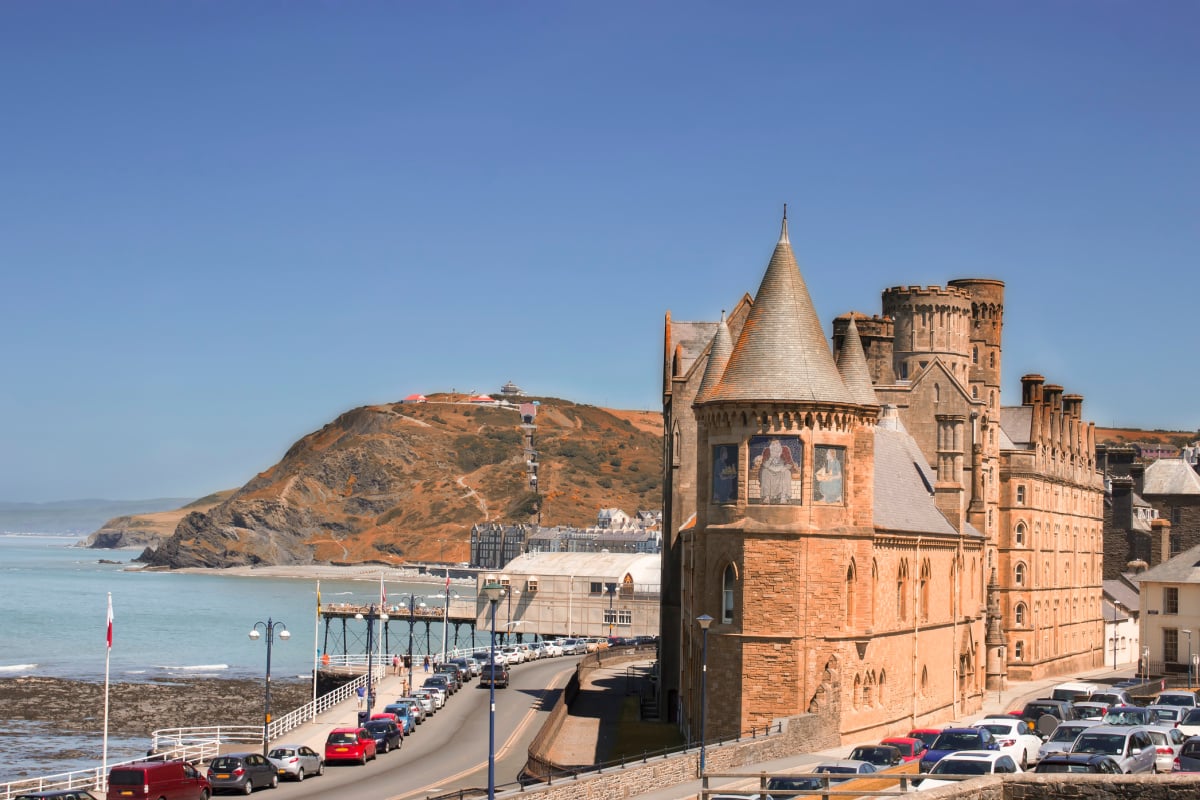
⁠Storybook architecture along coast in Aberystwyth, Wales

Dissecting it like a forensic file, we cut out a couple of places that don’t fit the bill due to both current conflicts in the Middle East and personal experience of aforementioned disappointment.

With that said, these 3 European beach destinations are actually worth visiting despite being a trek to reach.

But first, no matter where you decide to book your next vacation, be sure to check the latest Travel Alerts & Entry Requirements before your trip

3) Heraklion: Greece’s Most Visited Beach Is Also The Cheapest!

Ancient sites and stunning scenery in Heraklion

At first glance, one would think Santorini would be Greece’s most visited destination.

Nope — that would be Heraklion, a city equally historical as it is beautiful on the blissful island of Crete.

Boasting timeless ruins without the zig-zagging lines of Athens and ample paradisal shores to lounge seaside and take in sweeping views of the vast Mediterranean, Heraklion isn’t a name that rings a bell to most in the States, but locally beloved across Greece and fellow EU countries.

Of course, there are so many postcard-perfect beach escapes to choose from worldwide, but many of them draw a hefty price tag.

Heraklion, fortunately, isn’t one of them — not with Crete’s Blue-Flag sands of Ammoudara.
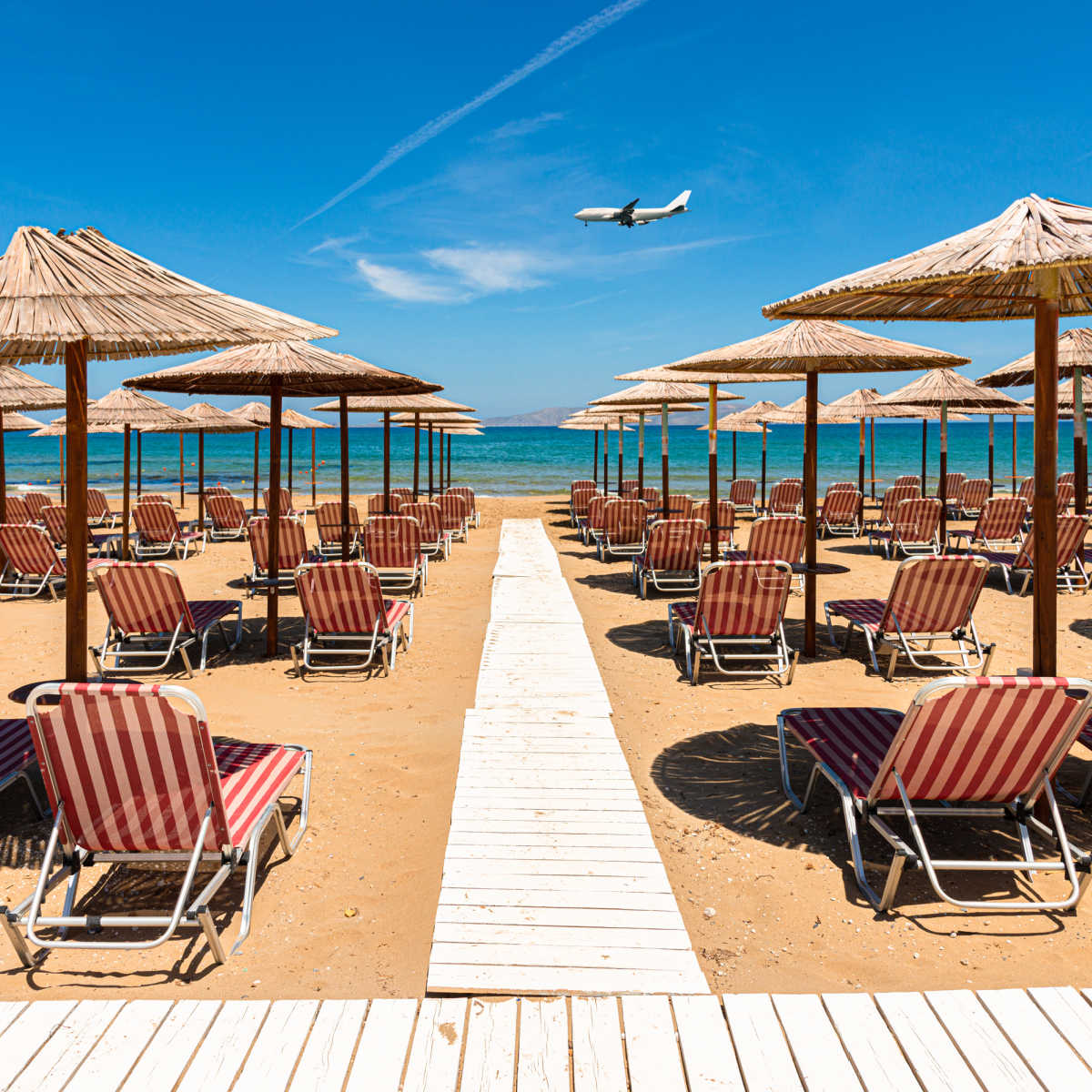
Arina Beach in Heraklion, Crete, Greece

It’s a far cry from Santorini’s aforementioned $500 per night villas.

Here, you’ll find much more palatable pricing:

  • Aquila Atlantis Hotel (5-star) – $99 per night
  • Taxi from the airport – $17
  • Coffee – $3.50
  • Street Food – $5
  • Tour of Palace of Knossos – $34
  • All beaches – FREE

That’s just a sample size, but you get the idea.

Plus, away from the gritty, graffiti-lined streetscape of Athens, Greece is largely considered safe.

See below what travelers are saying in real time:

2) Aberystwyth: A ‘Wale‘ Of A Beach Town
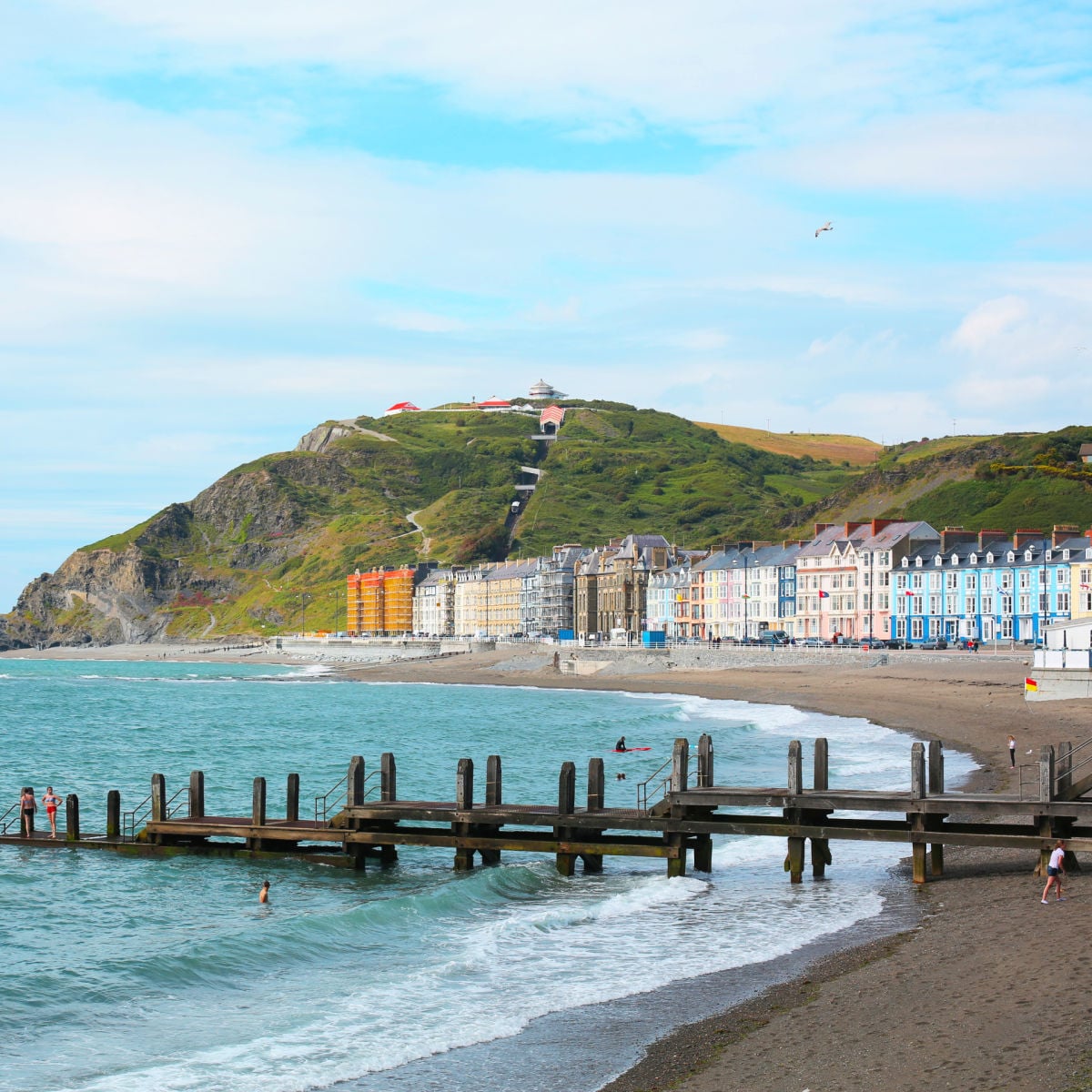
Colorful seaside village of Aberystwyth

Your first thought might be “where in the world is Aberystwyth?”, and rightfully so.

My first thought is “please, don’t make me spell it again”.

Wales is one of the UK’s unsung destinations for culture, as a large percentage of the population still speaks Welsh, and also for beach vacations, as most visitors are solely focused on the thrills of London over the highly underrated coastline.

Aberystwyth (success!) is a rare spot offering pristine, Blue-Flag designated beaches without breaking the bank.

You see, many travelers have the wrong impression of the UK since London is typically the entry point.
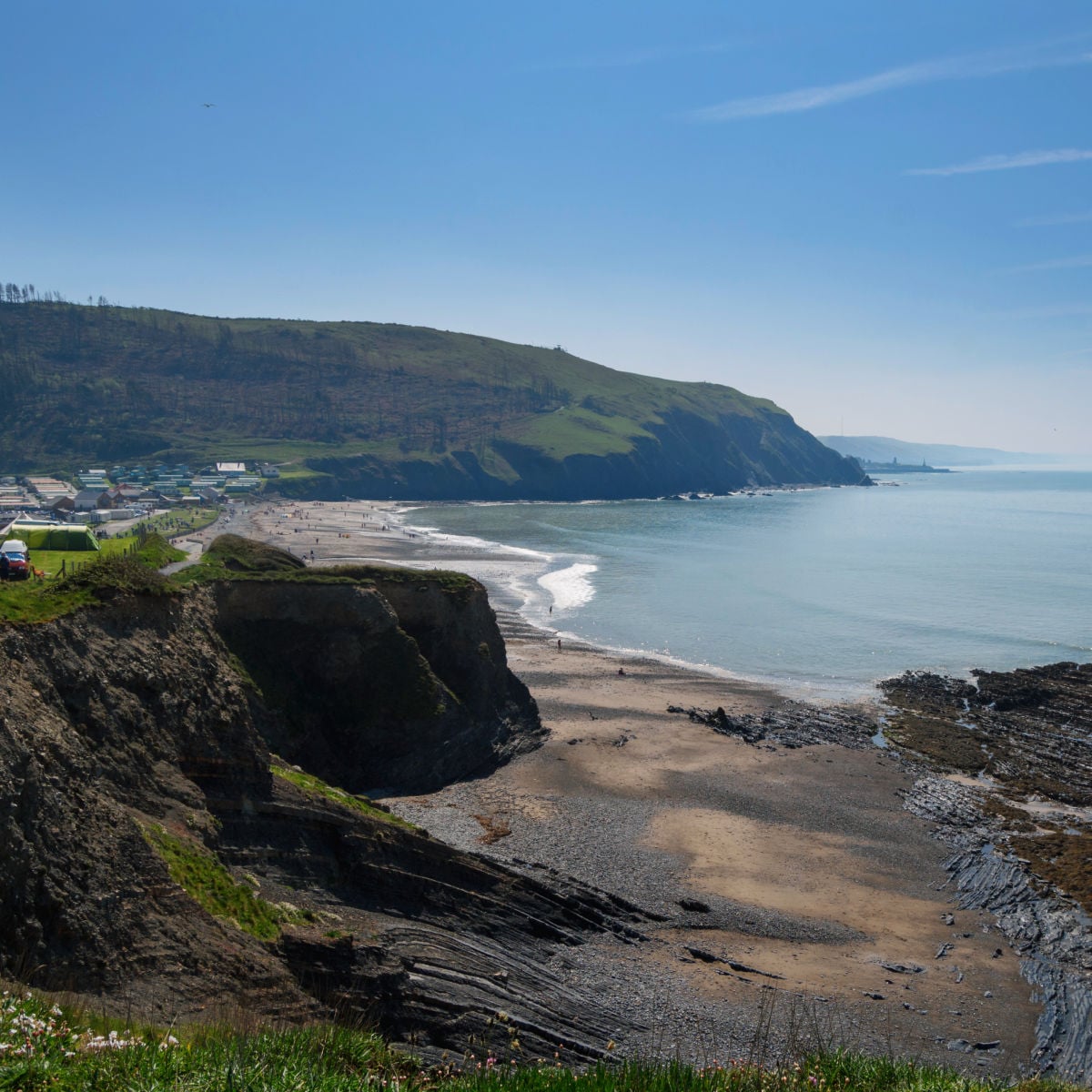
Sweeping bay view of Aberystwyth

In Aberystwyth, and neighboring towns, the population is relatively young being a university town, so you can expect cheap drinks and eats, all while still visiting authentic pubs.

Here’s another sample size of what to expect:

  • Castle Hotel (next to Castle Aberystwyth) – $155 per night
  • Coffee – $3
  • Beer – $4.50
  • Train from London – $95
  • Tour of Castle Aberystwyth – FREE
  • Hiking the Ceredigion Coast Path – FREE

Again, outside some wild London headlines, travelers tend to claim the UK is safe across the board.

See below what they’re are saying in real time:

1) Neum: The Must-Visit Neighbor To Croatia
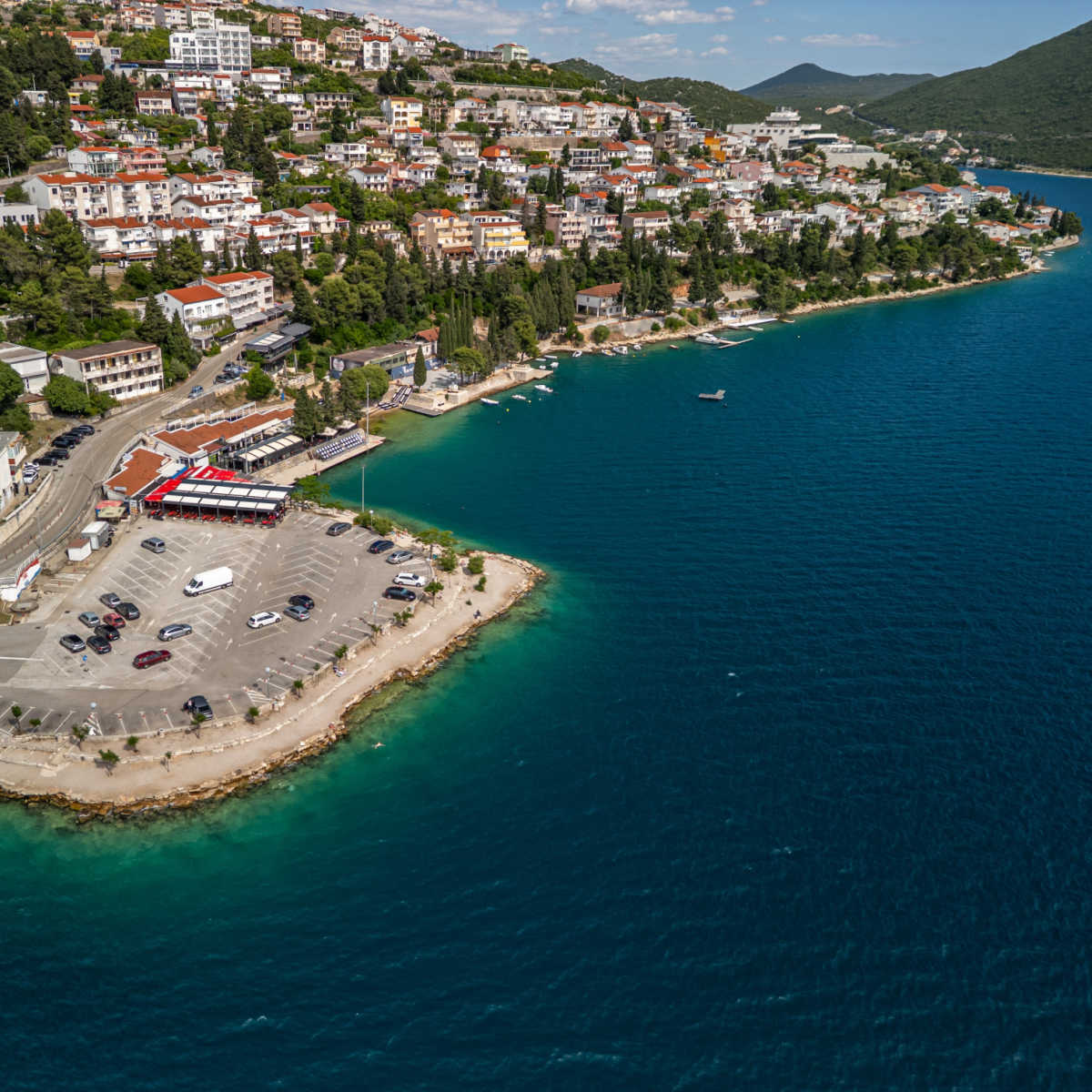
Whitewashed coastline of Neum, Bosnia

One European country that’s still largely undiscovered by the masses boasts just 12 miles of coastline, but within that stretch of whitewashed villages and turquoise coves is a true dreamscape most vacationers overlook.

Bosnia & Herzegovina (which we’ll just call “Bosnia” from here on out) is more know for its storybook towns — and to be frank — it’s very dark history.

But there’s been a real turnaround for this lesser-known nation and the next turning of the page is for travelers to discover the beach oasis of Neum, roughly an hour by public transit from Dubrovnik, Croatia.

Bosnia’s only Adriatic beach town is more low-key and a great escape from what seems like unavoidable crowds across the border in the Med’s summer hotspot.
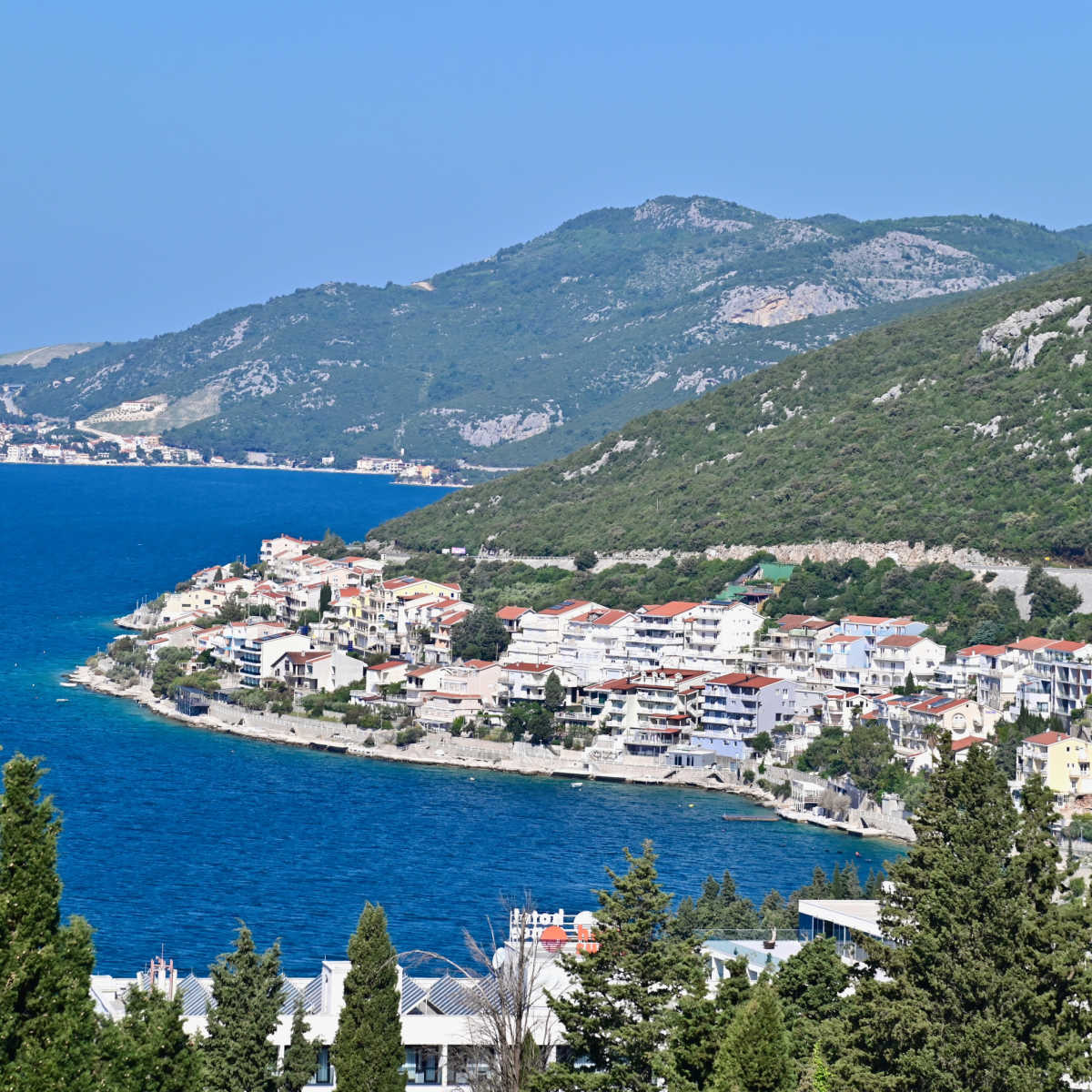
Sweeping hillside view of Neum, Bosnia

Here’s a sample size of what your bank account can expect to see:

  • Hotel Jadran (4-star) – $70 per night
  • Coffee – $2
  • Beer – $2
  • Meal for Two – $30
  • Public transit (one-way ticket) – $1.80
  • Public beaches – FREE

Note that some hotels control access to private beach areas, so you’ll need a reservation to use them.

Given Bosnia’s major glow-up, and outside a few still-edgy corners of Sarajevo, travelers say the country feels safe to visit.


Now take this quiz to find your perfect match!


Source link

Leave a Reply

Subscribe to Our Newsletter

Get our latest articles delivered straight to your inbox. No spam, we promise.

Recent Reviews


In the ever-shifting geopolitical sphere, China’s growing military presence and the ongoing tensions over Taiwan and the South China Sea continue to be a closely watched topic — particularly in regard to China’s ambition for naval power. In recent years, much speculation has been made over the country’s rapid military development, including the capabilities of the newest Chinese amphibious assault ships.

While there’s no denying its military advancements and buildup, much has been made about the logistical and military difficulties that China’s People’s Liberation Army (PLA) would face if it launched an amphibious invasion of Taiwan. However, there’s growing concern that if a Taiwan invasion were to happen, it wouldn’t just be military vessels taking part in the action, but a fleet of commercial vessels, too — including a massive new car ferries that could quickly be repurposed into valuable military transports.

While the possibility of the PLA using commercial vessels for military operations has always been on the table for a potential Taiwan invasion, the scale with which China has been expanding its commercial shipbuilding industry has become a big factor in the PLA’s projection of logistical and military power across the Taiwan Strait. It’s also raised ethical concerns over the idea of putting merchant-marked ships into combat use.

From car ferry to military transport

The rapid growth of modern Chinese industrial capacity is well known, with Chinese electric vehicle factories now able to build a new car every 60 seconds. Likewise, China has developed a massive shipbuilding industry over the last 25 years, with the country now making up more than half of the world’s shipbuilding output. It’s from those two sectors where China’s latest vehicle-carrying super vessels are emerging. 

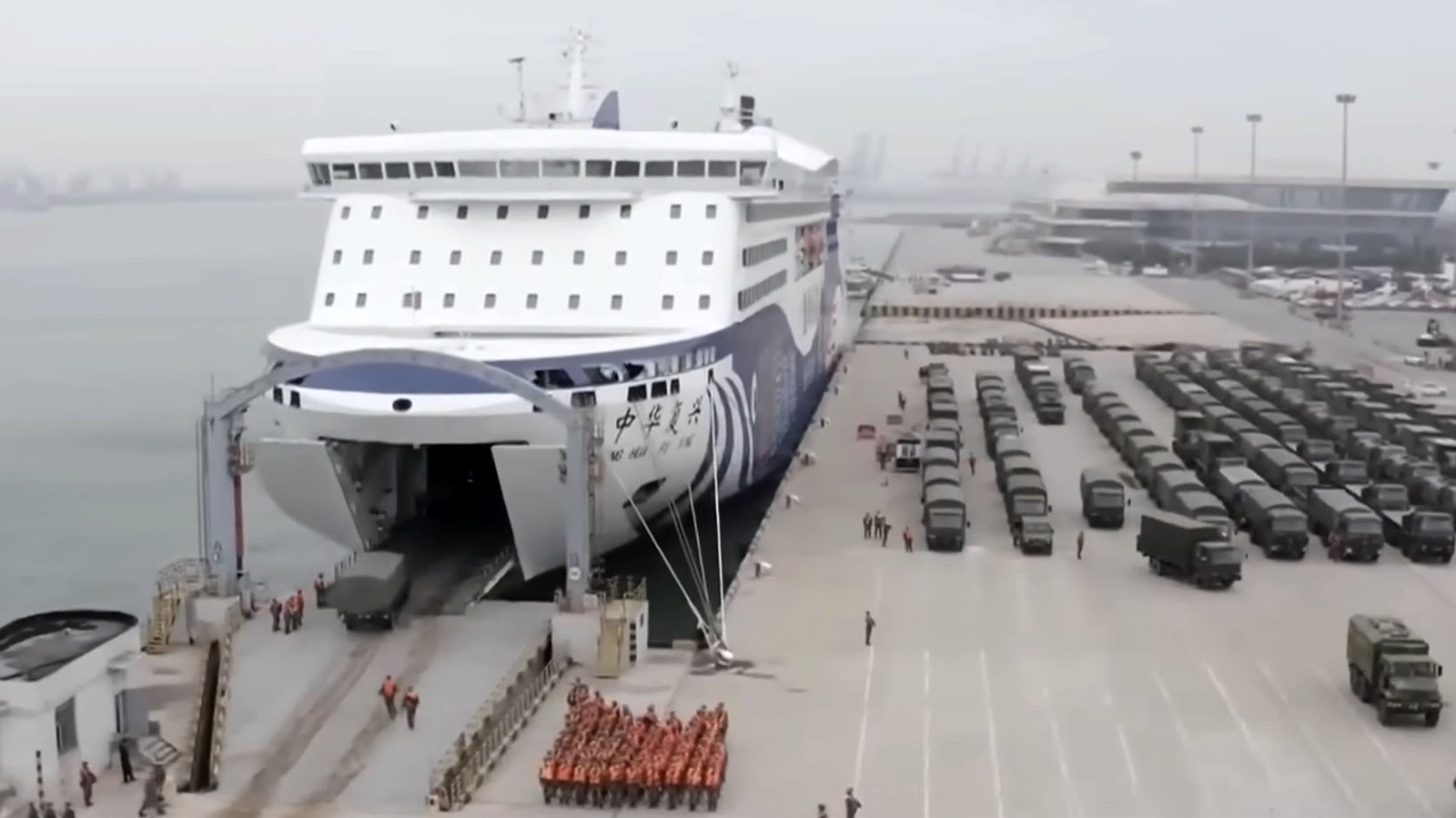
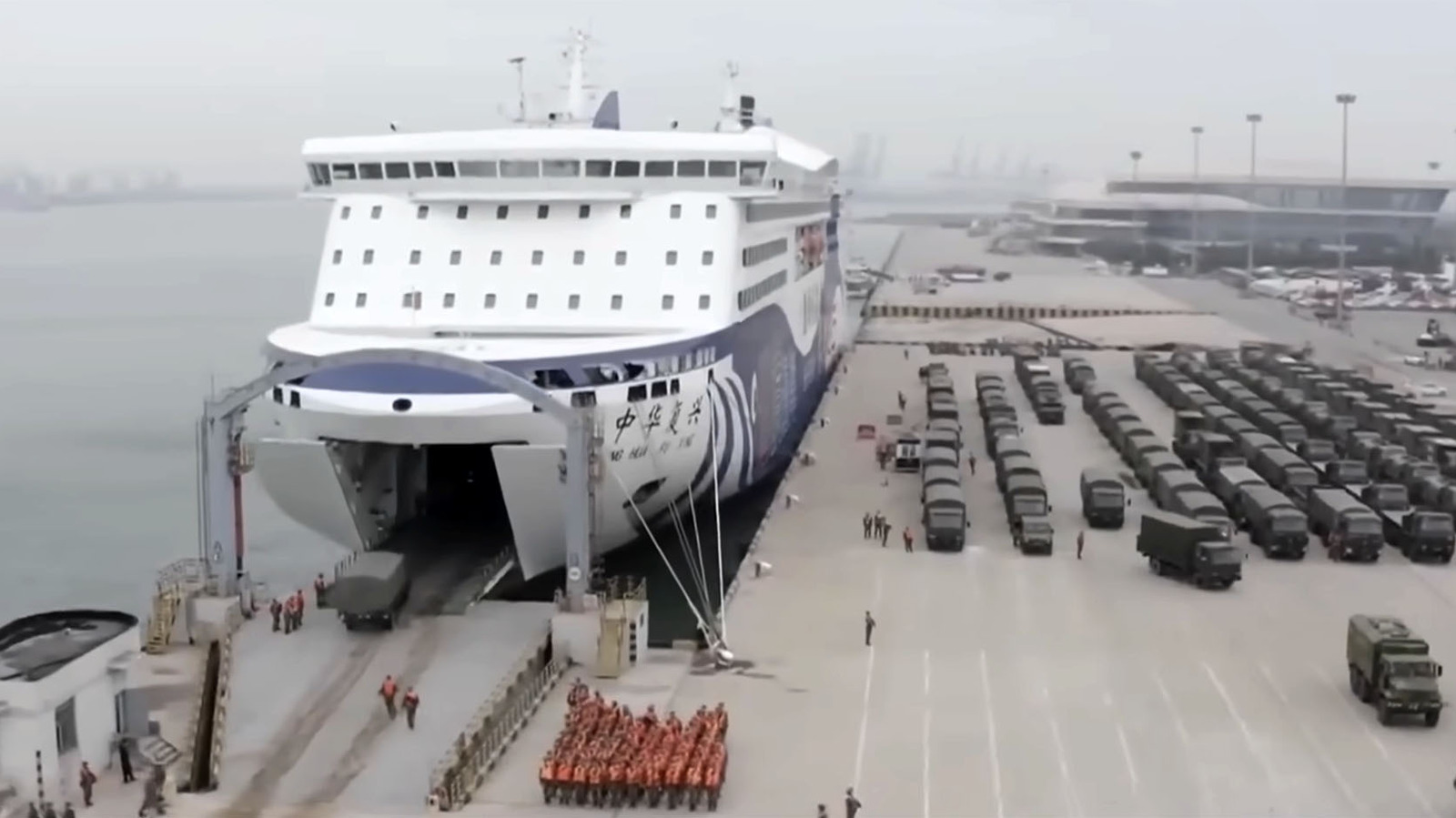
With a capacity to carry over 10,000 new vehicles for transport from factories in Asia to destinations around the world, these ships, known as roll-on/roll-off (Ro-Ro) ferries, are now the biggest of their type in the world. The concept of the PLA putting civilian ferries into military use is not a new one, or even an idea China is trying to hide. Back in 2021, China held a public military exercise where a civilian ferry was used to transport both troops and a whole arsenal of military vehicles, including main battle tanks.

The relatively limited conventional naval lift capacity of the PLA is something that’s been pointed out while game-planning a Chinese amphibious move on Taiwan, and it’s widely expected that the PLA would lean on repurposed civilian vessels to boost its ability to move soldiers and vehicles across the Taiwan Strait. With these newer, high-capacity Ro-Ro ferries added to the fleet, the PLA’s amphibious capacity and reach could grow significantly.

A makeshift amphibious assault ship

However, even with the added capacity of these massive ferries, military analysts have pointed out that Ro-Ro ships would not be able to deploy vehicles and soliders directly onto a beach the way a purpose-built military amphibious assault ship can. Traditionally, to deploy vehicles from these ships, the PLA would first need to capture and then repurpose Taiwan’s existing commercial port facilities into unloading bases for military vehicles and equipment.

However, maybe most alarming is that satellite imagery and U.S. Intelligence reports show that, along with increasing ferry production output, the PLA is also working on a system of barges and floating dock structures to help turn these civilian ferries into more efficient military transports. With this supporting equipment in place, ferries may not need to use existing port infrastructure to bring their equipment on shore.

Beyond the general military concern over China’s growing amphibious capability, there are also ethical concerns if China is planning to rapidly put a fleet of civilian merchant vessels into military service. If the PLA were to deploy these dual-purpose vessels into direct military operations, the United States and its allies would likely be forced to treat civilian-presenting ships as enemy combatants. On top of all the other strategic challenges a Taiwan invasion would bring, the U.S. having to navigate the blurred legal lines between military and merchant vessels could potentially give China a strategic advantage amidst the fog of war.


Source link