Residents, historians and storytellers have shared the story of Rondo, a historically Black neighborhood in St. Paul slashed by the midcentury construction of Interstate 94, in many ways.
There have been documentaries, works of historical fiction, memorials and even a themed version of Monopoly.
And now there’s what 73-year-old Peggy Pugh has been telling her friends about recently.
“Do you know you can go on your phone and there’s this game where you can see the old Rondo and the new Rondo?”
Related: Making Rondo documentary ignites a new generation
It’s called the “Rondo-verse” – a video game aiming to give a sense not only of historic Rondo, but also its present-day vibrancy.
As co-creator Benny Roberts said, “It’s important for me that the community that I come from and was raised in isn’t defined by the thing that happened to it.”
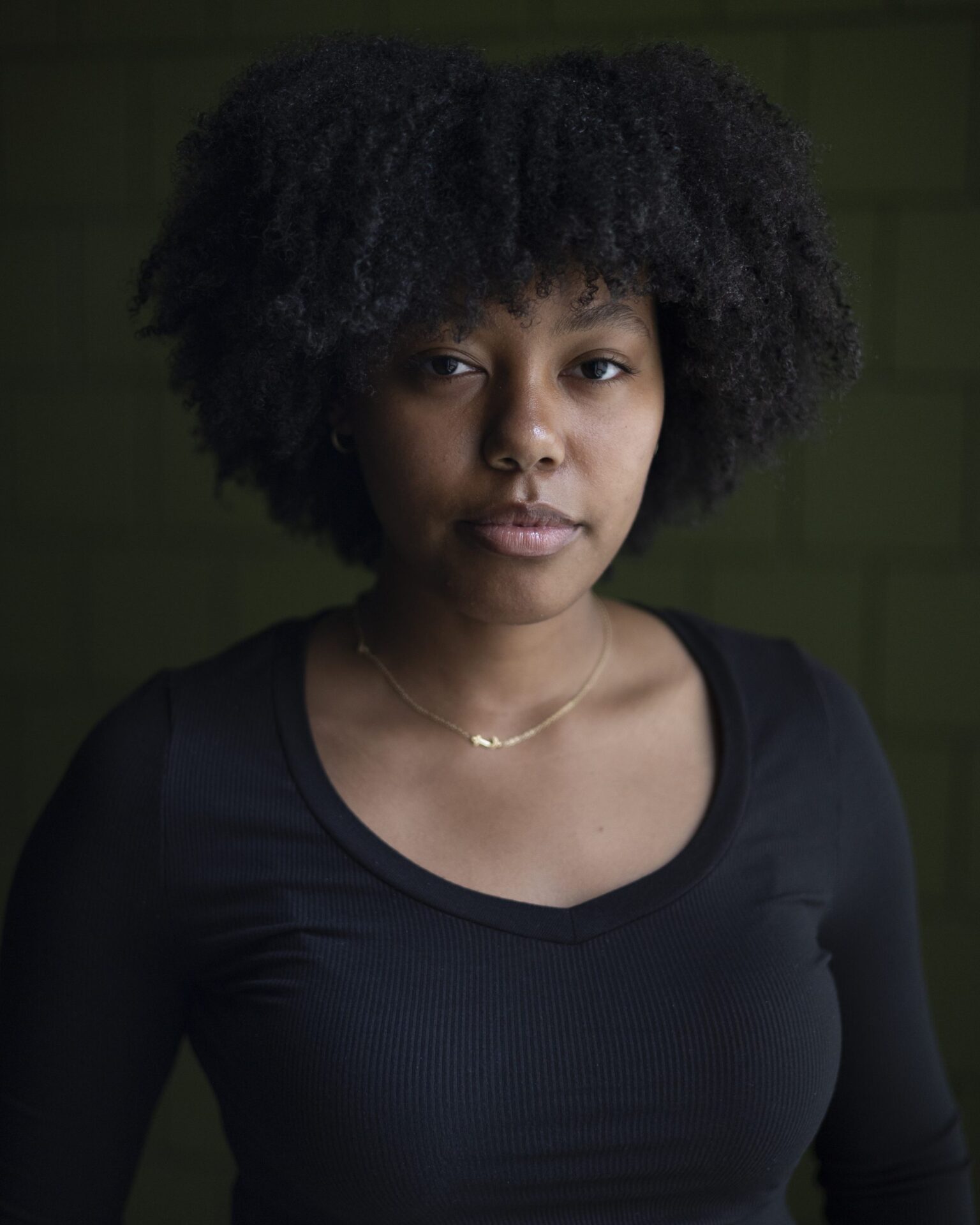
The project is a collaboration between Jolie Davis, a sophomore biology major at Macalester College and Roberts, the executive director of Rondo’s Hallie Q. Brown Community Center.
Using funding from the center’s historical archive program, Roberts was able to hire Davis for 10 weeks and figure out how to showcase Rondo in a unique way.
Davis suggested using Roblox – a platform where users can create their own video games and experiences. Roberts initially pitched The Sims, but acknowledged that Roblox was the right call given its wild popularity with kids and teenagers.
“The Sims feels like my generation,” he said, laughing.
To help create a vision of Rondo’s history, they worked with a group of about 15 community elders – people who knew what it was like to live, work and grow up in Rondo first hand.
“Coming here to Hallie and learning from Benny and others that work here, and getting to hear from the elders and their story, really felt made me feel like I was a part of the community,” Davis said, adding that she felt like she took off the “outsider lenses” and could see Rondo from a new perspective.
They first told the group they wanted to try and come up with sort of a “Top 5” for Rondo – a condensed version of the community they could create.
“Well, they were offended by that,” Roberts said with a smile. “Like there’s no way you can reduce our story to five places!”
There was one place that everyone agreed should make the cut, however – the Hallie Q. Brown Community Center itself. Founded in 1929, the center provides social services for the community and houses the nationally-recognized Penumbra Theatre.
“It was loud and clear,” Roberts said. “They’re all like ‘Hallie Q. Brown, this is our place, this is our center.’”


Alongside it, in what the team calls “Old Rondo,” are four buildings representing some of the places that have given the neighborhood life – schools, businesses, churches and social clubs.
Inside each are photos from Rondo’s history – the now-demolished McKinley Elementary School in the education hub, Tiger Jack’s corner store in the business hub. As players approach a building or a photo, text appears onscreen further explaining what they’re seeing.
Well-known St. Paulites with connections to Rondo have Roblox avatars in the game as well, from former Mayor Melvin Carter to Gordon Parks, the renowned photographer and director of the film “Shaft.”
When it came to I-94 itself, Roberts and Davis landed on a unique concept: the freeway takes players back and forth between Old Rondo and New Rondo, with era-appropriate cars driving toward their respective times.
“We don’t want the highway to be the story, we want it to be a part of the story,” Roberts said. “And so instead of making it a tool of destruction, we’ve made it in the game a vehicle to the future.”
In New Rondo, the church theme has been replaced by social services to show how many of the things once provided through a church have been spun out into separate services, while social clubs are now “community offerings” with a focus on things like Rondo Days, local sports or the annual Rondo Block Party.
When they first showed the game to their focus group of community elders, Roberts said that Floyd Smaller – the 89-year-old creator of Rondo Days – stood up and said “It was our dream that we would live to experience what we are seeing at Hallie today – some of our own children, picking up the torch and keeping up the fight.”
Roberts started to cry, he said.
In an interview, another member of the focus group, Pugh, said as an archivist she was excited to see a multigenerational history project that anyone could access – though she joked that they would “need to teach some of the baby boomers how to run that game.”
Even the act of sharing the information had been joyful, she said – community members she hadn’t seen in years, sitting in a room together and sharing bits and pieces about Rondo that they could then later see represented on screen.
“It just blessed my heart,” Pugh said, who added that Davis and Roberts were “wonderfully patient” as some of the elders remembered more and more they wanted to add.
Related: First grantee of St. Paul’s Inheritance Fund gets down payment, and a small measure of justice
“It’s wonderful to be able to see something not just in print,” Pugh said. “But as a part of the future.”
That’s what Davis and Roberts hope the game can achieve, especially as it grows in scope and navigates the limitations of Roblox, which frowns on creators sharing photos of real people, even in a historical context.
“There’s still life here,” Davis said. “There’s still generations growing and thriving here, and there’s just so much to it that others don’t know.”
Related