Five Common Problems With The Toyota Tacoma


Toyota is not necessarily the first brand that pops to mind when you think about all of the pickup trucks that overpopulate American roads. In a truck market ruled by full-size giants like the F-150, Silverado, and Ram, Toyota has carved out its own lane in the midsize segment since 1995, when the Tacoma was born. According to Toyota, the name is “an homage to the indigenous heritage of North America.”

The marketing move was deliberate — Toyota marketed the Tacoma as an all-American pickup truck, built for the people who live and work in it, and that gamble paid off in a big way. In 2025, Toyota sold 274,638 Tacomas — the best year in the nameplate’s history, a 42.4% increase over the previous year. The Tacoma has been the top-selling midsize pickup in the U.S. for 21 consecutive years. Those are numbers that the Silverado and Ram would be proud of in their own segment.

Still, sales figures don’t tell the whole story. The Tacoma went through four generations, some considerably better than others, and despite Toyota’s reputation for reliability and dependability, the road for the Tacoma hasn’t always been smooth. Even the best-selling midsize truck in America has its weak spots — and owners have found plenty of them over the years. Here are five common problems with the Toyota Tacoma.

Frame rot (1st and 2nd generation)

One of the most notorious problems in the Tacoma’s early history wasn’t mechanical, but structural. For decades, Toyota built its Tacomas with frames that had inadequate rust protection. The consequences ranged from cosmetic corrosion all the way to frames so compromised they were unsafe to drive, leading to Toyota instituting a complete frame replacement recall.

Understandably, some older Tacomas haven’t had the replacement, and they are still experiencing these problems. The problem was so severe that it led to Toyota agreeing to a $3.4 billion court settlement in 2016 concerning all 2005 to 2010 Tacomas. However, the Toyota Tacoma years that experienced frame rot issues extend back to even the mid 1990s. Per the settlement, Toyota agreed to set aside $15,000 per vehicle for a replacement, meaning that even out of pocket repairs easily reached into five figures.

The consequences of not carrying out the repair ranged from the spare tire mount separating from the rear-cross member to losing control while driving. The brake lines could fail, and if the truck gets rear ended, the truck can easily be totalled. In some cases, corrosion could cause the fuel tank to drop to the ground. If this happens, the tank can be dragged over the floor and potentially even burst in flames.

Lower ball joint failure (1st Generation)

The first generation Tacoma had a serious safety defect hiding in its front suspension. Due to a problem during production and assembly, the lower ball joint surface could become scratched. Over a longer period of time, that scratch could accelerate wear and cause the joint to fail in spectacular fashion, leading a loss of steering control. In July 2005, Toyota issued NHTSA recall 05V225000 covering 768,379 vehicles, including 2001–2004 model year Tacomas.

Owner complaints filed with NHTSA paint a vivid picture of what that actually looked like in practice. In worst instances, the front wheels even detached from the vehicle entirely, some while driving at highway speeds. Dealers replaced the front suspension lower ball joints free of charge. In more lucky instances, the car experienced uneven tire wear, rubbing, tire swelling, or shaking. 

And the ball joint defect wasn’t limited to the Tacoma alone — the same recall covered the Tundra, Sequoia, and 4Runner of the same era. Problems like these are part of why certain used Toyota models from this period are worth avoiding altogether. Some owners filed NHTSA complaints reporting ball joint failure even after the recall repair had been carried out, with at least one owner explicitly stating the recall repair failed on their 2003 Tacoma.

Rear differential leak (3rd generation)

The third generation Tacoma launched in 2016 with a new platform that was still heavily based on the previous generation. It didn’t take long for a serious drivetrain defect to surface. On April 27, 2017, Toyota filed a Defect Information Report with the NHTSA and issued a recall H0G (NHTSA 17V285), covering 227,732 2016–2017 Tacoma vehicles.

The problem was with the new BD20D rear differential carrier. In other words, due to a potential sealing surface contact variation, the nuts fastening the differential carrier to the axle housing could become loose. According to the official NHTSA recall document, “If the vehicle is continuously operated in this condition, the rear differential could become damaged, which can result in noise and reduced propulsion. In some cases the rear differential could seize, resulting in loss of control and increasing the risk of a crash.” The fix was dependent on whether a leak was present. 

If the diff was dry, the repair shop would make sure to tighten the nuts properly. If there was a leak, the gaskets and the nuts would all be replaced. If the problem was particularly bad and the entire differential assembly was damaged, Toyota replaced it free of charge. For those who haven’t had the differential replaced, they were/are risking potential loss of control problems that could even lead to a crash. If problems such as these scare you and you are not sure whether to consider one, here are four alternatives to the Toyota Tacoma that fit a similar bill.

Automatic transmission issues (4th generation)

We already noted how the third-generation Tacoma was merely an evolution of the platform, not a revolution. Well, the fourth generation was the exact opposite — a new turbocharged engine, available hybrids, and a new platform shared with the Tundra and Sequoia. As is often the case with brand new platforms, it had serious problems that blindsided new owners.

Specifically, early fourth-generation Tacomas suffered from transmission failures even on very low mileage, sometimes under 1,000 miles. This, understandably, resulted in complaints. Several reports were officially filed with NHTSA. On September 9, 2024, Toyota issued the TSB T-SB-0076-24 technical service bulletin acknowledging the issue, but stopped short of issuing a full recall. The problems typically included owners complaining about the transmission jumping into neutral, being sluggish, or not wanting to shift out of a higher gear.

The problem apparently involves components in the transmission becoming stuck in an off position. There are no indications as to how widespread the problem truly is, and it seems like the only way to actually solve the problem is if the truck is experiencing P07407F, P079571, P08BA71, P271371, P280771, or P281671 trouble codes. When we looked at the worst Toyota recalls you need to know about, we noted that the automatic transmission problem could cause accidents, and that Toyota does not really treat it as a true recall.

Brake master cylinder failure (3rd Generation)

Brakes are non-negotiable — and on certain 2018–2019 Tacomas, Toyota got them wrong from the factory gates. On December 13, 2018, Toyota filed a defect report with the NHTSA, issuing recall 18V888000 covering 44,121 vehicles. According to the recall, improper machining at one supplier facility could leave a master cylinder seal without its correct chamfer, eventually causing an internal fluid leak that reduces front brake performance. Drivers encountering this issue apparently exeperienced the brake pedal going all the way down to the floor.

In the real world, this could lengthen the distance the truck needed to stop safely, which could lead to accidents. On CarComplaints, 311 complaints have been listed noting problems with the 2019 Tacoma brakes. The severity rating is listed at “Really Awful,” and the site notes incidences of crashing and injury. It is a similar story with the 2018 Tacoma, where the same severity is listed with a total of 296 complaints.

One of the more worrying aspects is that the average mileage at which problems occurred were 6,866 miles for the 2018 Tacoma, and 3,336 miles for the 2019 Tacoma. To make the problem even more worrying, the 18V-888 Safety Recall Report noted that as many as 90% of vehicles are estimated to experience the defect. Overall, the Toyota Tacoma is able to last a long time when properly maintained, but only if problems such as these have been successfully dealt with.

Methodology

The Toyota Tacoma has over 100 recall entries in NHTSA’s recall database across four generations, meaning that picking five issues here was not an easy thing to do. Because of that, we focused on issues with the greatest severity and scale. Additionally, every generation had to be represented at least once, so no single era of the Tacoma’s history is overrepresented or ignored.

Each issue on this list carries a real-world documented risk of loss of control or crash. Affected vehicle counts range from 44,121 (brake master cylinder) to 768,379 (ball joint), reflecting how widespread they were. The transmission issue for the very latest Tacoma is the one exception without a full recall, but it was widespread enough for Toyota to acknowledge it via a formal technical service bulletin, so it was included.

Recall numbers, vehicle counts, and defect descriptions were verified against NHTSA’s database, with complaint volume and mileage data from CarComplaints and CarProblemZoo, and additional context from MotorTrend, AutoEvolution, Autoweek, BBC, USA Today, Motor1, Toyota, and Consumer Reports.


Source link

Leave a Reply

Subscribe to Our Newsletter

Get our latest articles delivered straight to your inbox. No spam, we promise.

Recent Reviews


Harbor Freight tools have become one of the primary points of purchase for DIYers looking to tackle various jobs on the home front without spending too much money on the tools required to accomplish each task. Over the years, the family-owned hardware chain has continued to build out its lineup of offerings, and these days even offers a full range of trailers, heavy garage gear, and even tow packages fit for off-road adventures.

You may not realize it, but Harbor Freight has also secured ownership rights over many of the most notable tool brands you’ll find available through its brick-and-mortar stores and its online retail outlet. One of the more respected names you’ll find among Harbor Freight’s in-house offerings is that of Icon Tools, which makes a full line of non-powered hand tools for virtually any job you can imagine.

While the budget-friendly pricing make Icon Tools ideal for the non-professional workers of the world, the brand’s offerings are, by and large, considered professional grade in quality. That fact alone should make them hard to resist for any DIYer in need. It’s worth noting, however, that some of those pro-graded Icon tools are a little more budget-friendly than others. Some can currently even be purchased for less than $50 through Harbor Freight Tools outlets. Here’s a look at 5 tools in that category that users have deemed to be well worth buying.

Professional 4-Piece 10 mm Socket Set – $9.99

Whether you’re putting together your first mechanic’s tool set, or just adding on to the kit you’ve already assembled, any home tinkerer would be wise to keep an eye out for a good socket or two. That is particularly true of 10 mm sockets, which some Harbor Freight Tools shoppers insist you just cannot have enough of in your tool kit. If you find yourself searching for 10 mm sockets from Harbor Freight, Icon’s 4-Piece Socket Set is as highly-rated an offering as you’ll find, and the set will cost you just $9.99.

As for what you get in that small socket set, it includes one shallow and one deep 10 mm socket in both 1/4-inch and 3/8-inch size. Those sockets are made from hardened chrome-moly steel to provide extra strength and torque, and given a high-polish finish to reduce the risk of corrosion. Their thin-walled design and chamfered openings are designed to provide easy fastening and a firmer hold during use. They’re also backed by Icon’s lifetime manufacturer’s warranty.

If all that wasn’t enticing enough, this 10 mm socket set currently holds a 5-star rating from Harbor Freight customers, which is itself based on 264 reviews of 4-stars or higher. Only 8 of those are 4-star, by the way, and even those admit the set is extremely well-made, with one even comparing them favorably to Snap-on sockets. The 5-star reviews are, obviously, equally glowing, with many praising Icon for not only having the foresight to offer a standalone 10 mm socket set, but making it in such high quality.

Professional 4-Piece Mini Screwdriver Set – $14.99

Speaking of essential items for any homeowner’s tool kit, a good set of screwdrivers is high on the list. Not all screwdrivers are the same, of course, with some slotted (AKA flat head) and Phillips head models proving too large for use in tight spaces. Thus, it can be smart to have a set of smaller screwdrivers around for those occasion when space is at a premium. In such a case, Icon’s 4-Piece Mini Screwdriver Set may be an ideal choice at a cost of just $14.99.

This set is designed for use in small spaces, with Icon capping their length at just 6-inches. Each of those drivers is made from special alloys to increase durability, and fit with an ergonomic handle for comfort during use. They’re also chrome plated for corrosion resistance and fit with precision-machined magnetic tips to hold screws tight while driving. There are also drivers in wider and slimmer sizes, the latter of which are small enough for use with JIS (Japanese Industrial Standards) gear.

This set is well-liked by many home tinkerers like YouTuber MECHAWORKS, with several 5-star user reviews from Harbor Freighters specifically noting they bought this set to use with Japanese made engines or electronics. Others claim the drivers are unexpectedly high quality for the price, with one admitting that fact led them to consider buying a full Icon tool set. There were, however, a pair of 1-star reviews bringing the overall rating to 4.8-stars, with one claiming their driver broke during usage, and the other questioning the claims of a magnetic tip.   

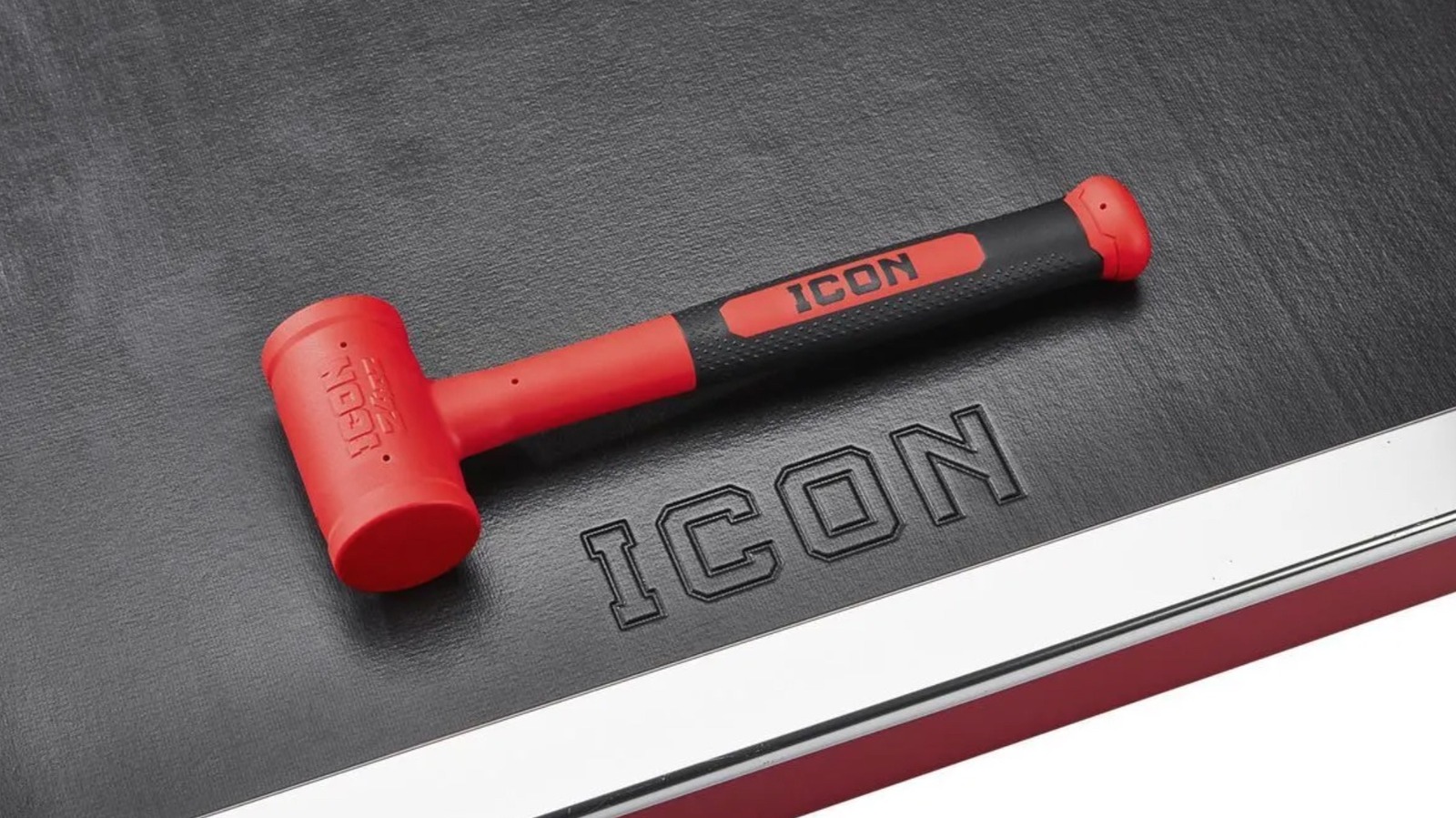
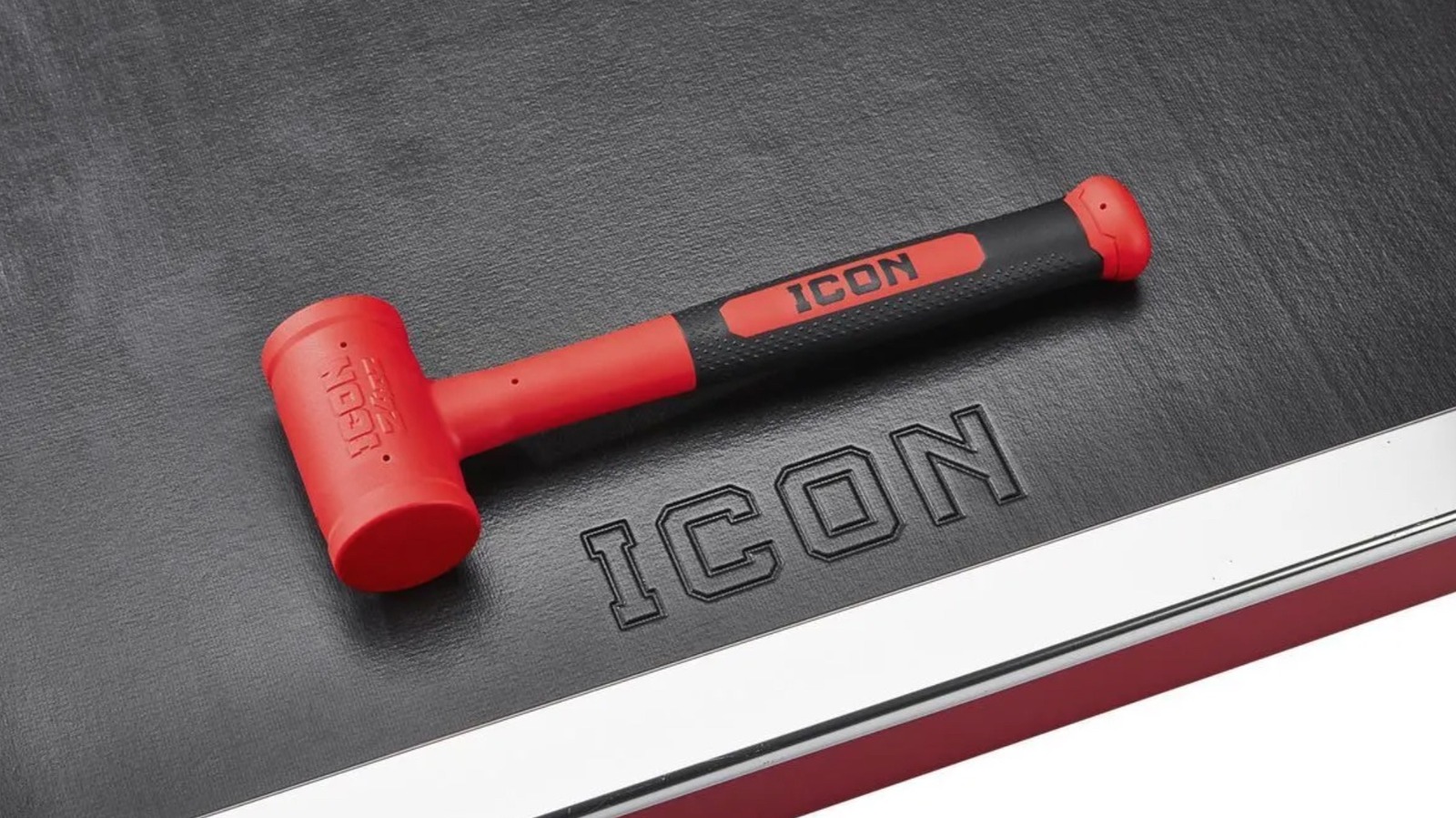
Soft Face Dead Blow Hammer – $24.99

While it can be used to perform the functions of a traditional hammer, a dead blow hammer is a strike device designed for different areas of usage. More specifically, it is a mallet-styled tool designed to reduce the level of bounce-back from each strike via a shot-filled head and a rubberized coating. The increased control makes it an ideal option for use in automotive endeavors like chassis work and suspension jobs, as well as woodworking projects and certain machining gigs. While Harbor Freight carries dead blow hammers from other brands, few are quite as well rated by customers than the 24-inch model made by Icon.

At present, a total of 274 users have chimed in on their Icon Dead Blow Hammer, bestowing upon the hammer an overall rating of 4.9-stars. As for that lone 3-star rating, the user questioned the materials used in its making to the point that they claimed it isn’t a dead blow hammer in the truest sense. Few of the other reviewers agreed, with most hailing it as a first-rate dead blow option that is ideal for automotive work and easy to manage in hand. One even hailed the hammer as, “the best product Icon sells.”

Apart from the shot-filled head and rubberized face, they also boast a steel shank and are covered in Polyurethane materials that make them resistant to many chemicals common to garages and workshops. The hammer is also backed by Icon’s lifetime warranty, and can be purchased for just $24.99. As YouTuber Last Best Tool points out, that considerably less than a similar Snap-On hammer for about the same quality.

35-Piece Locking Flex-Head Ratchet and Bit Set – $34.99

We already covered a well-rated socket set from Icon, so it seems fitting that we also cover a ratchet and bit set. This 35-Piece Ratchet and Bit Set features far more pieces than the other, of course. To that end, it understandably costs more, with Harbor Freight pricing it at $34.99. For the record, the kit is also not quite as highly rated as the socket set, though its 4.9-star rating is, arguably, more impressive as it is based on a whopping 2,387 user reviews.

Not all of those reviews are positive, with complaints ranging from soft bits and rusting to faulty parts and design and excessive back-drag from the ratchet head. Some of the positive reviews also note similar issues, by the way, even as the bulk of users and YouTube reviewers praise the kit for being durable and effective. Many Harbor Freight shoppers claim the inclusion of so many bits makes the kit incredibly versatile too. Several also claim its size makes it not only ideal for engine work, but easy to stow away in your car or even a motorcycle.

If you’re breaking down the cost, the $34.99 basically prices each piece of the kit at $1. So, if you’re curious as to what is included, the 1/4-inch chrome-vanadium steel Flex Head Ratchet is the biggest piece, though the kit also includes a 4-inch extender. As for the S2 steel bits, there are 11 TORX bits, 2 slotted bits, 3 Phillips bit sizes, 13 hex bits, and 3 Pozidrive bits, all of which fit inside a handy carrying case.

11-Piece SAE Professional High-Torque T-Handle Hex Key Set – $44.99

As previously noted, screwdrivers are a legitimately essential part of any tool kit, but not every fastener is fit with either a slotted or Phillips head. And yes, if you find yourself staring at a head with a hexagonal opening, neither type of driver will do you much good. In fact, only a hex key will suffice in that scenario, and even then, only the exact right size of hex key can move that fastener.  It stands to reason, then, that if you often deal with hexagonal fasteners, it might be wise to have several sizes of hex tipped drivers on hand when you need to tighten or loosen them.

Enter Icon’s 11-Piece T-Handle Hex Key Set, which is currently selling for $44.99 through Harbor Freight Tools. The keys in that set are designed for fasteners in SAE measurements, and range in size from 5/64-inch, 3/32-inch, 7/64-inch, 1/8-inch, 9/64-inch, 5/32-inch, 3/16-inch, 7/32-inch, 1/4-inch, 5/16-inch, and 3/8-inch. Each of those hex keys is made from black oxide coated steel for durability, and the T-Handle design allows for a short hex tip on the end of the ergonomic handle, as well as a longer shafted tip for heavier torquing jobs.

Users are overwhelmingly impressed with the set as well, rating it at 4.8-stars through Harbor Freight. Of the happy users, many praise the set for its variety as much as they do for the overall quality and design of the tools, noting that the T-handles are not only comfortable to use, but allow for extra torque. They also love the lifetime warranty that comes with them.

How we got here

In assembling this list, we scoured the Harbor Freight Tools website to examine every tool bearing the Icon branding that is currently listed with a sticker price under the $50 marker. We also limited our selections to Icon tools that have earned a user rating of at least 4.8-stars and currently show reviews from at least 50 Harbor Freight customers. Whenever appropriate, some reviews may have been cited directly to ensure accuracy. If possible, additional reviews were also consulted to prop up the consumer point of view. 


Source link