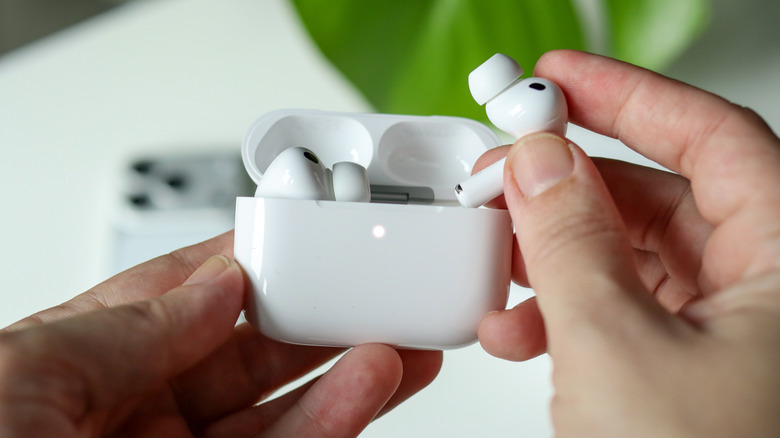

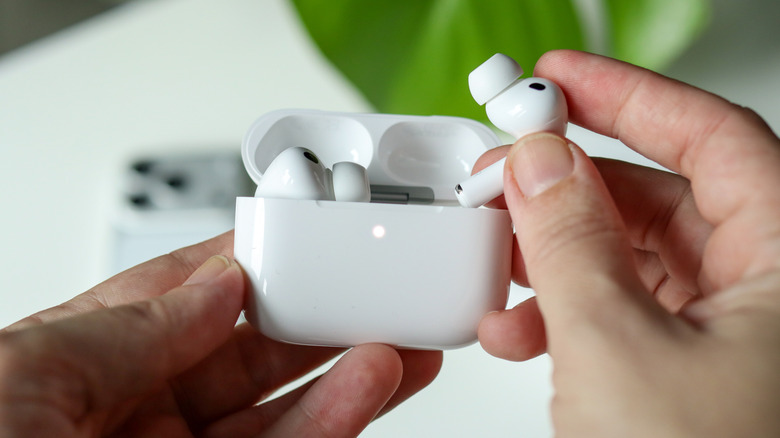
Did you know your earbuds need to breathe? No, they’re not alive, but a steady stream of air is vital to their functionality. If you’ve ever noticed the tiny holes on the sides of your earbuds, that’s exactly what they’re for: airflow.
They’re called “tuning holes,” and without them, your favorite songs just wouldn’t sound the same. When the miniature speakers inside your earbuds vibrate to create sound, they also build up pressure over time. Tuning holes exist to allow air in and out of the earbud, relieving that pressure. Many people think they’re for the microphone, but that’s not actually the case; in Apple EarPods and similarly designed earbuds, the microphone resides in the built-in remote that lets you control volume and playback features. This is why you might see video creators hold the remote up to their mouths when they speak.
Relieving pressure buildup isn’t all they do, though. Tuning holes also serve a few important purposes for improving the sound quality of your music, phone calls, and media.
Why your headphones need tuning holes
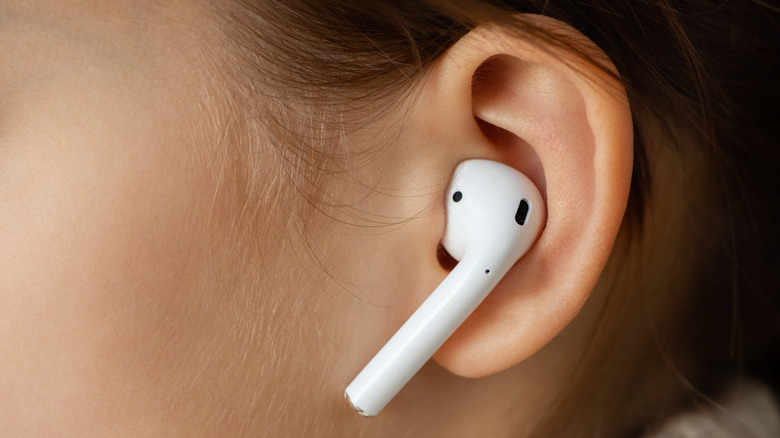
Pressure relief aside, tuning holes also play an important role in overall sound and bass quality. Not only does giving that pressure buildup somewhere to go allow your earbuds’ speakers to move freely — enabling them to vibrate accurately according to the signals given by your audio — but in a lot of cases, they’re more than just divots in the plastic.
Many earbuds also come equipped with a tuning net and tuning cotton or sponge packed into the tuning hole. You can even buy these parts from online retailers like Walmart. Tuning nets and cotton or sponges are useful for acoustic dampening and bass control, absorbing particularly high or sharp frequencies and providing an even listening experience throughout.
If you want to test how tuning holes affect your listening experience, try throwing some tunes on, then use your fingers to cover the tuning holes. Listen for a few moments, then uncover the tuning holes again. You’ll notice that, when covering the tuning holes, your music sounds hollow and the bass isn’t nearly as punchy.
What happens when tuning holes are blocked
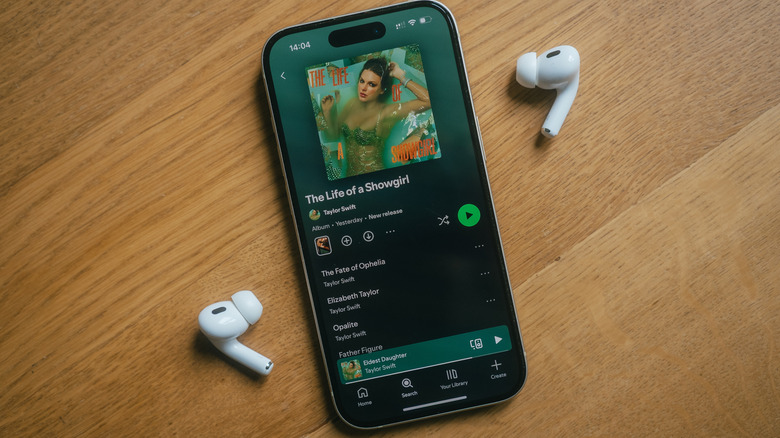
You don’t have to cover the tuning holes with your fingers for them to be blocked up. If you’ve never thought to clean your AirPods (or other earbuds), there’s a good chance they’ve accumulated some dust, wax, and sebum buildup. Even the best earbuds with tuning holes fall victim to this trap. Cleaning it out with safe-to-use cleaning agents, like 70% isopropyl alcohol and a soft, lint-free cloth or Clorox wipes, according to Apple’s cleaning recommendations, can make a world of difference for your sound quality. Plus, you get cleaner earbuds out of it.
If your earbuds’ tuning holes are blocked, they won’t be able to draw in and release air as intended. This will cause the pressure buildup of the speaker to warp playback sound and rob you of the bass your earbuds are actually capable of.
If you have a set of AirPods Pro, you may be wondering what the holes on the bottom of the case are for. Are these tuning holes, too? Not exactly – the pair of holes on the side of the case is for a lanyard, whereas the set of smaller holes on the bottom of the case is for the speaker that chimes in when you pair your iPhone for the first time or use the Find My feature.

Stephan is the sports journalist for the Maple Grove Report.