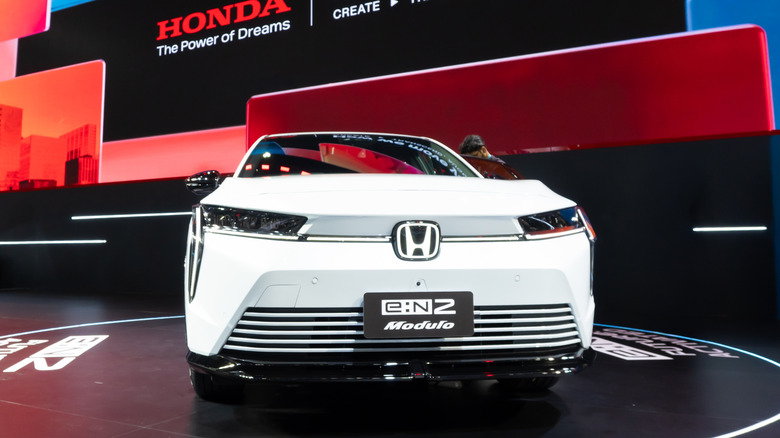

Competing with Chinese-made EVs has been the goal — and demise — of many an automaker from Europe to America and Japan. This includes Honda, which announced $15.8 billion in losses as a result of trying to keep up with China’s cheap EVs. These losses were the result of a dramatic pivot in its EV strategy, which saw the automaker canceling its electric 0 Series vehicles and the EV it was developing with Sony.
With China’s automakers releasing cheap EVs that boast looks, interiors, tech, and features to rival those from outside brands, automakers like Honda have started to struggle with sales in the country. Honda’s sales in China dropped from 1.62 million units in 2020 to just 640,000 units in 2025, and annual production volume in the country may fall below 600,000 by the end of 2026.
In late February 2026, Honda CEO and President Toshihiro Mibe visited an auto parts manufacturer in China to see how the nation’s automakers were making so many cars so quickly — and he left the factory with a sense of urgency. “We have no chance against this,” Nikkei Asia reported him saying. According to the same report, Mibe later told Japanese parts suppliers that they “must act quickly” to gain some ground on their Chinese counterparts.
Why are Chinese automakers so much faster?
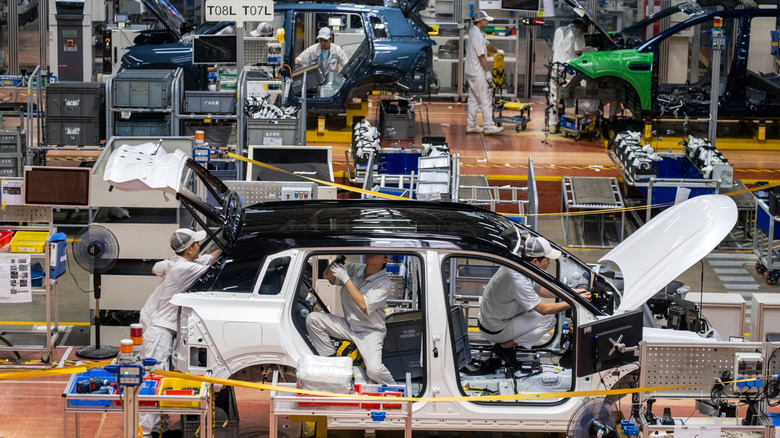
Chinese automakers can keep costs low and build vehicles quickly — some can introduce a whole new model in under two years, twice as fast as legacy brands. New companies like Xiaomi are producing vehicles in an entirely new way, too. It has developed a vertically integrated factory that relies heavily on a so-called gigacasting process. Gigacasting — which other automakers like Toyota have adopted — can replace 72 separate parts and reduce the number of welding points needed. This cuts production time in half. Xiaomi also uses robotic stations to assemble cars, rather than the traditional conveyor-belt assembly process.
The combination of these innovations allows Xiaomi to build 1,000 vehicles a day. That’s enough for Ford CEO Jim Farley to tell CBS Sunday Morning in late 2025 that China had the capacity to build enough vehicles for all of North America and “put us all out of business.” Like Ford, though, Honda is looking to compete, not give up. The Japanese automaker will be bringing back its independent R&D division, relocating thousands of engineers to a plant with much greater autonomy. It’s Honda’s attempt at encouraging innovation in a market where doing the same thing is no longer enough to compete with China’s automakers.

Stephan is the sports journalist for the Maple Grove Report.