How I’m backing up my Samsung Messages before the service ends in July – local and cloud options


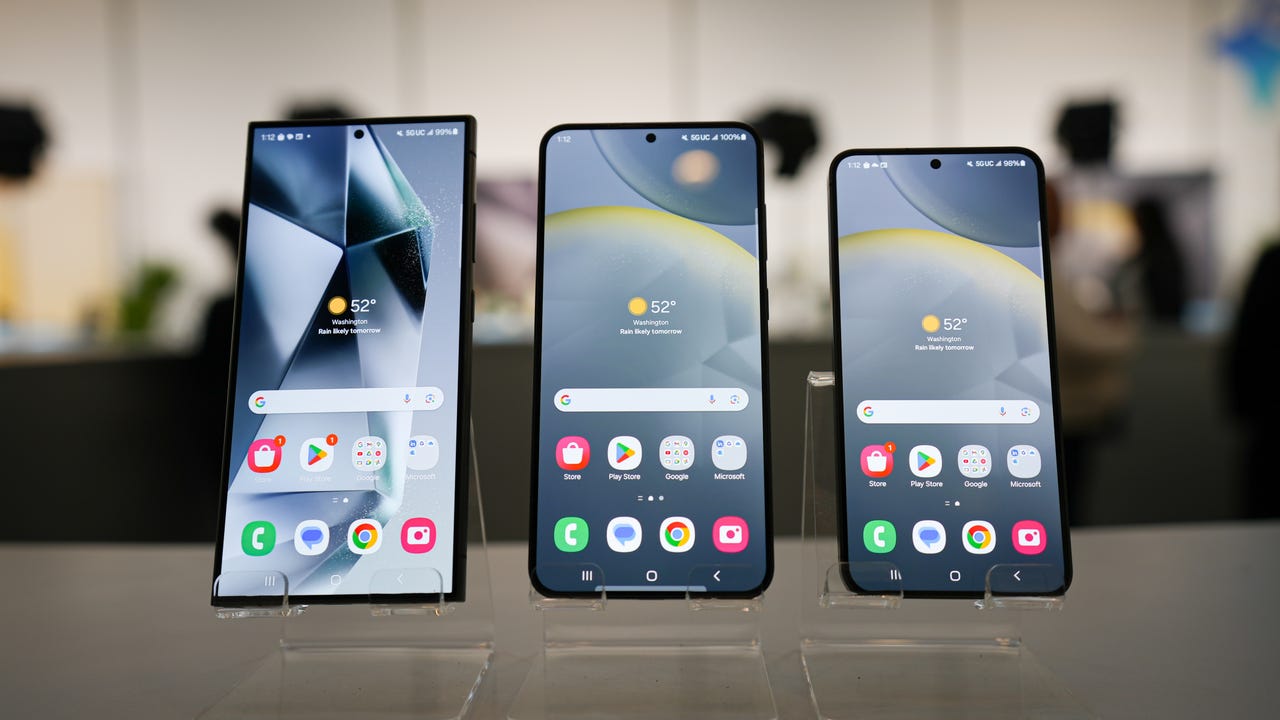
Samsung Galaxy S24, S24 Plus, S24 Ultra

Kerry Wan/ZDNET

Follow ZDNET: Add us as a preferred source on Google.


ZDNET’s key takeaways

  • Samsung is ending its messaging app sometime in July.
  • Android 12 or newer users must switch to Google Messages.
  • Back up your messages to Samsung Cloud or Google Drive.

The reckoning is here. Well, almost here, and maybe a little less dramatic than I’m describing. Samsung recently confirmed that it’ll be shuttering its own Messages app in favor of Google’s, requiring users on Samsung phones running Android 12 or newer to make the swap in July if they haven’t done so already.

This sunsetting marks a nearly 16-year run for the proprietary communication platform, one that has built quite the cult following over time. But no one should be surprised to see this coming. Just two years ago, Samsung began shipping its latest Galaxy phones with Google Messages set as the default messaging app. More recently, you wouldn’t even be able to download the Samsung Messages app on phones like the Galaxy S26 series.

Also: Samsung is ending Messages in July: 5 replacements I’d switch to now

So, what gives? There are plenty of unofficial theories behind the transition, but the prevailing assumption is simple: Samsung no longer wants the burden of managing its own messaging servers. It makes more sense to hand the reins to Google, which has steadily built a platform home to billions of Android users. Between the practical, security, and financial ramifications, the move just makes sense for the business.

That said, if you’re like me and want to back up any important messages from over the years, you’ve got options. I’ll go over the most reliable ones below, forgoing the ones that involve third-party services that may put your personal information at risk.

1. Backing up your messages locally

Samsung portable SSD T9

Kyle Kucharski/ZDNET

Your most secure backup option is a local transfer to an external storage drive, or SSD. Depending on how many months’ or years’ worth of messages you’ll be moving, you’ll want to make sure the drive has enough memory to host the data.

This is often a good time to look over your various threads and conversations and delete the ones you don’t want (or have) to store, such as 2FA and OTA codes, transaction histories, and receipts.

To back up your Samsung Messages texts, connect your SSD to your phone, open the Smart Switch app by going to Settings > Accounts and backup > Smart Switch, select the storage icon in the top right corner, then Back up, and tap Messages. The phone should begin packaging your texts into a readable file.

2. Backing up your messages to the cloud

It can be intimidating for some, but cloud backups are much more reliable and handy than they used to be, thanks to security enhancements to services like Samsung Knox, which comes built in on most modern Samsung phones. It’s also an intuitive way to back up and restore files — not just text messages — when you eventually switch to a new device.

Also: How I saved myself $1,200 a year in cloud storage – in 5 sobering steps

There are two native cloud services that you can back up your Samsung Messages to: Samsung Cloud and Google Drive. Personally, I’d recommend the latter, as it’s more accessible across phones and PCs, including non-Samsung devices. Google Drive also comes with 15GB of free storage, versus Samsung’s 5GB, in case you haven’t been taking advantage of that benefit.

Here’s the breakdown of the two services to help you better decide. If it helps, there’s an argument for backing up to both services.

Feature Samsung Cloud Google One/Drive
Ideal for Galaxy-to-Galaxy transitions Multi-device and cross-brand sync
Free storage amount 5GB (varies by region/plan) 15GB (shared with Gmail/Drive)
Photos/videos Synced via Microsoft OneDrive Managed via Google Photos
Device settings Deep backup of Home screen, alarms, etc. Basic Android settings backup
App support Samsung apps (Notes, Calendar) Google apps and third-party app data
Accessibility Best on Samsung devices Accessible on web, iOS, and Android

For both services, you can back up your texts by opening Settings > Accounts and backup > Back up data under Samsung Cloud and/or Google Drive. You’ll be required to sign in to either your Samsung account or Google account, depending on the service.

If the process is done properly, the respective settings pages should show your last backed-up timestamp, which should be today’s date.

What happens next?

With your text messages backed up, I’d recommend you start testing Google Messages, or alternative communication platforms, to see which one you’d prefer before Samsung ultimately pulls the plug in July. While the company hasn’t confirmed the exact date of the sunsetting, it never hurts to prepare yourself ahead of time.

Also: How to use Google Messages’ new Trash feature to recover texts you accidentally deleted

Personally, I’m switching to Google Messages. It may not have the same personalization features as Samsung’s, but it has its advantages, like a more universal RCS system that isn’t limited to any specific carrier, some useful Gemini integrations, smart replies and native AI image generation, and, from what I’ve experienced, a more reliable spam detector. We may even see some newer features as soon as later this month.





Source link

Leave a Reply

Subscribe to Our Newsletter

Get our latest articles delivered straight to your inbox. No spam, we promise.

Recent Reviews


We may receive a commission on purchases made from links.

For TV owners, High-Definition Multimedia Interface (HDMI) technology is the gateway to accessing endless content and maximizing your viewing experience. Whether it’s watching films from physical media, streaming content via your preferred subscription platform, or playing games, there are plenty of gadgets you can connect for the perfect entertainment setup in your home.

Apart from investing in the right HDMI cable, choosing the right port makes all the difference. Depending on how old your TV is, you can expect anything from the legacy HDMI 1.0 to even the most recent HDMI 2.2. However, while there’s a big jump in terms of quality between HDMI 2.1 and 2.0, there are plenty of gadgets that can still work perfectly with your HDMI 2.0 port. This is great news if you aren’t so particular about getting the best picture possible. In fact, unless you’re a hardcore gamer or have a TV made for high resolution, it’s likely you’ll be able to get the most out of what you already have without HDMI 2.1 or 2.2 ports.

To help you get the most out of your existing HDMI 2.0 port, we’ve listed broad categories of gadgets that work with it. Next, we share specific models that either maximize the port’s capabilities or still offer a great viewing experience despite the bandwidth limits. To learn how we selected the models that work well with HDMI 2.0 ports, you can skip to our methodology at the end.

1. Streaming sticks

If you own an older TV model but don’t want to trash it yet, streaming sticks are among the most affordable ways to access modern entertainment options on a budget. In fact, the HDMI 2.0 port will already let you maximize the performance of even newer streaming sticks, like the Fire TV Stick HD, which supports 1080p Full HD. So, if your TV can’t do 4K anyway, you don’t really need to get a more expensive model. An Amazon’s Choice product, the Amazon Fire TV Stick HD has an average rating of 4.7 stars from more than 62,000 reviewers.

While many newer smart TVs have built-in streaming capabilities, there are still many benefits to using a streaming device, such as regular security updates. These days, many streaming sticks are marketed as 4K-capable, like the Amazon Fire TV Stick 4K. While we’ve recommended plugging it into an HDMI 2.1 port for the best experience, an HDMI 2.0 port is also perfectly fine for most modern 4K movies and shows. If you have the extra budget, it can be an investment for future upgrades. As of March 2026, over 75,000 Amazon users have rated the Fire TV Stick 4K Max an average of 4.6 stars. However, you can also consider options like the Roku Express 4K, Apple TV 4K, and Google TV Streamer 4K.

2. Sync boxes

There’s something incredibly dramatic about having the lights match the scenes on your TV, and you can do that with a sync box. Whether you’re watching a movie, playing games, or listening to music, sync boxes help elevate your entertainment experience. While many of the latest sync boxes are designed for HDMI 2.1 ports, these are generally backwards compatible with HDMI 2.0 ports, so you can still enjoy them with their reduced capacity, such as the Philips Hue Play HDMI Sync Box 8K, which generated an average rating of 4.2 stars from more than 230 Amazon customers.

Priced at $384.99, you can connect up to 4 input devices. Unless you buy a kit, there’s also the price of the lights, which will vary depending on your screen size. The Philips Hue Play Gradient Smart TV Light Strip is available in three sizes: 55-inch ($274.99), 65-inch ($296.99), and 75-inch ($329.99). In general, many people seem quite satisfied with it, as over 2,000 Amazon users rated it 4.3 stars. 

Lastly, you will need to factor in the cost of the Philips Hue Bridge, which lets you enjoy its integration with smart home ecosystems, like Amazon’s Alexa, Google Home, and Apple HomeKit. With over 11,200 Amazon reviews, it has generated a pretty positive 4.5-star rating. Given that it tops our list of smart lighting brands, it can be a great investment if you’re already using other Philips smart lights in your home.

3. DVD and Blu-ray players

Although many people have turned to streaming to optimize their content viewing, there are still people who like owning physical media. Whether you’re a film buff, a parent of young children, an elderly person, or just someone who doesn’t want to deal with subscriptions, owning a DVD or Blu-ray player can keep all your favorite TV shows and films within reach, without the need for internet connectivity. For many old DVDs and some Blu-ray discs, they don’t max out HD resolution anyway, so you’re likely to get the most out of their content with even the older HDMI 2.0 port. In fact, even premium 4K Ultra HD Blu-ray players run flawlessly on HDMI 2.0.

On Amazon, the #1 Best Seller in its DVD category is the ELECTCOM PRO DVD Player, with over 40,300 customers rating it 4.2 stars on average. With prices starting at $41.99, it comes in different set variations that include HDMI and RCA cables, and even remote controls with large buttons designed for the comfort of seniors. But take note, this model doesn’t support Blu-ray discs. Alternatively, there’s the Panasonic Blu-ray player that retails for $89.95.An Amazon’s Choice product, more than 2,100 users gave it an average rating of 4.4 stars. Apart from playing Blu-ray discs, it can also work with CDs, DVDs, and even compatible files on your thumb drive, such as photos and videos. You may even find similar media players in secondhand or vintage stores if you’re on a tighter budget.

4. Gaming consoles

For gamers who get a little overstimulated with the latest releases, the HDMI 2.0 port already lets you experience games that run on 4K at 60 fps. So, if you’re one of those people who still enjoy older-generation consoles, like the PlayStation 4 Pro or Xbox One S, you’ll be happy to know it’s built to work perfectly with the HDMI 2.0 port. These days, you can still get secondhand models of the PlayStation 4 Slim 1TB ($199.99) or the PlayStation Pro 1TB ($240.95) from the official PlayStation store on Amazon. Despite being released years ago, both models still enjoy an average rating of at least 4.6 stars from more than 12,000 Amazon customers.

Among the devices that should always be plugged into an HDMI 2.1 port, many newer gaming consoles can benefit most from high resolution and 120Hz frame rates. But, since HDMI 2.0 supports 4K resolution at 60 frames per second, a powerful console like the Sony PlayStation 5 will still run massive, modern AAA games flawlessly in stunning ultra-high definition. Despite its price tag, it boasts a ton of satisfied customers with 2,400+ Amazon users rating the PlayStation 5 Pro around 4.6 stars.

5. HDMI switch

If you find yourself attaching several devices to your TV via the HDMI port, you may need to use an HDMI switch to free up space, like the UGREEN HDMI Switch. An Amazon’s Choice Product, it boasts a positive 4.3-star rating from 5,200 customers. Available in two colors, the switch comes in black or grey with discounts for Amazon Prime customers. With 5 input ports, you can connect all kinds of devices, such as the ones above: PCs and laptops, streaming sticks, and TV boxes. To switch devices, you can either press the buttons on the unit or use the remote, which is powered by two AAA batteries. The unit itself has an LED indicator that shows which device is active. On the other hand, its single output port is compatible with displays such as TV screens, monitors, and projectors.

But, if you’re on a budget and only really need one extra slot, the Anker HDMI Switch might be better for you. An Amazon Overall Pick product, the Anker HDMI Switch has an average rating of 4.5 stars from more than 4,000 customers. Priced at $15.99, this HDMI switch measures just 2.17 inches by 2.17 inches by 0.57 inches, so you can easily take it with you when you’re traveling, too. It comes with a pair of input ports and a single output port for displays. Unlike the UGREEN model, this doesn’t need an external power supply.

Methodology

To help you understand what your HDMI 2.0 port can do, we’ve highlighted gadgets that either maximize its capabilities or provide a great experience despite the port’s bandwidth limits. We selected devices that have averaged at least four stars from more than 200 reviewers, indicating a general trend of user satisfaction. While it didn’t affect their inclusion on the list, we also noted whether they are top-selling products in their respective categories and mentioned additional features you may enjoy beyond their primary functions.


Source link