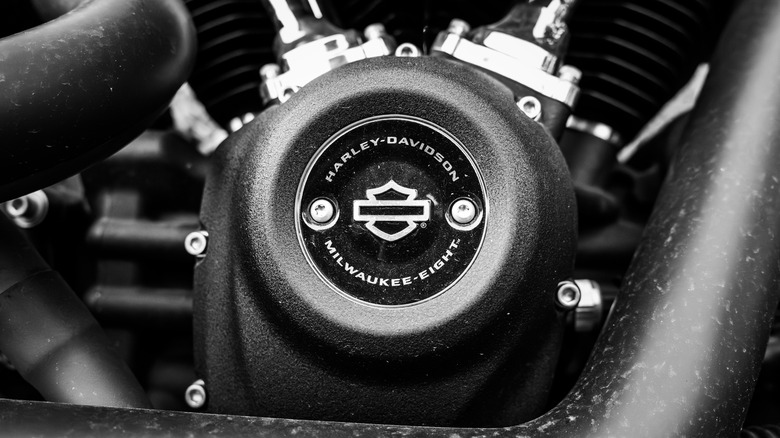
How Reliable Is Harley-Davidson’s Milwaukee-8 Engine? Here’s What Owners Say


Many motorcyclists are passionate about their rides, and that’s especially true of Harley-Davidson owners. That appreciation goes beyond the brand’s iconic logo and company legacy, as the longevity of the bikes and their engines is often a huge selling point. When it comes to the Milwaukee-8 engine, it’s common to find owners praising its reliability online — albeit with some notable exceptions.

Harley owners mostly appreciate the engine, with the reliability seemingly a strong point. A Harley owner on the UKGSer claimed to have put over 16K miles on two different Milwaukee-8-powered bikes without issue, while a Harley-Davidson Forum poster asserts that they had put 224,000 trouble-free miles on their 2020 bike over five years. Reddit users also loved the M8, with many agreeing it’s a great engine that often outperforms other engines.

However, some owners have had problems with the 114 variation of the Milwaukee-8. Much of those problems are related to oil collecting at the bottom of the engine’s crankcase, a condition known as “sumping.” There are many tales of this occurring online, though evidence suggests that the issue is limited to older models.

The evolution of the Milwaukee-8 engine
Harley-Davidson first acknowledged the Milwaukee-Eight’s sumping issue in a 2017 factory service bulletin. The bulletin noted that the issue primarily occured during extended periods of high-rpm operation or under heavy engine load. These situations would lead to an excessive amount of oil gathering in the engine’s crankcase, affecting the flywheel movement and causing the bike to lose power. High levels of engine braking were also possible, as was engine damage. Affected models included the Touring, CVO, Trike, Police, and Softail.

But while this was one of the reasons riders may have stayed away from even used Harleys, the company appears to have addressed the issue. The 2017 bulletin includes technical updates, indicating that the issue may have been fixed by implementing revised oil pump designs. These new pumps had updated part numbers and were installed to replace older pumps in affected motorcycles.

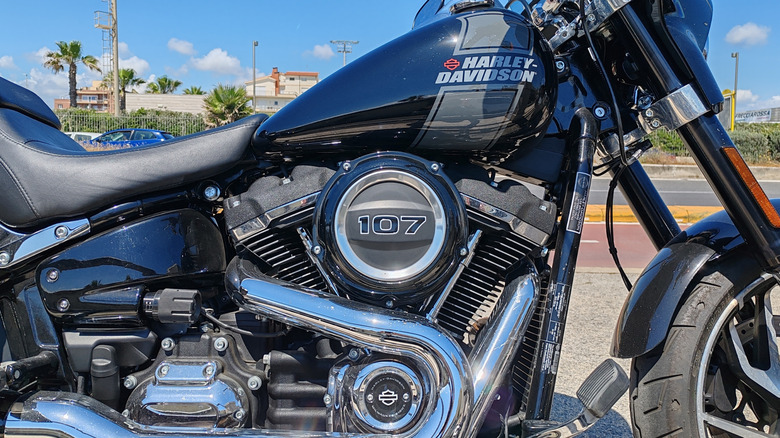
Despite any early problems, Harley-Davidson continues to use the M8 family of big-twin engines in the Touring and Softail models. The lineup’s variants currently include 107, 114, 117, and 121 cubic-inch models, with the 121-CI version powering certain CVO models like the Road Glide ST. These versions emphasize improved airflow, combustion efficiency, and better output compared to earlier large-displacement Harley engines like the Twin Cam engines.


Source link

Leave a Reply

Subscribe to Our Newsletter

Get our latest articles delivered straight to your inbox. No spam, we promise.

Recent Reviews


Google is experimenting with a new policy restricting the amount of free storage provided to some accounts. New Google accounts (including new Gmail accounts) created in certain regions will be limited to 5GB of free storage when they’re first set up. That’s only one-third of the amount of storage that has been typically offered. There is a way of increasing the amount of free storage you get when setting up a new account, though: you can unlock it by linking your phone number.

When approached for comment by Android Authority, a Google spokesperson confirmed that the new policy was being tested to “help us continue to provide a high-quality storage service to our users, while encouraging users to improve their account security and data recovery.” The statement didn’t clarify which regions the policy is being tested in, nor for how long the testing period will last.

Notably, a Google One Help support page about account storage has been updated to state that each Google account contains “up to 15 GB of storage”, as noted by 9to5Google. Previously, the page didn’t say “up to”; it simply stated that accounts come with 15 GB of storage. So far, the experiment doesn’t appear to stretch to pre-existing accounts.

Per a screenshot shared by Reddit user Sungusungu on R/DeGoogle (a subreddit dedicated to finding alternatives to Google services and products) Google is collecting phone numbers to make sure that the full 15 GB of storage is only redeemed once per person. Of course, that’s easily evaded by using a burner phone to set up multiple accounts, should you want to. The pop-up directs users to a webpage to learn more about storage management. However, at the time of writing, the link redirects to the help center landing page instead.

How to link your Google account with a phone number

If you’re in the process of setting up a new Google account in an impacted region, then you might be prompted with the option of unlocking an extra 10 GB of storage using your phone number via a simple pop-up menu. If so, you can go ahead and follow those steps. However, if you want to link your phone number with a pre-existing Google account, then here’s what you need to do. Using your computer, you need to:

  1. Open your browser and head to myaccount.google.com, then navigate to “Security and sign in” on the left-hand toolbar. This should open a list of security options.

  2. Select “Use your phone to sign in” and then “Set it up”. 

  3. Add a phone number using the “Recovery phone” option.

  4. Follow the on-screen steps to verify your number and finish linking it to your account.

Your options might look a little different if you already have a recovery number set up with your account.

Alternatively, you can connect a phone number to your Google account from your Android device, iPhone, or iPad. Much like on a computer, you connect your number by adding it as a recovery phone. First, head over to myaccount.google.com. Then select “Personal info”, followed by “Phone”. From there, you should be able to add or edit your phone number by navigating to the “Recovery phone” section.


Source link