


The garage occupies a weird spot when it comes to a home. Not fully outside and not fully inside, it’s an area that often gets neglected when it comes to cleanliness and organization. We all have visions of our garages as neatly organized spaces where we park our vehicles, keep tools, and work on projects — but reality often gets in the way.
In daily life, garages tend to become a place where random things just pile up, and it doesn’t take long to get to a point where their functionality starts being limited — including situations where a vehicle doesn’t even fit inside anymore. Fortunately, there are many ways to address the garage clutter problem, including purchasable upgrades that can make the workspace more functional. But sometimes decluttering your garage into a functional work and storage space doesn’t require buying anything at all — it simply requires a different mindset. This is where the so-called “Two-Foot Rule” comes in.
Created by organization experts who praise the importance of focusing on the two feet of space that are used most in a given room, the rule can be used in all rooms or areas of a home — and not just for initial decluttering, but for keeping it that way. The Two-Foot Rule can be applied everywhere from kitchen counters to bedroom nightstands, but a cluttered, disorganized garage might just be the best place to use it.
What is the Two-Foot Rule?

Decluttering and organizing can be a daunting task, especially in the garage, where things can pile up for months before you get around to it. When you want to clean up, there are some helpful garage lifehacks to clear up space, but the Two-Foot Rule takes a more universal, repeatable approach to organization.
Rather than going for a massive decluttering or organization project, the Two-Foot Rule is about starting small, setting aside the two-foot space that you use most, and starting there. By limiting the focus to one highly used area, the idea is that it’s much more manageable to organize and easier to maintain that organization going forward.
Experts say this two-foot zone is something that can be double-checked every single day, and if something is out of place, it can be easily put back where it belongs. This hopefully eliminates the possibility of the clutter piling up until it reaches an unmanageable level. While the Two-Foot Rule won’t make every corner of your garage spotless and perfectly organized at once, it could very much improve the areas you use the most.
The perfect workbench solution?
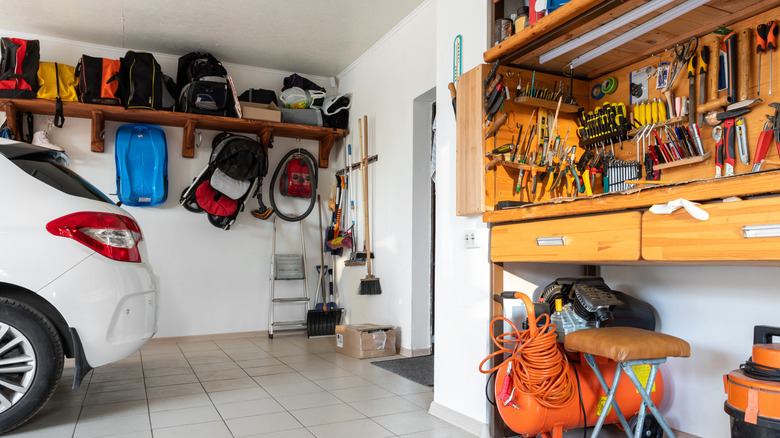
Focusing on a specific two-foot zone allows you to determine exactly what you use that area for and focus your efforts on that specific place. Inside a garage, the workbench — or just a small section of the workbench — could be the perfect place to start with the Two-Foot Rule.
It’s easy for tools and other junk to pile up on a workbench after you use them, but with the Two-Foot Rule, you could implement specific solutions for reducing clutter, like workbench-mounted pegboard that easily turns empty wall space into an organized storage space. Working vertically is a key part of the Two-Foot Rule, with the emphasis on using walls or shelving to permanently clear up the surface space you want to use.
Keeping common tools organized ties into another related de-cluttering concept called the Two-Touch Rule, which states that when you use an item, you should only touch it twice — once to use it, and once to put it back. Otherwise, tools and other items are likely to pile up on the workbench until you get around to putting them back, which can be days or weeks later — if ever. If they are stored within easy reach, the easier it is to put them back. The basic premise of the Two-Foot Rule is that it’s manageable and easy to stick with. Plus, if you have good results, there’s no reason it couldn’t be expanded from the workbench to other areas in the garage.

Stephan is the sports journalist for the Maple Grove Report.