IBM’s New Chip Fits Nearly 100 Billion Transistors in the Size of a Fingernail


IBM on Thursday unveiled the first chip created using its latest semiconductor technologies, one that holds nearly 100 billion transistors in a fleck of hardware no bigger than your fingernail. Packing more transistors into a die the same size or smaller than previous generations is an essential part of increasing power efficiency and speed. 

The new chip is 0.7 nanometers, smaller than IBM’s two-nanometer chip that was first unveiled in 2021. But the circuitry of the new chip has been significantly adjusted. That older, larger process laid the transistors flat in what IBM Research called nanosheets, as CNET reported in 2021. Now, the new 0.7nm chip uses IBM’s recently developed nanostack architecture, which stacks the nanosheets vertically.

IBM says the new architecture results in better performance. In the company’s experiments, it found the new chip improved performance by up to 50% and energy efficiency by 70% compared to the 2nm version. 

According to IBM, the nanostack architecture also allows for a 40% smaller die for SRAM — static RAM is a type of memory that doesn’t require a constant flow of electricity to store data, and because it’s faster than DRAM, it’s in high demand for AI applications.  

A researcher wearing white gloves and holding IBM's sub-1nm node wafer

An IBM researcher holds the company’s sub-1nm node wafer.

IBM

The chip won’t be ready to go for a while, though. IBM is still working with its manufacturing partner, Rapidus, a Japanese foundry (chip-making factory), to ramp up. IBM says it “sees a path to production” in five years, but the demand for energy-efficient computing hardware is only growing.

Chips like those designed by IBM, Nvidia, AMD and others are the backbone of the AI industry. As AI developers like OpenAI and Google race to build the most advanced models, they need massive amounts of energy, or compute, to train them. But that can take a lot of electricity, clean water and land to devote to data centers.

AI Atlas

“Everyone demands more performance, but no one wants to pay for the bill for the power,” said Huiming Bu, vice president of IBM semiconductor R&D. The new chip’s energy efficiency “is a very critical component for AI,” he said.

Creating more efficient hardware is a key piece of the AI-powered future that tech leaders envision. Current shortfalls in production capacity for memory, processors and other components have created shortages in the parts that are essential for any laptop or gadget you may want to buy. New research prototypes may help tech companies — and everyone who uses their products — get more bang for their buck in the future.

“Fundamentally, it comes down to, can we make transistors more efficient?” said Jay Gambetta, director of IBM Research. “This is a platform that can be customized, so our expectation is it’s going to impact everything from the logic to the SRAM, and I expect we’ll see, as this scales, more efficient, larger AI accelerators.”


Source link

Leave a Reply

Subscribe to Our Newsletter

Get our latest articles delivered straight to your inbox. No spam, we promise.

Recent Reviews


evergreen-deals-imagery

Hisense/ZDNET

Follow ZDNET: Add us as a preferred source on Google.


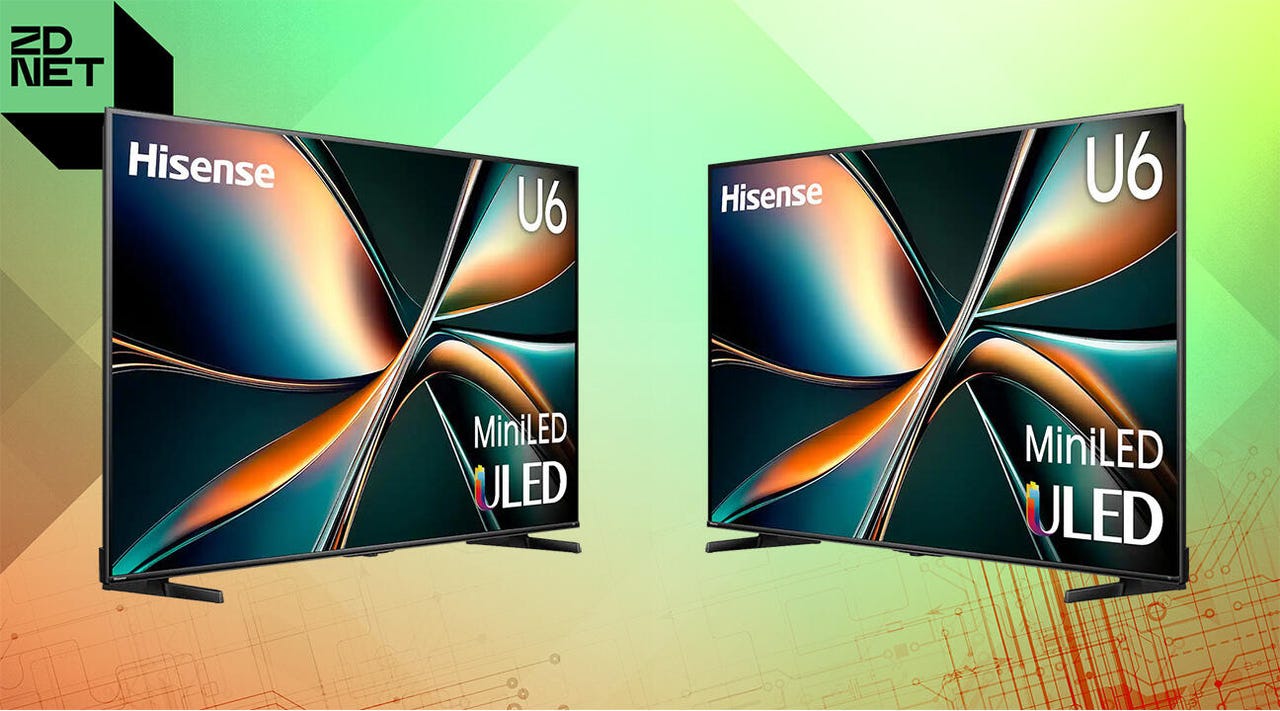
Whether you’re looking to upgrade your main TV to set up the ultimate home theater, or you’re just looking for a high-quality second screen for your home, you’d be hard-pressed to find a better option than the Hisense U6 Pro. And just in time for the FIFA World Cup, you can pick up the 75-inch Hisense U6 Pro for just under $850 at Amazon — a nearly 40% discount.

Also: TCL vs. Hisense

The Mini LED panel is Pantone Validated for color accuracy, which means you’ll get some of the best picture quality outside of ultra-premium OLED and Micro RGB models. It’s also backed up by a 144Hz refresh rate, making it perfect for smoother motion while watching live sports, streaming, and console gaming. 

Speaking of gaming, the dedicated picture mode supports AMD FreeSync Premium Pro VRR to help prevent screen tearing. There’s also an AI Sports mode that automatically detects when you’re watching a live match and adjusts the refresh rate, sound, and picture settings for the best experience, making it a fitting choice for soccer fans ahead of the World Cup.

Also: The best Hisense TVs of 2026: Expert tested and reviewed

You’ll get audio to match with support for Dolby Atmos virtual surround sound and a built-in subwoofer for deep bass tones that make movie soundtracks and your favorite music more impactful. If you prefer to have more control over your sound, you can set up home audio equipment with either the HDMI eARC connection for near-perfect video and audio syncing or via Bluetooth for a fully wireless setup. And if you’ve set up a security camera system, you can show feeds from up to four cameras at once on your Hisense U6 Pro to keep an eye on your home.

How I rated this deal 

The Hisense U6 Pro is a great midrange Mini LED TV that offers a 144Hz refresh rate, Dolby Vision IQ HDR, Dolby Atmos virtual surround sound, and built-in Alexa voice controls. The Pantone Validated panel gives you incredibly accurate colors for more lifelike images. And at a discount of nearly 40% on the 75-inch model, you’re getting an excellent value for your next home theater upgrade or second-screen addition. That’s why I gave this deal a 4/5 Editor’s rating.

Deals are subject to sell out or expire anytime, though ZDNET remains committed to finding, sharing, and updating the best product deals for you to score the best savings. Our team of experts regularly checks in on the deals we share to ensure they are still live and obtainable. We’re sorry if you’ve missed out on this deal, but don’t fret — we’re constantly finding new chances to save and sharing them with you at ZDNET.com


Show more

We aim to deliver the most accurate advice to help you shop smarter. ZDNET offers 33 years of experience, 30 hands-on product reviewers, and 10,000 square feet of lab space to ensure we bring you the best of tech. 

In 2025, we refined our approach to deals, developing a measurable system for sharing savings with readers like you. Our editor’s deal rating badges are affixed to most of our deal content, making it easy to interpret our expertise to help you make the best purchase decision.

At the core of this approach is a percentage-off-based system to classify savings offered on top-tech products, combined with a sliding-scale system based on our team members’ expertise and several factors like frequency, brand or product recognition, and more. The result? Hand-crafted deals chosen specifically for ZDNET readers like you, fully backed by our experts. 

Also: How we rate deals at ZDNET in 2026


Show more


Source link