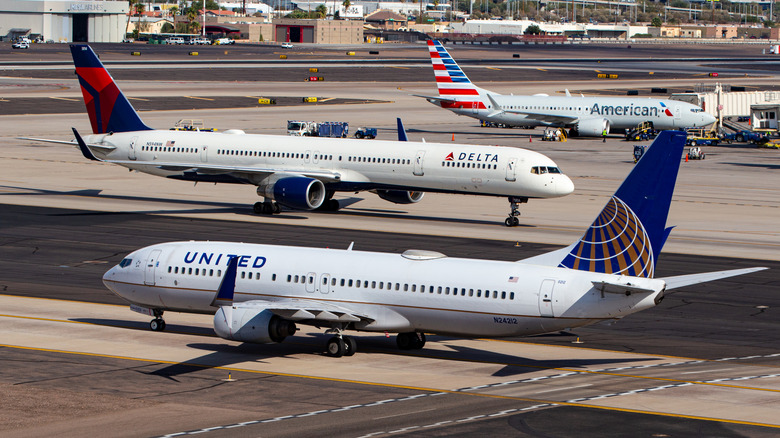

Recent reporting suggests that the idea of a merger between American Airlines and United Airlines has been informally raised at a high level. The reports claim that United Airlines CEO Scott Kirby floated the idea with the Trump administration. However, the merger is highly unlikely to happen for several reasons, not least of which is American Airlines’ response to the proposal. In a statement, the airline said the merger would be “negative for competition and for consumers,” and that it was not “engaged or interested in” such a dialogue, effectively rejecting the hypothetical proposal.
Even if American Airlines had responded more positively, the merger would be unlikely to happen. The U.S. airline industry is already highly consolidated, with the four largest carriers (which include American and United) accounting for about 80% of domestic capacity. A merger of this kind would create the world’s largest airline, and such a consolidation would undoubtedly face intense antitrust review.
While the chances of the merger happening are slim, if it did happen, the most obvious place where passengers would feel it is in their pockets. This is simple market economics; less direct competition on overlapping routes could lead to higher ticket prices. We don’t need to rely on too much conjecture either. The 2008 merger between Delta Air Lines — an airline that offers some of the best in-flight entertainment — and Northwest Airlines is a case study in what happens when two major airlines merge.
What history shows happens after a merger
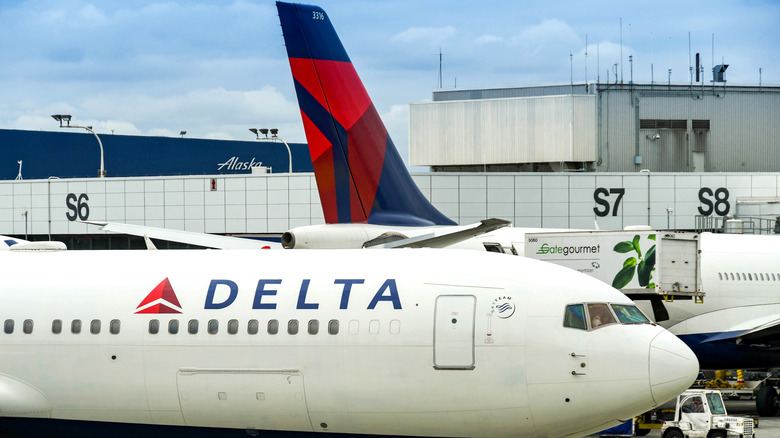
The merger between Delta Air Lines and Northwest Airlines is an excellent example of how airline mergers affect passengers. At the time, the merger created the world’s largest airline, and also set the wheels in motion for a period where consolidation and mergers reduced the number of major American airlines from seven to the current big four that dominate the market.
The good news for flyers is that the immediate aftermath of a merger doesn’t automatically send fares skyrocketing. A study undertaken in 2015 examined the Delta/Northwest merger and found that before the merger was fully completed, prices remained stable or even fell slightly. However, the study concluded that overall fares increased when compared to what the expected ticket prices would have been if the merger hadn’t gone ahead.
Another area where flyers could see changes is in the networks the airlines operate. When two large airlines combine, there will inevitably be overlapping routes that will need to be reduced or restructured. But at the same time, the merged airline will also likely operate a larger network with more destinations offered through its hubs.
Finally, the effects of a merger can have an impact on more than just fares and route maps. The Delta/Northwest merger was a complex process that took almost two years to complete and covered everything from pilot contracts to how many slices a lime should be cut into. During that period, operational performance suffered, with delays and customer complaints increasing. However, this ultimately improved, and Delta is now considered one of the most reliable North American airlines.

Stephan is the sports journalist for the Maple Grove Report.