
Follow ZDNET: Add us as a preferred source on Google.
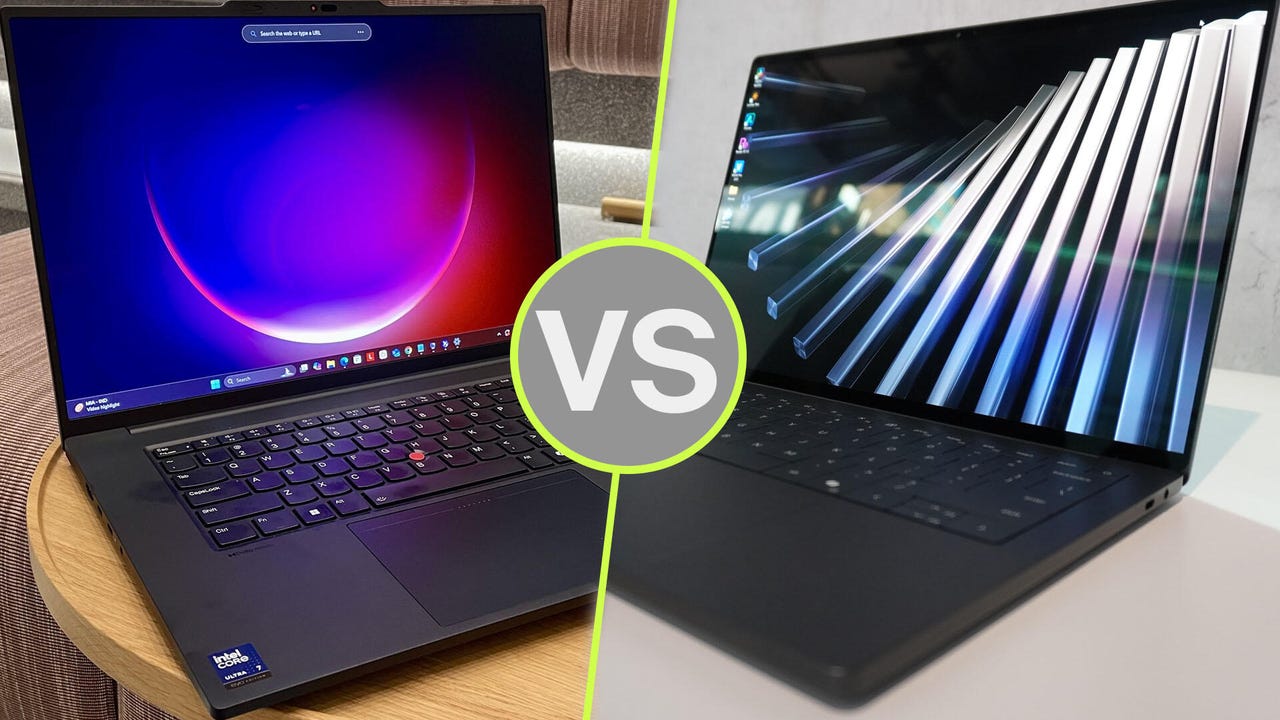
If you’re shopping for a new laptop or PC, you’ve probably considered either a Dell or a Lenovo model. Both brands dominate the PC market with a wide range of devices, from budget-friendly machines to premium notebooks and powerful workstations. However, they take different approaches when designing their computers.
Also: Lenovo ThinkPad vs. Apple MacBook: Which is the better laptop for you?
Having spent a lot of time with products from both companies, I see two distinct philosophies at work. Dell laptops tend to cater more toward creative professionals and consumers who value polished design. Lenovo, on the other hand, leans more into practicality, emphasizing broader configuration options and stronger overall value.
To explain what I mean, I’ll break down where each brand excels and why you might choose one over the other.
You should buy a Lenovo laptop if…
1. You want a better typing experience
One of Lenovo’s biggest strengths is the keyboard experience it delivers across its many laptops. From my own hands-on testing, I’ve consistently found that ThinkPads, IdeaPads, and Yoga models have some of the best keyboards, thanks to their deep key travel, satisfying tactile feedback, and well-designed keycaps. All three work together to ensure great comfort.
Even on devices I didn’t particularly love, like the Yoga 7a 2-in-1, the keyboard still stood out as a major highlight.
I place so much emphasis on this because it’s the part of the laptop you’ll interact with most. Whether you’re writing, coding, or going through documents, you will be spending hours hitting those many keys. So, at the very least, you’ll want something comfortable.
Also: Googlebook looks promising, but one big laptop brand is conspicuously absent
ThinkPads also have the signature TrackPoint — a the small red nub in the middle. It lets you control the cursor without using the trackpad. While not as spacious, the TrackPoint is an ergonomic alternative that lets you keep both hands on the keyboard.
2. You want a more affordable laptop
Lenovo has an extensive catalog with several product lines. Within each product line are dozens of models, both on the high end and the low end. This allows Lenovo to be the more budget-friendly option, with many ThinkPad and IdeaPad models at a lower price than comparable Dell PCs. Let me give you a good example.
This Lenovo IdeaPad Slim 3 is currently on sale for $279 at B&H Photo/Video. It comes with an AMD Ryzen 5 7520U CPU, integrated AMD Radeon 610M GPU, 8GB of LPDDR5 RAM, and a 256GB SSD. Comparatively, this 15.6-inch Dell laptop from Best Buy shares many of the same specs (although it replaces the AMD hardware with Intel), yet it costs $500. The extra cost of the Dell device appears to be due to the 2K touchscreen.
Also: A month with Lenovo’s premium ThinkPad made me rethink what a work laptop should be
This pricing strategy shows up across Lenovo’s catalog. You’ll find a wide range of affordable laptops on the company’s official storefront, so it’s easier to find something that fits a tighter budget. You have many low-cost options available for purchase. And that quantity expands greatly when you go to third-party platforms.
Dell, by contrast, leans more premium. Even its entry-level machines have a unique feature that inflates its cost, such as the 2K touchscreen mentioned earlier.
3. You want more configuration options
Lenovo offers a wider range of configuration options, giving buyers control over what their laptop houses. You have more choices for processors, RAM, storage, and other features. For example, let’s take a look at the sixth-generation ThinkPad T14. Shoppers can equip the ThinkPad with an Intel Core Ultra 7 255U CPU, the Spanish version of Windows 11 (or Linux Ubuntu), 32GB of RAM, and a smart card reader, among other things.
Also: I found the apps slowing down my PC – how to kill the biggest memory hogs
You don’t really see this level of customization on Dell. Sure, you can choose from four different processors for the Dell 14 Plus, but you can’t change the operating system or add new hardware. For buyers, this is important because it makes it easier to find a laptop that fits your exact needs and budget. Lenovo’s approach toward laptop customizing lets you scale certain specifications up or down in small increments.
You should buy a Dell laptop if…
1. You want the best gaming laptops
I had a hard time choosing which brand offers the better gaming laptops. Both companies make excellent gaming machines, but if I had to pick one, I’d give the edge to Dell and its Alienware series.
Like other gaming laptops, Alienware models come equipped with high-end hardware, designed to run demanding games at their highest possible settings without breaking a sweat. Plus, they also have fantastic displays. What really sets Alienware laptops apart is their excellent engineering. I have found that Dell’s machines have more effective cooling systems. They’re better at keeping internal components cool over long periods, thus reducing thermal throttling when it matters most.
Also: Should you replace your desktop with a laptop setup? I tried with this Dell, and didn’t mind it
Also, recent Alienware models have moved from bulky bodies toward sleeker form factors. These different designs allow the series to better fit into office settings. And many can change the RGB lighting to plain white. Lenovo’s Legion machines tend to stick with a more traditional gaming look, featuring thicker builds and brighter RGBs.
2. You want a laptop with the best displays
I have found that Dell laptops are generally better for creative workflows. Not only do they offer the internal components needed for demanding tasks, but they also feature stunning displays. Many models feature bright panels that deliver high resolutions and accurate colors. Features like these are crucial to creative professionals or anyone who works in photography and video editing. A good example would be the new Dell XPS 16, with its brilliant, 16-inch 3.2K OLED touchscreen.
Also: I’ve used Dell’s new XPS 16 for a week, and it’s the Windows laptop to beat in 2026
Those same strengths carry over to everyday use. Whether you’re streaming a movie on Netflix or just browsing the internet, Dell’s displays feel incredibly immersive and visually striking. The company often pairs the laptop screen with powerful speaker systems, creating a great multimedia experience.
3. You value aesthetics
Admittedly, I am biased here, but I think Dell laptops have more striking designs overall. Recent models are made with a strong focus on materials and finish, giving them a rightfully polished, premium look. This isn’t a design philosophy exclusive to flagship models either. You’ll find plenty of affordable models looking especially high-end.
That attention to detail extends to smaller elements as well, like slimmer screen bezels and sturdy hinges, all of which contribute to a more well-balanced design. Lenovo prioritizes function over form, which is not necessarily a downside. However, when it comes to first impressive and visual appeal, Dell laptops tend to stand out more.
Writer’s choice
Both brands are excellent. You can’t go wrong with either one. But if I did have to pick one over the other, I’d go with Lenovo. I tend to prioritize practicality as a consumer. I want a laptop that is affordable and capable of handling my everyday workloads, and Lenovo laptops are better suited for my needs. I also appreciate the wide range of configurations available across the company’s catalog.
Also: I saw Framework’s new ‘MacBook Pro for Linux’ and it’s the hardware enthusiasts deserve
That’s not to take anything away from Dell. It makes undeniably great laptops that excel in display quality among other areas. But for me, those strengths feel more like nice-to-haves rather than essential features. I don’t really need a super nice screen or premium speakers. What matters more to me is comfort, value, and day-to-day usability. This is where Lenovo stands out.