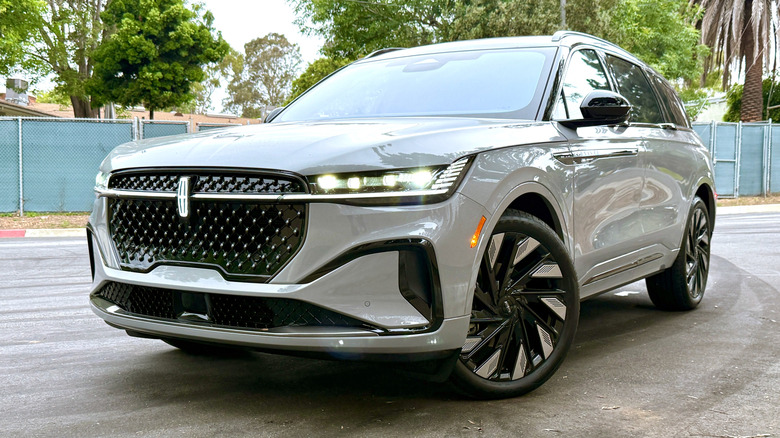

The stately Lincoln sedan was a staple in luxury transports, but in 2026, there are no more Continentals, and absolutely zero Town Cars. Since the Continental was discontinued in 2020, Lincoln’s lineup has been all SUVs. So, to appeal to as many markets as possible, there are a few different sizes and shapes to choose from when it comes to a new Lincoln – and the 2026 Nautilus is right in the middle of the fray.
The Nautilus is an upscale, two-row SUV with lots of room to stretch out on the inside, a sleek exterior design, and a premium vibe to go along with all that space. It’s significantly smaller than the big body-on-frame Navigator, and more spacious than the entry-level Corsair, but more than just right-sized, it offers a top-shelf cabin experience.
 Travis Langness/SlashGear
The Nautilus name hasn’t been around very long: the Johnny-come-lately of the Lincoln lineup took the place of the MKX less than a decade ago. But for a while now, when it comes to refinement, it’s been one of the brand’s most attractive offerings. For 2026, it gets some new interior and exterior colors, as well as an update to the BlueCruise suite of hands-free driving aids, all of which add to the charm.
It doesn’t get much better than the Black Label
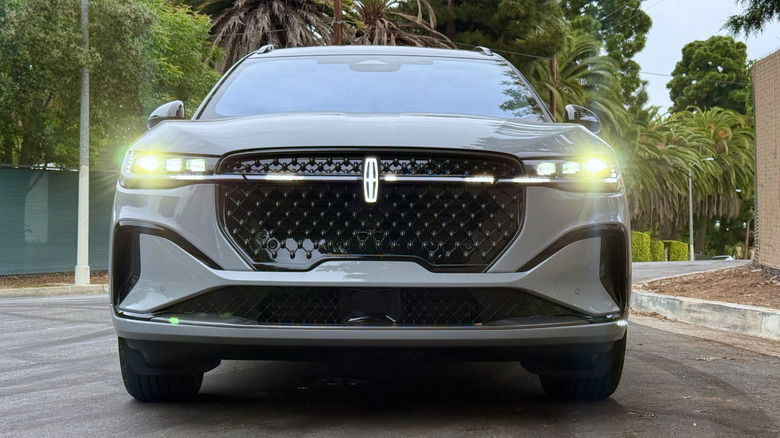
There are three trim levels for the Nautilus: Premiere, Reserve, and Black Label. My test vehicle was at the tippy top of the ladder, the Black Label with some aesthetic options helping to inflate the price.
The base Premiere starts at $56,815 (including $1,995 destination fee and $825 acquisition fee), and if you add the hybrid powertrain, that price goes up by $3,000 — the same increase it carries on all the trim levels. For that you get features like the big panoramic dashboard display (more on that in a moment), a heated steering wheel, and a 10-speaker stereo. The Reserve trim adds heated and ventilated front seats, heated rear seats, and adaptive suspension. It also raises the price to an MSRP of $66,415.
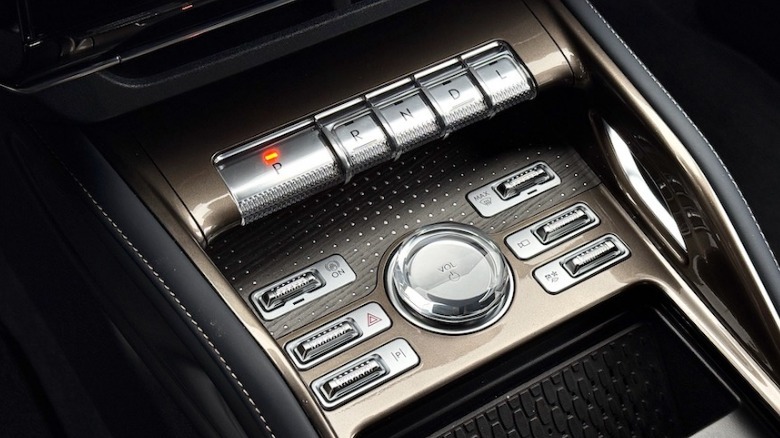 Travis Langness/SlashGear
On top of all the Premiere and Reserve features, the Black Label includes a number of additional creature comforts, including the 24-way adjustable front seats and a 28-speaker stereo. It checks in at $80,480. As tested, the Lincoln Nautilus Black Label I drove around for a week had an MSRP of $88,130. That’s a high price to pay, but it’s where the Nautilus ends up when you add just about every available option — most of which improve the driving experience.
Plenty of reasons to go with the hybrid
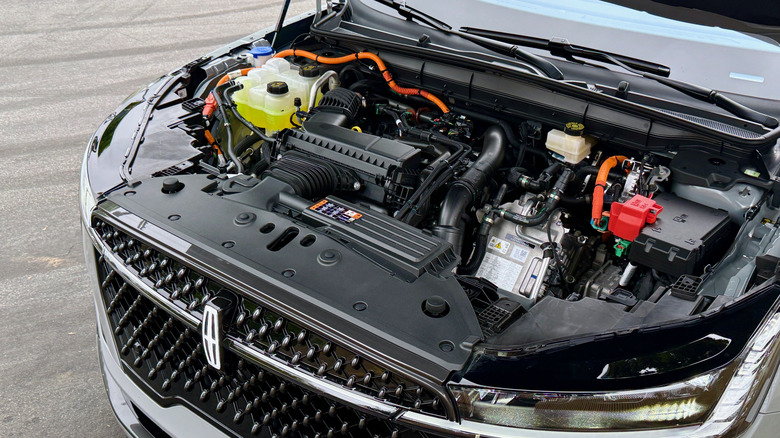
There are two available powertrains for the Nautilus, and all three trim levels are available with both. The base engine is a turbocharged 2.0-liter four-cylinder that makes 250 horsepower and 280 lb-ft of torque. It’s paired with an eight-speed automatic transmission, and it’s probably a reasonable choice if you’re looking to save a bit of money up front. According to the EPA, though, that base engine will return just 24 mpg combined (21 city/29 highway), and the much more efficient option is what I had in my test vehicle: the hybrid.
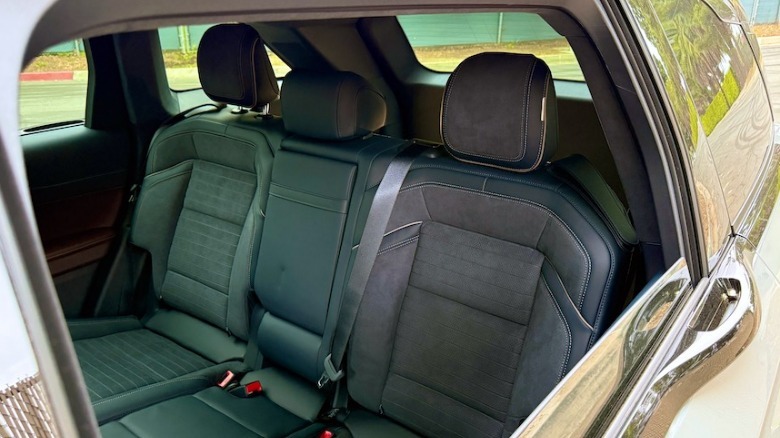 Travis Langness/SlashGear
The Nautilus’ hybrid powertrain uses a turbocharged 2.0-liter four-cylinder engine, too, but this one is paired with a 100 kW electric motor. Combined output is 310 hp and 295 lb-ft — a big bump compared with the standard engine. The hybrid uses a CVT instead of the 8-speed, but fuel economy is markedly improved. The EPA says the hybrid powertrain will return 30 mpg combined (29 city/31 highway).
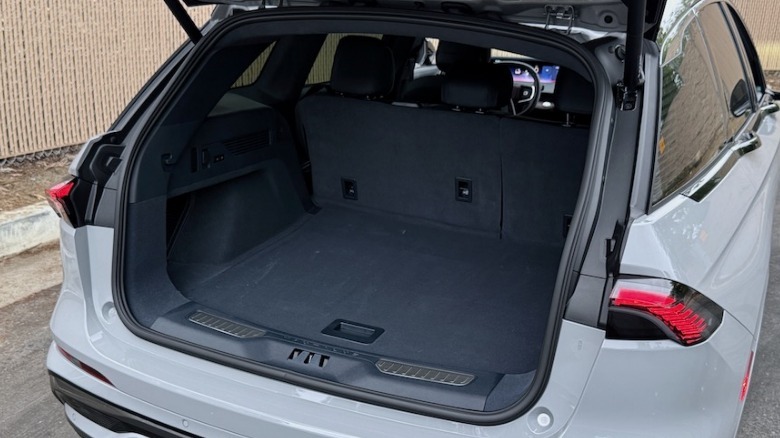 Travis Langness/SlashGear
With the hybrid powertrain, there’s plenty of passing power in most scenarios and a nice shove of electric torque off the line. While it isn’t exactly what the Nautilus is best at, there are also decent handling and steering characteristics, too. With the adaptive suspension on the Black Label trim, the Nautilus can scoot its way up a curving mountain pass with a bit of entertainment factored in as well. Whatever other options you decide to get or omit, the hybrid is certainly the best choice for power and efficiency.
All the proper space and comfort
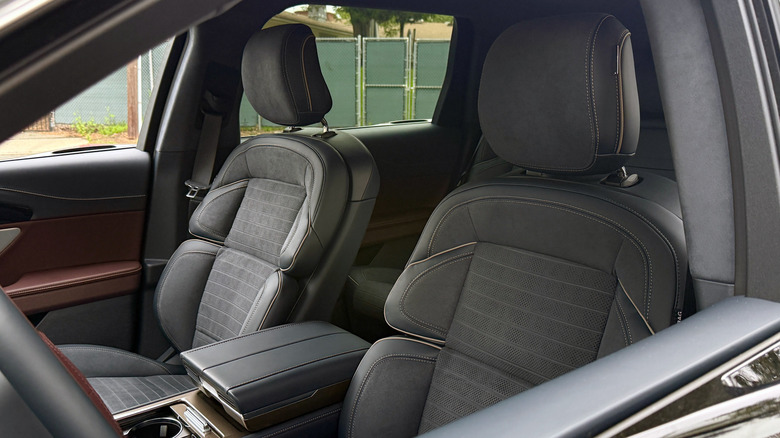
Once you’ve loaded yourself inside the Nautilus, you’ll notice a pretty high seating position, which gives you a commanding view of the road. Settle in and you’ll begin to pay a bit more attention to the ultra-comfortable front seats that have all sorts of adjustments. Lincoln calls them Perfect Position seats and that description isn’t hyperbolic. They’re heated, cooled, and massaging, and are a highlight of the driving experience. Long road trips and daily commutes alike are improved by sitting up front in the top-trim seats.
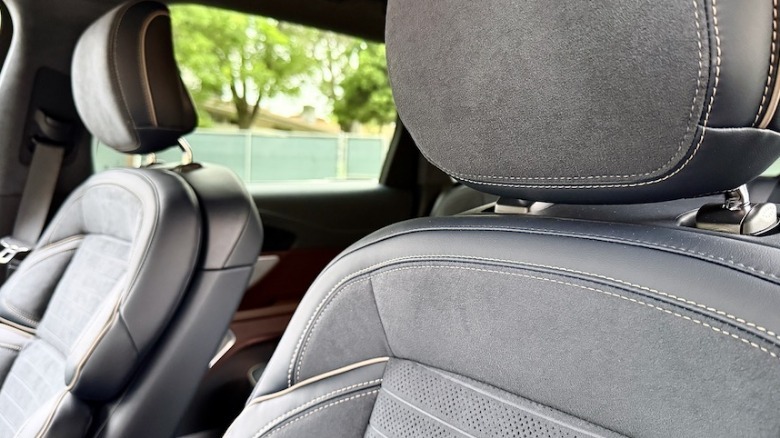 Travis Langness/SlashGear
On top of being comfortable, the Lincoln’s cabin design is probably one of its best attributes, with lots of lovely materials and bold colors used all around. The seats, door panels, and dashboard all feel like they’ve been constructed with high-quality materials, and they feel like they’ve been put together well, with tight tolerances and even stitching on everything.
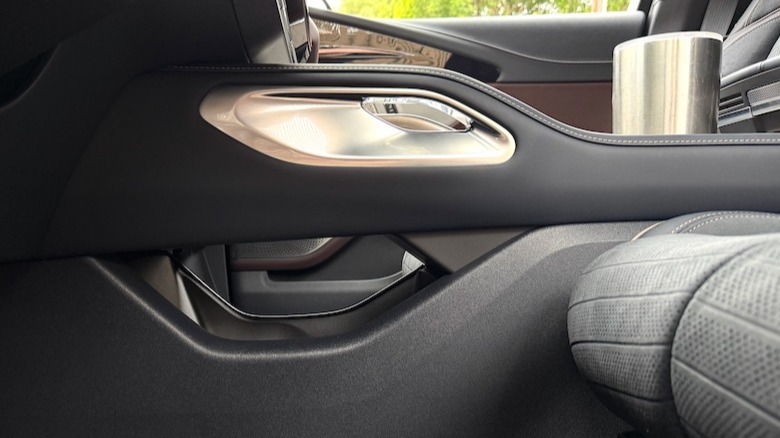 Travis Langness/SlashGear
Beyond just design, it’s a highly functional interior, too. The small-item storage areas are well-organized, and there’s lots of room for big items in the trunk. There are 35.2 cubic feet of cargo space behind the second row, and 68.8 cubic feet behind the second row — plus the second-row seats are easy to fold flat. If you like to overpack, the Nautilus is happy to accommodate.
In-cabin tech is hard to beat
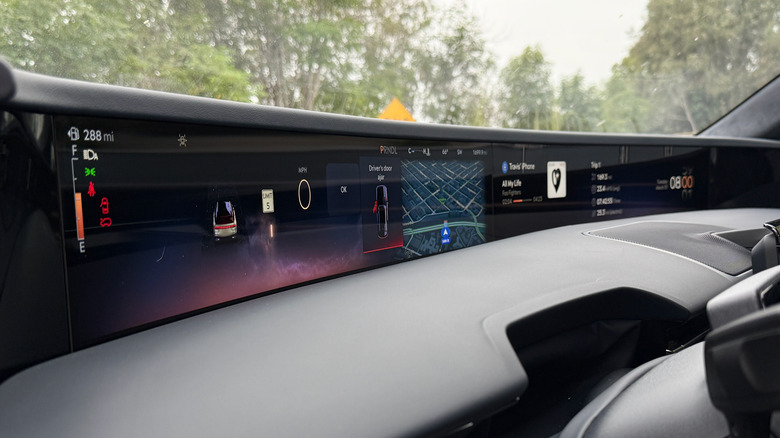
Right before I drove a Nautilus around for a week, I was testing out Lincoln’s big baddie, the Navigator, and it was clear to me that the two share a lot of highlights. The Nautilus and Navigator have much of the same tech and interior details, most notably, the massive mirror-to-mirror screen that dominates the dashboard.
Inside the Nautilus, the 48-inch display is a bit more intimidating at first. In the Navigator, the screen feels a bit smaller, just based on its relation to the size of the vehicle. Without the imposing size of the Navigator to balance it out, the screen seems significantly larger in the Nautilus. Thankfully, the learning curve isn’t very steep. Learning the locations of the controls and what information is housed in which part of the screen is a quick process.
 Travis Langness/SlashGear
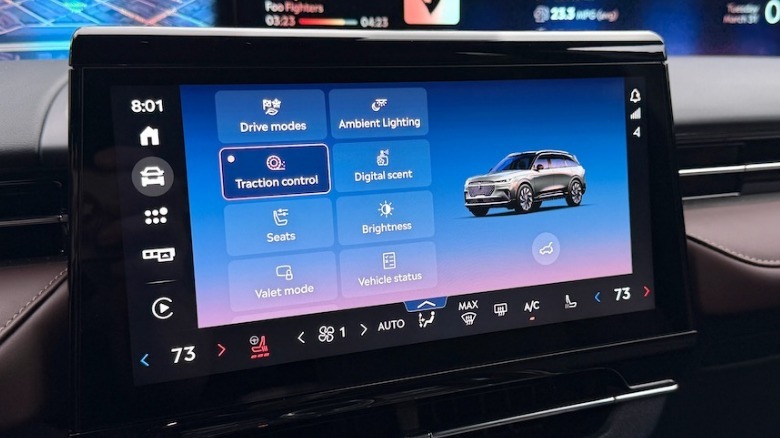
The large screen dominates the dashboard, but a smaller 11-inch display down low does the work of controlling most of the functions. It responds to inputs quickly, and it’s extremely high resolution, with good contrasts, making it easy to see in the sort of sunlight that can blast out lower-quality screens.
 Travis Langness/SlashGear
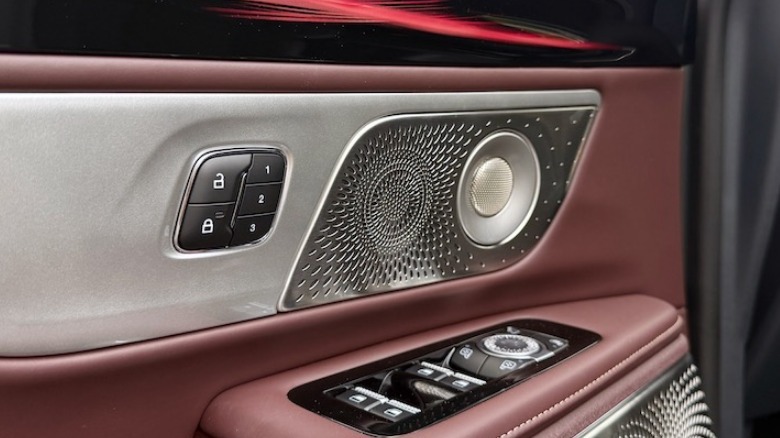
In the case of the Revel Ultima 28-speaker stereo, I’m a fan, but it seems that more power from the stereo and fewer speakers would get the job done. The audio quality was impressive, and with all the speakers surrounding me, things felt pretty immersive, but the volume didn’t go nearly as high as I would’ve liked.
Traveling with BlueCruise is a mixed bag
Ostensibly, one of the most appealing features of the Nautilus is the BlueCruise system. It packages the Lincoln’s driver aids together for a hands-free driving experience on certain roads. I used it on multiple occasions, when the roads were wide open and when traffic was heavy, and it wasn’t all I’d hoped for. In general, the system reduces fatigue, which is great, especially if you’re stuck in long traffic jams (which are pretty normal here in Los Angeles). The adaptive cruise control aspect of BlueCruise works well. It maintains a reasonable distance from the vehicle ahead and doesn’t brake too hard when traffic slows down.
New for 2026 is the Nautilus’ automatic lane-change feature, included in BlueCruise. On multiple occasions during my test, while BlueCruise and the adaptive cruise control were engaged, the Nautilus attempted to make its own lane changes to go around slower-moving traffic. This would be great, if it weren’t when the only lane to my left was a carpool lane that I couldn’t enter. It happened on more than carpool lanes, too: the system did its best to initiate a pass when a closed-off toll lane was the only place to do so. It also tried to make passes around vehicles when I was already doing the speed I’d set with the cruise control.
 Travis Langness/SlashGear
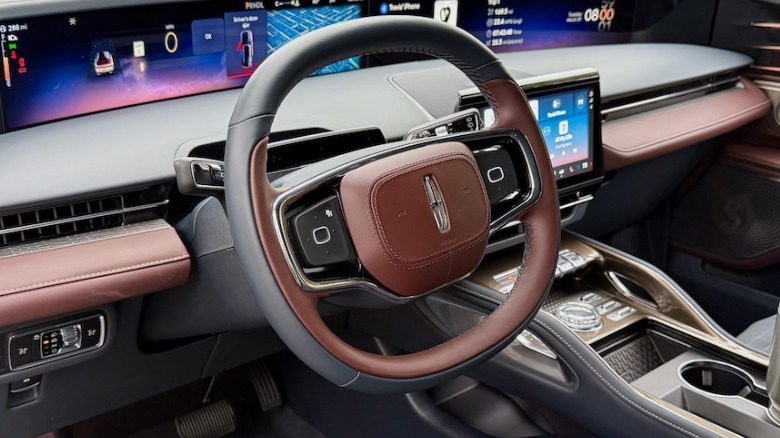
The other big drawback on the inside of the Nautilus was the steering wheel. If you want to read my full thoughts on oblong steering wheels in vehicles, and disappearing buttons on those same steering wheels, feel free to check out my Navigator review. I basically say the same thing in there, so I’ll keep those thoughts brief here: They both need to go. For me, the flat-bottom-and-top steering wheel isn’t functional, and the not-visible-until-you-touch-them buttons don’t contribute to an improved experience.
2026 Lincoln Nautilus Black Label verdict
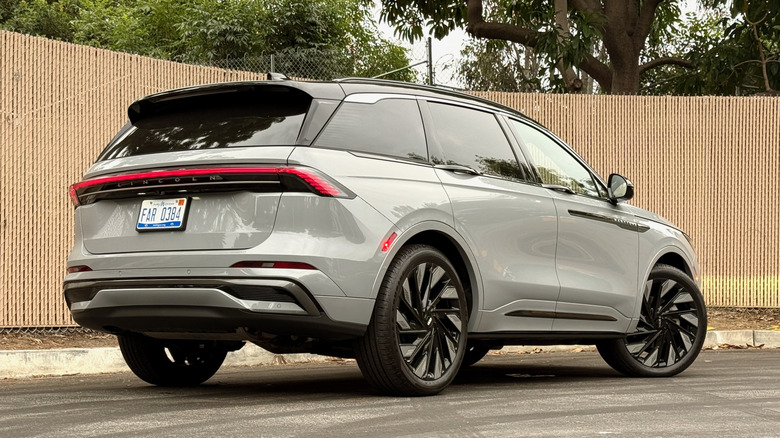
American luxury brands can sometimes be playing for second place in their segment. German automakers like BMW, Porsche, and Mercedes-Benz often lead their respective classes in terms of interior refinement and available equipment. In this case, though, the Nautilus doesn’t fall behind those brands, especially when you consider the pricing delta. Top trim levels of the Nautilus are pricey, but for the most part, the Lincoln undercuts rivals, even on the top trims, without sacrificing features.
 Travis Langness/SlashGear
The 2026 Nautilus offers one of the best interiors in its class, with impressive on-road comfort and all the modern features you could ask for — even if its driving aids could be a little better executed. It does lack some of the pizazz and outright power, though, so if you’re looking for all-out performance in your luxury SUV, it’s worth considering options like the rowdy BMW X5 M60i or the Porsche Cayenne GTS.

Stephan is the sports journalist for the Maple Grove Report.