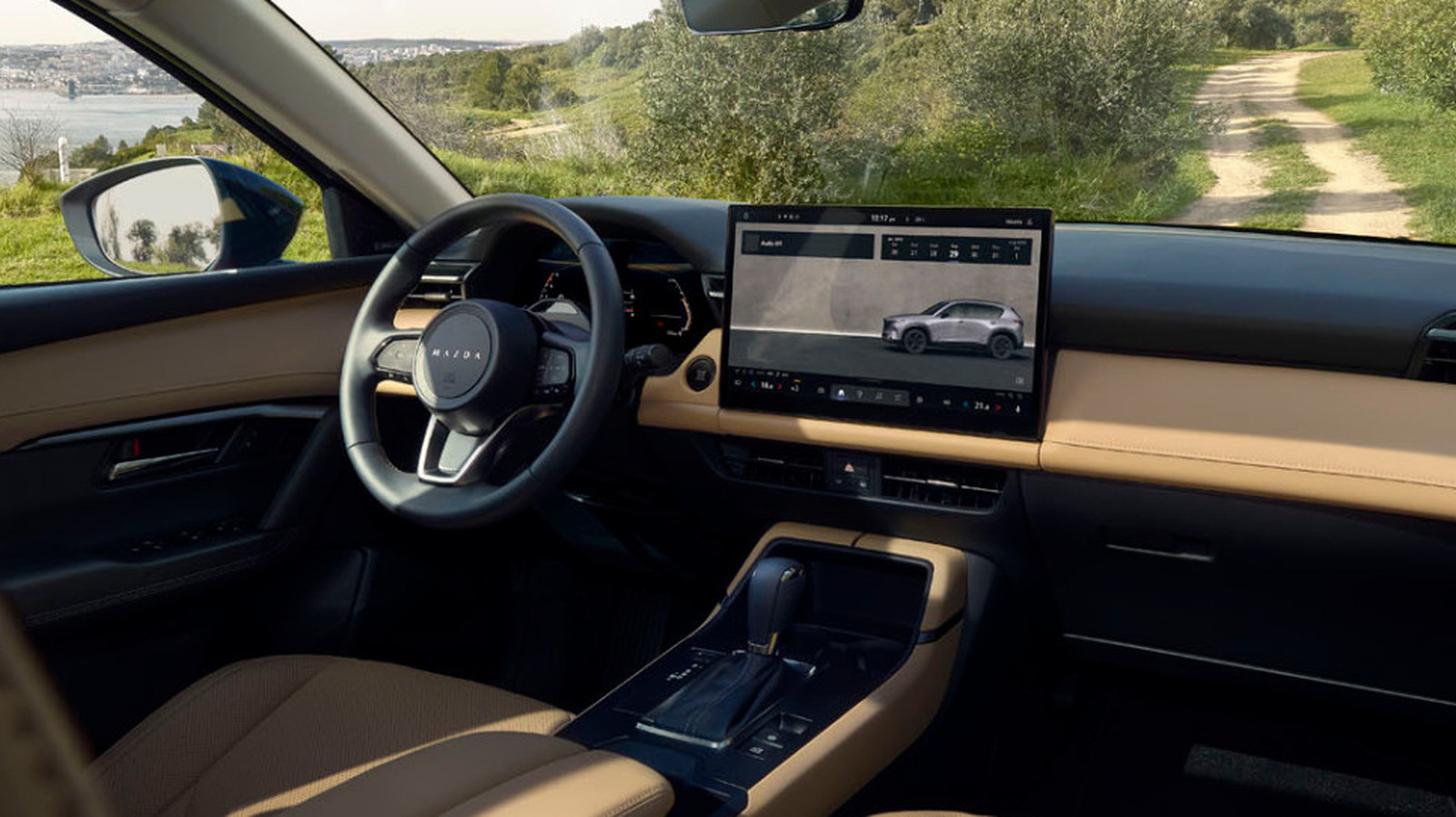

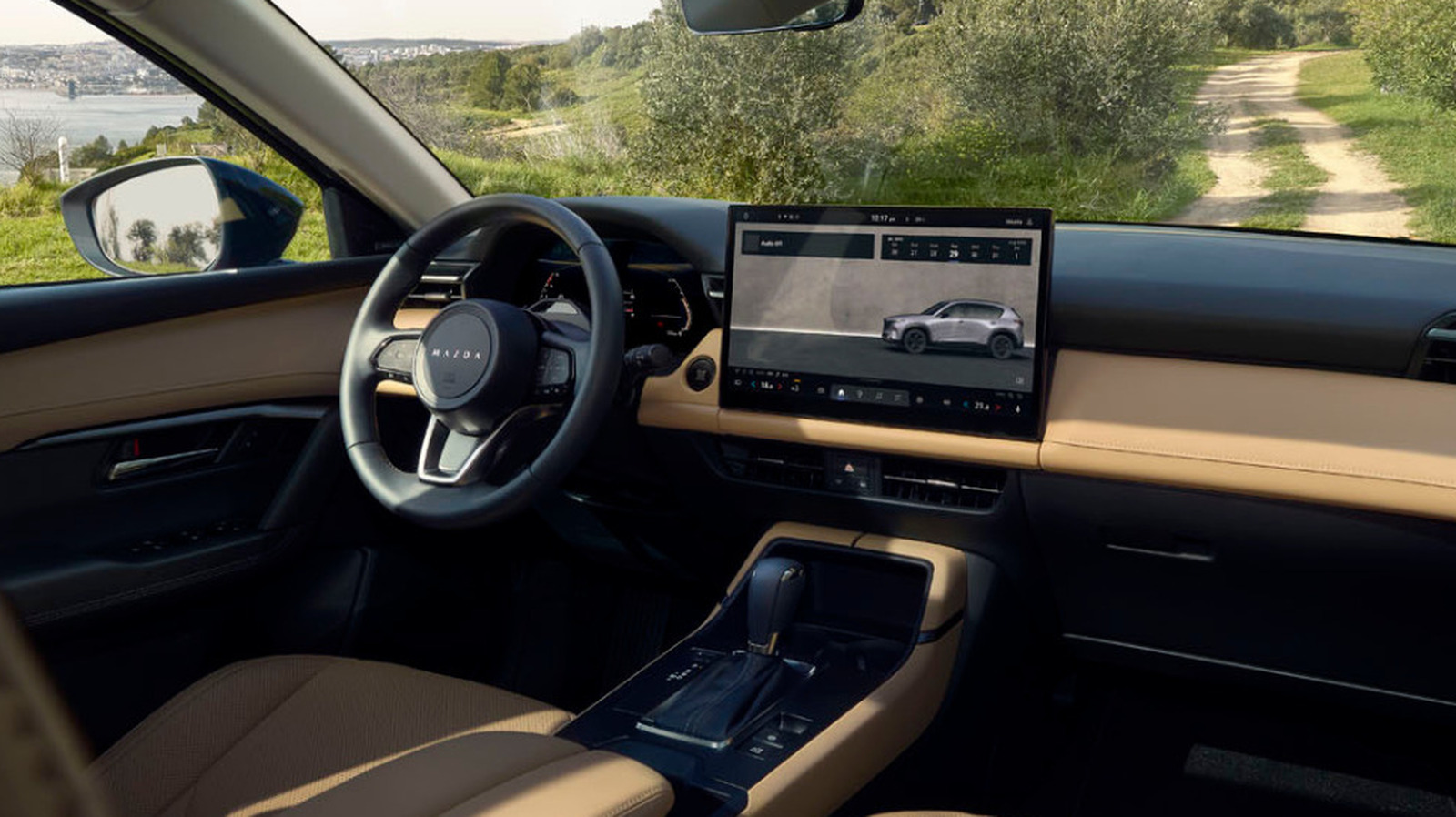
Even experienced drivers can make the mistake of driving while distracted, and the best way to avoid that is to remove any distractions before they become a problem. But according to Mazda, the new massive attention-grabbing infotainment screen in the 2026 CX-5 isn’t as much of an issue as dealing with traditional buttons.
Mazda’s new touchscreen is 12.9-inches, and the version in the CX-5 Premium Plus measures 15.6-inches. Though it appears that the company caved in to the touchscreen dashboard trend with this move, Mazda frames it as being a better system with minimal distractions. That’s because the new screen utilizes simplified commands while also leaning on voice control and steering-wheel inputs. It has modern touch systems like Google Built-In and smartphone-style apps as well. The company believes that since most drivers are already accustomed to using touchscreens, there’s less of a reason to continue with physical buttons and knobs that work differently than the tech they use every day.
This marks a direct contradiction for Mazda, which decided to move away from touchscreens in its vehicles several years ago. The company cited research that showed drivers could look away from the road while attempting to perform commands on a screen, potentially affecting their ability to keep the vehicle stable. The decision to use buttons, head-up displays and other controls would allow drivers to operate more efficiently and with less complex movements, thus making for a safer drive.
Mazda’s future plans and touchscreen safety concerns
Mazda’s updated touchscreen system in the 2026 CX-5 combines navigation, vehicle settings, and everyday controls into one hub. This system is designed to give fast on-screen responses, easy menus, and reduced effort to move between functions. Important elements like media control and key adjustments are easily accessible, and the overall structure is built to make the most commonly used features easy to find while driving.
We reviewed the 2026 CX-5 in February and as of now, it’s uncertain if the new touchscreen will be featured in other models anytime soon. However, Mazda describes the CX-5’s underlying vehicle system as the starting point for the future of its software-driven vehicles. This suggests that the new technology will eventually support and likely influence the development of upcoming models. So, while a rollout hasn’t yet been announced, it appears there could be more to come.
But while automakers continue to utilize infotainment screens in their vehicles, a 2025 driving simulator study found that there are some persisting safety concerns. Touchscreens in Motion: Quantifying the Impact of Cognitive Load on Distracted Drivers revealed that when these displays were used, driver performance and awareness declined. In fact, drivers’ response times were almost twice as slow when using a touchscreen while driving and their ability to maintain a stable lane position worsened as well.

Stephan is the sports journalist for the Maple Grove Report.