
No more waiting for hours on end at some secondary European airport, nor pulling your hair out at the departure gate ’cause Ryanair staff suddenly decided your perfectly sized cabin bag doesn’t actually fit the measurer. “The wheels are sticking out,” huh? Yeah, classic.
This summer, if you’re planning to country-hop around Europe, you can ditch their crazy rules altogether and hit the railway instead:
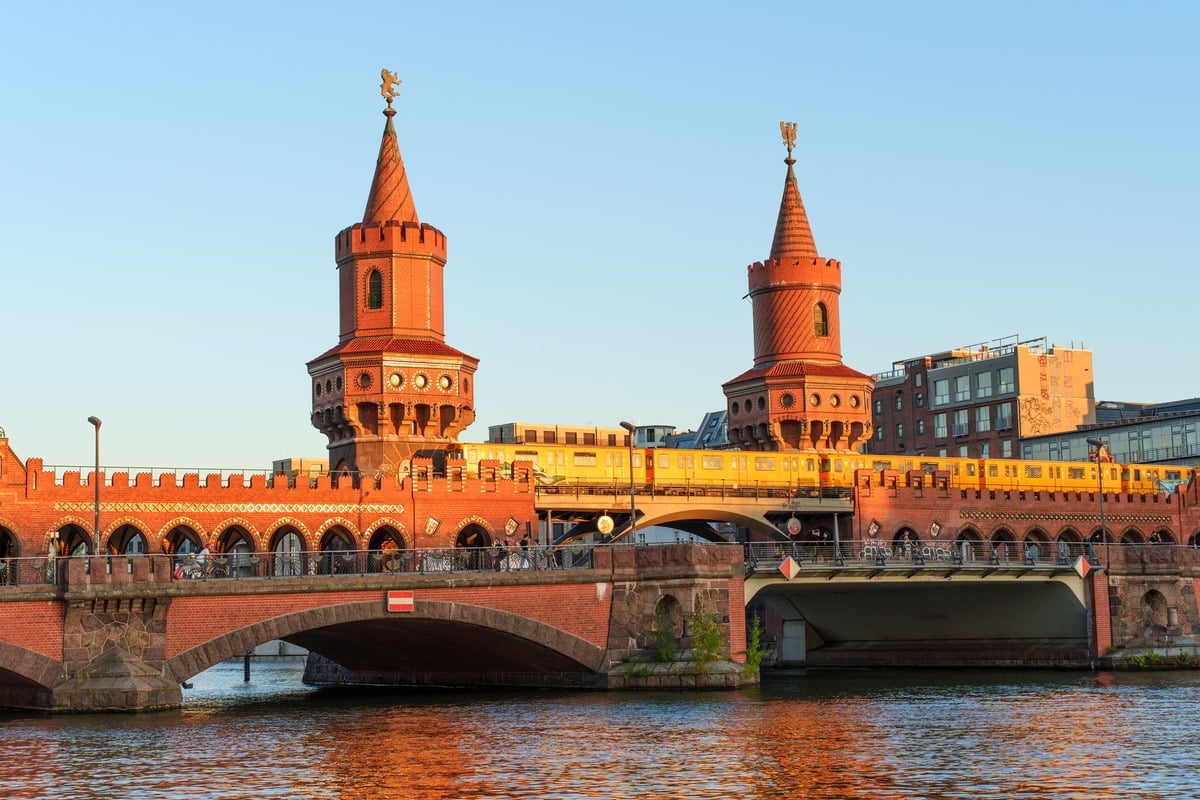
European Sleeper has just launched a brand-new overnight route, connecting 3 of the most sought-after and vibrant capital cities on the continent. How do croissant et un café allongé for breakfast, fries and waffles for lunch, and schnitzel and draught beer for dinner sound?

Paris To Brussels To Berlin
After a brief 2-month hiatus for the season, European Sleeper has hit the road again for spring/summer. Similarly to its pre-winter schedule, it connects Paris-France, Brussels-Belgium, and Berlin-Germany, and while serving a bunch of minor stops in between.
It runs 3x weekly, with the Berlin-bound train leaving Paris on Tuesdays, Thursdays, and Sundays, while the Paris-bound return is currently running on Mondays, Wednesdays, and Fridays.
The overnight service kicks off from Gare du Nord in the French capital at 5:45 PM, passing Brussels at 9:45 PM the same evening, and pulling up to Berlin Hauptbahnhof at 9:59 AM the next day.
From Berlin, departures are scheduled for 6:31 PM, calling at the Belgian capital at 7:56 AM the following day, and finally Paris-Gare du Nord at 10 AM.

Everything You Need To Know About The New Route
Here’s the full breakdown of the new European Sleeper from Paris → Brussels → Berlin:
- Operator: European Sleeper
- Complete itinerary: Paris Gare du Nord → Aulnoye-Aymeries → Mons → Brussels-Midi → Liège-Guillemins → (Hamburg-Harburg from mid-July 2026) → Berlin Hbf
- Frequency: 3x week
- Frequency: from Paris: Tue / Thu / Sun | from Berlin: Mon / Wed / Fri
- Typical duration: about 14h04 to 16h, depending on the timetable period and whether Hamburg is included
- Ticket classes: Budget, Classic, Comfort Standard, Comfort Plus

How Much Do Tickets Cost?
- Budget (regular seat): from €29.99 | $34.50*
- Classic (shared cabin): from €79.99 | $92.10
- Comfort Standard: €119.99 | $138.20
- Comfort Plus: €149.99 | $172.70
*Ideal for the Paris–Brussels stretch but not recommended for long-distance
Europe is planning on a major overhaul of its travel rules this summer. Soon enough, Americans will have to get fingerprinted upon arrival to the continent, so make sure you prepare in advance for that.
Be sure to Check the Traveler Dashboard for the latest Entry Requirements and travel advisories for your destination before planning your trip!
Which Category To Pick?

Needless to say, if you’d like to avoid arriving to Berlin completely stiff-backed, we wouldn’t go for a regular train sit for the overnight stretch. If you’re on a budget, the shared cabin (Classic) is the ideal category:
A 5-person couchette compartment (including Women-Only options), it’s seats by day, bunks by night. Sheets, a blanket and a pillow are included, with toilet and washroom available outside the compartment (1 per carriage).
In Classic, you get the exact same amenities, except if you’re traveling in a group, you can book the entire compartment for yourselves.
Comfort is reserved for 3 people only, offering more privacy, better bedding than Classic or Budget.

Finally, Comfort Plus has all of Comfort’s perks, plus more space, standard-size beds, a private washbasin, and a welcome drink and breakfast included.
You should know, however, the European Sleeper is not currently operating the dining car on this route. The current setup looks more like crew snack/drink service, so you might want to stock up on any essentials at either Gare du Nord or Berlin Hbf before boarding the train.
Explore The 3 Capitals Like A Local
Paris, France

The City of Lights, home to the Eiffel Tower, the Arc de Triomphe, the cobble-paved Montmartre, and the Louvre and a plethora of world-class museums, Paris requires no introduction. From someone who lives here, though, here’s a local secret tourists often miss:
Nestled in the heart of the Historic Center, a short 15 min walk to Notre-Dame, the Arènes de Lutèce is an Ancient Roman amphitheater that’s only been unearthed in the 19th century, and now serves as a public park.
It’s my go-to spot for people-watching and savoring a cheese-and-ham baguette on a hot summer day, and the lush garden in the vicinity is perfect for stretching with a good book or just soaking up the sun while the city hums around you.
Brussels, Belgium

Brussels is one of those surprisingly-compact, fully-walkable European capitals you can see in a full day. From the Grand-Place, with its ornate gilded guildhalls, to the iconic ‘Pissing Boy’ statue, and its even-quirkier ‘Pissing Girl’ companion, and the chocolate-and-beer scene, it’s easy to get swept up in the obvious sights.
Those are all obvious Brusselian landmarks. If you’re looking for the hidden gems, tucked away in the artsy Marolles district, the Musical Instruments Museum has a rooftop terrace commanding a breathtaking panorama of the city’s spires, red rooftops, and even the Atomium in the distance.
The café at the top also serves some of the richest, smoothest coffee in the city, and it’s somewhere I always find myself gravitating back towards whenever I’m in Brussels. I love sitting up here and watching the street musicians waft their tunes faintly from below, soaking in that ‘urban hideaway in plain sight’ vibe.
Plus, it’s not like Brussels is the safest city to be in these days, what with the rise in sectarian violence and mugging, so I’m happy to just be an observer from afar:
Berlin, Germany

From the gloomy, fascinating-all-the-same WWII heritage, to the history-drenched streets of Mitte, and the art-soaked, graffitied Kreuzberg, Berlin is a city of contrasts, buzzing with pulsating energy, and my city break of choice when I need a shot of chaos straight to the head.
The beer garden scene is unrivaled—the city’s oldest, Prater Garten, might just be my favorite, with its chestnut tree garden, long communal tables and chill summery vibe—and if you’re here for the (in)famous nightlife, know the legends don’t even scratch the surface compared to the insanity on the ground.
Give me a good warehouse rave in Friedrichshain any day, or a long all-nighter session in techno temple Berghain. There’s something for every kind of night owl here, from the casual, cocktail-sipping, Instagramming types, to the grundgier, strobe-lit, berserk freaks.


Stacie Harris is a local resident and reporter of the Maple Grove area. Stacie reports on medicine and science for the Maple Grove Report.