New Vehicles That Still Come With V6 Engines In 2026


Especially with the introduction of electric powertrains, there’s never been more of a choice for what you get under the hood of your vehicle than in 2026. Emissions regulations and a strive for the highest efficiency ratings mean there’s a lot of smaller engines on the market today. Still, some manufacturers manage to keep the middle-ground V6 alive, offering standout performance without decreasing the fuel economy as much as larger V8.

Due to the V6’s versatility and proven practicality, you’ll be able to find one in all the major segments on the market at the moment. Considering how expensive new cars are, you won’t be able to get a brand-new V6-powered car on a budget, but if you’re looking for a pickup truck that can tow plenty or a compact sports car with buttery-smooth power delivery, the V6 is still well and truly alive across the board. Here’s a closer look at 12 of the nameplates that still feature a V6 in 2026 for some, if not all, trim levels.

2026 Lexus IS

At the smallest end of the Lexus sedan lineup is the IS, which is wearing an all-new face for the 2026 model year. While it’s still part of the third-generation run, its front end makes it look brand new in all the best ways. Under the hood, though, one of the engines from the 2025 model has been brought over: the 3.5L-liter V6. The entry-level four-cylinder was dropped alongside the top-spec V8, leaving the V6 as the sole option if you want the car brand new.

The engine is the powerplant for both of the trims this year, with the F Sport Design only having the appearance of the proper F Sport, just without the performance upgrades elsewhere within the drivetrain. You get a healthy 311 horsepower and 280 pound-feet of torque from the V6, which doesn’t make it the most powerful on this list, but it is still plenty for a compact sedan that treats luxury equally as important as performance. Pricing starts at $46,895, plus a $1,295 destination charge.

2026 Jeep Wrangler

The Jeep Wrangler has been a pillar of the off-roading scene since its introduction in 1986. Throughout its generations, the rugged SUV hasn’t deviated much from its original philosophy, yet it still manages to keep up with the competition in capability. The 2026 model doesn’t change anything major underneath its skin, with features such as leading link suspension at the front and trailing arm at the rear in the base trim. For power, it relies on a 3.6-liter V6 for most of its trims.

Like many SUVs on the current market, the 2026 Wrangler has multiple engines available. The Sahara, 80th Anniversary Edition, and the Willy ’41 come with a smaller, 270-horsepower inline-four. In the top-spec Moab 392 sits a 6.4-liter V8 producing 470 horsepower, but for every other trim, you get the 285-horsepower V6. The engine also gives you 260 pound-feet of torque at 4,800 RPM, striking a solid balance between on and off-road driving. At the lowest end of the V6-powered lineup, the Sport trim comes in at $36,035, with the Rubicon X sitting at $56,560. All come with a $1,995 destination charge.

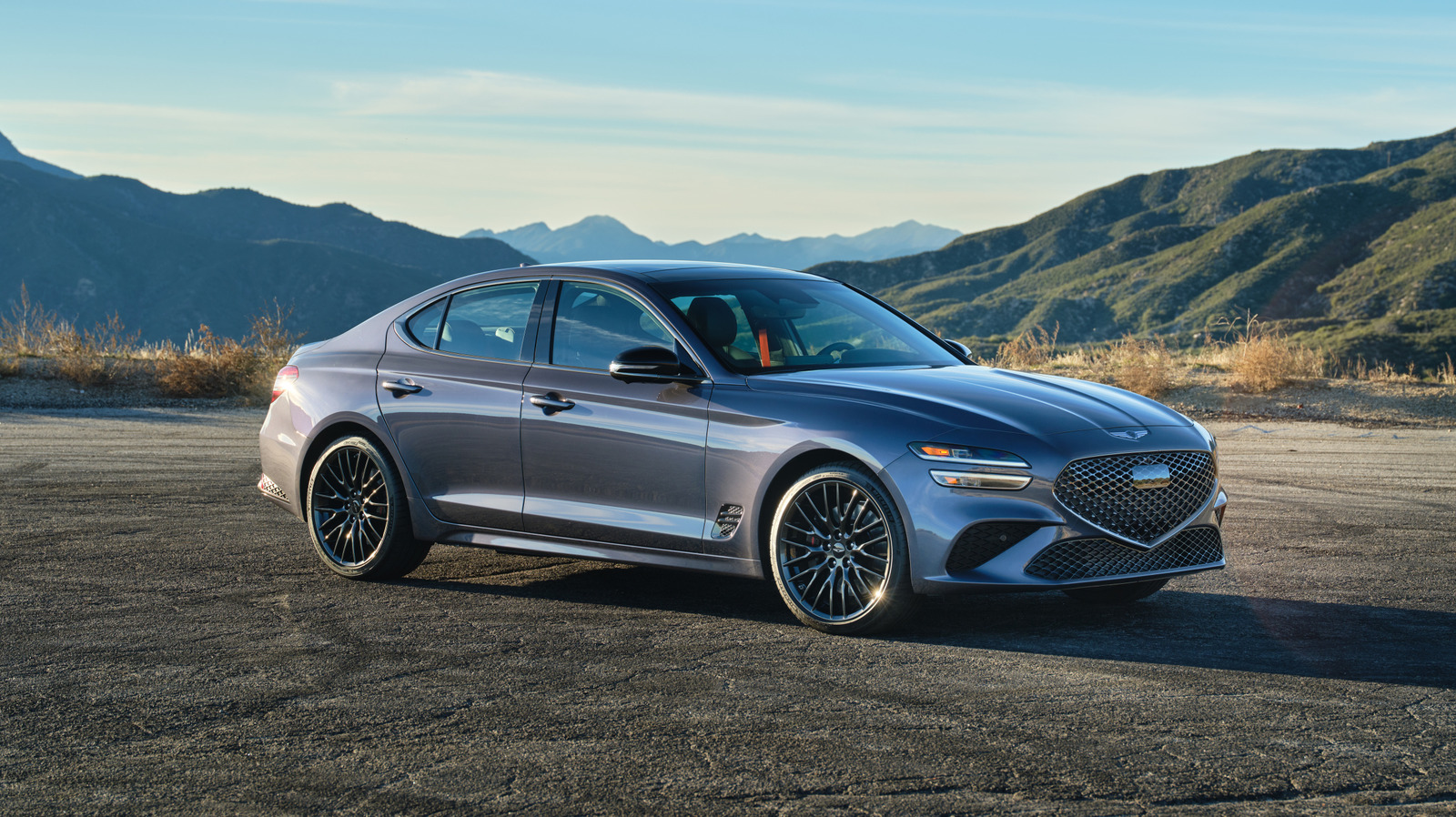
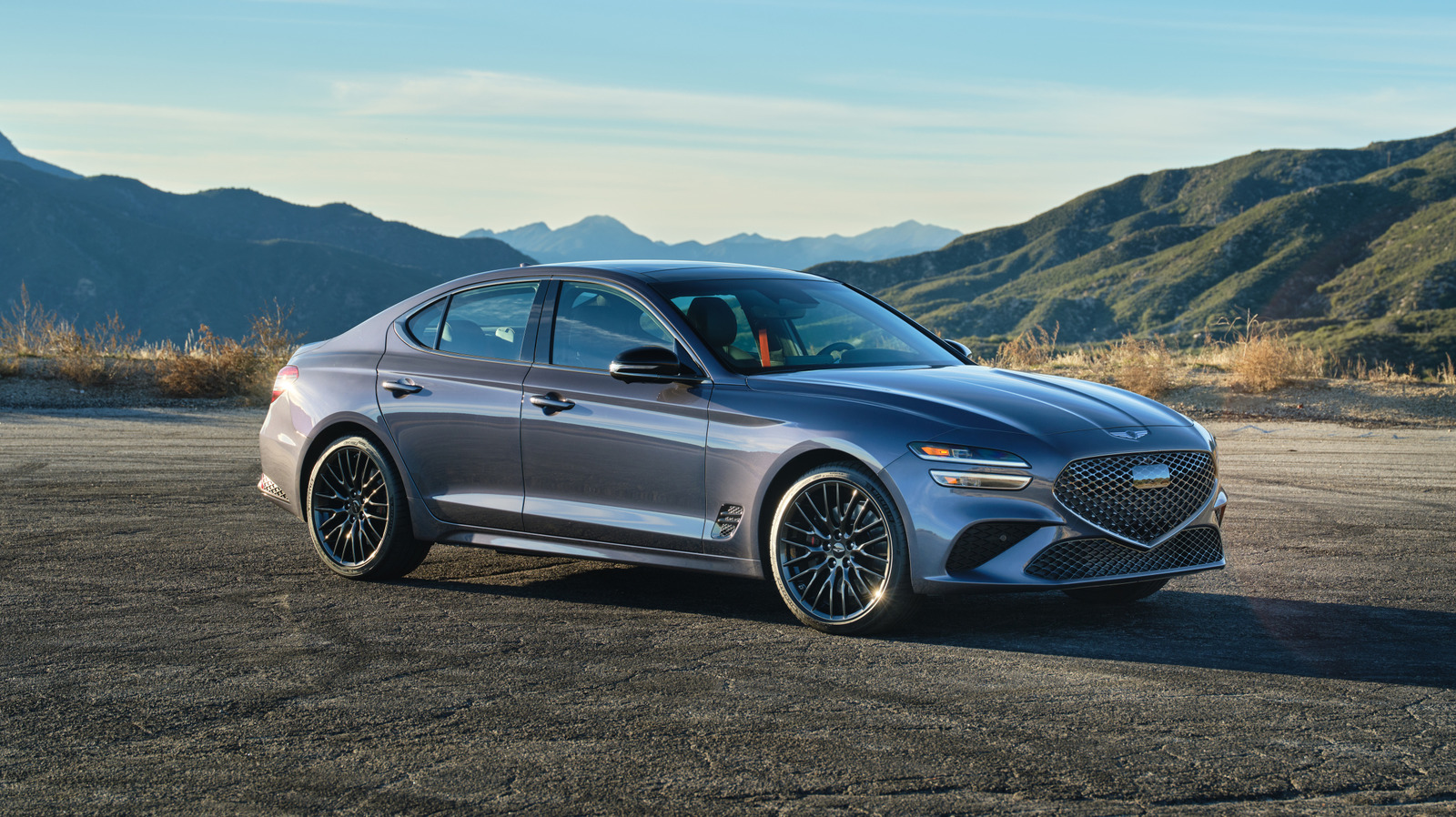
2026 Genesis G70

Another Asian luxury brand that is trying to reach the levels of Lexus and such is Genesis. Only entering the U.S. market in 2016, Genesis has built a very competitive fleet of cars, making good use of a variety of powertrains across the sedan and SUV segments. At the smaller end of the former segment sits the G70, which goes toe-to-toe with cars like the IS. Similar to the Lexus, the G70 is powered exclusively by V6 engines, but has a couple of options depending on your budget and priorities.

The entry-level 2.5-liter V6 for the 2026 G70 can be selected for the base trim as well as the more refined Prestige models, producing a decent 300 horsepower and 311 pound-feet of torque. It’s turbocharged for an extra boost of performance, but the 3.3-liter option comes with two of them. Producing a higher 360 horsepower, this engine will expectably cost you more money, starting at $53,600 for the Sport RWD trim, compared to the $43,450 MSRP of the cheapest 2.5-liter model. Every G70 is available in either rear-wheel or all-wheel drive, giving it an edge over some rivals in that respect.

2026 Acura MDX

Despite being tailored almost exclusively for the U.S. market, Acura is also one of the most reserved when it comes to how many cars it has in its lineup. In 2026, you have the choice of just four new Acuras, three of them being SUVs. At the top of the relatively small pile is the MDX, which is very much marketed as a premium performance SUV. Inside, you get features like leatherette-trimmed seats, ambient lighting, and a leather steering wheel as standard for a more polished look, with driving dynamics to match.

Under the hood sits a 3.5-liter V6 engine producing 290 horsepower and 267 pound-feet of torque, which may not seem like a lot, especially compared to rivals such as the BMW X5. However, Acura puts a lot of focus on the rest of the car, using tech such as the brand’s Active Handling Assist, which uses torque vectoring to help keep the car balanced through the corners. The reactive dampers aim to keep the ride as smooth as possible, to also hit the luxury brief. At the top of the pack, though, the Type-S trim gets a turbocharged 3.0-liter engine, putting down a much more competitive 355 horsepower and 354 pound-feet of torque.

2026 Porsche Panamera

The Panamera doesn’t get as much attention as some other Porsches in the current lineup, but that can be somewhat expected. It’s not as flashy or brutally fast as any of the 911s or 718s, but if you’re looking for a nice balance between performance and comfort in a full-size sedan, the German outfit’s offering remains one of the most competitive all these years later. Porsche likes a six-cylinder engine, and for the 2026 Panamera, a healthy 2.8-liter V6 is put to use.

If you want the maximum performance that the Panamera offers at the moment, either the gas-only V8 producing 493 horsepower or one of the four different hybrid options, some of which we got behind the wheel of last year. With the base V6 engine, though, you get 348 horsepower and 368 pound-feet of torque, which is necessary to shift the 4,295-pound curb weight. Pricing starts at $113,000 for the base 2026 Panamera, with the $120,400 4 trim also getting the same engine, but with all-wheel drive as standard to get off the line quicker.

2026 Toyota Tundra

The first pickup on this list is the Toyota Tundra. Ever since it was released in 2000, it’s remained one of the most attractive full-size trucks on the market, despite going up against the likes of the F-150. In 2026, the Tundra continues to build on the complete redesign introduced in 2022, but doesn’t have anything major compared to the previous two model years. That means the same engine carries over, and a truck this big needs plenty of power to do its job.

The 2026 Tundra has three different 3.6-liter V6 options available, with the lower-tuned, single-turbocharged version producing 358 horsepower and 406 pound-feet of torque. The SR5 trim unlocks the twin-turbocharged engine producing 389 horsepower, but the hybrid option comes out on top with a strong 437 horsepower output. With so many different cab configurations as well, the Tundra’s towing capacity can fluctuate massively, but it’s the SR5’s engine that manages to tow the maximum 12,000 pounds that the truck is capable of.

2026 Cadillac CT4-V Blackwing

With most American manufacturers moving toward SUV and pickup truck exclusivity, Cadillac has been the primary force in keeping the sedan segment alive in the U.S., at least with an engine under the hood. The smaller of the two gas-powered sedans currently offered by Cadillac is the CT4, introduced in 2020 to replace the ATS. Not long after, the compact sedan would receive the Blackwing treatment for the CT4-V variant, which remains one of the best value-for-money buys if power is your utmost priority.

In the standard CT4-V, you still get solid numbers from the 2.7-liter four-cylinder, offering 325 horsepower and 380 pound-feet of torque. In the Blackwing, though, a massive 472 horsepower and 445 pound-feet of torque come courtesy of the twin-turbocharged 3.6-liter V6. Alongside the bigger engine, the CT4-V Blackwing gets various visual enhancements to drive home the performance element, including a larger front splitter and a defined duck spoiler, to name a few. Starting at $63,600 (with a $1,795 destination charge), the Caddy undercuts plenty of cars that don’t offer this level of power, especially in a compact package.

2026 Nissan Frontier

Full-size trucks aren’t the only type to have a V6 under the hood. In Nissan’s current lineup, there’s only one truck left after its full-size competitor, the Titan, was discontinued in 2024. Now, only the mid-size Frontier keeps the brand active in the pickup truck segment, but it does a solid job of staying in the mix in its segment for raw power.

For the 2025 model year, the truck received a refresh to bring it up to the visual standards of modern trucks, but the rocksteady powerplant remained the same. The same carries over into the 2026 model year, with the 3.8-liter V6 producing 310 horsepower and 281 pound-feet of torque. The former rating is the same as the Chevy Colorado, a direct rival to the Nissan, and 40 more than the Ford Ranger. It’s worth noting that the other trucks offer bigger engines, but for the base price of $33,550, excluding the $2,190 destination fee, the Frontier is certainly worth considering if you aren’t looking to spend a whole lot of money but want plenty of power.

2026 Audi S5

Very few brands have gone through as big an overhaul as Audi in recent years. Discontinuing many nameplates and merging others, the brand backtracked several times before settling on its current strategy. One of the changes that was made was the removal of the A4 and the old A5 to create the all-new A5, which leans further into both the luxury and performance elements that the brand is built on. The B10 generation was launched for the 2025 model year, subsequently getting no major changes this year.

In what’s currently the top-spec model before the RS5 enters the market, the 2026 S5 is powered by a 3.0-liter V6 engine, producing 362 horsepower and 406 pound-feet of torque. Equipped with quattro all-wheel drive as standard, the sedan can reach 60 MPH in just 4.3 seconds, which isn’t bad for a luxury car of its size. Being an all-new German luxury car, though, it’s quite expensive relative to cars of a similar performance level, starting at $63,300.

2026 Ford Bronco

Ford is another brand that frequently reshuffles its lineup, with some recent key changes aimed at simplifying things, such as dropping the mid-size Edge from the fleet. In 2026, Ford will have a couple of SUVs within the segment. The Explorer is the way to go if you want a bit more comfort and a standard SUV feel, but for overall capability, the Bronco is Ford’s main weapon. In its lower-trim guises, the inline-four delivers 300 horsepower, which is there or thereabouts with the competitor.

However, the Outer Banks, Badlands, and Heritage edition get a 2.7-liter EcoBoost V6, producing a much healthier 400 horsepower and 415 pound-feet of torque using premium fuel. Only the Stroppe Edition gets this engine as standard. Go right to the top of the lineup, though, and the Bronco Raptor delivers a maximum 418 horsepower and 440 pound-feet of torque from its EcoBoost 3.0-liter V6. While the horsepower bump is only slight, the step up in torque allows the Raptor to be comfortably the best Bronco off the tarmac, but comes with a price tag of $79,995 (with a $1,995 destination charge).

2026 Genesis GV80

Genesis’ sedans are a huge part of the brand’s overall success, but in the U.S. market, it’s unsurprisingly the SUVs that are the most important in continuing the recent strides. Towards the top-end of the segment, the GV80 is the largest SUV you can buy from Genesis at the moment, until the much-anticipated GV90 finally releases. Like many of its competitors and other Genesis models, the 2026 GV80 comes with a couple of engine options. The base 2.5-liter inline-four produces 300 horsepower and 311 pound-feet of torque, but the higher trims get a 3.5-liter turbocharged V6.

The first trim level that unlocks the V6 is the Advanced, with the Prestige and engine-exclusive Prestige Black also getting the V6 treatment. You get 375 horsepower and 391 pound-feet of torque, which was a massive factor in getting a perfect 10/10 score in our review of the V6-equipped 2025 GV80. Other features, such as the limited-slip differential, help keep the increased power consistent almost all the time, further bolstered by the available Sport driving mode alongside the various other terrain modes. For pricing, the V6-powered luxury SUV comes in at $75,950 with a $1,495 destination charge.

2026 Nissan Z

Decreasing the size dramatically compared to some of the V6 SUVs on this list, we get to the Nissan Z. The Z nameplate has been a staple of Nissan’s performance efforts for decades now, with the most recent iteration doing pretty well in offering the more stripped-back, analog feel behind the wheel that you’d expect from a small JDM sports car. Outside of the engine itself, Nissan uses Akebono brakes for all trims and tunes the suspension for the best balance across the board, but the 3.0L twin-turbocharged V6 is what gets most of the attention.

Producing 400 horsepower and 350 pound-feet of torque, the 2026 Z manages to hang on to and sometimes beat its rivals for base performance. The newest GR Supra produces 382 horsepower from its inline-six (not a V6), for example. Nissan doesn’t stop there, though, with the Nismo trim once again topping the lineup with a more powerful version of the twin-turbo V6. Priced at $65,750, it’s noticeably more expensive than the base trim at $42,970, but justifies it through delivering 420 horsepower and 384 pound-feet of torque. Do note that only the nine-speed automatic is available for the Nismo; the rest of the trims also offer a six-speed manual.


Source link

Leave a Reply

Subscribe to Our Newsletter

Get our latest articles delivered straight to your inbox. No spam, we promise.

Recent Reviews


  • Law establishes national prohibition against nonconsensual online publication of intimate images of individuals, both authentic and computer-generated.
  • First federal law regulating AI-generated content.
  • Creates requirement that covered platforms promptly remove depictions upon receiving notice of their existence and a valid takedown request.
  • For many online service providers, complying with the Take It Down Act’s notice-and-takedown requirement may warrant revising their existing DMCA takedown notice provisions and processes.
  • Another carve-out to CDA immunity? More like a dichotomy of sorts…. 

On May 19, 2025, President Trump signed the bipartisan-supported Take it Down Act into law. The law prohibits any person from using an “interactive computer service” to publish, or threaten to publish, nonconsensual intimate imagery (NCII), including AI-generated NCII (colloquially known as revenge pornography or deepfake revenge pornography). Additionally, the law requires that, within one year of enactment, social media companies and other covered platforms implement a notice-and-takedown mechanism that allows victims to report NCII.  Platforms must then remove properly reported imagery (and any known identical copies) within 48 hours of receiving a compliant request.

Support for the Act and Concerns

The Take it Down Act attempts to fill a void in the policymaking space, as many states had not enacted legislation regulating sexual deepfakes when it was signed into law. The Act has been described as the first major federal law that addresses harm caused by AI. It passed the Senate in February of this year by unanimous consent and passed the House of Representatives in April by a vote of 409-2. It also drew the support of many leading technology companies.

Despite receiving almost unanimous support in Congress, some digital privacy advocates have expressed some concerns that the new notice-and-takedown mechanism could have some unintended consequences for digital privacy in general.  For example, some commentators have suggested that the statute’s takedown provision is written too broadly and lacks sufficient safeguards against frivolous requests, potentially leading to the removal of lawful content –especially given the short 48-hour time to act following a takedown request.  [Note: In 2023, we similarly wrote about abuses of the takedown provision of the Digital Millennium Copyright Act]. In addition, some have argued that the law could undermine end-to-end encryption by possibly forcing such companies to “break” encryption to comply with the removal process.  Supporters of the law have countered that private encrypted messages would likely not be considered “published” under the text of the statute (which uses the term “publish” as opposed to “distribute”).

Criminalization of NCII Publication for Individuals

The Act makes it unlawful for any person “to use an interactive computer service to knowingly publish an intimate visual depiction of an identifiable individual” under certain circumstances.[1] It also prohibits threats involving the publishing of NCII and establishes various criminal penalties. Notably, the Act does not distinguish between authentic and AI-generated NCII in its penalties section if the content has been published. Furthermore, the Act expressly states that a victim’s prior consent to the creation of the original image or its disclosure to another individual does not constitute consent for its publication.

New Notice-and-Takedown Requirement for “Covered Platforms”

Along with punishing individuals who publish NCII, the Take it Down Act requires covered platforms to create a notice-and-takedown process for NCII within one year of the law’s passage. Below are the main points for platforms to consider:

  • Covered Platforms. The Act defines a “covered platform” as a “website, online service, online application, or mobile application” that serves the public and either provides a forum for user-generated content (including messages, videos, images, games, and audio files) or regularly deals with NCII as part of its business.
  • Notice-and-Takedown Process. Covered platforms must create a process through which victims of NCII (or someone authorized to act on their behalf) can send notice to them about the existence of such material (including a statement indicating a “good faith belief” that the intimate visual depiction of the individual is nonconsensual, along with information to assist in locating the unlawful image) and can request its removal.
  • Notice to Users. Adding an additional compliance item to the checklist, the Act requires covered platforms to provide a “clear and conspicuous” notice of the Act’s notice and removal process, such as through a conspicuous link to another web page or disclosure.
  • Removal of NCII. Within 48 hours of receiving a valid removal request, covered platforms must remove the NCII and “make reasonable efforts to identify and remove any known identical copies.”
  • Enforcement. Compliance under this provision will be enforced by the Federal Trade Commission (FTC).
  • Safe Harbor. Under the law, covered platforms will not be held liable for “good faith” removal of content that is claimed to be NCII “based on facts or circumstances from which the unlawful publishing of an intimate visual depiction is apparent,” even if it is later determined that the removed content was lawfully published.

Compliance Note: For many online service providers, complying with the Take It Down Act’s notice-and-takedown requirement may warrant revising their existing DMCA takedown notice provisions and processes, especially if those processes have not been reviewed or updated for some time.  Many “covered platforms” may rely on automated processes (or a combination of automated efforts combined with targeted human oversight) to fulfill Take It Down Act requests and meet the related obligation to make “reasonable efforts” to identify and remove known identical copies.  This may involve using tools for processing notices, removing content and detecting duplicates. As a result, some providers should consider whether their existing takedown provisions should also be amended to address these new requirements and how they will implement these new compliance items on the backend using the infrastructure already in place for the DMCA.

What about CDA Section 230?

Section 230 of the Communications Decency Act (“CDA”), 47 U.S.C § 230, prohibits a “provider or user of an interactive computer service” from being held responsible “as the publisher or speaker of any information provided by another information content provider.” Courts have construed the immunity provisions in Section 230 broadly in a variety of cases arising from the publication of user-generated content. 

Following enactment of the Take It Down Act, some important questions for platforms are: (1) whether Section 230 still protects platforms from actions related to the hosting or removal of NCII; and (2) whether FTC enforcement of the Take It Down Act’s platform notice-and-takedown process is blocked or limited by CDA immunity. 

On first blush, it might seem that the CDA would restrict enforcement against online providers in this area, as decisions regarding the hosting and removal of third party content would necessarily treat a covered platform as a “publisher or speaker” of third party content. However, a deeper examination of the text of the CDA suggests the answer is more nuanced.

It should be noted that the Good Samaritan provision of the CDA (47 U.S.C § 230(c)(2)) could be used by online providers as a shield from liability for actions taken to proactively filter or remove third party NCII content or remove NCII at the direction of a user’s notice under the Take It Down Act, as CDA immunity extends to good faith actions to restrict access to or availability of material that the provider or user considers to be “obscene, lewd, lascivious, filthy, excessively violent, harassing, or otherwise objectionable.” Moreover, the Take It Down Act adds its own safe harbor for online providers for “good faith disabling of access to, or removal of, material claimed to be a nonconsensual intimate visual depiction based on facts or circumstances from which the unlawful publishing of an intimate visual depiction is apparent, regardless of whether the intimate visual depiction is ultimately determined to be unlawful or not.” 

Still, further questions about the reach of the CDA prove more intriguing. The Take It Down Act appears to create a dichotomy of sorts regarding CDA immunity in the context of NCII removal claims.  Under the text of the CDA, it appears that immunity would not limit FTC enforcement of the Take It Down Act’s notice-and-takedown provision affecting “covered platforms.” To explore this issue, it’s important to examine the CDA’s exceptions, specifically 47 U.S.C § 230(e)(1).   

Effect on other laws

(1) No effect on criminal law

Nothing in this section shall be construed to impair the enforcement of section 223 or 231 of this title [i.e., the Communications Act], chapter 71 (relating to obscenity) or 110 (relating to sexual exploitation of children) of title 18, or any other Federal criminal statute.

Under the text of the CDA’s exception, Congress carved out Section 223 and 231 of the Communications Act from the CDA’s scope of immunity.  Since the Take It Down Act states that it will be codified at Section 223 of the Communications Act of 1934 (i.e., 47 U.S.C. 223(h)), it appears that platforms would not enjoy CDA protection from FTC civil enforcement actions based on the agency’s authority to enforce the Act’s requirements that covered platforms “reasonably comply” with the new Take It Down Act notice-and-takedown obligations.

However, that is not the end of the analysis for platforms.  Interestingly, it would appear that platforms would generally still retain CDA protection (subject to any exceptions) from claims related to the hosting or publishing third party NCII that have not been the subject of a Take It Down Act notice, since the Act’s requirements for removal of NCII by platforms would not be implicated without a valid removal request.[2]  Similarly, a platform could make a strong argument that it retains CDA immunity from any claims brought by an individual (rather than the FTC) for failing to reasonably comply with a Take It Down Act notice.  That said, it is conceivable that litigants – or event state attorneys general – might attempt to frame such legal actions under consumer protection statutes, as the Take It Down Act states that a failure to reasonably comply with an NCII takedown request is an unfair or deceptive trade practice under the FTC Act.  Even in such a case, platforms would likely contend that such claims by these non-FTC parties are merely claims based on a platform’s role as publisher of third party content and are therefore barred by the CDA. 

Ultimately, most, if not all, platforms will likely make best efforts to reasonably comply with the Take It Down Act, thus avoiding the above contingencies.  Yet, for platforms using automated systems to process takedown requests, unintended errors may occur and it’s important to understand how and when the CDA would still protect platforms against any related claims.

Looking Ahead

It will be up to a year before the notice-and-takedown requirements become effective, so we will have to wait and see how well the process works in eradicating revenge pornography material and intimate AI deepfakes from platforms, how the Act potentially affects messaging platforms, how aggressively the Department of Justice will prosecute offenders, and how closely the FTC will be monitoring online platforms’ compliance with the new takedown requirements.

It also remains to be seen whether Congress has an appetite to pass more AI legislation. Less than two weeks before the Take it Down Act was signed into law, the Senate Committee on Commerce, Science, and Transportation held a hearing on “Winning the AI Race” that featured the CEOs of many well-known AI companies. During the hearing, there was bipartisan agreement on the importance of sustaining America’s leadership in AI, expanding the AI supply chain and not burdening AI developers with a regulatory framework as strict as the EU AI Act. The senators listened to testimony from tech executives calling for enhanced educational initiatives and the improvement of infrastructure needed for advancing AI innovation, alongside discussing proposed bills regulating the industry, but it was not clear whether any of these potential policy solutions would receive enough support to be signed into law.

The authors would like to thank Aniket C. Mukherji, a Proskauer legal assistant, for his contributions to this post.


[1] The Act provides that the publication of the NCII of an adult is unlawful if (for authentic content) “the intimate visual depiction was obtained or created under circumstances in which the person knew or reasonably should have known the identifiable individual had a reasonable expectation of privacy,” if (for AI-generated content) “the digital forgery was published without the consent of the identifiable individual,” and if (for both authentic and AI-generated content) what is depicted “was not voluntarily exposed by the identifiable individual in a public or commercial setting,” “is not a matter of public concern,” and is intended to cause harm or does cause harm to the identifiable individual. The publication of NCII (whether authentic or AI-generated) of a minor is unlawful if it is published with intent to “abuse, humiliate, harass, or degrade the minor” or “arouse or gratify the sexual desire of any person.” The Act also lists some basic exceptions, such as publications of covered imagery for law enforcement investigations, legal proceedings, or educational purposes, among other things.

[2] Under the Act, “Upon receiving a valid removal request from an identifiable individual (or an authorized person acting on behalf of such individual) using the process described in paragraph (1)(A)(ii), a covered platform shall, as soon as possible, but not later than 48 hours after receiving such request—

(A) remove the intimate visual depiction; and

(B) make reasonable efforts to identify and remove any known identical copies of such depiction.


Source link