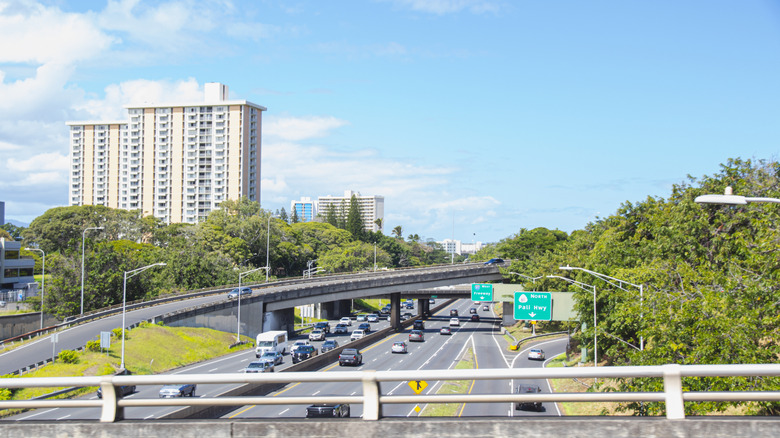
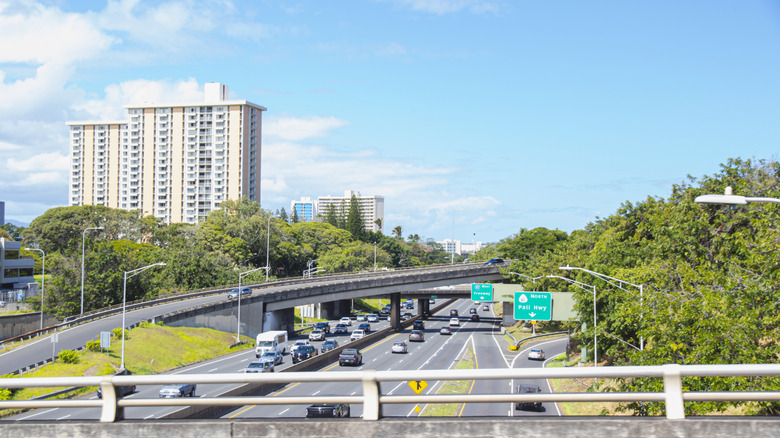
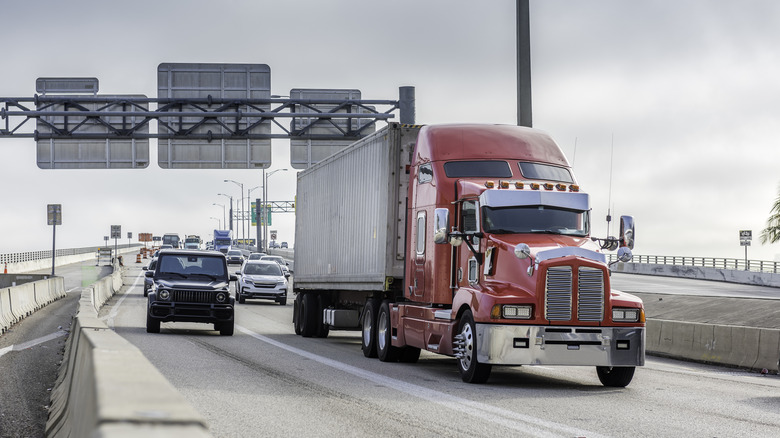
Many states have laws requiring slower traffic to keep right. Sometimes this is reserved specifically for trucks, but not always. Some law enforcement officials have begun cracking down on those meandering in the fast lane, such as when one state trooper taught a slow driver what the left lane is actually for, which included a fine. Recently, Hawaiian officials made some changes to their left lane law by removing an exception which was considered problematic in terms of enforcement.
While the original law sought to keep trucks out of the left lane, it allowed big rigs to remain as long as they were matching the surrounding traffic flow. The law became active in 2024, but nearly half a year into its tenure, not one citation had been handed out. Now, that exception has been removed, along with some other changes. According to Rep. Diamond Garcia, as reported by KHON2.com, with regard to the exception, “It did not allow our law enforcement to actually enforce the law. So, three years in the making to finally add teeth to it to make it work.”
So now, those operating a commercial vehicle tipping the scales at more than 10,000 pounds or towing (either a vehicle or trailer) caught in the left lane will be subject to a $97 fine. And this is regardless of whether they’re keeping up with traffic. Hawaii isn’t the only one taking a stiffer stance, Colorado is another state cracking down on slow drivers hogging the left lane as well.
Why slow vehicles in the left lane creates problems
Chuyn/Getty Images
There is a science to optimal traffic flow and this can be easily disrupted when slower vehicles, like trucks, remain in the left lane. This becomes especially important in crowded areas. For example, Honolulu, Hawaii’s largest city, has experienced considerable traffic congestion, particularly on the H-1 Freeway. Data shows the average motorist in the islands capital loses up to 95 hours a year in traffic, a figure only slightly trailing Los Angeles, according to WildlifeHawaii.com.
When the left lane is reserved for passing, it not only reduces congestion, but it’s also safer. Vehicles wanting to travel faster but are impeded by trucks (or slow cars) in the fast lane, must resort to overtaking in the right lane. This potentially leads to weaving through traffic and alternating continually between lanes, which invites more opportunity for accidents.
In an interview with MotorWeek.org, seasoned long-haul trucker Bill Adams explained, “We’re dependent on our mirrors, and we have large blind spots on all sides of the tractor trailer.” And unfortunately, the blind spot is much greater on the right side than on the left. This is why you should avoid passing a semi truck on the right, as it may not be able to see you.
Most people do not need another vacation that looks perfect online. They need one that feels good while they are living it.
That sounds simple, but it is where so many trips go wrong. We chase the famous view, the trending hotel, the restaurant everyone is posting about, and the itinerary that sounds impressive when we explain it to friends. Then we come home tired, over budget, and strangely unsatisfied.
The truth is, the best trips are not always the biggest, flashiest, or most expensive. They are the ones that match who you are, how you travel, and what you actually need from your time away.
Maybe that means quiet mornings instead of packed schedules. Maybe it means a mountain lodge instead of a city hotel. Maybe it means one unforgettable excursion instead of five average ones. Maybe it means finally admitting that your dream trip should feel like your dream, not someone else’s highlight reel.
After years of traveling through wild places, luxury resorts, small towns, national parks, historic cities, and far-flung corners of the world, we have learned one thing repeatedly: the magic usually starts when you stop planning the trip you think you are supposed to want.
Stop Planning for the Person You Wish You Were
Photo Credit: Deposit Photos.
There is a version of you who wakes up before sunrise every day, hikes ten miles, eats only at hidden local spots, never needs downtime, and looks effortlessly put together in every photo. That person may not actually exist.
Too many travelers build itineraries for an imaginary version of themselves. They plan nonstop days when they know they need rest. They book adventurous excursions when what they really want is a slow food tour. They choose nightlife-heavy destinations when they are happiest watching sunset from a balcony with a glass of wine.
A better trip starts with honesty. Do you like structure or freedom? Do you want pampering or grit? Do you love cities or do they drain you? Are you traveling to explore, recover, reconnect, celebrate, or simply breathe?
There is no wrong answer, but there is such a thing as the wrong trip for the wrong traveler.
The Best Itinerary Has White Space
Photo Credit: Deposit Photos.
A full calendar can make a trip feel valuable before you leave, but once you arrive, it can feel like a trap.
White space is not wasted time. It is often where travel gets interesting. It is the extra hour at breakfast when a local gives you a tip you would never find online. It is the afternoon spent wandering a neighborhood instead of rushing to another attraction. It is the unplanned stop that becomes the story you tell for years.
This is especially true in destinations with big personalities. Alaska does not always follow a schedule. Mountain weather has its own agenda. Historic cities reward wandering. Small towns reveal themselves slowly.
Leave room for the place to surprise you.
Choose a Base That Changes the Trip
Photo Credit: Margarita Ibbott.
Where you sleep shapes everything.
A hotel is not just a bed. It influences your mornings, your evenings, your stress level, your access, and often your entire relationship with a destination.
A well-located boutique hotel can turn a city trip into a walkable delight. A remote lodge can make wilderness feel immersive instead of logistical. A resort with strong summer programming can transform a ski destination into a warm-weather escape. A charming inn can make a small town feel like home.
Sometimes the right base matters more than adding another activity. Ask what your accommodations make easier. If the answer is very little, keep looking.
Trade Checklist Travel for Texture
Photo Credit: Jenn Coleman.
Checklist travel says: see the landmark, take the photo, move on.
Texture travel asks what a place actually feels like.
You find texture in farmers markets, neighborhood bakeries, local music, ferry rides, scenic backroads, family-run restaurants, historic hotels, guided walks, and conversations with people who live there.
Texture is what separates “we went there” from “we felt like we understood it a little.”
It is easy to build a trip around attractions. It is harder, and usually better, to build a trip around moments.
Spend More on the Part You Will Remember
Photo Credit: Jenn Coleman.
Not every trip needs to be luxury from beginning to end. In fact, some of the smartest trips are built around one or two intentional splurges.
That might be a flightseeing tour, a private guide, a special dinner, a room with a view, a spa day, a scenic train ride, or an experience that gets you closer to the heart of a place.
Spend where it changes the story. Save where it does not.
A forgettable upgrade is rarely worth much. A once-in-a-lifetime experience usually is.
Let Food Lead You Somewhere Real
Photo Credit: Jenn Coleman.
Food is one of the easiest ways to move beyond surface-level travel.
Not every meal needs to be fancy. Some of the best food memories come from bakeries, roadside stands, markets, pubs, diners, and family-owned restaurants that tell you exactly where you are.
Order the regional specialty. Ask what is local. Take the food tour. Visit the market. Try the thing you cannot get back home.
Food gives a destination flavor in the most literal sense, but it also gives it context. It reveals history, migration, climate, agriculture, celebration, and comfort.
A good meal can explain a place faster than a brochure ever could.
Do One Thing That Scares You a Little
Photo Credit: Jenn Coleman.
Not reckless. Not unsafe. Just slightly outside your normal lane.
Kayak near a glacier. Take the winter trip. Ride the e-bike. Book the guided hike. Try the unfamiliar dish. Visit the destination that feels a little harder to reach.
The edge of your comfort zone is often where the best travel memories live.
You do not have to become a different person. You just have to give yourself one good story.
Stop Letting Photos Run the Trip
Photo Credit: Jenn Coleman.
Photos matter, but memories matter more.
There is nothing wrong with wanting beautiful images, especially when you are visiting beautiful places. But when every decision becomes about the photo, the trip starts to shrink.
You may miss the quiet moment because you are chasing the perfect angle. You may overlook a meaningful experience because it does not look flashy online. You may spend more time documenting joy than actually feeling it.
Take the picture, then put the camera down.
Let the place be bigger than the post.
Build in Recovery Time
Photo Credit: Altezza Travel.
This is the travel advice almost everyone needs but few people plan for.
Arrival day should not be overloaded. Departure day should not feel heroic. The day after a major excursion should allow for breathing room.
Travel takes energy. Airports, rental cars, time changes, weather, crowds, and constant decision-making add up quickly.
A trip with recovery time feels more luxurious, even when it costs exactly the same.
You are not failing at travel because you need rest. You are making room to enjoy it more fully.
The Right Guide Can Change Everything
Photo Credit: Jenn Coleman.
A great guide is not simply someone who shares facts.
A great guide translates a place.
They know when to go, where to stand, what to skip, what matters, and what you would never notice on your own. They can transform a landscape into a story, a meal into cultural understanding, or a wildlife sighting into something unforgettable.
Independent travel is wonderful, but guided experiences can add depth, safety, access, and ease.
The right expert often makes a trip more meaningful, not less authentic.
Go Where the Season Has Something to Say
Photo Credit: Jenn Coleman.
Every destination has a rhythm.
Some places sparkle in winter. Others come alive in summer. Some are best in the quiet shoulder seasons, when crowds thin and the destination exhales.
Instead of asking when it is most popular, ask when it feels most itself.
A ski town in summer can offer wildflowers, hiking trails, patio dining, and mountain air. A historic city in winter can feel atmospheric and romantic. A wilderness destination in shoulder season can feel even more intimate.
The calendar can be one of your most powerful travel tools.
Make the Trip Yours Before You Leave
Photo Credit: Deposit Photos.
The best trips begin before the suitcase comes out.
Read a novel set there. Watch a documentary. Learn a few phrases. Study the food. Understand the geography. Learn what shaped the place before you arrive.
A little context makes everything richer.
You notice more. You ask better questions. You connect faster.
Travel becomes more than movement. It becomes understanding.
Final Thoughts: Better Travel Starts With Better Questions
Photo Credit: Deposit Photos.
The vacation you think you want might be beautiful, popular, and perfectly respectable. But the trip you actually need may be quieter, deeper, wilder, slower, softer, or more personal.
That is often the trip worth taking.
Instead of asking where everyone else is going, ask what kind of experience will stay with you. Instead of building an itinerary that looks impressive, build one that feels alive. Instead of collecting places, collect moments that remind you why you wanted to leave home in the first place.
Because the best travel does not simply show you something new. It gives something back.
It offers wonder, perspective, courage, rest, and sometimes even a version of yourself you are very glad to meet.
Hi! We are Jenn and Ed Coleman aka Coleman Concierge. In a nutshell, we are a Huntsville-based Gen X couple sharing our stories of amazing adventures through activity-driven transformational and experiential travel.
To provide the best experiences, we use technologies like cookies to store and/or access device information. Consenting to these technologies will allow us to process data such as browsing behavior or unique IDs on this site. Not consenting or withdrawing consent, may adversely affect certain features and functions.
Functional
Always active
The technical storage or access is strictly necessary for the legitimate purpose of enabling the use of a specific service explicitly requested by the subscriber or user, or for the sole purpose of carrying out the transmission of a communication over an electronic communications network.
Preferences
The technical storage or access is necessary for the legitimate purpose of storing preferences that are not requested by the subscriber or user.
Statistics
The technical storage or access that is used exclusively for statistical purposes.The technical storage or access that is used exclusively for anonymous statistical purposes. Without a subpoena, voluntary compliance on the part of your Internet Service Provider, or additional records from a third party, information stored or retrieved for this purpose alone cannot usually be used to identify you.
Marketing
The technical storage or access is required to create user profiles to send advertising, or to track the user on a website or across several websites for similar marketing purposes.