
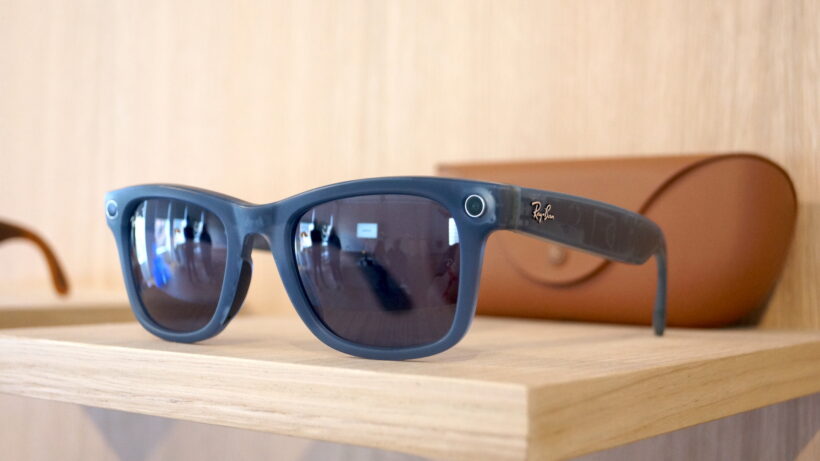

If you’ve spent any time looking at the current crop of smart glasses, you’ll know the industry is currently stuck in a bit of a ‘tech-first, fashion-later’ rut.
While Meta and Ray-Ban have done a decent job of making smart glasses look like, well, glasses, the rest of the market often makes it feel like we’re wearing miniature computers on our faces with thick, heavy, uninspired frames.
However, according to recent reports, Nothing – the London-based company known for its transparent tech and glowing LEDs – is finally ready to jump into the ring. And that’s exactly what the AI glasses market really needs right now.
Most smart glasses don’t look that great
Let’s be honest: most smart glasses are a bit of an eyesore.
Since they started hitting the market a few years ago, much of the industry has focused more on utility than aesthetics, often resulting in chunky frames and awkward silhouettes that scream early adopter rather than style icon.
Even as we move away from the truly hulking first-gen specs toward sleeker AI-driven frames, the designs remain largely utilitarian. You can always tell when someone is wearing a pair of smart glasses – maybe with the exception of Ray-Ban’s Meta Glasses, given the current discourse around filming people when they’re unaware.

Meta has recently tried to fix this by padding out its collection with more variety, particularly with its Oakley Meta Vanguards, but there’s still a massive gap in the market for something that feels fresh and fashionable.
Most tech companies are playing it safe, sticking to traditional frame shapes that try to hide the technology within. We haven’t really seen a company embrace the “tech” as a design language in a way that actually looks cool on a night out.
What the market needs is variety – not just “here’s the same frame in black, slightly-less-black, and prescription”, but different design philosophies entirely. That’s where Nothing’s arrival could be genuinely refreshing.
Nothing is one of few companies that could change that
Nothing’s whole shtick is visual identity, present in both its hardware and software offerings. Transparent elements, intentional shapes, hardware that looks like it belongs in a music video – you know what I mean. You see a Nothing Phone, or even Nothing headphones, and you know exactly what they are. And in a sea of similar-looking glasses, that’s exactly what we need.

Bloomberg’s Mark Gurman reports that Nothing is planning AI-powered glasses for the first half of 2027, equipped with cameras, microphones and speakers, and designed to lean on a phone and the cloud for AI processing rather than cramming everything into the frames themselves – very similar to Meta’s popular formula that we already know works.
However, it’s not the hardware that’s important here – for my argument, anyway – it’s the Nothing vibe that it could bring to the table. If Nothing manages to implement its design DNA in eyewear in a way that still feels wearable (and not like a cosplay prop), it could help smart glasses make the jump from tech accessory to something you’d actually like to wear.
No AR glasses, but that’s not surprising
It’s important to note that Nothing is said to be working on AI glasses, not AR glasses like the high-end Meta Display specs – and that’s fine, maybe even preferable for now.
A display changes the entire dynamic of smart glasses design, introducing new cost, battery, heat, and comfort issues to deal with. As we’ve already seen with Meta’s Display specs, even a multi-billion-dollar company can’t shrink the tech down to something that even slightly resembles regularly sized glasses – so Nothing likely wouldn’t be able to either.

Instead, the lighter, sleeker AI-powered glasses route seems like the safer bet – especially if, as I expect, Nothing wants to put a particular focus on the look of the smart specs.
After initial hesitation, they could arrive in 2027
It wasn’t always a sure thing, though.
Reports suggest that CEO Carl Pei was initially resistant to the idea of glasses, but has since come around as the Android XR charge – led by Google and Samsung – begins to take shape. Samsung’s Galaxy Glasses are expected to arrive sometime in 2026, but Nothing is reportedly aiming for a 2027 release window.
That might feel like a long way off, but if that extra time allows them to perfect a design that actually looks like high-end eyewear rather than a prototype, it’ll be well worth the wait.

Stephan is the sports journalist for the Maple Grove Report.



