
Older Drivers Love F-150s, But Gen Z’s Favorite Car Couldn’t Be More Different


It’s a bit of a stereotype that the older generations prefer the larger full-size trucks, and that’s for a variety of reasons. They’re spacious, the newest ones are packed with technology, and have a commanding presence on the road. In fact, the Ford F-Series has enjoyed an astounding 49 consecutive years as the most popular vehicle in America, surpassing even giants like the Toyota Corolla or Camry. However, a new generation has entered the chat, and they have their own opinions on what makes a good vehicle to own. Welcome Generation Z to the roads, whose most prized car is none other than the Honda Civic.

According to statistics published by Insurify, Generation Z — as well as the preceding millennials — vastly prefer compact sedans and hatchbacks over the F-Series, to the tune of 5.05% of Gen Z drivers owning a Civic. The follow-up, and most popular shared vehicle among millennials and Gen Z, is the Honda Accord (accounting for 3.23% of millennial sales), further reinforcing this trend. The Accord topped the charts for millennials while still sitting firmly in the number two spot for Gen Z; the F-Series, by comparison, fell to number six for millennials, and is nowhere in sight for Gen Z.

There are a number of reasons why this could be, with Insurify speculating on factors such as price, fuel economy, consciousness about global climate change, and more. All these statistics come from over 4.5 million insurance applications sourced from 2025, providing a reasonable sample size of new car buyers. Let’s dive in and crunch the numbers.

It’s about the money

To address the elephant in the room: Car prices are skyrocketing today, surging past $50,000 for the average cost of walking out of a showroom with a new set of keys. Modern Ford F-Series trucks, and its various alternatives, are just as guilty of this as anything else, with newer trucks starting in the low-$40,000-range MSRP and going up from there. With shipping and other fees factored in, you’re looking at a substantial investment for a vehicle, and that’s before taking into account the price for gas — these trucks aren’t exactly built for hypermiling. 

To put it bluntly, most Gen Z owners simply don’t have the kind of scratch it takes to park an F-Series in front of their homes and drive it every day. Rather, trends indicate the latest driving generation leans more towards budget-conscious cars that sip gas, rather than guzzling it. 

The Honda Civic tops that list, of course, but virtually everything that follows is a sedan or hatchback — not a truck, nor even a crossover. This data betrays a far more money-conscious purchasing habit than the raw sales figures would have you believe. Yes, the F-Series is still America’s most selling vehicle by a healthy margin, but that might not always be the case if the current trend keeps building momentum.

The Honda Civic in particular offers a compelling argument for this, with the base price roughly half of what the average new car price in America is. Moreover, even the top trim, track-focused Type R starts at $46,895 — still less than that national average.

Other factors influencing the shift

It’s not just about money, practicality plays a huge role as well. According to the U.S. Census Bureau and extrapolated upon by Insurify, about 80% of residents lived in cities. The fact is, it’s a pain to drive and park a full-size pickup truck downtown, as opposed to a nimble Honda Civic. Compacts also boast far better fuel efficiency, with the Civic benefiting from a four-cylinder engine and an optional hybrid package. It’s something the Civic was always good at, with virtually every Civic generation providing a lightweight, economical commuter car as the base model.

Moreover, thanks to the global rise in fuel costs and the increasing efforts to curtail climate change, Generation Z is statistically the most anxious when it comes to environmental concerns. This fits like a glove with saving money on fuel, meaning buying a Civic is having your cake and eating it too, as far as the carbon footprint is concerned.

Lastly, we have the sportiness and optional extras. Let’s face it — when we’re younger, a lot of us like having a sportier car. Cars like the GR86 and Civic are perfect for this, giving the younger generation a taste of a planted, tight-cornering compact at a reasonable price. Is it more practical than a crossover? Maybe not. Does it make more smiles for a similar price point? Absolutely.


Source link

Leave a Reply

Subscribe to Our Newsletter

Get our latest articles delivered straight to your inbox. No spam, we promise.

Recent Reviews


In the ever-shifting geopolitical sphere, China’s growing military presence and the ongoing tensions over Taiwan and the South China Sea continue to be a closely watched topic — particularly in regard to China’s ambition for naval power. In recent years, much speculation has been made over the country’s rapid military development, including the capabilities of the newest Chinese amphibious assault ships.

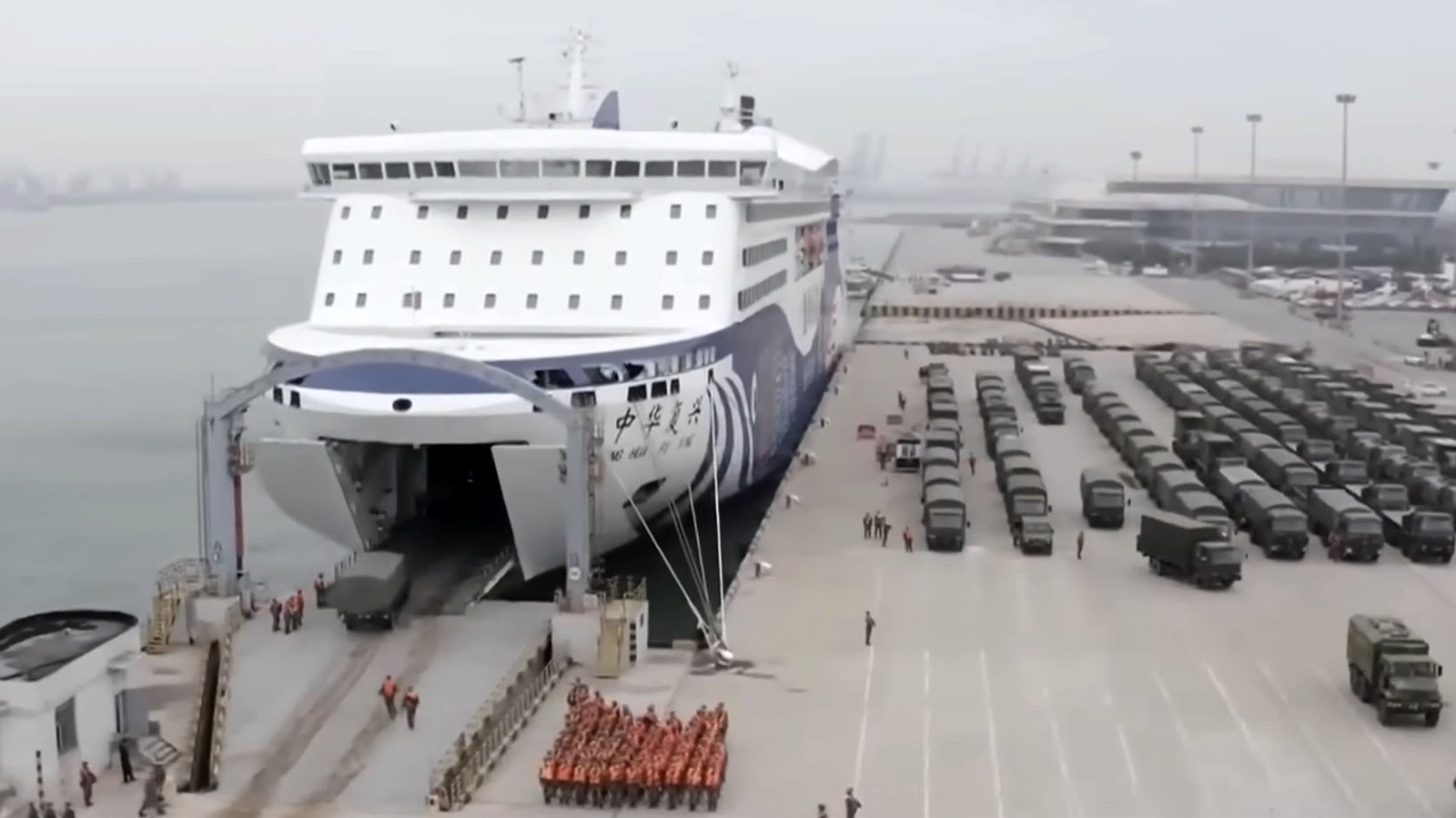
While there’s no denying its military advancements and buildup, much has been made about the logistical and military difficulties that China’s People’s Liberation Army (PLA) would face if it launched an amphibious invasion of Taiwan. However, there’s growing concern that if a Taiwan invasion were to happen, it wouldn’t just be military vessels taking part in the action, but a fleet of commercial vessels, too — including a massive new car ferries that could quickly be repurposed into valuable military transports.

While the possibility of the PLA using commercial vessels for military operations has always been on the table for a potential Taiwan invasion, the scale with which China has been expanding its commercial shipbuilding industry has become a big factor in the PLA’s projection of logistical and military power across the Taiwan Strait. It’s also raised ethical concerns over the idea of putting merchant-marked ships into combat use.

From car ferry to military transport

The rapid growth of modern Chinese industrial capacity is well known, with Chinese electric vehicle factories now able to build a new car every 60 seconds. Likewise, China has developed a massive shipbuilding industry over the last 25 years, with the country now making up more than half of the world’s shipbuilding output. It’s from those two sectors where China’s latest vehicle-carrying super vessels are emerging. 

With a capacity to carry over 10,000 new vehicles for transport from factories in Asia to destinations around the world, these ships, known as roll-on/roll-off (Ro-Ro) ferries, are now the biggest of their type in the world. The concept of the PLA putting civilian ferries into military use is not a new one, or even an idea China is trying to hide. Back in 2021, China held a public military exercise where a civilian ferry was used to transport both troops and a whole arsenal of military vehicles, including main battle tanks.

The relatively limited conventional naval lift capacity of the PLA is something that’s been pointed out while game-planning a Chinese amphibious move on Taiwan, and it’s widely expected that the PLA would lean on repurposed civilian vessels to boost its ability to move soldiers and vehicles across the Taiwan Strait. With these newer, high-capacity Ro-Ro ferries added to the fleet, the PLA’s amphibious capacity and reach could grow significantly.

A makeshift amphibious assault ship

However, even with the added capacity of these massive ferries, military analysts have pointed out that Ro-Ro ships would not be able to deploy vehicles and soliders directly onto a beach the way a purpose-built military amphibious assault ship can. Traditionally, to deploy vehicles from these ships, the PLA would first need to capture and then repurpose Taiwan’s existing commercial port facilities into unloading bases for military vehicles and equipment.

However, maybe most alarming is that satellite imagery and U.S. Intelligence reports show that, along with increasing ferry production output, the PLA is also working on a system of barges and floating dock structures to help turn these civilian ferries into more efficient military transports. With this supporting equipment in place, ferries may not need to use existing port infrastructure to bring their equipment on shore.

Beyond the general military concern over China’s growing amphibious capability, there are also ethical concerns if China is planning to rapidly put a fleet of civilian merchant vessels into military service. If the PLA were to deploy these dual-purpose vessels into direct military operations, the United States and its allies would likely be forced to treat civilian-presenting ships as enemy combatants. On top of all the other strategic challenges a Taiwan invasion would bring, the U.S. having to navigate the blurred legal lines between military and merchant vessels could potentially give China a strategic advantage amidst the fog of war.


Source link