Replacing America’s Gas Stations With EV Chargers Is More Complicated Than It Sounds


Once a novelty, EVs are now here to stay, and it’s safe to say that the EV Era is reaching its adolescence. From small economy and city compacts to full-size trucks and SUVs, there’s an electric option out there for almost everyone — but they could never fully eclipse gas-powered vehicles. Right?

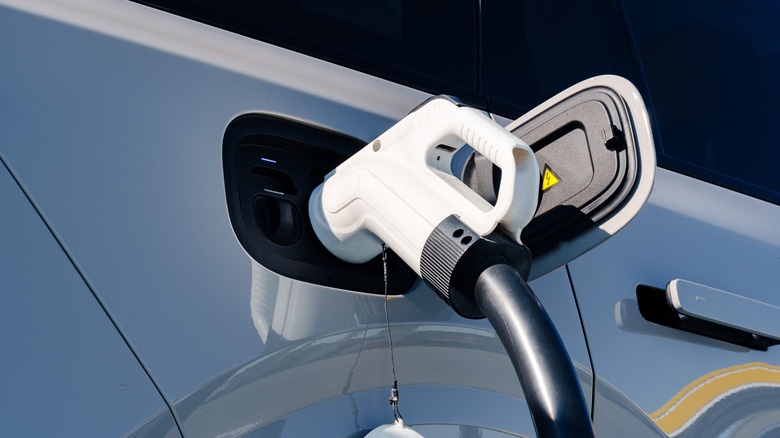
The only way EVs could overtake gas cars is with a wider charging network — ideally, one that totally replaces the existing gas ecosystem. Range anxiety is a perennial EV concern, but one that doesn’t exist for gas-powered cars, thanks to the robust network of stations across the country. How do we replace that, then?

Let’s do the math, or at least as closely as we can approximate. The Department of Energy estimates a need for approximately 182,000 fast chargers and a whopping 28 million charging ports by 2030 to support growing EV demand, the majority of which are standard at-home chargers. Public stations will require around 1,070,000 regular ports plus those fast chargers. That would make a total of roughly 30 million EV charging ports of all types.

To fully move on from gas, however, we’d need to replace or supplement every gas pump in the nation with a DC fast charger to ensure a comparable level of practical range. After all, gas or diesel vehicles are quick to refill and can be topped up anywhere; most EV charging is done at home and is often less convenient in rural areas — one reason EV tech hasn’t become the norm for long-distance trucking, for example. And all that is before accounting for market growth. In short, it’s a complicated issue. Let’s break it down further.

Let’s account for all the variables
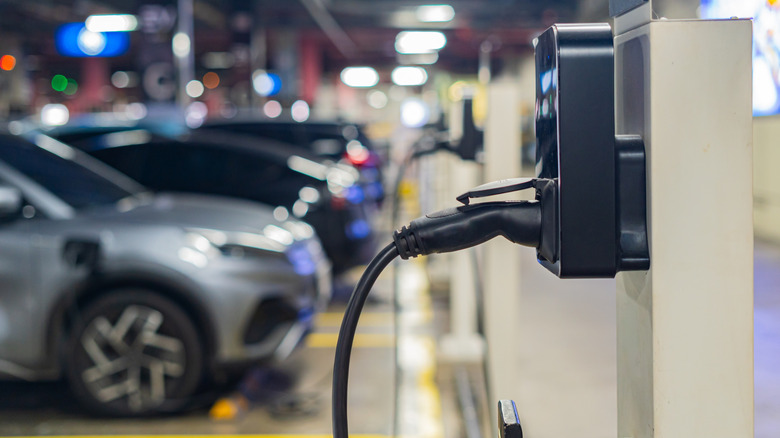
The EV market is growing exponentially; the U.S. Department of Energy estimates the number of electric cars will increase nearly tenfold by 2030, from about 3.5 million in 2026 to around 33 million in five years. That anticipated market surge will likely create massive demand for quick chargers and more advanced station designs.

One question, however, is whether the supply can keep up, especially in more remote locales, and whether it can account for the differing needs Americans have. Remember that the main benefits of gasoline cars over EVs are range and convenience: it’s way easier to drive cross-country in a gas-powered car than an EV. Tow too heavy a load with your EV, and your range estimates may tumble; suddenly, you’re scrambling around looking for a free charging station. In a gas vehicle, you can pull into a gas station.

Then there are industries such as trucking. How many EV charging stations would be required to allow EV trucks to cover thousands of miles as easily as diesel trucks do? Would truck drivers even want to deal with the wait times? There’s no hard number we can put on such a scenario; yes, EVs may be more efficient in the long term, but not everyone would see them as good for business.

How future tech and urban planning can bring the number down
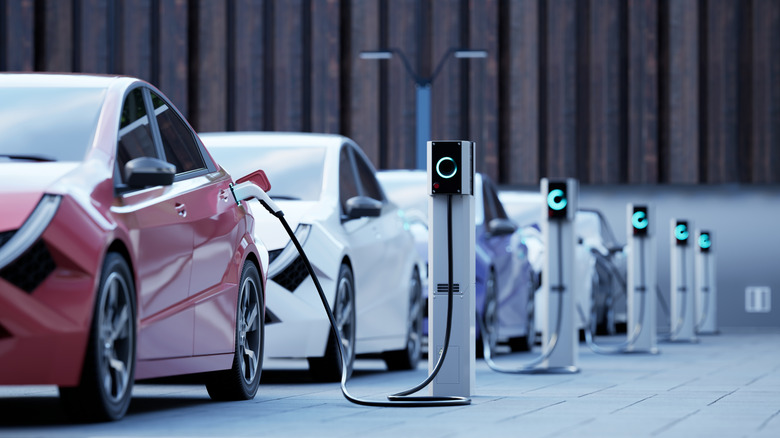
Fossil fuels aren’t infinite; at some point or another, gasoline will become prohibitively expensive. Fossil fuel-powered cars still have their place, sure, though it might not be for long — at least, not if alternative prospects are anything to go by. 

While the idea of needing tens of millions of new EV charging ports may seem daunting, those numbers don’t take into account developments in battery technology. Take China’s semi-solid-state batteries, which promise to revolutionize EVs with vastly extended ranges and affordable prices — both key criticisms of EVs over the past decade or so. If the tech is feasible and makes it to American roads, then we may not need as many fast chargers as we think we do now. In essence, we’ll be able to have our cake and eat it, too. 

Then there’s the question of road infrastructure. We’re seeing more interstate highways and more mass transit networks than ever before. The latter, especially, will mean more walkable cities and less traffic, along with smoother, clearer, and more efficient roads. All that is to say, while there’s no single absolute number of EV stations we’ll require to support a transition away from gas, the more work we do now, the less imposing that eventual number will be.


Source link

Leave a Reply

Subscribe to Our Newsletter

Get our latest articles delivered straight to your inbox. No spam, we promise.

Recent Reviews


Thailand and golf make an interesting combination. Within moments, you could be strolling down a lush tropical fairway surrounded by palm trees, then have dinner at an inexpensive street stall while watching the sun dip below the horizon from your seaside vantage point. This winning combination of golfing excellence, sunny skies, tasty cuisine, and affordability keeps players coming back every year.

The country now has more than 250 golf courses across destinations such as Bangkok, Pattaya, Hua Hin, Phuket, and Chiang Mai. Many of them are championship-level courses designed by top golf architects. The best part is that you can often play world-class golf for far less than what you would spend in the US, Australia, or Europe. 

But here’s the thing. A golf trip to Thailand is one activity that requires careful planning. The distances are not always as they appear on a map; weather is important, and Thai golf is not quite like that of other countries.

So if you are thinking about booking a golf holiday there in 2026, here’s how to do it right.

First, Decide What Kind of Golf Trip You Want

Wide green lawns in Thailand golf course
Photo Credit: Jennifer Coleman.

Not every golf destination in Thailand feels the same.

If you want nightlife and a huge number of golf courses close together, Pattaya is usually the first choice. The city has more than 20 quality courses nearby, including Siam Country Club and Laem Chabang. 

If you prefer a calmer beach town with a more relaxed atmosphere, Hua Hin is hard to beat. Courses like Black Mountain and Pineapple Valley regularly appear on lists of the best courses in Asia. 

Phuket is ideal if the trip is half golf and half luxury holiday. The scenery is incredible, and courses like Blue Canyon and Red Mountain are famous for a reason. 

Bangkok works well for shorter trips because many excellent courses sit within driving distance of the city. Meanwhile, Chiang Mai gives you cooler mountain air and a slower pace.

Before booking anything, ask yourself one simple question: do you want a serious golf-focused trip, or a holiday where golf is just part of the experience?

That answer changes everything.

Pick The Right Time of Year

The Royal Bangkok Sports Club golf course
Photo Credit: Jenn Coleman.

Thailand is warm all year, but golf conditions definitely change with the seasons.

The main golf season runs from November to April. Temperatures are more comfortable, humidity drops a little, and rainfall is lower. That is why this period is considered the peak season for golf tourism. 

December through February is especially popular, so tee times and hotels can fill up quickly.

The rainy season usually runs from May to October. That does not mean constant rain all day, though. In many areas, showers arrive in the afternoon for an hour or two before clearing up. The upside is cheaper hotel rates and quieter courses.

If you do not mind occasional rain, shoulder months like May or October can offer excellent value.

Don’t Try to Cover The Entire Country

Toscana one of the most beautiful golf courses in the world
Photo Credit: Deposit Photos.

A common mistake first-time visitors make is trying to play golf everywhere.

Thailand looks compact on a map, but travel between golf destinations can take longer than expected. Phuket to Hua Hin, for example, is a serious travel day. 

Instead of rushing around, pick one or two regions and stay there.

A smart first trip could look like this:

● 4 nights in Bangkok

● 5 nights in Hua Hin

Or:

● 6 nights in Pattaya

● 3 nights in Bangkok

That gives you enough time to actually enjoy the golf instead of constantly packing and unpacking.

Book Tee Times Earlier Than You Think

Green golf course
Photo Credit: Jenn Coleman.

Thailand’s best golf courses get busy during peak season, especially morning tee times.

This is where services like Sawadee Golf can genuinely help. The site focuses specifically on golf travel in Thailand, with detailed course guides, rankings, green fee information, and local advice that makes trip planning much easier for international golfers.

Booking in advance is especially important if you want to play famous courses like Black Mountain, Siam Country Club, Blue Canyon, or Alpine Golf Club.

Some private clubs also have stricter access rules, so planning ahead matters.

Understand Thailand’s Golf Culture

Thailand golf culture
Photo Credit: Deposit Photos.

Golf in Thailand comes with a few things that surprise first-time visitors.

For starters, caddies are standard at almost every course. In fact, many clubs require them. Most courses also include a golf cart or buggy policy. 

And truly, the caddies themselves are a part of the game.

Most are extremely adept at judging greens, finding balls, and helping players navigate the course. It takes a great caddie to help you shave off a few strokes from your game.

Tipping, of course, is also required. Most golfers will leave about 400 to 500 baht, depending on the service of the caddie.

Dress codes are usually stricter than those at public golf courses in the West. Pack proper golf attire and avoid showing up too casually.

Choose Courses That Match Your Skill Level

Three men playing Golf
Photo Credit: Jenn Coleman.

Thailand has beautiful courses, but some are seriously challenging.

Red Mountain in Phuket, for example, is stunning but demanding. The elevation changes, and tight fairways can punish wayward shots. 

Meanwhile, courses like Laguna Phuket or Palm Hills are more forgiving and relaxed for casual golfers.

It is tempting to only chase famous championship courses, but mixing easier rounds with tougher ones usually makes the trip more enjoyable.

A balanced golf itinerary always works better than five brutal rounds in tropical heat.

Pack The Right Gear

Smiling female golf players at golf cart getting ready for game at golf
Photo Credit: Deposit Photos.

Traveling across the world with sports equipment requires a bit of extra thought. First, make sure you invest in a heavy-duty, padded travel bag to protect your clubs from rough airport baggage handling.

Because of the tropical humidity, packing lightweight, moisture-wicking golf shirts and flexible shorts is key. Do not forget to pack an extra pair of golf gloves, as hands sweat quickly in the heat, causing your grip to slip.

Most clubs have a standard dress code that requires collared shirts, golf shorts/pants, and soft-spiked shoes. Regular shoes can be used on occasion for casual play, but metal spikes cannot be worn at any time due to the high quality of the grass.

Bring along some good-quality waterproof sunblock cream, sunglasses with polarizing lenses, and a broad-brimmed hat because the tropical sun is very strong even on cloudy days and can cause intense sunburns.

Balance Time On And Off The Greens

The Marble Temple, Wat Benchamabophit
Photo Credit: Deposit Photos.

The secret to a truly great golf trip is making sure you enjoy the destination just as much as the sport itself. After a long, physically demanding morning out on the turf, take advantage of the local culture to unwind.

Reward yourself with an authentic Thai massage from a local spa to ease your aching shoulder and back muscles. Visit the famous night markets to indulge in the delicious Pad Thai, barbecued seafood, and the sweet dessert of sticky mango rice. 

Allocate a couple of days without golfing to experience the olden day golden temples, cruise inside the caves, or just kick back on a white sandy beach.

So, there you have it. This is how you can plan a stress-free golf trip in Thailand. Pack your clubs!

Hi! We are Jenn and Ed Coleman aka Coleman Concierge. In a nutshell, we are a Huntsville-based Gen X couple sharing our stories of amazing adventures through activity-driven transformational and experiential travel.


Source link