Robotaxis Will Hit London’s Notoriously Unruly Roads This Year. Are They Ready for Chaos?


To be a pedestrian in London is to have the power. Tube strikes? Bus delays? No fear — you can probably walk there faster anyway. And traffic? Make it stop for you. There are no jaywalking laws here.

It’s against this backdrop of people stepping out into the road whenever they damn well please that Waymo plans to launch its fully autonomous robotaxis this year.

“We’re treating London with the appropriate amount of humility and respect,” Saswat Panigrahi, Waymo’s chief product officer, told the audience at SXSW London.

On a couple of occasions throughout the tech festival, I caught a glimpse of one of the company’s Jaguar I-Pace vehicles rolling slowly along the street. Waymo employees have started traveling around the city in Waymo vehicles, of which there are 100 — all still under the watchful eye of a human driver for now.

The testing in the British capital comes ahead of Waymo opening up to the public by the end of 2026. And it’s not alone. Wayve, one of the UK’s most valuable AI startups, has also been trialing its tech on London roads. It plans to launch its autonomous ride-hailing service in London this year in partnership with Uber before expanding to Tokyo and the US.

The two companies rely on different technologies: Waymo uses a classic robotics approach based on 3D mapping combined with sensors and lidar, while Wayve uses an AI driver that taps into end-to-end neural networks trained on extensive data. But for Londoners, both options will introduce a brand new experience into the city’s well-established transport network. Both companies will also have to contend with many of the same unique-to-London challenges.

London roads: “The hardest edge cases”

When I finally get to try Waymo in London, it won’t exactly be my first time. I have been in one of the cars before on a mission to go for tacos in San Francisco’s Mission district. On that occasion, struggling to find somewhere to pull over, the Waymo circled the block several times before it would let me out.

London isn’t a grid-based city but instead packs complex one-way systems into its labyrinthine medieval streets. If a car misses its chance to stop, it could be much harder to remedy. It’s like driving around San Francisco’s Chinatown but all the time, Waymo spokesperson Ethan Teicher told me in an interview at the company’s SXSW London booth.

Close-up of a Waymo sensor taken while at SXSW London

The Waymos are ready for rain.

Katie Collins/CNET

Operating in the city means “solving for the hardest edge cases,” said Wayve’s vice president of commercial and operations, Kaity Fischer, speaking at SXSW London. It has 20 times the amount of construction going on in San Francisco, and 10 times the number of vulnerable pedestrians, she added — and that’s not just the jaywalkers.

Unlike Waymo, which is already available in cities across the US, London is Wayve’s first market for autonomous taxis, so it’s learning all its lessons here before it goes elsewhere. But it has been testing its vehicles on British roads since 2019. 

Waymo, meanwhile, has only been testing in London since the end of last year, but it will use the experience it’s gained over more than 20 million rides to inform its expansion to London. These, in turn, will provide learnings to help the company venture elsewhere.

London (mostly) welcomes its robotaxi overlords

To the point where any autonomous vehicle company can operate in any given city, it needs policymakers and regulators on its side. In the US, most states and even cities have their own operating standards, which explains the phased rollout.

The same isn’t true in the UK. “The government has been an incredible support for us launching and deploying our technology right now,” said Fischer. The UK is the first country to have a nationwide strategy for getting autonomous vehicles on the road, which makes it easier for companies like Wayve, she added.

London was a natural first choice for Waymo in Europe, said Teicher. It’s a global city with a huge potential customer base of both residents and visitors who come from other countries and might experience Waymo in the British capital for the first time. Plus, he added, “the city has some very clear goals around safety and transit, and we think this technology helps accomplish a lot of those goals.” 

Close-up of the front of a Waymo while indoors at SXSW London

Waymo had a booth at this year’s SXSW London to introduce the vehicles to the city.

Katie Collins/CNET

London also wants to help people find last-mile solutions, which Waymo is ideal for, said Teicher. “We already know that Londoners think about transportation in sort of a step-by-step manner,” he said, adding that the company was happy to contribute another safe, accessible, clean and comfortable option to London’s established transport ecosystem.

That ecosystem includes iconic modes of transportation, which includes the Tube underground system, red Routemaster buses and black cabs. The latter may prove less welcoming to Waymo and Wayve than local politicians have been.

When Uber first arrived in the city, London’s black cab drivers — who must pass a test known as the Knowledge, in which they prove their encyclopedic understanding of London’s streets — protested extensively. Last year, the Guardian reported that there’s been a drop in the number of black cab drivers registered with Transport for London from 22,810 in 2013-14 to 14,470 in 2023-24.

I ask Teicher whether Waymo is prepared for the potential backlash from the city’s registered cabbies. “They are skilled professionals,” he said. “We have tremendous respect for what they do, what they mean to the city, and we don’t see ourselves replacing them anytime soon.”

The company will be part of an ecosystem of hailable vehicles when it launches, he added. “We’re not going to be the whole ecosystem.”

He also welcomes the competition from Uber and Wayve. “It pushes all of us to do what we can to be better, to learn from each other, and ultimately it’s a win for Londoners,” he said.


Source link

Leave a Reply

Subscribe to Our Newsletter

Get our latest articles delivered straight to your inbox. No spam, we promise.

Recent Reviews


2026 has shaped up to be a big year for Milwaukee, and the company shows no signs of slowing down as it expands its product line. For example, it has announced that some solid new Milwaukee hand tools and organizers will be arriving throughout the summer, but that’s not all. At the end of the day, you need somewhere to put all of this stuff, and while the Milwaukee Packout storage system is deep and varied as is, the company will expand the line in the summer months.

More methods for organizing your tools are on the way, too, with the Milwaukee Packout line set to introduce some new entries this summer. They vary in size, purpose, and price point, but they’re all compatible with the wider Packout line. That means they can connect to each other, making transportation easier. In some cases, they’ll be able to help keep tools and other items secure and organized while on the move. Additionally, all of these new Packout products are covered by Milwaukee’s Limited Lifetime Warranty.

So, what new products does Milwaukee have to offer from its Packout line this summer? Here are the drops you can look forward to throughout June and July 2026.

Milwaukee compact crate

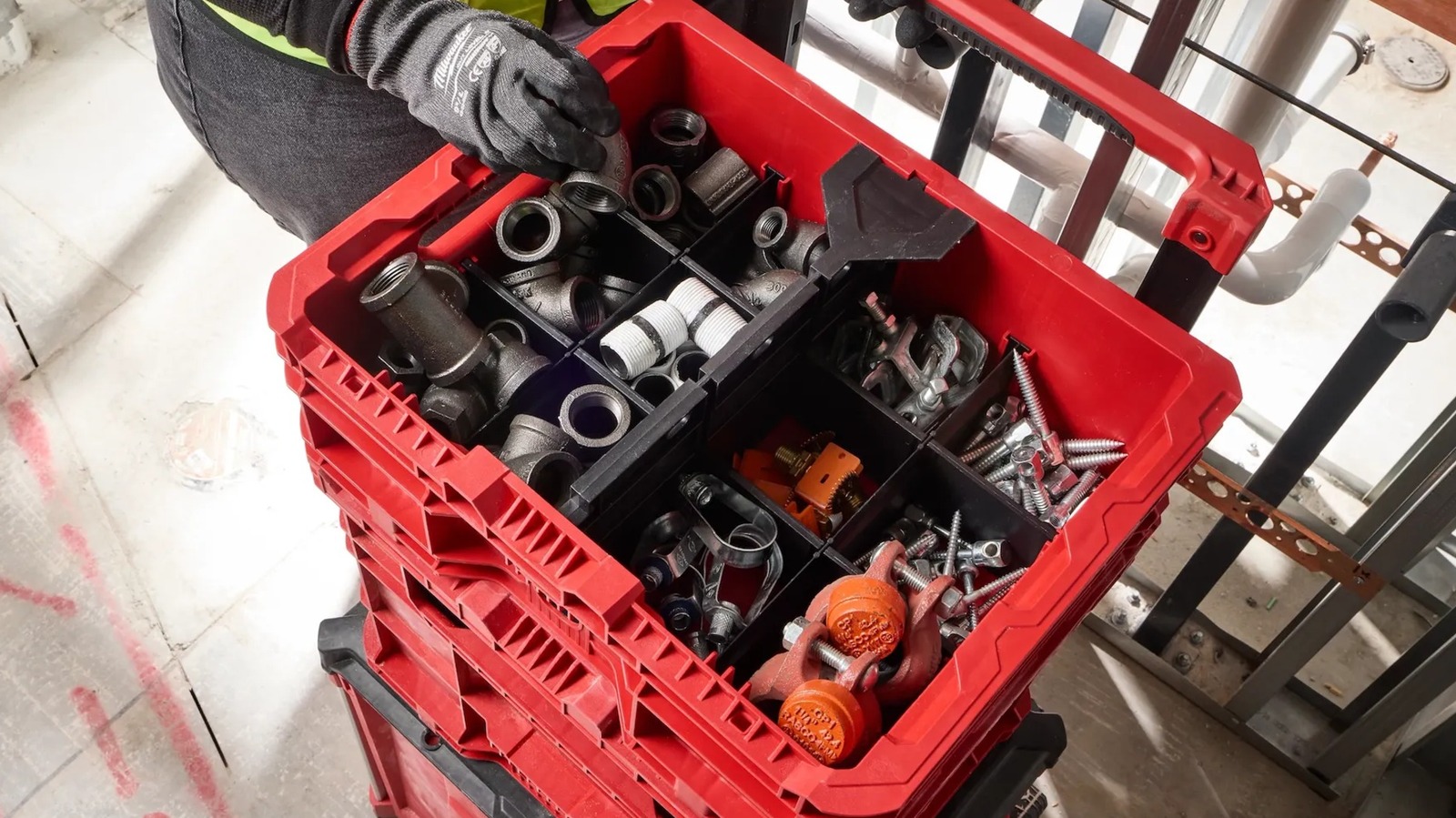
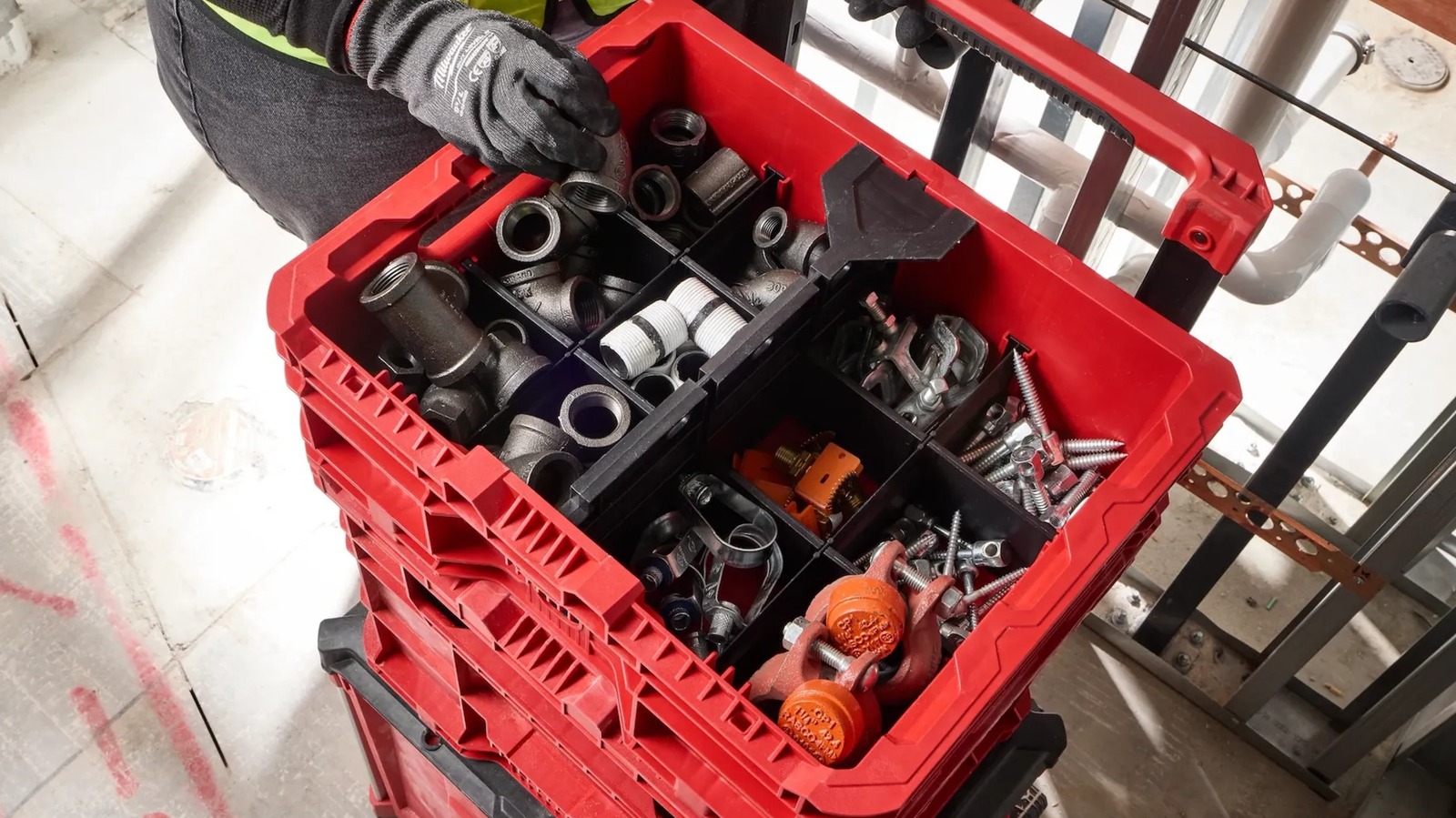
Sometimes, a massive Packout crate isn’t a necessity, which is why the line has its share of smaller options. Yet another will be coming to the Milwaukee catalog in the form of the Milwaukee Packout compact crate, which is set for a June 2026 release and will cost $39.97. It has a 30-pound weight capacity, comes in at 8.75 inches tall, 9.5 inches wide, 15.5 inches long, and 3.75 pounds, and includes two removable dividers to create up to three sections within the crate. The dividers can also be customized by cutting them to size along the pre-made score lines.

This compact crate features a wide front opening for easy access to its contents while on the job, as well as a metal top handle to carry it around on its own. Should you want to add it to your current Packout stack, you can use the connection points at the top and bottom of the crate. Speaking of durability, Milwaukee notes that it has an impact-resistant body along with weep holes to prevent water collection. At the same time, there is some nuance regarding the waterproof nature of Milwaukee Packout products, so keep that in mind before letting this crate get soaked.

Milwaukee Packout low-profile crate

A shorter but equally mighty Milwaukee Packout container is also on its way to customers this summer. The Milwaukee Packout low-profile crate is the shortest of the new releases at just 6.625 inches tall, though it makes up for what it lacks in height with a 15-inch length and an 18.625-inch width. Even though it’s slightly heavier than the compact crate at 4.85 pounds, it wins out in weight capacity with a 50-pound limit. It will be released in June 2026 and will cost $44.97.

For added modularity, the low-profile crate includes three different divider types: eight short, two long, and one for the middle of the container. When combined, they form up to 12 individual sections for tool and accessory organization. In terms of connecting to other Packout containers, it can do so from the top and bottom. Alternatively, built-in side handles are integrated into the design to make it easier to carry the crate on its own. The crate has weep holes for water drainage and an impact-resistant body.

Milwaukee Packout XL crate

Moving on to one of the larger upcoming Milwaukee Packout releases — even if it ultimately lands somewhere in the middle of the smallest and largest Packout containers for sale — there’s the aptly-named Milwaukee Packout XL crate. This release will hit shelves in June 2026 and comes with a $69.97 price tag. The 8.03-pound crate can take on some serious tools with its 75-pound weight capacity. It measures 15 inches tall, 15.75 inches long, and 18.625 inches wide. Despite its size, it can be hung up on a wall like most other Packout containers.

While some may hang this crate in their workshop, many will use it as part of their mobile Packout stack. You can connect it to your existing setup via the top and bottom connection points. It can also be used with Milwaukee toolbox attachments to hold smaller tools and batteries with connection points on the sides. Alternatively, you can move the crate around using its built-in side handles. It’s advertised as having an impact-resistant body along with anti-water collection weep holes. Suffice to say, there’s more to this seemingly simple crate than initially meets the eye.

Milwaukee Packout Wire Pulling XL Crate

For the most part, the Milwaukee Packout line is so popular because of its versatility. While most entries can be used for just about anything, there are those that come with a specialized function. Case in point, the forthcoming Milwaukee Packout Wire Pulling XL crate, which is designed for dispensing wire. This involves inserting and locking in spools of the user’s needed material, threading the wire through the wire retention slots, and using the fold-down panel to keep the end of the wire from rolling back into the box.

Overall, this crate has the same dimensions and weight capacity as the previously covered Packout XL crate, though it is the heavier of the two at 9.85 pounds. It can accommodate up to six spools, can be stacked onto other Packout containers or hung up, and has an impact-resistant body. This is the most expensive of the new Packout releases at a hefty $119.97, and it’s set to release during July 2026. Alongside the best Milwaukee power tools for electrical work, this crate seems like a vital piece for any Milwaukee-enthusiast electrician’s kit.

New Milwaukee Packout inserts are coming, too

That’s it for the new Milwaukee Packout containers set to debut this summer, but there are more new releases yet to cover. To pair with some of these containers and improve their levels of organization and function, come two new insert sets. First is the divider for the Milwaukee Packout XL crate, which splits the container into two sections. It simply slides down the middle of the crate and fits snugly into place, while retaining its ability to connect with smaller Packout attachments. It will be released in July 2026 for $29.97.

Alongside the Packout XL crate divider is the set of Packout wire pulling inserts for the XL crate. You’ll need these if you end up buying an XL crate and later want to use it as a wire-pulling crate. These inserts allow you to convert it instead of having to buy a new designated wire pulling crate. They attach to two of the inner sides of the crate via T-25 screws and include wire puller guards as well. The Milwaukee product listing says these inserts are meant for 1/2-inch EMT conduit. This insert set also comes out in July and will cost $49.97. 


Source link