
As artificial intelligence continues to permeate the globe and pervade almost every industry, data center infrastructure is increasingly becoming the cornerstone for what many believe is the next digital frontier. And data centers themselves are becoming a more contentious topic by the day. In Gallup’s first-ever data center construction survey, the research firm found that data centers have become less popular than nuclear power plants. As the global market for AI compute power heats up, the public’s opinion on data centers continues to sour as the knock-on effects become harder to ignore, forcing the public and policymakers alike to look at them with more scrutiny.
The advent of generative AI is a technological feat that cuts both ways, but there seems to be at least one way to reconcile AI’s benefits with its harmful side effects. Data centers consume an appalling amount of electricity and water, and their very operation produces a giant byproduct: heat waste. While data centers have a long way to go to rein in their carbon emissions, countries in Europe are taking important steps by recycling that heat waste to heat homes and businesses. Recycling this heat waste doesn’t balance the massive cost that the environment has to bear for these data centers, but it helps — and proves that they can do more than just provide fast data processing and storage.
European countries like Finland and Sweden are setting important examples
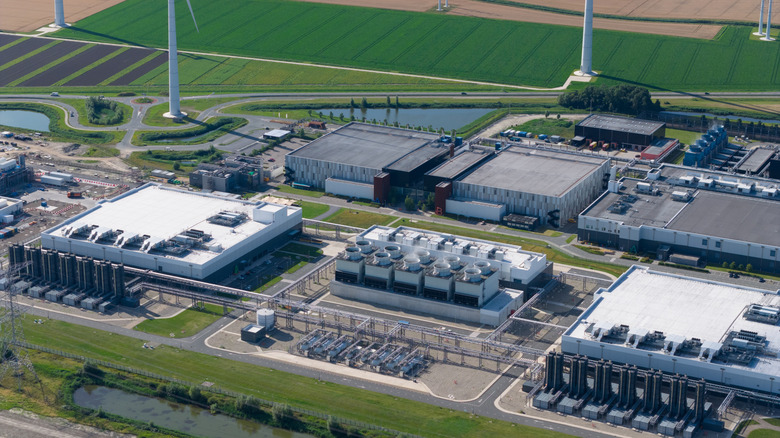
Nordic countries like Finland and Sweden are pioneering the recapturing of data center heat waste and using it as a renewable heat source in place of fossil fuels. In Finnish cities like Espoo and Helsinki, data centers built by Microsoft and Equinix are being incorporated into the municipal heating districts built underground, where heat waste is captured and redistributed to homes and buildings throughout the district through insulated heat pipes. Microsoft is partnering with Fortum, a Finland-based energy company, to eventually deliver recycled data center heat to 250,000 homes and businesses throughout Espoo, Kirkkonummi, and Kauniainen.
Google has also been exploring heat recovery, with its Hamina data center being the company’s first offsite heat recovery project. The Hamina data center has already been recovering heat waste to heat the facilities on-site, but is aiming to provide 80% of Hamina’s annual heat demand. Nebius, a data center infrastructure company, currently operates its primary Finland location in Mäntsälä. This site currently recovers 20,000 MWh of energy annually, which Nebius states can heat up to 2,500 homes in Finland. In Sweden, Stockholm has partnered with multiple companies to form the Stockholm Data Parks initiative to reuse data center heat waste to heat homes in the city, and also offers incentives to data center partners who invest in heat recovery.
Amazon’s AWS data center in Dublin is providing roughly 92% of the heat required to heat Dublin’s Technological University campus in the Tallaght suburb. Amazon has already been exploring reclaiming water to cool its data centers, and Microsoft has been using chip-level cooling and closed water loops in an attempt to curtail water usage –- both of which are less wasteful than evaporative cooling, and equally as important as heat recovery.
Nordic countries lead the way for eco-friendly data centers with environmental standards and incentives
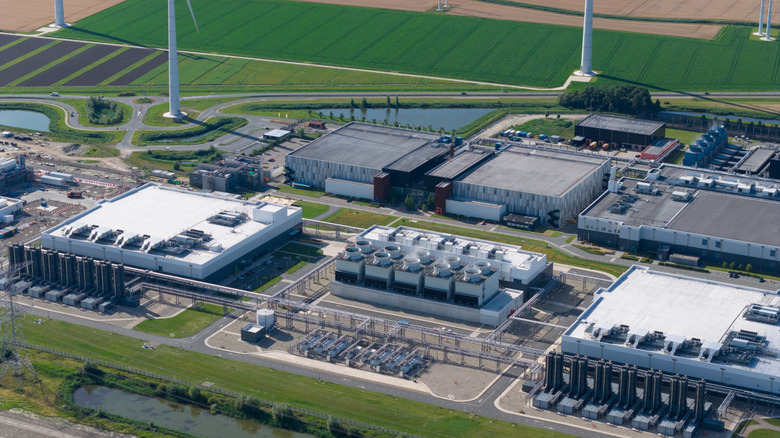
Europe is also taking important strides towards making data centers more environmentally conscious by codifying it into the regulatory process –- meaning obtaining construction permits and financing could hinge on implementing heat recovery, or agreeing to other energy targets. Under the European Commission, European data centers are subject to monitoring and reporting energy metrics, so that their economic footprint can be better gauged. Also, under Energy Efficiency Directive (EU) 2023/1791, Data centers operating above 1 MW are required to capture and reuse their waste heat, unless it is demonstrably impractical.
While there may be parts of the U.S. that house a surprising number of data centers, many parts of Europe –- the Nordic regions in particular –- are well suited for greener data centers. These parts of the world have a colder climate, meaning data centers can often use outside ambient air for cooling server racks and halls, relying less on direct liquid cooling. Many urban areas in Europe are also heated through underground heating districts, and data centers can more easily be plugged into these networks. Heat Purchase Agreements (HPAs) are common in the European energy market, which allows data center clients to sell thermal energy (like heat waste) to energy companies, further making Europe an attractive hub for data center investment and a proving ground for heat waste recycling.
These are ecological advantages that many parts of the Western world don’t have, but that’s no excuse. A study by Rice University tested a novel solar-boosted heat recovery system at data centers in Ashburn, Virginia, and Los Angeles, California. The results showed a 60% to 80% increase in recovered electricity from heat waste, and also lowered the levelized cost of electricity at both locations.

Stephan is the sports journalist for the Maple Grove Report.