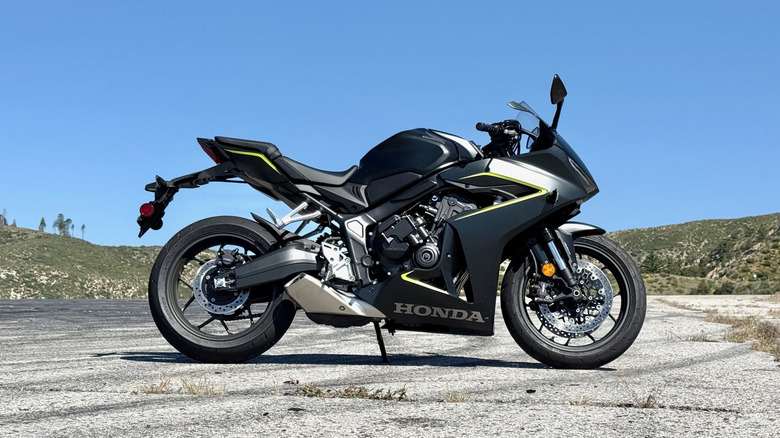

The Honda CBR650R is a sport bike, but it’s not a supersport bike, and that’s an important distinction. For the uninitiated, it can be tough to tell the difference between sport bikes and supersport bikes. They look alike, and in many cases, they even share a naming convention — as is the case with the Honda CBR nameplate and its variants. As with cars, though, the ‘super’ prefix means there’s a difference in performance.
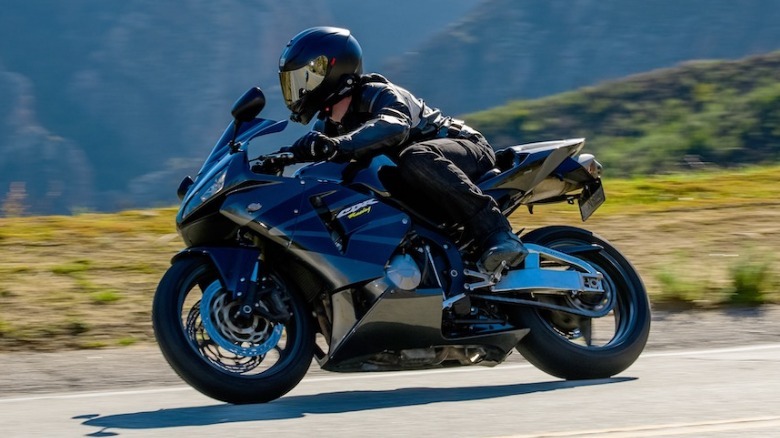
Honda’s supersport bike is the CBR600RR, a high-revving machine meant as a lightweight track missile. I rode a 600RR for years, and boy do I miss that bike. I took it all over the United States and modified it to fit my needs just right. Unfortunately, after years of ownership and hundreds of rides, I’d moved on to other bikes. I needed the garage space, and I wanted someone else to enjoy the bike I’d idolized, then purchased, and enjoyed for years, so I made the choice to sell the aging Honda. Enter my test of the 650R.
 Victory Jon
A few months after I sold my CBR, Honda offered me the latest CBR650R as a test bike for a few weeks, and I immediately thought of it as an opportunity: one to see if the sub-super CBR could fill the Honda performance motorcycle void in my life. Could the less-expensive, albeit slower, but still somewhat-performance-oriented bike make up for the gap in my garage, and in my heart? Though more affordable than the current 600RR, it still has hearty performance on paper, and no massive sacrifice in the looks department. I rode the newest 650R for nearly a month to find out if it delivers.
Plenty of power for entertainment
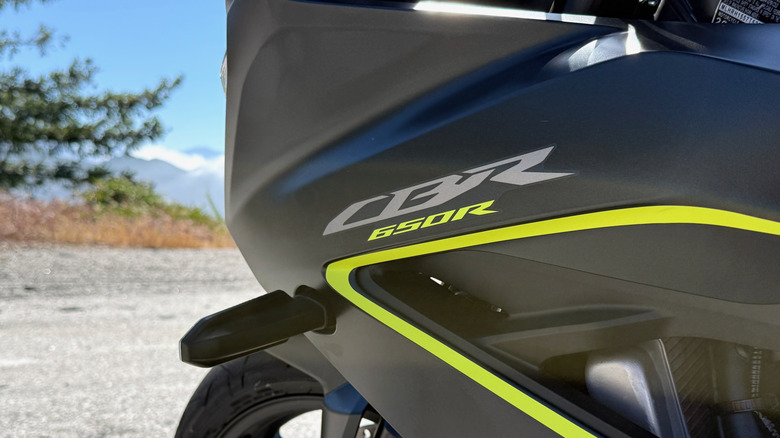
From my first freeway ride with the 650R, I could tell it had more than enough grunt to put a smile on my face. I’d picked up the bike from Honda HQ and immediately laid into the throttle on the nearest highway onramp.
While it isn’t a high-revving supersport, the CBR650R does have a substantial amount of power and torque. It uses a 649cc inline four-cylinder engine that revs to 12,000 rpm. That’s a relatively low redline by inline-four standards, but it still produces a healthy 93.8 horsepower and 46.4 lb-ft of torque — much more than its parallel-twin class rivals.
 Travis Langness/SlashGear
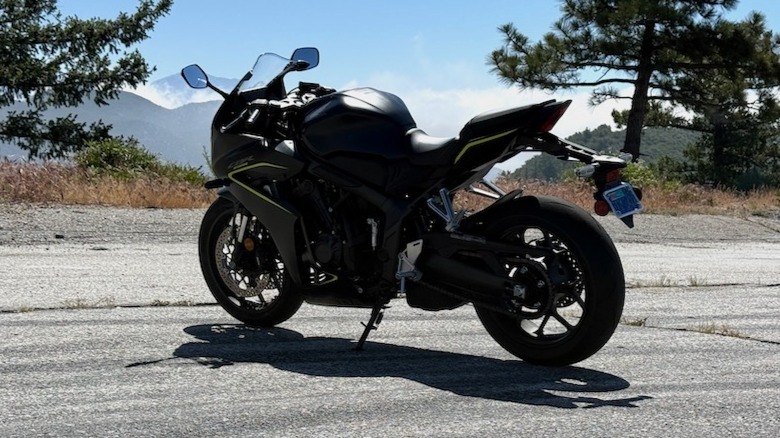
Snap the throttle back, and as RPMs climb through the rev range, the 650R’s power feels satisfying, even if it isn’t as thrilling as something like my old 600RR. The 650R doesn’t quite manage to get the front wheel off the ground without some over-aggressive riding behavior, but it’s eager to entertain right out of the box. The exhaust note has a nice pitch, and the volume goes up reasonably as the revs rise, giving you a nice bit of four-cylinder sound. An aftermarket exhaust could add some serious spice to this bike and that would probably be my first modification if I owned one.
Light on its feet
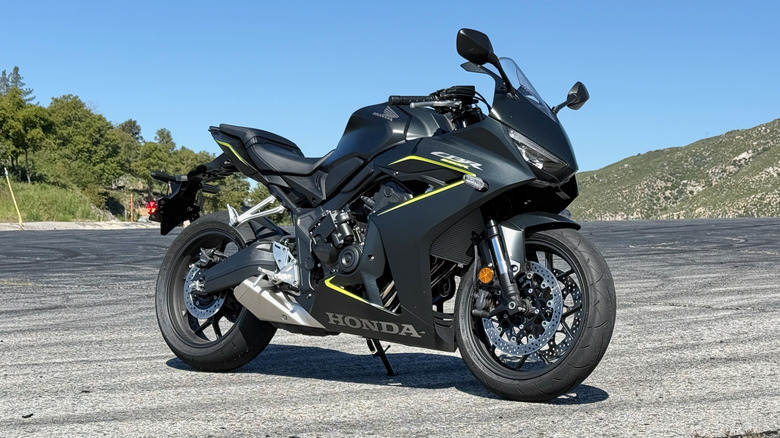
More than just adequately powered, the 650R is also relatively light. At 466 lbs (wet weight), the 650R felt easy to maneuver through traffic, and I imagine even novice riders would feel confident in the saddle (though they’d probably have an easier time getting used to Honda’s smaller CBR500R).
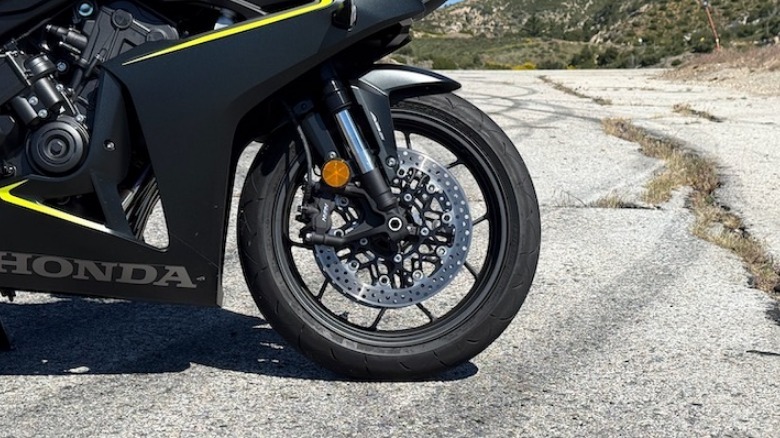
The front brakes are 310mm rotors being clamped down on by four-piston calipers, with a single-piston caliper and a 240mm rotor in the rear. Both the front lever and rear brake pedal have strong feedback, and it was easy to bring the 650R to a halt in traffic, or as I approached corners in the twisties.
 Travis Langness/SlashGear
I got used to riding the 650R quickly, and I was able to lean into the performance easily once I was out of the city, which I did quite a bit of. More than just satisfying for the price or for the class, the 650R was properly fun and responsive without any qualifiers or necessary context. So far, so good, for the bike I’d arbitrarily assigned to fill my 600RR’s place.
The E-Clutch is a pretty special trick up the CBR650’s sleeve
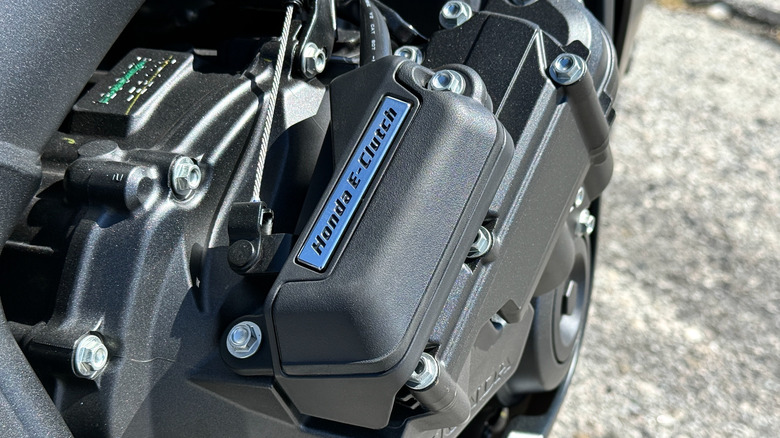
On last year’s model, the CBR650R got the addition of Honda’s E-Clutch system, a feature that carries over for 2026. Employed on a few other Honda bikes (like the small, entry-level Rebel 300, and the CB750 Hornet), the system essentially eliminates the need for the hand-operated clutch lever most of the time. Honda says it eliminates stalling and makes gear changes effortless. For the most part, that characterization of the system is spot on.
If you’re shifting the bike as you accelerate or decelerate, you still need to tap the foot lever in the appropriate direction, but there’s no need to pull in the hand clutch. You can even come to a complete stop without ever engaging the clutch lever, and the bike won’t stall. In some scenarios, you’ll need to use the clutch lever to get going, or to give the clutch a bit of slip on steep uphills, but that’s about it.
 Travis Langness/SlashGear
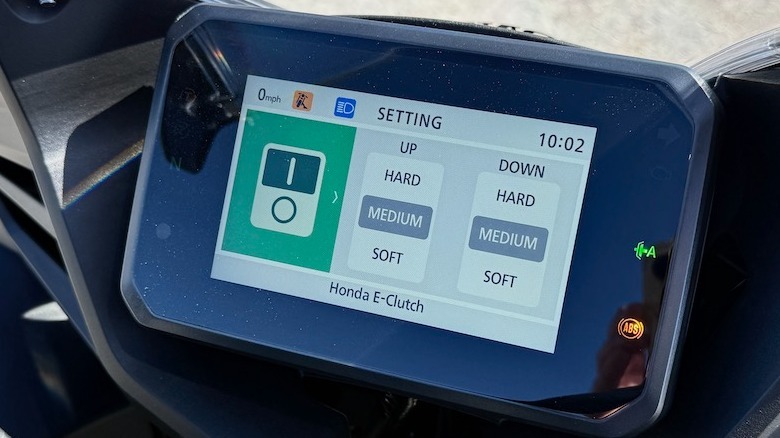
In operation, the E-Clutch also essentially acts as an ultra-slick quick shifter. You can adjust the E-Clutch’s shift sensitivity (there are three levels — I stuck with the lightest and easiest one) or you can shut off the E-Clutch entirely if you want to go full manual mode. Just a tiny tap of your left foot and the gears change with minimal pressure. The shifts are delivered quickly as you climb through the gears, and there’s no jolting forward as you engage the next gear. What’s more, unlike some DCT or fully-automatic motorcycle transmissions, the Honda still requires a bit of engagement from the rider, adding a bit to the riding experience.
One bit of missing hardware
Being relatively speedy and having the excellent E-Clutch, the CBR650R was easy to ride on a daily basis, but it was missing something. It doesn’t have much in the way of adjustable suspension, and that did make the ride a bit stiff at times. The 650R’s rear suspension has adjustable spring preload, but that’s it. It’s a pretty typical omission for this class, but some rivals — like the R7 — do offer rebound and damping adjustment.
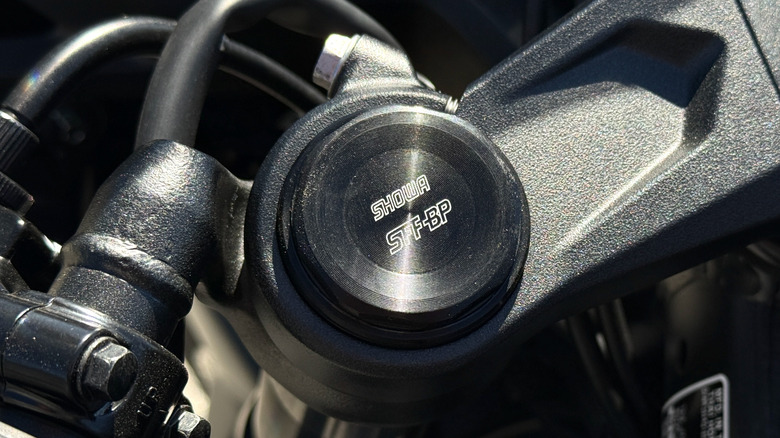
Up front, the 650R has a Show 41mm SFF-BP fork with 4.7 inches of travel, and in the rear, there’s a single-tube monoshock with 5.1 inches of travel. The shocks absorbed most of the small-to-medium bumps, but bigger road imperfections caused some jostling and fairly-sized movements from the handlebars.
Luckily, when I had the 650R leaned over on a few of my local corners, the small bumps I encountered didn’t upset the bike’s handling enough to take me off my line. The Dunlop Roadsport 2 tires that came on the 650R were predictable and relatively quick to warm up. While I wouldn’t make the CBR650R, especially on the budget-friendly Dunlops, my first choice for a weekend track day, neither the bike nor the tires felt overwhelmed on spirited weekend rides.
In it for the long haul
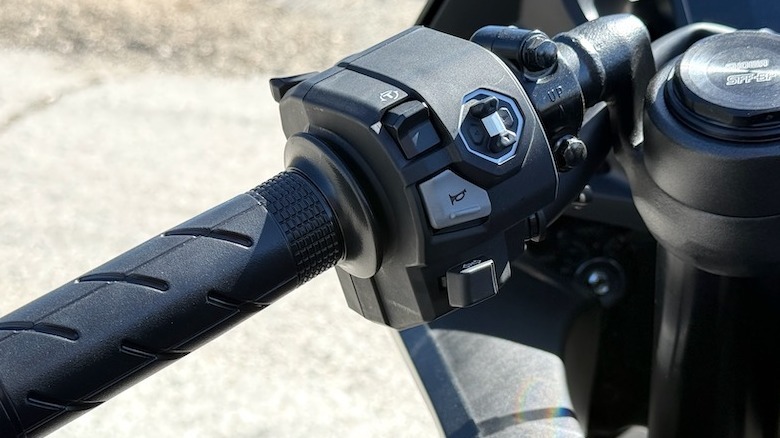
Suspension adjustments notwithstanding, I felt pretty comfortable on the CBR650R. Riding on the freeway, eventually in the canyons, and commuting through LA at some of the worst parts of the day, it was easy to get comfy. At 5-foot-9, the foot pegs are low enough that my knees didn’t feel pressured to bend too much, and the handlebars are high enough that I didn’t have to fully rely on my wrists and forearms for stability.
All the long rides I took on the 650R were pain free. The 650R also felt particularly narrow, making lane-splitting especially easy. Getting just about anywhere on the svelte Honda was a quick errand.
 Travis Langness/SlashGear
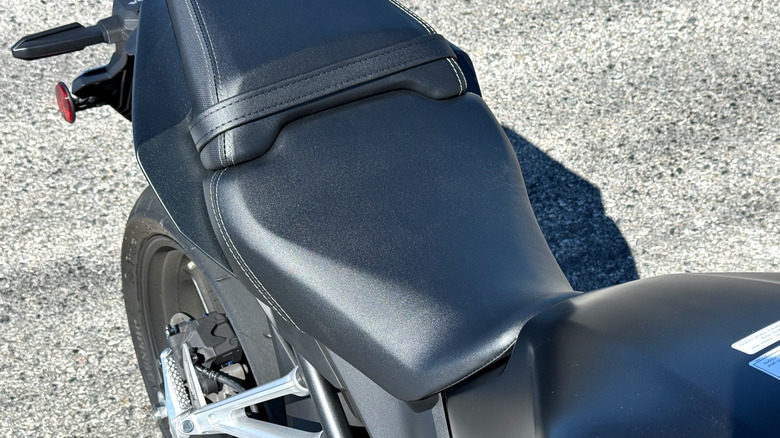
The rider seat was pretty pain-free too. It’s forgiving enough that my rear end didn’t go numb after a few hours in the saddle (that can happen if a seat is too stiff, like the one on my old 600RR was), and it’s tapered properly towards the front so that riders with larger legs like me can still touch both feet on the ground. A seat height of just 31.9 inches means most riders should have no problem stabilizing the bike at a stand-still.
Form and function
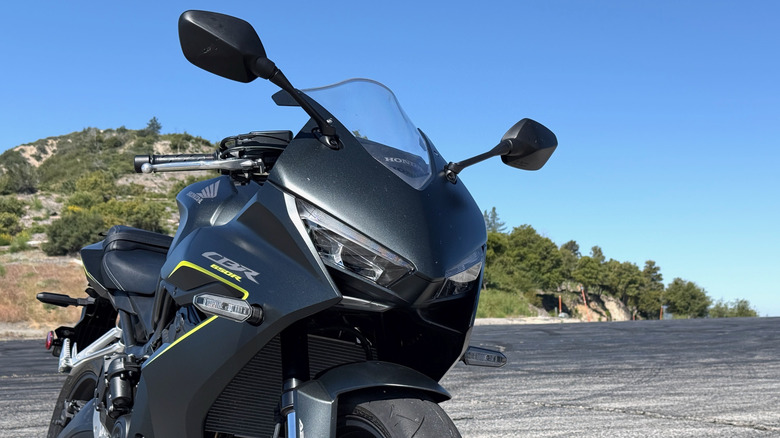
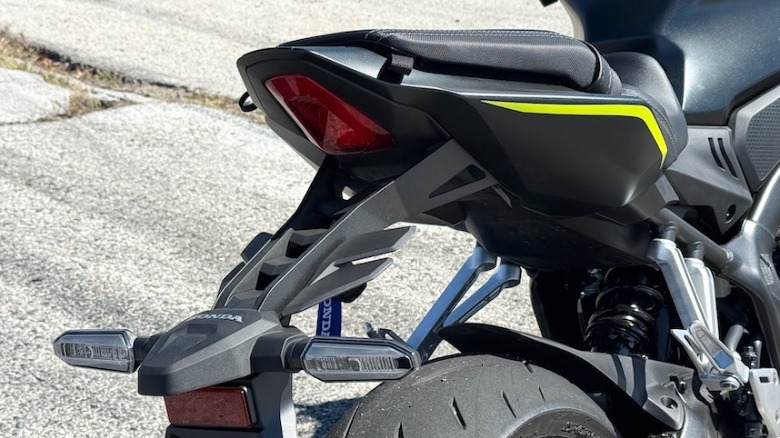
After a few weeks on the CBR650R, I was able to start seeing the details more clearly. Styling cues like the thin headlights and the narrow taillight help elevate the 650R to a premium status amongst sport bikes in its class. A bit of flake in the Matte Black metallic paint gives you the sensation that Honda spent a bit of money on this one — it’s not some sort of afterthought to an already-robust motorcycle lineup. They’re hidden, but the exhaust headers leaving the front of the engine, before they’re collected into the single exhaust, are an impressive sight to behold. Even the ladder-style license-plate mounting bracket looks the part of an aggressive sport bike.
 Travis Langness/SlashGear
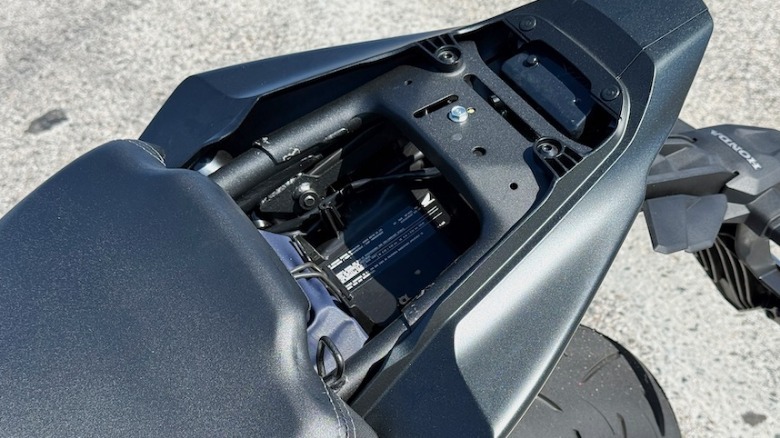
Unlike most sport bikes these days, especially the ‘super’ ones, the 650R had some surprising storage space, too. Pop the rear seat off, and there’s an area large enough for some tools, maybe a rag or two, and some window cleaner for when your visor is splattered with most of the local insect population. There are two little straps attached to the rear seat as well, where I could attach my helmet at stops and not worry about it falling off the handlebars or the mirror.
 Travis Langness/SlashGear
Also combining form and function in a seamless manner is the CBR’s rider screen. The 5-inch TFT display is high contrast and easy to read, even in bright, overhead sunlight. It’s also easy to interact with, given Honda’s simple handlebar controls and the logical menu layout. Like most of the rest of the bike, the screen just plain works.
Finding the pricing sweet spot
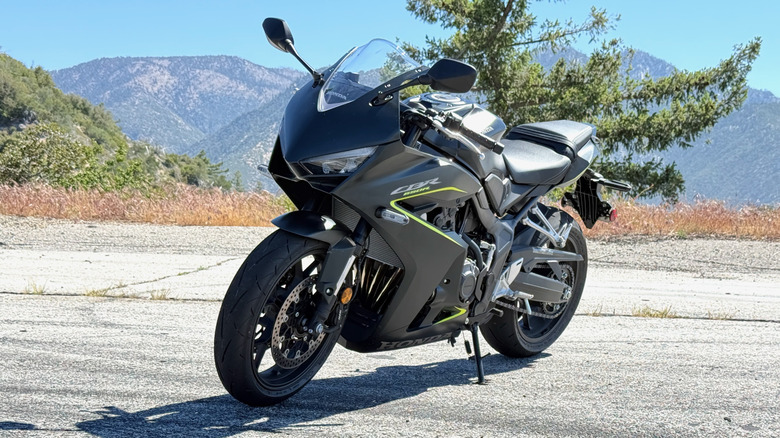
The 2026 CBR650R, with its satisfying power, sleek looks, and slippery E-Clutch, has an MSRP of $9,799 (including a $600 destination fee). That represents a $100 price drop over last year’s model, and big savings over the 600RR, which currently starts at $13,099.
The CBR650R is pretty reasonably priced when you compare it to class rivals from Yamaha and Suzuki, too. For instance, the Honda is a few hundred dollars less than the newest R7 ($10,074), and a bit cheaper than the GSX-8R ($10,399). The Kawasaki Ninja 650 undercuts them all at $8,884 (with ABS — it’s $500 less without it), but that Honda still has pretty good value.
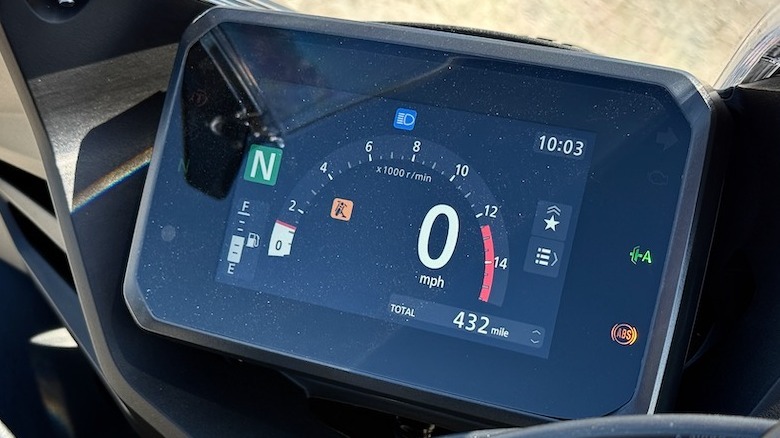 Travis Langness/SlashGear
The 650R is missing a few features that rivals have — like cruise control, which you get standard on the new R7 – but the Honda is still expertly assembled, and there are lots of details that give it a strong sense of quality. The E-Clutch is a great asset for the Honda, while tight tolerances on body panels, nicely constructed trim pieces, and stitching on the seat that doesn’t waver is all part of the package. It feels like any Honda motorcycle should: well built.
2026 Honda CBR650R verdict
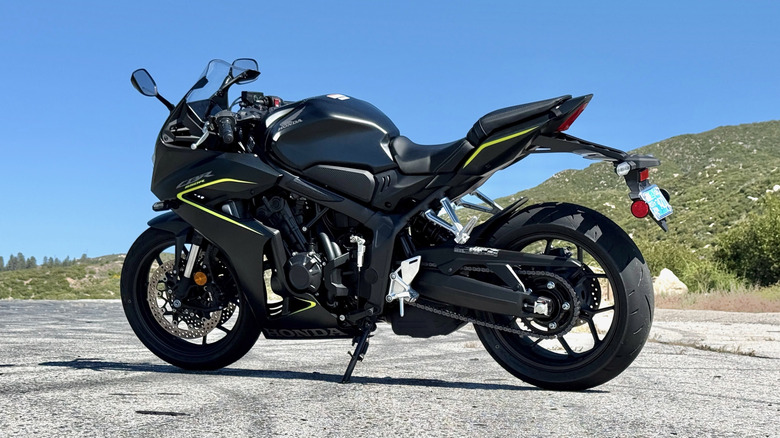
The CBR650R doesn’t provide the same kind of fizz that my old 600RR did, but pretty quickly after hopping on, I realized that wasn’t the point — I’d been looking at this bike through the wrong set of lenses. While it might not be a track-day weapon, capable of revving to the moon, the 2026 Honda CBR650R is swift, sharp, easy-to-ride two-wheeled transportation that will definitely fit the bill for lots of riders. It’s much cheaper and more approachable than the 600RR; it’s still properly powerful; and it’s a more versatile tool. It makes sport bike riding more accessible, and that’s never a bad thing.
The E-Clutch is an excellent bonus for new riders who are intimidated by manual clutch-lever operation, and it also provides an easy riding experience for veteran riders like myself. If you know yourself and your riding style well enough to know you won’t be doing triple-digit-speed freeway pulls or local track days on a regular basis, you don’t have to shell out for the more-expensive CBR600RR. If you want something that’ll be proper fun on its own, don’t sleep on the easier-to-ride CBR650R.

Stephan is the sports journalist for the Maple Grove Report.