
The 3-Second Rule Every Driver Needs To Know


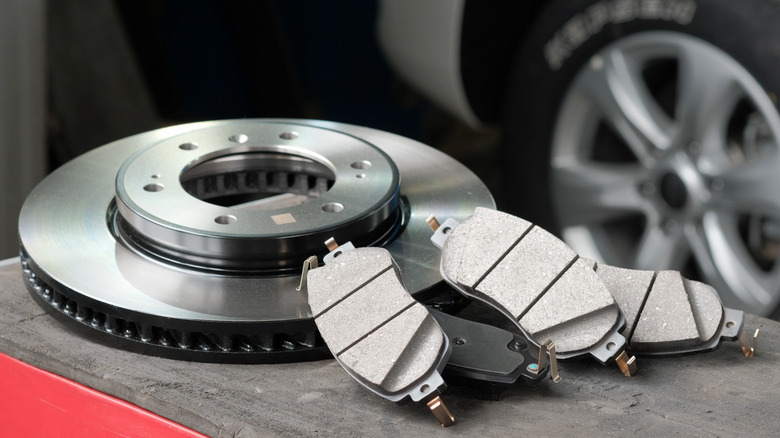
When you’re taking your driving test, the theory and the practical test contain a lot of info that you should know, and there’s also some stuff that your instructor mentions that isn’t necessarily written anywhere, but it’s still a good rule of thumb. Driving tests also prepare you to act appropriately in an emergency, including keeping a safe distance from the car in front of you so you’ll have enough room to slam on the brakes; it helps to have a car with a good braking system as well.

A good rule to follow in this situation is the three-second rule. Generally, the three-second rule states that you should always maintain a distance of roughly three seconds from the car in front of you. If you’ve ever played a racing game, you’ve likely gotten a little text on the screen letting you know how many seconds the car in front of you or behind you is. It works on a similar principle and can stretch to four or five seconds if the conditions are poor. Even though it’s a good idea on paper, it might be a little confusing because the distance between cars is measured in seconds only when those cars are on the race track, not in rush-hour traffic. Let’s delve a little deeper.

Calculating the three-second rule correctly

Since real life does not contain a split timer on our non-existent heads-up displays, let’s see how the three-second rule is applied in practice.  Pick a stationary object on the side of the road, like a road sign or a tree. As soon as the rear bumper of the car in front of you passes that object, begin counting to three. If your front bumper passes that exact same object before you finish counting, you are following too closely. Slow down and let them get a little further away to make things safer.

This begs the question: why is the safe distance from the car in front of you measured in time, rather than any other unit of measurement used to calculate distance or length? Mostly, it hinges on one of the most important metrics of accident avoidance and driving in general: reaction times. According to the New South Wales government, drivers generally need about 1.5 seconds to react to something and decide on the next action, and another 1.5 seconds to finally respond to the situation, in this case, avoiding a potential accident. The United States has plenty of dangerous highways, so it’s always a good idea to follow rules like these, as it could potentially save your life.


Source link

Leave a Reply

Subscribe to Our Newsletter

Get our latest articles delivered straight to your inbox. No spam, we promise.

Recent Reviews


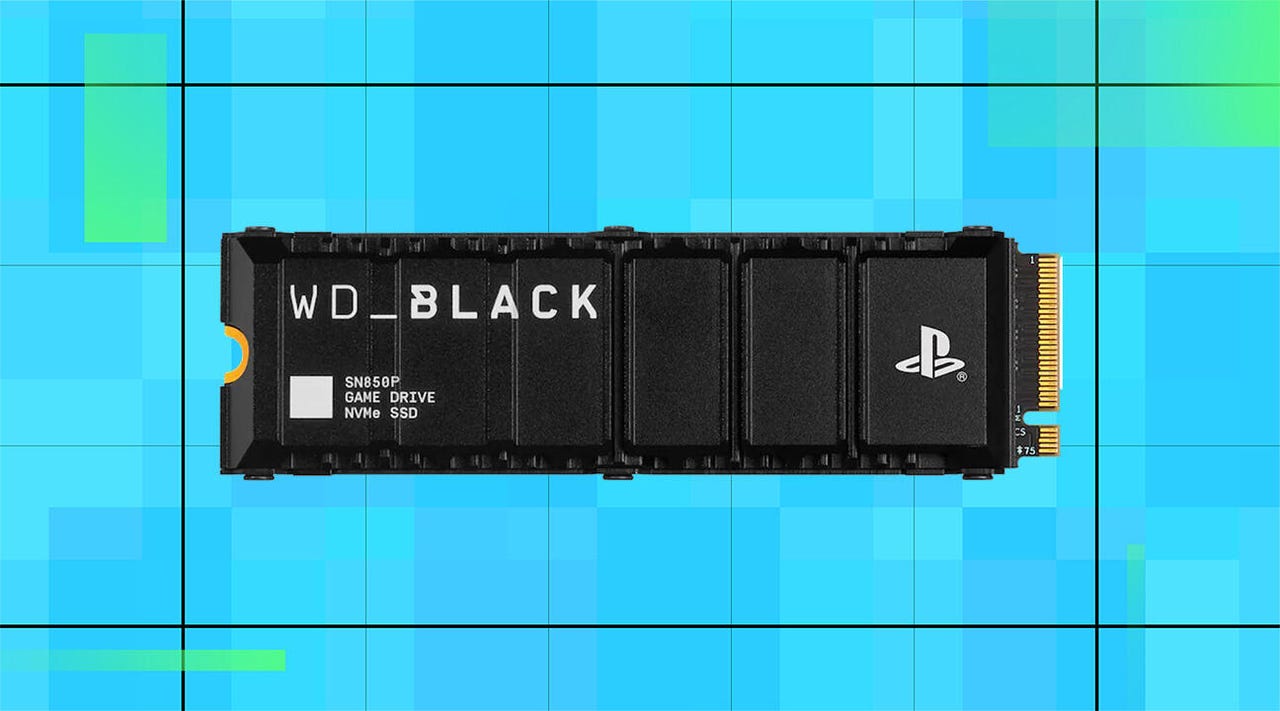
A WD Black SN850P SSD on a blue background

WD/ZDNET

High SSD prices got you down? Right now during Best Buy’s Tech Fest sale, you can save up to $2,800 on the WD Black SN850P storage drive. And while it’s officially licensed for use with PlayStation 5 consoles, it’s easy to reconfigure for use in gaming laptops and desktops for a boost in storage capacity. 

Also: The best Amazon Spring Sale deals: Save on streaming, Apple, Samsung, and more

Available in capacities from 1TB to 8TB, the WD Black SN850P can double, or even quadruple, your available storage space, giving you plenty of room for large game downloads, save files, screenshots, highlight reels, and more. With read and write speeds up to 7300 and 6600 MB/s, respectively, you’ll get much faster loading times than traditional HDDs as well as quicker access to your favorite apps, games, and programs.

Also: SSD vs HDD: What’s the difference, and which should you buy?

The integrated heatsink helps keep everything running at optimal temperatures to prevent data loss or corruption due to overheating. It can also be removed for easier installation in smaller PCs. 

By using flash memory rather than traditional mechanical platters, the WD Black SN850P can provide you with years of reliable data access with much less risk of internal damage due to shocks and bumps.

How I rated this deal 

Prices for RAM and SSD storage drives have skyrocketed as AI companies buy up available stock to power LLMs. And while this particular model is licensed for use with the PS5, you can quickly reconfigure it for use in laptops and desktop PCs. The 2TB model is marked down to $400, bringing it closer to pre-AI pricing, and the 8TB version is almost $2,800 off. While it’s still very expensive, it’s the lowest price I’ve seen on a high-end SSD in a long time. That’s why I gave this deal a 5/5 Editor’s rating.

Deals are subject to sell out or expire anytime, though ZDNET remains committed to finding, sharing, and updating the best product deals for you to score the best savings. Our team of experts regularly checks in on the deals we share to ensure they are still live and obtainable. We’re sorry if you’ve missed out on this deal, but don’t fret — we’re constantly finding new chances to save and sharing them with you at ZDNET.com


Show more

We aim to deliver the most accurate advice to help you shop smarter. ZDNET offers 33 years of experience, 30 hands-on product reviewers, and 10,000 square feet of lab space to ensure we bring you the best of tech. 

In 2025, we refined our approach to deals, developing a measurable system for sharing savings with readers like you. Our editor’s deal rating badges are affixed to most of our deal content, making it easy to interpret our expertise to help you make the best purchase decision.

At the core of this approach is a percentage-off-based system to classify savings offered on top-tech products, combined with a sliding-scale system based on our team members’ expertise and several factors like frequency, brand or product recognition, and more. The result? Hand-crafted deals chosen specifically for ZDNET readers like you, fully backed by our experts. 

Also: How we rate deals at ZDNET in 2026


Show more


Source link