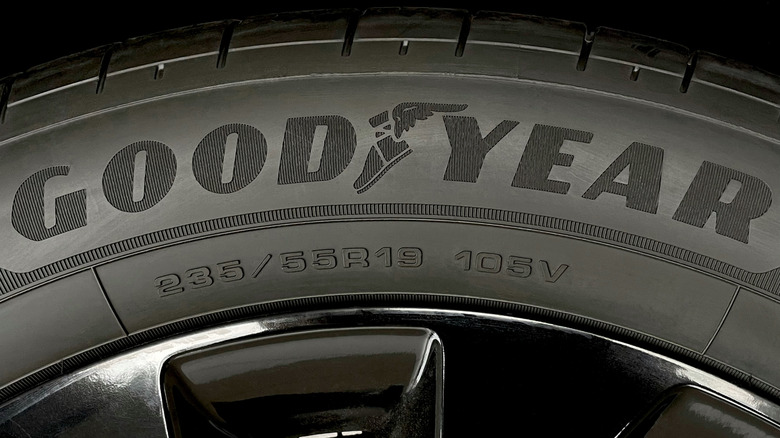
The Controversial Goodyear Tire Some Have Labeled ‘The Worst Tire Made In History’


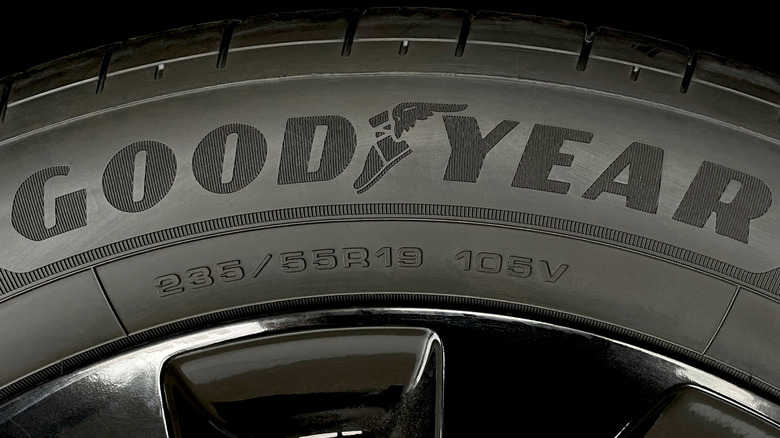
When you hear “worst tire ever made,” you probably think of the tread wearing down too fast or cracking sidewalls. But these Goodyear tires have caused at least nine deaths. While the tire was causing accidents for over two decades, it wasn’t recalled by Goodyear until 2022.

The Goodyear G159 was aimed at lower-speed delivery vehicles that don’t travel over 65 miles per hour. However, Goodyear installed at least 40,000 of them on motorhomes between 1996 and 2003. One of those motorhomes was owned by Billy Wayne Woods, who was paralyzed and later died from injuries sustained in a crash when he was driving down to Florida with his family — the treads had come off one of the G159 tires, causing the vehicle to violently hit two embankments.

The Woods family is one of 41 lawsuits filed against Goodyear over the G159. “You cannot debate the defective nature of the G159,” Attorney David Kurtz told Jalopnik. “There’s nothing to discuss. It is the worst-performing tire ever made.”

Why is the Goodyear G159 tire so bad?
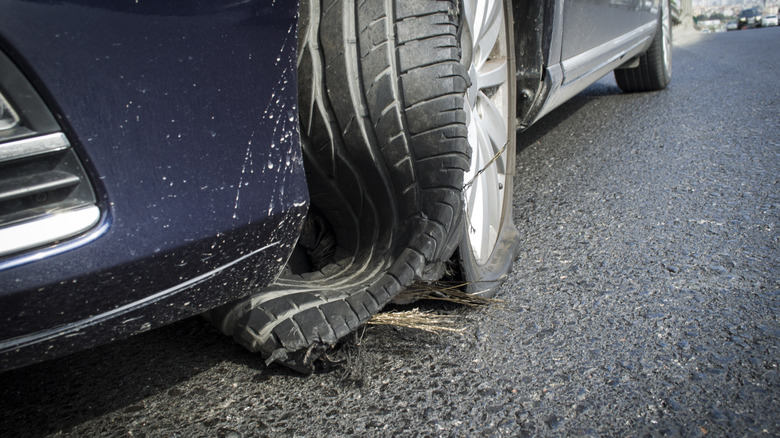
The Goodyear G159 was not meant to be on motorhomes, which can reach well above 65 mph on the highway. When the vehicles reach higher speeds, the G159 often experienced heat-induced failure, tread separation, and blow-outs. 

Tires have a temperature rating, which indicates how a tire handles the high temperatures built up from the road. Investigations from the National Highway Traffic Safety Administration (NHTSA) found that the G159 tires produced temperatures exceeding 200 degrees when the speed reached 50 mph. Continued operation at this heat caused structural deterioration. 

Goodyear didn’t conduct high-speed tests on the G159 tires until after it already started selling them — the tires blew out at 75 mph during two different tests, which Goodyear did not release. Instead, Goodyear claims it was user error, stating that blowouts can happen from overload and under-inflation. When 70-year-old LeRoy Haegar lost control of his motorhome after a tire blowout — causing all occupants to suffer serious injuries — Goodyear said in response to a lawsuit that Haegar caused the accident by slamming on the brakes. 

Jalopnik’s investigation found nine deaths and 34 injuries linked to crashes involving the Goodyear G159 tire from just a seven-year period. There were over 700 complaints. 

Goodyear attempts to cover up G159 dangers

Despite all the tragedies, investigations, and lawsuits surrounding the Goodyear G159 tire, nobody had really ever heard of it. This is due to Goodyear’s attempt to cover it all up, according to Jalopnik’s investigation. The company was able to until 2022, when the NHTSA opened an investigation. At this point, all the documents were unsealed and published. 

Court documents from 1996 to 2015 show the Goodyear G159 tire being accused of ongoing safety issues. The documents showed a pattern that can’t really be denied — the same tire failed at highway speed across 17 brands of motorhomes and 39 different models. Goodyear was claiming all of these instances were caused by user error, but one case finally brought the previously mentioned testing to light.

In 2010, the Schalmo family sued Goodyear when the tread separated on one of their tires and led to a serious crash. As part of the case, the family demanded Goodyear to turn over its test data, which proved the tires were running at 229 degrees — beyond their capacity. And Goodyear knew this. “Goodyear admitted that exposure to prolonged temperatures greater than 200 degrees can lead to separation of the tire’s structure,” Kurtz wrote in a 2015 court filing. “Exposure above 250 degrees threatens the capability of the tire to stay together much longer.” 

There are still Goodyear G159 tires on the road today. You can try to catch these early signs of a tire blowout if you’re at risk while driving to get your replacement Goodyear tires from the recall. Want a different brand for your older RV? Michelin is the tire brand with the highest satisfaction rating, with the XRV made specifically for motorhomes. 


Source link

Leave a Reply

Subscribe to Our Newsletter

Get our latest articles delivered straight to your inbox. No spam, we promise.

Recent Reviews


Managing a small business is a balancing act, and staying on top of SARS requirements is a non-negotiable part of the journey. As we enter the 2026/27 financial year, this guide provides the essential dates and updated thresholds you need to keep your compliance on track and your cash flow healthy.

The 2026 Budget Speech introduced significant shifts (most notably a major change to VAT registration) designed to reduce red tape for entrepreneurs. Here is how those changes translate into your key tax moments.

1. Value-Added Tax (VAT): The VAT201 Return

VAT is the 15% you add to your sales. Think of yourself as a collection agent for SARS; this money isn’t yours, you’re just holding it for them. A VAT201 is the form where you declare how much VAT you collected from customers minus the VAT you paid to your suppliers.

  • The Current VAT Rate: Remains unchanged at 15%.
  • What’s changed? As of 1 April 2026, the compulsory VAT registration threshold has more than doubled, increasing to R2.3 million (up from R1 million). This means small businesses earning less than R2.3 million per year are no longer required to register as a VAT vendor.
  • Voluntary Registration: The minimum turnover threshold required to voluntarily register for VAT has increased to R120 000 (up from R50 000) (up from R50,000).
  • Deadline: For eFiling, returns and payments are due by the last business day of the month following your tax period.

Impact: Businesses with taxable income lower than the registration threshold of R2.3 million may deregister for VAT if they do not want to be registered under voluntary registration.

2. Monthly Payroll: The EMP201 Return

If you have employees, you must deduct tax from their pay and send it to SARS. The EMP201 is a monthly declaration that combines PAYE (employee income tax), SDL (skills levy), and UIF (unemployment insurance). What’s changed for your staff? The 2026 Budget increased Medical Scheme Tax Credits to R376 per month for the main member and first dependent.

  • Additional dependents increased to R254 per month. Ensure your payroll reflects this so staff receive the correct take-home pay.
  • The bottom line on tax brackets: Personal income tax brackets were adjusted by 3.4% for inflation. This helps prevent “bracket creep,” so your team isn’t taxed more simply because their salaries rose to keep up with the cost of living.
  • Deadline: The 7th of every month. (If the 7th is a weekend, pay by the Friday before).

3. Provisional Tax: The IRP6 Return

Provisional tax is just a way for business owners to pay their Income Tax in “pay-as-you-go” installments. An IRP6 is the form you use to estimate your profit and pay the tax on it in advance.

  • 31 August 2026 (First Period): Pay 50% of your estimated total tax for the 2027 year.
  • 26 February 2027 (Second Period): Your final estimate and payment for the year.
  • 30 September 2026 (Third ‘Top-Up’ for 2025/26): If you under-calculated for the 2025/26 year, paying by this date helps you avoid backdated interest.

4. Filing Seasons: Employer Reconciliations (EMP501)

Twice a year, SARS asks you to prove that the monthly amounts you paid (the EMP201s) match the actual tax certificates (IRP5s) you gave your employees. The EMP501 is this final “check-up” form.

  • 1 April – 31 May 2026 (Annual Filing): Covers the full year just ended (March 2025 – Feb 2026).
  • September – October 2026 (Interim Filing): The half-year check for the current 2027 year.

Compliance Note: SARS now strictly validates Employee Tax Reference Numbers. Submissions with “dummy” numbers will be rejected. Make sure you avoid this mistake to avoid potential penalties. 

5. Your 2026/27 Strategic Checklist

Think of this as your business “health check.” It’s about ensuring your books reflect reality so you can make better decisions for the year ahead.

[ ] Claim your Small Business Corporation (SBC) relief: If you qualify, the first R99,000 of your taxable income  is now tax-free. Check with your accountant if you meet the criteria to save on the flat corporate tax rate.

[ ] Offset your “Bad Debts”: Run an Aged Receivables report in Xero. If invoices are unlikely to be paid, write them off. This lowers your taxable profit by telling SARS you never actually received that income.

[ ] Leverage the Asset Write-off: Ensure your Fixed Asset Register is updated in Xero. SARS allows “wear and tear” deductions for equipment like laptops or machinery, which reduces your tax bill.

[ ] Audit your VAT Status: Check your turnover against the new R2.3 million threshold. If you’re below the new limit, discuss with your advisor whether staying registered is still the right move for your business.

Was this article helpful?

YesNo


Source link