The European Capital Straight Out Of A Fairytale You Need To Visit At Least Once


Share The Article

When you think of Europe, chances are it’s places like Rome, with its imposing Colosseum and open-air museum of a Historic Center, or Paris, with the Haussmann-designed, grid-like cityscape, and soaring Eiffel that come to mind.

I live in Paris myself, and I go to Rome at least twice a year, so don’t get me wrong, these are truly some of the most beautiful, inherently-fascinating capitals in the Old Continent.
The European Capital Straight Out Of A Fairytale You Need To Visit At Least Once

Be that as it may, major European cities are not necessarily the best pick if it’s that idyllic medieval charm and slow-paced living you’ve been idealizing.

Yes, there’s an ancient landmark hither and thither, and there’s no question the museums are world-class, but between the buzzing traffic and the odd, ugly skyscraper looming in the distance, it doesn’t feel exactly… immersive.

Now, if you’re looking for that fairytale, time-travel kind of vibe, I’ve got just the place for you:

Is Ljubljana The Ultimate European City?

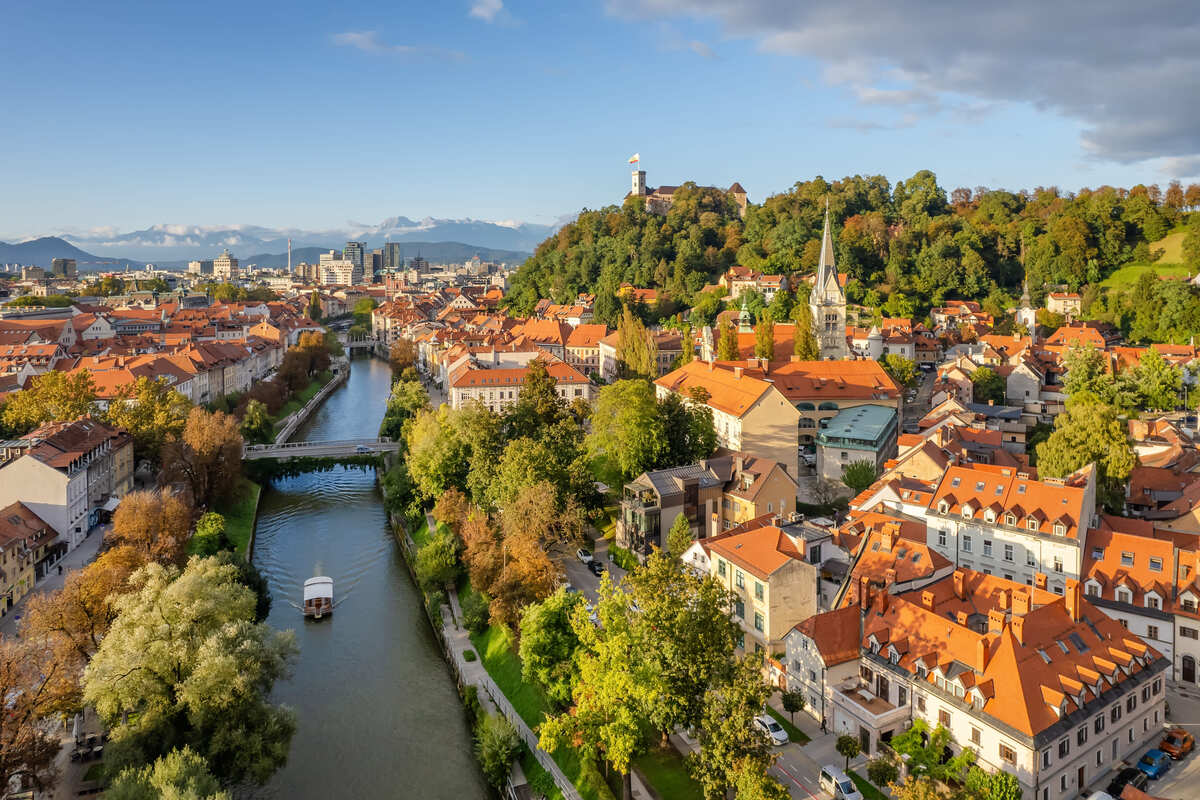
Nestled in its cozy Central—Eastern?—European nook, Ljubljana is basically a small town with big city responsibilities.

Aerial View Of Ljubljana, Slovenia

It’s the capital, cultural heart, and administrative center of Slovenia, a tiny Old World country most first-time visitors, and even repeat-visitors to Europe, bypass altogether… even though it’s home to some of the most beautiful, absolutely breathtaking alpine scenery.

Anyway, we’re getting a little ahead of ourselves here.

With just under 300,000 residents, Ljubljana is what we like to call a pocket-size cultural powerhouse: it’s a capital, sure, but it feels more like one of those Disney-like, riverside fairytale you get in a storybook cover.

No, there’s no major Roman arena up here—too far north of the Alps for that—but we do have the Triple Bridge?

A Pocket-Size Cultural Powerhouse

Young Female Tourist In Ljubljana Old Town, Slovenia, Southeastern Europe

A stunner of a bridge complex designed by local architect Jože Plečnik, it is a trio of ornate, stone-built pedestrian crossings spanning the fast-flowing Ljubljanica River.

They join the riverside promenade on both ends, and connect the ‘newer’ town, which is still fairly old by American standards, mind, and the castle district.

As a matter of fact, Ljubljana’s whole schtik is actually whimsical bridges.

Beside the Triple Bridge, there’s the other Plečnik-signed Cobbler’s Bridge, known for the wide stone pillars and wide, open design, and Dragon Bridge, an Art Nouveau offering guarded by fearsome dragon statues.

My favorite thing about Ljubljana?

Whether it’s during the day, when the city center is buzzing with passersby and day-trippers from Italy—you can actually take a direct train from Trieste to Ljubljana—or at nighttime, when the 19th-century lamplights cast eerie shadows on wet cobblestones, I’ve not once felt unsafe or on edge.

Ljubljana Just Couldn’t Be Safer If It Tried

People Working In A Park In Ljubljana, Slovenia

Ljubljana is one of the safest capital cities across the pond, owing it to a stellar track record of keeping petty theft and religious extremism that now plague so much of Western Europe at bay, and a near-absence of violent crime.

It’s a Level 1 destination as per the U.S. Department of State’s official advisory, and if you don’t give anything .gov the time of day, you can trust the people instead. Vox populi, vox dei.

Slovenia scores an impressive 86 out of 100 on the Traveler Safety Index, informed by reports from travelers who’ve actually been to the place—ahem, maybe I’ve contributed to the current rate myself?

Can We Talk About Those Epic Rooftop Terraces?
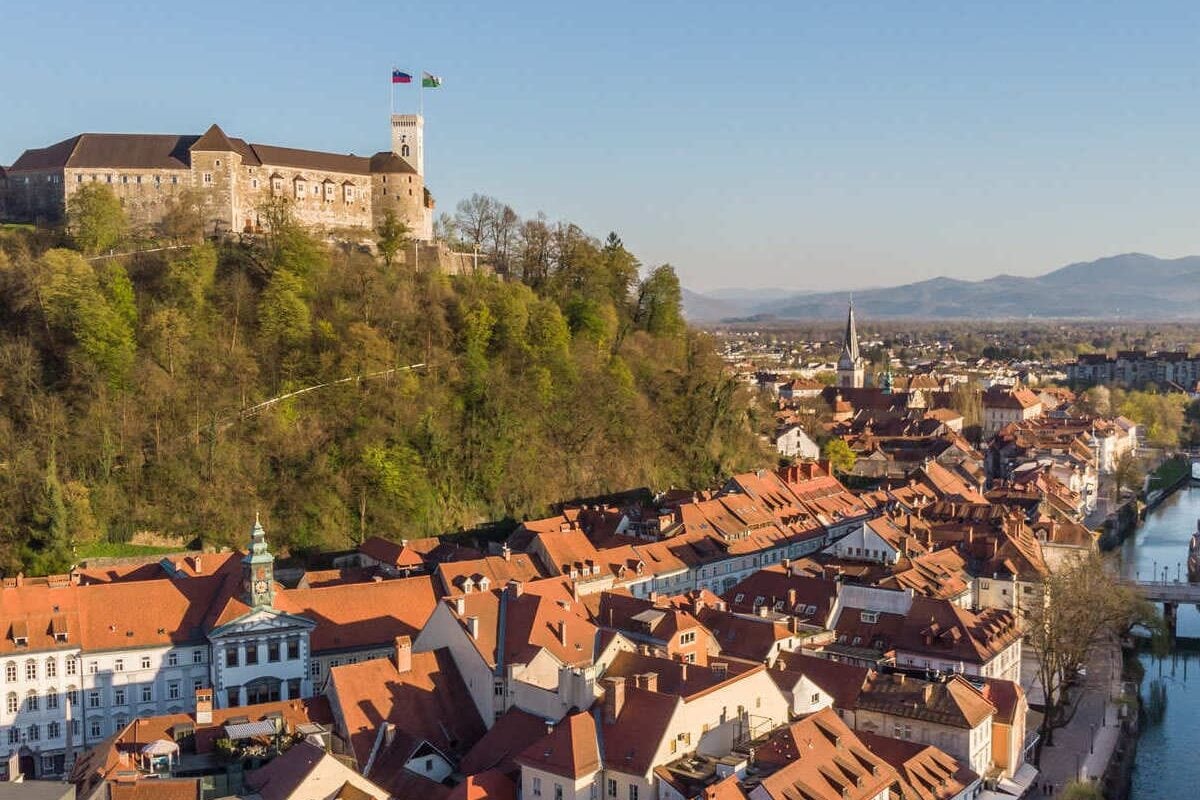
Panoramic View Of Ljubljana Old Town, Slovenia, Southeastern Europe

Bridges aside, you can’t miss Central Market, where you’ll find a plethora of local produce, from alpine cheeses and honey to Slovenian specialties like Carniolan sausage and Karst prosciutto, Slovenia’s response to the Italian one.

As you venture deeper into the Old Town, up towards the castle, it’s all about cobbled lanes, well-maintained Habsburg-era, pastel-hue façades, and cute little cafés, ideal for a wine stop, or some coffee-sipping leisure with some leisurely people-watching.

Looking for the best viewpoint in town?

Take the funicular up to Ljubljana Castle, the massive medieval fortress overlooking the gable tiled roofs of the Old Town, or if you’re looking for that postcard-perfect view of the city, castle included, the Nebotičnik rooftop café is the money shot.

Check Travel Rules For Europe Ahead Of Flying
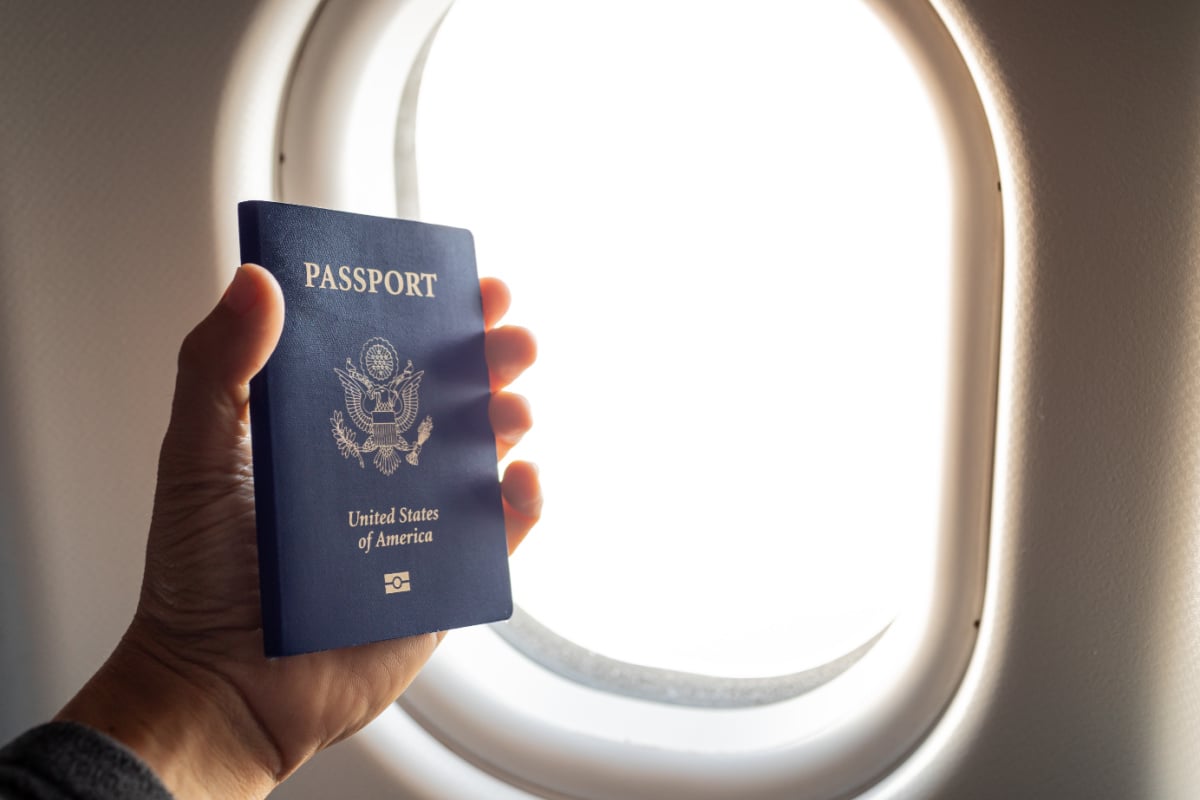
Passenger holding a USA passport in a plane with the window in the background

Before you go ahead and book those flights, though, make sure you run a quick destination check on the Entry Requirement Checker page in advance.

Europe is tightening its entry rules significantly this year, and from the already-enforced mandatory fingerprinting, to the upcoming ETIAS, a travel permit that will soon apply to American travelers, you’ll want to stay up to speed with the ever-changing regulations.

Explore Slovenia Beyond The Capital

Ljubljana is also the perfect base for exploring Slovenia as a whole.

Lake Bled is possibly the most photographed lake in all of Europe, with its iconic church on an islet right in the center and a mountaintop castle. A short 34-mile drive out of town.

Panoramic View Of Bled Lake Seen From Bled Castle, Slovenia, Southeastern Europe

Just as pretty, just a tad more offbeat, Lake Bohinj offers quieter promenades, snow-capped peaks, and peaceful waterfront retreats. A further 53 miles.

Keen on a laid-back beach getaway?

Believe it or not, Slovenia claims a short 29-mile coastline along the Mediterranean Sea, and over in Piran (74 miles south of the capital), you can expect a Venetian-style resort town with narrow streets, Italian-style buildings, green shutters and all, and epic sunset views for days.

Slovenia proves you don’t need size to deliver serious storybook magic: from alpine gems to sun-drenched Adriatic towns, it’s Europe in miniature done right.


Source link

Leave a Reply

Subscribe to Our Newsletter

Get our latest articles delivered straight to your inbox. No spam, we promise.

Recent Reviews


Digital Evidence Has Reshaped Criminal Defense – and the Defense Bar Is Still Catching Up

A decade ago, a felony case file might have run to a few hundred pages of police reports, witness statements, and lab results. Today, that same case can include a full cell phone extraction, hours of body-worn camera footage, surveillance video from multiple cameras, social media exports, license-plate-reader hits, and digital forensic reports running thousands of pages. The substantive law has not changed nearly as fast as the evidence it operates on.

For criminal defense practitioners, the shift is not just about volume. It is about how cases are investigated, how discovery is reviewed, how plea calculations are made, and how trials are tried. A defense lawyer who treats digital evidence as an afterthought — to be skimmed close to trial, with the cell phone dump opened only if something obvious surfaces — is no longer providing competent representation in most serious cases.

The Volume Problem

Modern law enforcement investigations generate digital evidence at a scale that traditional defense workflows were never designed to handle.

A single cell phone extraction using forensic tools commonly used by prosecutors can produce a report tens of thousands of pages long. Multiply that across co-defendants. Add cloud account data subpoenaed from providers. Add body-cam footage from every responding officer, often running an hour or more per officer per incident. Add interview recordings, surveillance video, ALPR records, and any wiretap or pen register data.

The defense lawyer’s obligation is to review all of it — or at least to review it competently enough to identify what matters. Doing that without a workflow is impossible. Cases get lost not because the exonerating evidence was hidden, but because it was buried in the third week of message history nobody had time to read.

The practical response involves a combination of technology and process: e-discovery review platforms scaled for criminal cases, paralegal-level review with defined search protocols, and clear allocation of which categories of evidence the attorney personally reviews versus which are screened first. Firms that handle digital-evidence-heavy cases without that infrastructure tend to discover, late in the process, that something important was missed.

Authentication and Chain of Custody Have Become Central

Volume is half the problem. The other half is that digital evidence is harder to authenticate than the physical evidence it has displaced.

A surveillance video recovered from a business has to be tied to a specific camera, on a specific system, with verified timestamps, with continuous custody from the moment of seizure to the moment of presentation. A cell phone extraction has to be tied to a specific device, performed using a documented forensic process, with hash values demonstrating that the data has not been altered. A social media export has to be authenticated either through the provider’s certification or through circumstantial evidence connecting the account to the defendant.

Each of these chains has potential breaks. Cameras get the wrong time. Forensic extractions get performed with outdated software. Social media accounts get used by people other than the registered user. Defense counsel who understands the technical underpinnings of how evidence was collected can identify gaps that opposing counsel may have assumed were settled.

Federal procedure in particular has evolved around these issues. Practitioners working in federal court should be familiar with the Federal Rules of Evidence governing authentication and the best-evidence rule, both of which apply to electronic records in ways that often surprise lawyers more accustomed to paper-era practice.

Discovery Obligations and the Brady Problem

The growth of digital evidence has also complicated the prosecution’s obligations under Brady and its progeny, which require disclosure of material exculpatory and impeachment evidence to the defense.

When the relevant evidence universe was a few hundred pages, prosecutors could reasonably review the file and identify Brady material. When the universe is a hundred thousand pages of cell phone data and dozens of hours of video, identifying what is exculpatory becomes a much harder problem — and not always a problem prosecutors solve well. Defense counsel cannot rely on the prosecution to flag what the defense will find useful. The defense has to find it themselves, which loops back to the volume problem.

Courts have been inconsistent in how they handle Brady obligations in the digital age. Some jurisdictions require prosecutors to provide searchable, organized productions; others permit document dumps that effectively shift the search burden to the defense. The practical implication is that defense lawyers in serious cases must budget significantly more time for discovery review than would have been required even a few years ago, and must do so on schedules that prosecutors and courts often have not adjusted to reflect the new reality.

How Digital Evidence Changes Plea Negotiations

Plea negotiations have always been driven by each side’s assessment of trial risk. Digital evidence has changed both sides of that calculation.

For the prosecution, video and digital records often appear to lock in factual elements that previously turned on witness credibility. A clear video of an alleged assault, or a series of incriminating messages, can shift a case from a battle of testimony into a battle of interpretation. Prosecutors evaluating cases with strong digital evidence often offer less, because they perceive their trial position as stronger.

For the defense, the same evidence frequently contains nuance that changes how a jury would actually receive it. Body-cam footage that the prosecution thinks is damning often shows context that supports the defense theory. Cell phone messages read in full rather than excerpted often tell a different story. The defense lawyer who has actually watched the video and read the messages — rather than relying on the prosecution’s characterization — is often in a meaningfully stronger negotiating position than the case file would initially suggest.

This is part of why pretrial preparation has become more decisive. The cases that resolve favorably are usually the cases where the defense did the digital evidence work early enough to see what was actually there, rather than what the police reports said was there. Resources from the California Courts and the State Bar of California outline the procedural framework within which this work has to happen, but the framework alone does not produce results — sustained attention to the evidence does.

What Effective Defense Looks Like Now

Competent criminal defense in 2026 looks different than it did even five years ago. The lawyers who get the best outcomes for clients tend to share a few characteristics: they take digital evidence seriously from intake forward, they have the infrastructure to review it at scale, they understand the technical questions well enough to challenge authentication where appropriate, and they treat plea calculations as something to be made after the evidence has been examined rather than after the police reports have been read.

For people facing serious charges in California, the practical implication is that the choice of counsel matters more, not less, in the digital evidence era. A firm like Angelo Reyes Law, built around trial-ready preparation rather than volume-driven plea processing, reflects what effective representation tends to look like in cases where the evidence record is large and where the difference between a good and a poor outcome turns on what defense counsel actually finds in the file.

The volume of evidence will keep growing. Defense practice has to keep up.


Source link