The dark romantic dramedy “The Drama” is one of the year’s earliest hits, with a total box office gross climbing above $100 million ($45 million domestic). Sure, that only places it as No. 14 on the year’s top box office earners, but it’s still remarkable given the nature of the film and its marketing.
The film is the latest A24 effort from Norwegian writer-director Kristoffer Borgli, who is far from an American household name — although he had some mild success with his previous A24 project, 2023’s Nicolas Cage-starring “Dream Scenario” — and it broke one of the major rules of modern film marketing: Do not hide the ball.
Related: Independent theaters resurrect and redefine the theater-going experience
Movie stars used to be the main engine of a film’s financial success, but times have changed. A rapidly evolving, less original cinema scene — as well as overexposure to countless celebrities — have contributed to this, but they’re not entirely gone. Some current releases have shown that audiences still care about movie stars: The question is how much?
“The Drama” is centered around a major reveal, but it doesn’t give it away in the trailer, like far too many blockbuster films do (think “Batman vs Superman: Dawn of Justice,” which spoiled the entire ending fight scene and Wonder Woman’s reveal in the first full trailer). This seemed set to deliver a massive blow to the film’s potential financial success, but one (or shall I say two) things stepped in the way: the movie’s stars, Robert Pattinson and Zendaya.
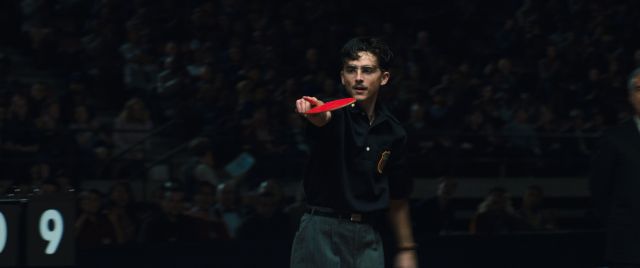
They heavily marketed the film, but it didn’t feel like their sheer willpower pushed it to $100 million plus, as it did with Timotheé Chalamet’s excellent, massive guerrilla campaign for “Marty Supreme.” People just showed up to see them. Their two faces in the trailer were enough to get butts in seats, even when audiences knew practically nothing about what the film would be.
This is one of the prime examples of massive star power driving cultural impact and box office success in the past six months of movie-going (the others being “Marty Supreme” and, on a much larger scale, Ryan Gosling’s “Project Hail Mary”). The question is, are these outliers, or do they signal something much larger in cinematic culture?

Let’s take a look back at a time when stars really were the center of movie culture. The year is 1976. Average Americans are spending significantly more time at theaters than they are now, and they are probably seeing one of five movies: “Rocky,” “A Star is Born,” “All the President’s Men,” “King Kong” or “The Enforcer.” What is one thing these all have in common — besides generally being smart and made for adults? Stars. Sylvester Stallone bursting onto the scene, Barbara Streisand continuing her dominance, Robert Redford and Dustin Hoffman finally joining forces, Jeff Bridges and Jessica Lange making themselves known and Clint Eastwood continuing to be your dad’s favorite action star.
Fast-forward 43 years to 2019, widely considered one of the 21st century’s finest years of film releases. The top five that year? “Avengers: Endgame,” “The Lion King,” “Toy Story 4,” “Frozen II” and “Captain Marvel.” None of these films is star-driven. Three of them are animated (ignore how Disney attempted to market its“Lion King” remake; it really is just “advanced” animation), and two of them are superhero films that, sure, have major stars, but nobody is going to the theater for the stars; they’re going for their favorite characters. This box office communicates one thing: The stars of yesteryear are gone. The Al Pacinos, the Robert Redfords, the Meryl Streeps, even the Brad Pitts and the Leonardo DiCaprios, are going extinct.
Four short years later, with the film industry mostly recovered from a disastrous pandemic-writers’ strike combo, more positive trends are emerging. The lighting-in-a-bottle “Barbinheimer” event is contributing to most of it (these two projects are partially star-driven, with Margot Robbie and Gosling highlighting “Barbie,” and Cillian Murphy and Emily Blunt for “Oppenheimer”).

Outside of the top five, some star-focused intellectual property rears its head with installments from Keanu Reeves’s “John Wick” series, Tom Cruise’s “Mission Impossible,” Michael B Jordan’s “Creed,” and the latest film in the legacy of Willy Wonka films, Timotheé Chalamet’s “Wonka.” Those four films are undeniably IP, and Robbie and Murphy only made up a portion of the massive success of their respective films, but it’s much more positive than 2019’s box office. It’s nowhere close to the inspiring list of films that 1976 boasts, but at least it’s some sort of step in that direction.
Right now, we stand at a fascinating time in the world of movie stardom. 2025’s box office, although largely made up of films like “Lilo & Stitch” and “Fantastic Four: The First Steps,” had some hopeful material like “Sinners” slotting in at No. 7 on the domestic box office and “F1: The Movie” at No. 14. A decent portion of these films’ success has to be attributed to their stars (Michael B. Jordan and Brad Pitt, respectively). A24’s twin pairing of movie star vehicles “Marty Supreme” and “The Drama,” both crossing the $100 million threshold at the worldwide box office, is exciting, and Ryan Gosling’s massive sci-fi spectacle “Project Hail Mary” climbing to over $600 million is equally impressive.
Alongside these three projects, the late 2025, early 2026 season has given us two more star-driven films: “Wuthering Heights” and “The Housemaid.” Although the quality of these two is sketchy, they’re both literary adaptations, riding on the backs of their stars (Margot Robbie and Jacob Elordi for the first, and Sydney Sweeney for the latter).
Finally, early 2026 has also given us “Send Help,” a gnarly survival thriller directed by professional sicko Sam Raimi starring two actors that Hollywood has cast aside. Rachel McAdams is the first of these two. Coming off the three-hander of “Mean Girls,” “The Notebook” and “Wedding Crashers,” she seemed set to be the next big leading woman.
Unfortunately, besides 2015’s “Spotlight,” she’s almost entirely been in lousy parts in mediocre movies that are mostly unsuccessful — both critically and financially. What happened? Were there no strong movies that wanted McAdams’ multi-faceted acting chops in their leading spot? Did audiences suddenly lose interest in her? It’s difficult to say, which is a classic case of 21st-century stardom.
Related: Hollywood’s new film genre degrades us with its celebration of the bizarre
Alongside her in “Send Help” is Dylan O’Brien. He seemed to be on a fast track to stardom after the smash success of the “Maze Runner” films (in which he was first billed), but a freak on-set accident drastically derailed his career. And when he decided to return to the screen, he couldn’t find a decent part. Before “Send Help,” his only mildly successful film since “The Maze Runner” was “Saturday Night,” which he wasn’t starring in. Hollywood seemingly doesn’t want O’Brien, but he wants Hollywood. And judging from his recent success, viewers want him, too. It’s a complex case that is still evolving, but the question of whether he can make his way back into receiving consistent, good roles remains unanswered.
What defines a movie star is tricky to think about now. After the DiCaprio-Pitt generation, it’s difficult to find a list of A-List stars that you can’t count on one hand. Recent successes have the future looking brighter than it has in decades, but the role of the movie star in contemporary pop culture remains an ever-changing tale.
Peter Ostrem, a student journalist at St. Paul Academy and Summit School, is a senior who will be attending the University of Minnesota in the fall.
Related