
Most people arrive in Kota Kinabalu with a list: beaches, wildlife, culture. They want to tick every box before their flight home. What they often miss is the version of Sabah that exists between those boxes — the river silence, the local smiles, the moment a proboscis monkey appears in the trees and the whole boat goes still.
A Kota Kinabalu day trip puts all of it within reach: islands, rainforest, river life, coastal scenery, and local culture, without demanding that you move fast. The city itself is just the starting point. What unfolds after is something closer to Borneo at its own pace.
How the Day Actually Begins
Pickup from a designated point keeps things easy. The van pulls away and Kota Kinabalu’s streets gradually open into coastal roads, green hills, and glimpses of village life. The shift is gradual, and by the time you’re deep into the landscape, you’ve already started to exhale.
Your Kota Kinabalu travel guide grew up around Kota Kinabalu. They know the rivers, the villages, and the island areas not as a script but as a place they’ve spent their life in. They share stories in that easy, unhurried way that only comes from genuine familiarity with a place. You’re not being lectured. You’re just listening.
The River Cruise and What It Does to People
I remember one guest who started the day quietly – camera up, watching everything from a slight distance. Then, during the river cruise, a proboscis monkey appeared in the trees above the water. The whole boat went silent. No one called it out or reached for their phone. They just watched. When I glanced over, that guest had lowered their camera and was smiling in the way people do when they realize they’re seeing something real.
That moment happens more often than you’d expect. It’s not staged. It can’t be.
What You’re Likely to See on the River
Proboscis monkeys in Kota Kinabalu are the encounter most guests remember, but the river offers more than one kind of stillness. Birds move through the trees. Light shifts across the water. In some stretches, the only sounds are the boat engine dropping to idle, the soft current, and whatever is living in the canopy above you.
Sabahans have a word – Aramaiti – used as a call for togetherness and celebration. On the river, you understand why that spirit exists. Borneo’s nature has a way of pulling strangers into the same silence, the same attention, the same small moment of collective wonder.

Culture, Villages, and the Slower Side of Sabah
Most travel writing treats Sabah as a checklist: beach, orangutan, mountain. What that misses is the texture of the place: the local streets you pass through, the cultural stops along the way, the ordinary details of river and village life that don’t photograph dramatically but stay with you longer than any landmark.
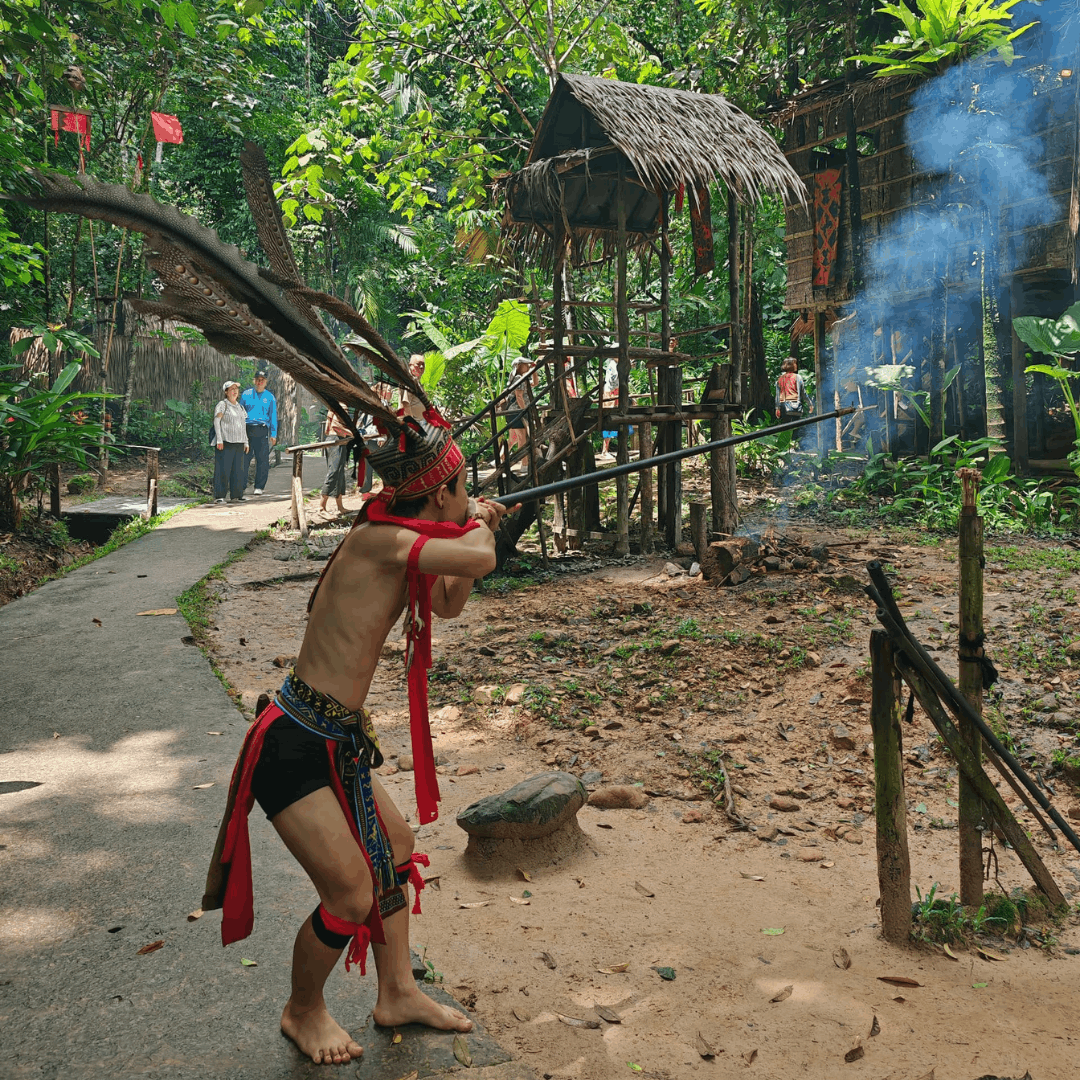
The route takes in cultural villages, including stops like Mari Mari Cultural Village, and river communities along the way. Your guide fills in the context: what a place means to the people who live there, how daily life moves, what you might not think to ask. This is where the trip earns its depth, closer to being introduced to a place by someone who genuinely loves it than to following a checklist tour.
The Islands and the Coast
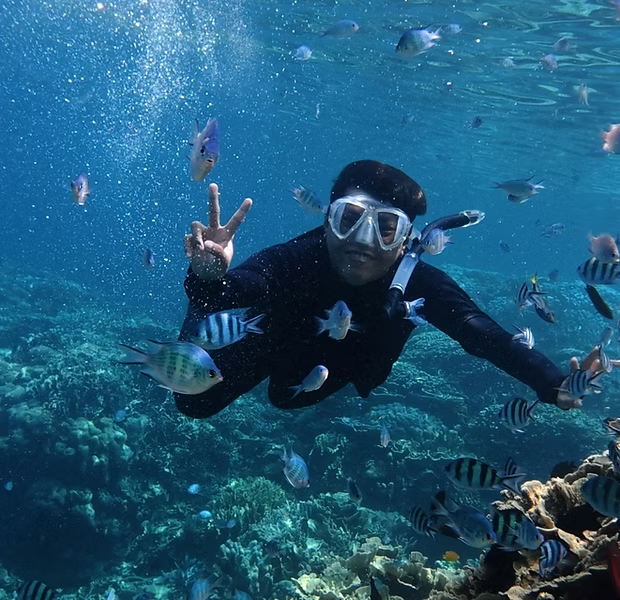
Near the coast, the air changes. Salt and sea come in through the windows, and the views open up across the water toward islands like Sapi, where the snorkeling draws its own crowd of day-trippers. Whether you get closer to the islands by boat or simply take them in from the shore depends on the day’s itinerary, but the sea is always present, a reminder that Sabah sits at the edge of the Sulu and South China Seas, with some of the richest marine waters in the region just offshore.
This coastal stretch tends to be where people get quiet for a different reason than the river. The open sky, the water in every direction, the green hills behind you: the scale of it has a way of making the rest of the world feel very far away.
Food, Smells, and Small Sensory Details
Travel writing tends to skip over the parts that actually embed a place in memory: the smell of rain in the rainforest just before it falls, the warmth of local food with its light spices and familiar heat, the fresh air near the coast that carries a faint edge of salt.
The food along the way is simple and Malaysian. Don’t expect a formal dining moment. Expect the kind of food that locals actually eat, served without ceremony, which is usually the better version anyway.
The weather runs warm and humid throughout, as you’d expect from tropical Borneo. Coastal stretches offer sea breezes, shaded river areas cool things down, and a short rain shower, if one comes, tends to leave everything smelling clean and green.
What the Trip Is Really For
If you’re hoping to see wildlife ticked off a species list, you might enjoy this. But if that’s your only aim, you’ll miss the larger thing. The guests who get the most from this day are the ones who ask, at some point, what they should slow down and really notice.
The answer is usually the same. Not the big moments, since those tend to take care of themselves, but the river silence, the way light falls through the canopy, the sound of local voices at a village stop, the changing color of the water as you near the coast. It’s the small, unplanned pause when something wild appears and reminds everyone in the boat that they’re visitors here, in the best possible sense.
Wildlife, river, rainforest, islands, and local culture, all in a single day this close to a city, is a fairly rare combination. That’s simply the geography of Sabah.
Practical Information
Getting there: The tour operates from Kota Kinabalu with hotel pickup included, so there’s no need to arrange separate transport or navigate unfamiliar roads on your own. The day begins at your accommodation.
Timing: This is a full-day format with a relaxed return to Kota Kinabalu, arriving in the evening. Sabah’s weather is tropical year-round, so expect warmth and humidity regardless of when you visit. The wet season brings short afternoon showers that rarely derail a day and often make the landscape feel more alive.
What to bring
- Light, breathable clothing (long sleeves help in forested or river areas)
- Sun protection: hat, sunscreen, sunglasses
- A small dry bag if you’re protective of electronics near water
- A camera, but keep it accessible rather than glued to your face – the proboscis monkey moment goes fast
Frequently Asked Questions
How physically demanding are day trips from Kota Kinabalu?
Most day trips in the area combine vehicle transport, boat time, and short walks at cultural or village stops, without requiring strenuous hiking or specialized fitness. Sabah’s terrain does include serious trekking routes for travelers who want them, but the river, coastal, and village circuits around Kota Kinabalu are built for a general range of fitness levels.
What wildlife can you realistically see on a day trip near Kota Kinabalu?
Proboscis monkeys are the animal most associated with river routes just outside the city, alongside a range of birdlife along the water and forest edges. Sightings vary by day and season, since this is wild habitat rather than a managed enclosure, which is part of what makes a genuine encounter feel significant.
Is local food part of a typical Kota Kinabalu day trip, and can dietary restrictions be accommodated?
Malaysian food, usually simple, lightly spiced, and served without much ceremony, is a common part of day-trip itineraries around the region. Operators can generally accommodate dietary restrictions or allergies if you flag them in advance, so it’s worth confirming details before booking rather than after.
Are day trips around Kota Kinabalu suitable for kids?
Many of the region’s river and coastal circuits are considered family-friendly, and wildlife or river stops tend to be highlights for younger travelers. Age and safety requirements vary by operator and by activity, particularly anything involving boats, so it’s worth checking specifics when booking.
Is it better to book a combined day trip or arrange rainforest, river, and island visits separately?
Combining several experiences into one guided day typically means one set of transport and one guide familiar with the whole route, rather than juggling multiple bookings and logistics. The tradeoff is less control over timing at each individual stop, so travelers who want to linger somewhere specific may prefer arranging visits separately.
Is a Kota Kinabalu day trip worth it if you’ve already visited Sabah before?
Yes, for many repeat visitors. Areas like river communities and smaller cultural villages near the city are often skipped on a first visit in favor of bigger-name attractions, so a guided day trip can surface parts of the region that don’t show up in more standard itineraries.

Stacie Harris is a local resident and reporter of the Maple Grove area. Stacie reports on medicine and science for the Maple Grove Report.