The new Surface Laptop Ultra is a mini‑LED RTX Spark powerhouse


Microsoft has unveiled the Surface Laptop Ultra, a new high-end Surface model built around Nvidia’s RTX Spark platform. This positions it as one of its most capable laptops to date, at least on paper.

The device is expected to arrive later this year. However, Microsoft’s announcement leaves several key details open, particularly around final configurations and regional availability. Reports confirm that the device includes Nvidia’s brand new RTX Spark SoC and supports up to 128GB of RAM, suggesting a clear focus on demanding creative workloads and AI-assisted computing tasks.

On the display side, the Surface Laptop Ultra uses a 15-inch mini-LED panel with a claimed peak brightness of 2,000 nits and a density of 262 PPI. While Microsoft has not explicitly confirmed resolution, those figures point to a high-resolution 3.2K to 3.5K-class panel in a 16:10 format to balance productivity space with visual clarity.

Microsoft also says the laptop supports “all-day” battery life, though no capacity or usage scenarios have been provided to clarify how that holds up under sustained high-performance workloads. As with previous Surface devices, real-world endurance will likely depend heavily on configuration and workload type. This is especially true when the RTX Spark silicon is under load.

In terms of connectivity, the Surface Laptop Ultra includes a fairly comprehensive selection of ports for a modern thin-and-light machine: HDMI, USB-C, USB-A, an SD card slot, and a headphone jack. That puts it slightly ahead of some recent ultraportable designs that have moved further toward dongle-dependent setups.

Advertisement

Microsoft has also highlighted improved repairability, suggesting a shift away from earlier Surface laptops that were more difficult to service. However, details on how modular or user-serviceable the components are remain limited at this stage.

Microsoft clearly positions the Surface Laptop Ultra as a flagship device, but it has not confirmed pricing. Given the hardware on offer and Microsoft’s historical pricing strategy for high-end Surface products, it is likely to sit at the premium end of the market when it does eventually launch.

Availability is expected later this year, though some industry reports suggest that RTX Spark systems, more broadly, may not see wide availability until 2027.


Source link

Leave a Reply

Subscribe to Our Newsletter

Get our latest articles delivered straight to your inbox. No spam, we promise.

Recent Reviews


There are certain engine configurations that are known even to those whose interest in engines is minimal. For instance, most people will know what makes a V-engine a V-engine, and even the differences between an in-line and flat engine

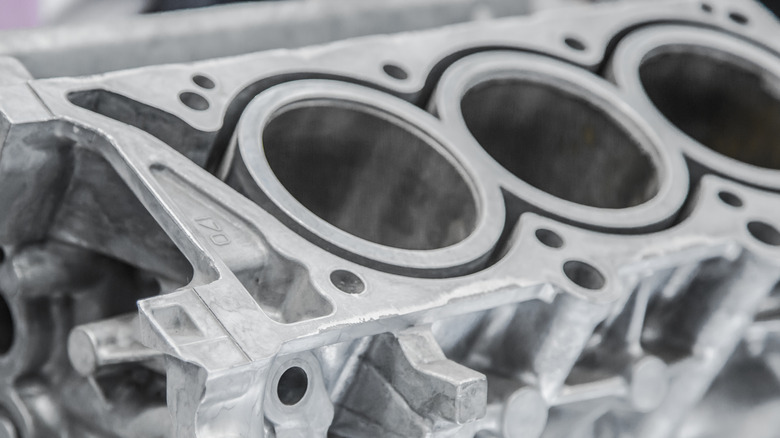
One engine design trait that’s perhaps less well-known is also related to the engine block, but not to with how the cylinders are arranged in the engine, rather with how they’re supported and cooled. When looking at this aspect of engine design, there are really three main types of engine block to look at. At the extremes are closed-deck and open-deck engine blocks, with some modern engines taking a halfway house approach with a semi-closed design. 

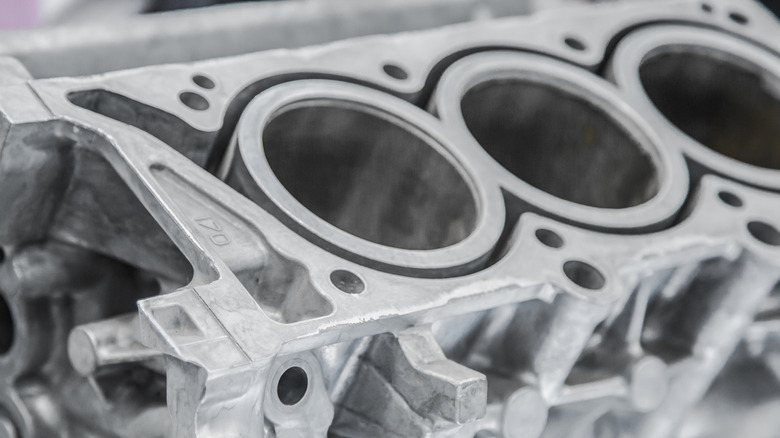
Let’s start by defining what an engine deck is. Essentially, the engine deck is that part of the block that the head gasket sits on, and the engine head attaches to. This means that an inline engine with a single line of cylinders will have one deck, whereas a V-configuration with two banks of cylinders will have two decks. 

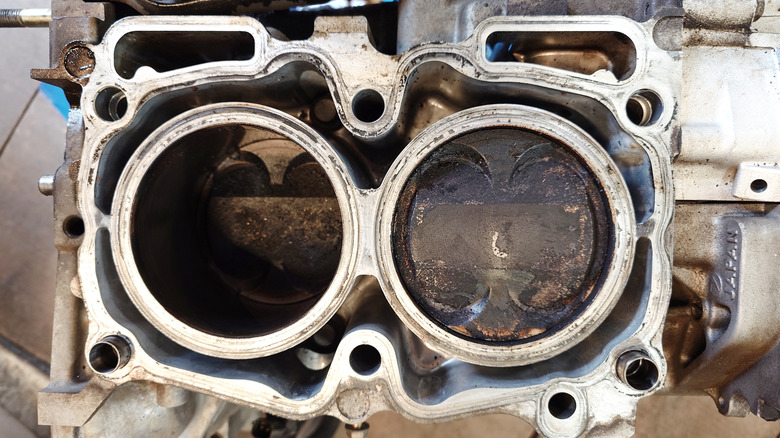
Now that we understand that, we can begin to discuss the differences between closed-deck and open-deck engine blocks. In an open-deck engine, there is open space around the top of the cylinders that allows the coolant to circulate more freely. In a closed-deck design, in case you haven’t guessed it by now, the deck features extra material that offers less in the way of cooling, but it does support the cylinders more rigidly. Let’s pop the cylinder head off and have a closer look at these engine block types and why they matter more than you may think. 

Open-deck engines are cool, but flawed

For engine makers, there are definite advantages to open-deck designs — they cost less to manufacture when compared to closed-deck engines, and keep the engine cooler by exposing more of the surface area of the cylinder to the cooling liquid. 

However, all this open space around the cylinders is all very well and good when looking at cooling and manufacturing complexity — but cracks start to appear (sometimes literally) when we look at other aspects of closed-deck engine blocks. While it’s unfair to call open-deck engines unreliable and leave it at that, there are trade-offs in the design, and these become more noticeable in high-performance situations.

Essentially, the lack of material at the top of the engine deck means the engine is less structurally rigid right at the point where it meets some of the most extreme forces engines have to cope with — the combustion point at the top of the cylinder.

If you removed the head from an open-deck design and look down at the deck, this structural weakness is visible. From this viewpoint, the cylinders look separate from the rest of the engine block, with the gap between the two being used for coolant, as some open-deck designs have limited support at either end of the cylinder bank. While this gives more space for coolant to move freely, the downside is that it also does the same for the cylinder. Over time, even the limited movements of cylinders can weaken the head gasket and bring all the associated troubles that follow such a failure. 

Why some engines use closed- and semi-closed deck designs

Open-deck engine blocks are optimized for cooling and manufacturing efficiency. However, incorporate such a configuration in a high-revving, turbocharged brute of an engine and, well, it could end very badly. This is why such engines will usually use a closed-deck configuration. 

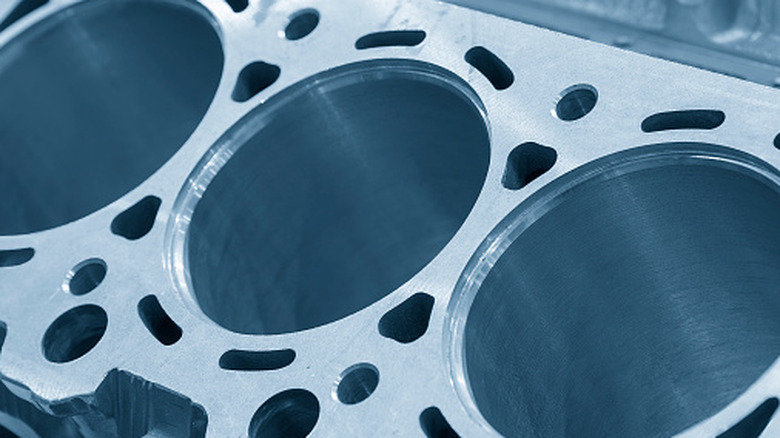
In a closed-deck engine, the open spaces around the cylinders of an open deck are filled with additional material. Obviously, the removal of such space and the flexibility it gives to the cylinders substantially strengthens the engine block. This is why some people fill engine blocks with concrete — it removes the flexibility afforded by the presence of cooling chambers. This is especially important for high-performance engines, but to call it overkill for the family runabout is not overstating the case. 

However, and the more observant among you will be there by now, filling an engine’s cooling cavities with material may add strength — but at the expense of cooling efficiency. This is why many modern turbocharged engines or higher-performance engines use a halfway house design in the form of semi-closed decks. 

Semi-closed decks are a compromise design that offers more rigidity to the cylinders by adding more support points. These supports are usually at the top of the cylinder. For instance, while there are pros and cons to Subaru’s EJ20 engine, the company released a version with a semi-closed deck with four additional support points, which should make it less prone to bore distortion. Ultimately, open-deck and closed-deck engine blocks represent design decisions based on the demands the engine is expected to handle. 


Source link