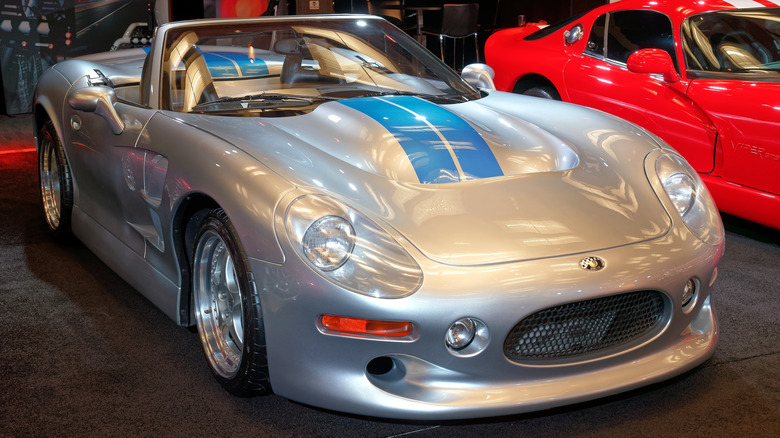
The Only Shelby Built From The Ground-Up Ditched Ford For An Oldsmobile V8


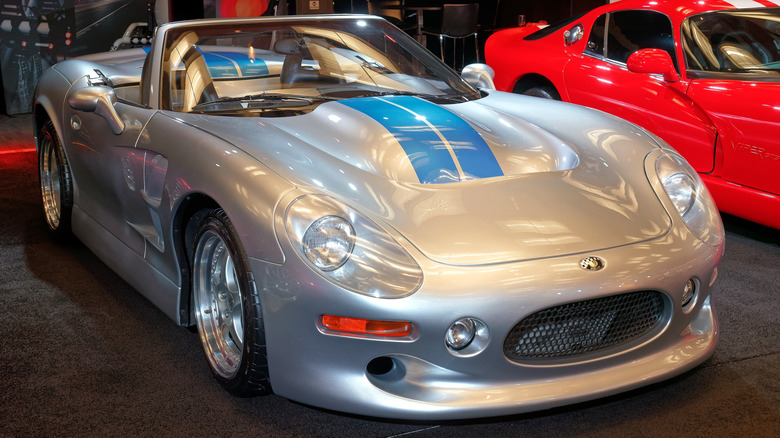
There was a car created by Carroll Shelby that didn’t have a Ford engine under its hood. In fact, it wasn’t even based on a Ford. We are talking about the Shelby Series 1 Roadster, the only car ever built by Shelby from a clean-sheet design. Instead of a big engine from the Blue Oval providing the motive power for this Shelby, there was an Oldsmobile V8 under the hood generating the necessary horsepower. Overall, it was an underappreciated Shelby car.

The Shelby Series 1 Roadster was Carroll Shelby’s final attempt to create a modern version of the automotive icon that was the Shelby Cobra. Just 249 examples of the Series 1 were produced, all 1999 models, conforming to that year’s Federal Motor Vehicle Safety Standards. The Shelby’s chassis was state-of-the-art, featuring 6061 T4 aluminum elements that were formed and extruded before being welded together and heat treated. Honeycomb aluminum panels formed the floor and rocker panels for extra rigidity, producing a chassis that weighed only 265 pounds. The body that was draped over this chassis was made of fiberglass composite and carbon fiber, keeping the curb weight down to just 2,650 pounds. This was much less than that of the car seen as the Shelby’s main competitor at the time, the Chevrolet Corvette C5.

The Shelby Series 1 Roadster’s suspension used a double wishbone setup connected to cantilevered coil-overs in the center of the vehicle. The brakes were discs all around, with forged aluminum 18-inch Speedline wheels measuring 10 inches wide in the front and 12 inches wide in the rear, mounted with Goodyear Eagle F1 tires.

The Shelby Series 1 Roadster had its share of problems
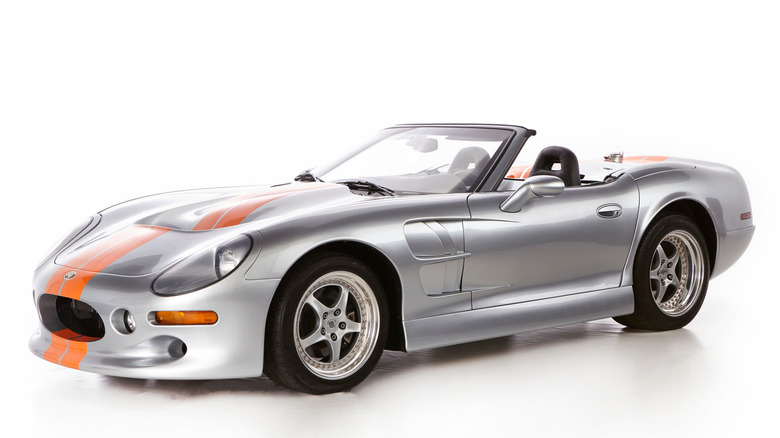
The Shelby Series 1 Roadster experienced a large number of problems during its gestation, primarily due to both production-related issues and roadblocks stemming from corporate politics. Production problems included chassis jigs that permitted warping during cooling, plus delays due to an overworked team at Shelby that pushed production out to 1999. This further led to cost overruns when a new set of safety standards had to then be met. Then there were handling issues, the lack of ABS (which led to braking problems), whining gears from the ZF manual transmission, and repeatedly cracking aluminum castings in the rear suspension. Moreover, the side windows and convertible tops did not fit correctly and some of the transaxles needed replacement, all issues that increased costs further. Also, the car’s carbon fiber body panels turned out to be not properly sealed, requiring body filler that added hundreds of pounds of weight to the Series 1 Roadster.

Political problems were largely the result of the forced 1996 departure of John Rock, the Oldsmobile general manager who had championed GM’s hookup with Shelby to produce the Series 1 Roadster. Once Rock was gone, Oldsmobile would not supply the computer tuning codes for the L47 engine Shelby was using, ultimately reducing the stock engine’s output from 350 horses to 320. Making things worse, GM refused to share any current Corvette parts with the Shelby Series 1 Roadster, so Shelby was unable to use the ‘Vette’s transaxle or any C5 suspension pieces. The price also increased, starting at a sub-$100k target when it was first announced up to $181,824 in 2000.

How well did the Shelby Series 1 Roadster perform?
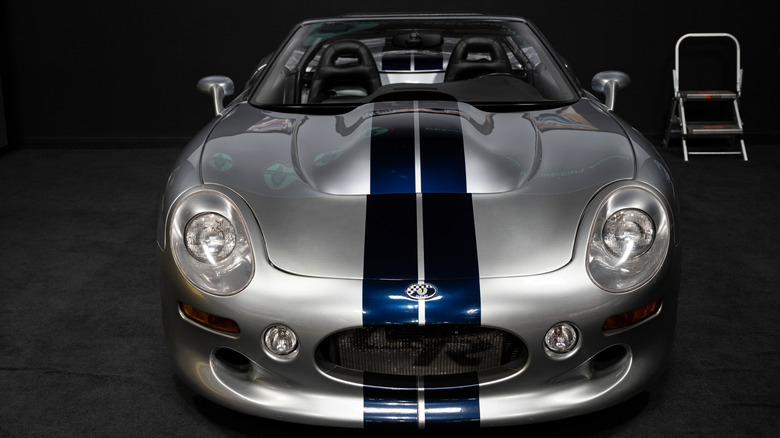
For motive power, the Shelby Series 1 Roadster was supposed to use an Oldsmobile racing engine, but emissions-compliance issues resulted in the car using the civilian version, the 4.0-liter DOHC V8 from the Oldsmobile Aurora, mounted behind the front axle in a front mid-engine position. The engine was mated to a six-speed manual ZF transmission driving the rear wheels. Weight distribution was an ideal 51:49. The engine made 250 horsepower in the Aurora, but the Shelby ended up with 320, while an optional supercharger, which works differently than a turbocharger, would literally boost that to 450 horsepower. 

According to the Museum of American Speed, the stock Shelby Series 1 Roadster can do 0-60 mph in 4.4 seconds, with a quarter-mile time of 12.8 seconds at 112 mph and a top speed of 170 mph. Car and Driver managed, after many difficulties related to the car’s reliability, to get a 0-60 mph time of 4.1 seconds and a quarter-mile time of 13.0 seconds at 112 mph. The publication famously called the Series 1 “a work in progress.”

The Shelby Series 1 Roadster should have been a modern reincarnation of the Shelby Cobra, with all the performance and charisma of the original version. Instead, it is seen as a project that came up against all of the typical obstacles that befall low-volume vehicle producers. From the eternal struggle to make money on a few hundred cars and corporate infighting with formerly helpful partners to the realities of making a vehicle that conforms to the Federal Motor Vehicle Safety Standards, the Series 1  had the deck stacked against it; regardless, it remains Carrol Shelby’s flawed but striking swansong.


Source link

Leave a Reply

Subscribe to Our Newsletter

Get our latest articles delivered straight to your inbox. No spam, we promise.

Recent Reviews


We may receive a commission on purchases made from links.

Michelin is a French multinational company that many consumers consider to be one of the most satisfying major tire brands. This firm makes several tire models that offer comfort, performance, all-terrain prowess, and everything in between — including cutting-edge products like the $42,000-per-set Michelin Pilot Sport PAX that it developed specifically for the Bugatti Veyron. Aside from its own tires, Michelin also owns other tire brands that you might be familiar with, including BFGoodrich, Achilles, and Corsa.

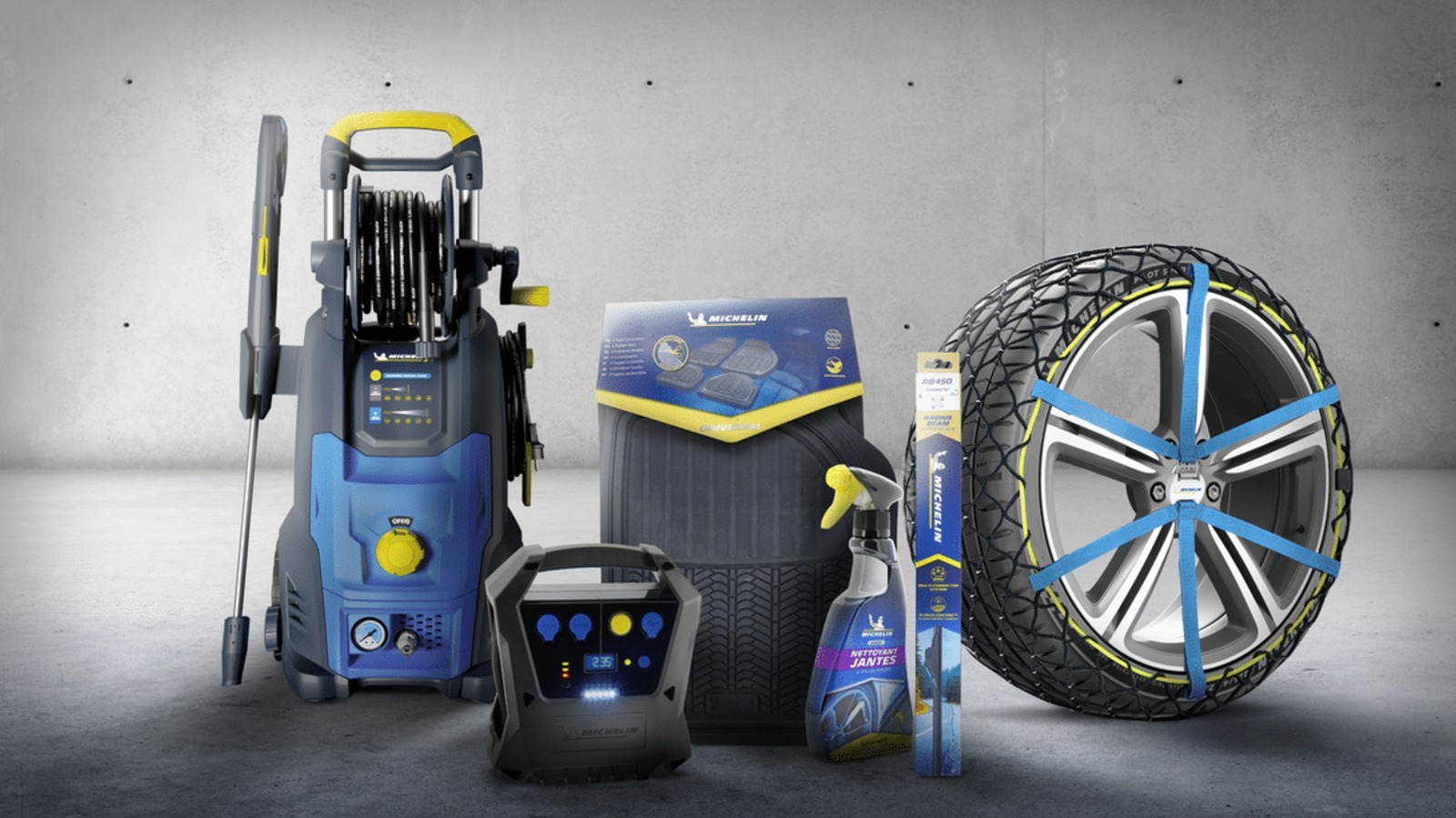
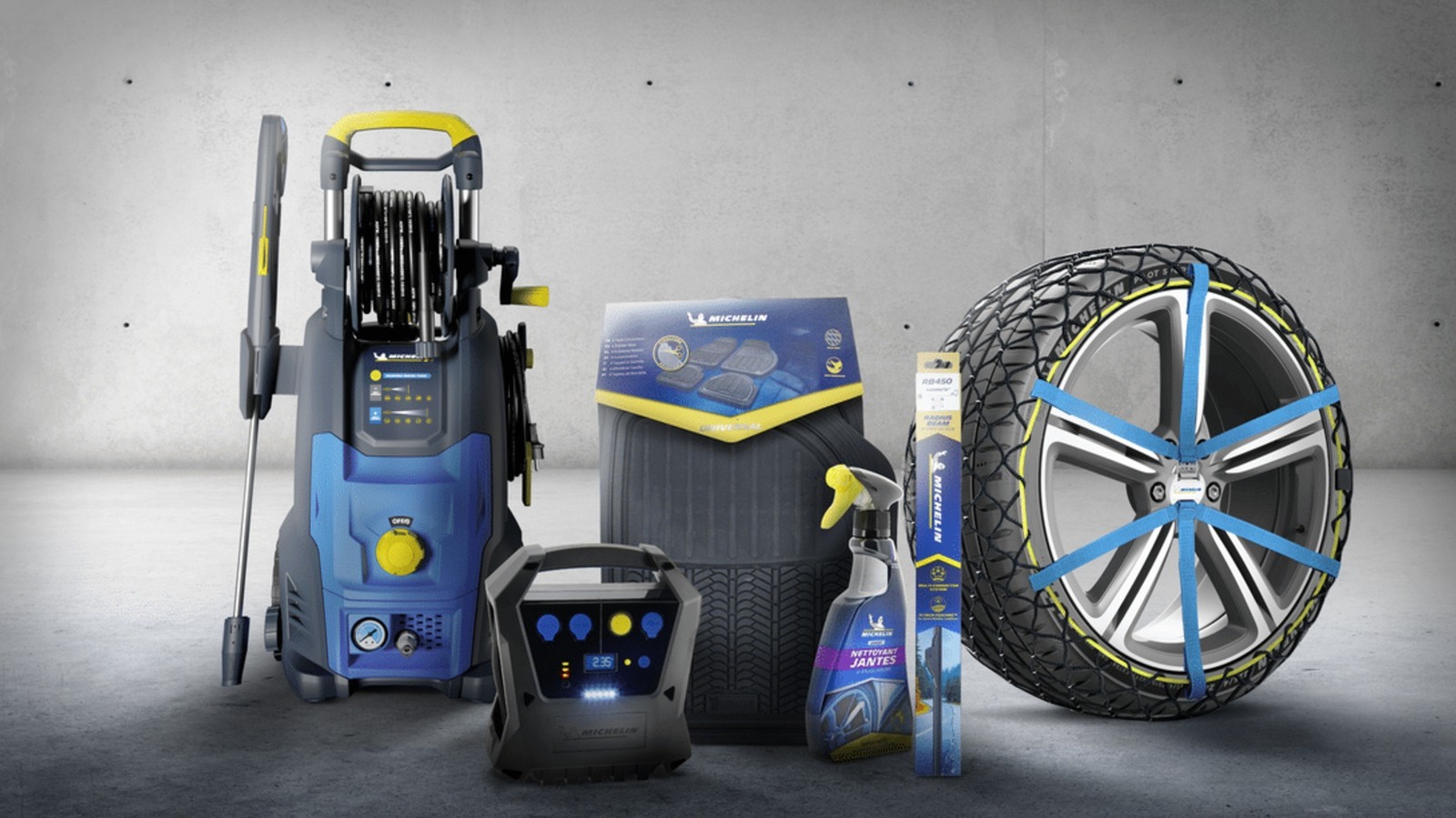
While tires are what Michelin is known for, the company has put its name to more than the rubber that wraps around your car’s rims. In fact, the company sells several other products that aren’t tires. So, we’re listing a few Michelin-branded items that you can buy online and in retail stores. While they might not all be made of rubber or even related to vehicles, these tools and accessories can come in handy when keeping your car — and even yourself — in good shape.

Michelin tire inflator

Since Michelin is primarily known for its tires, it makes sense for the company to sell a Michelin-branded tire inflator as well. That way, if you get a flat on one of the Michelin tires on your car or want to regularly top up your car’s tire pressure to maintain optimum performance, you can use a Michelin-branded pump to fill up your tires. The company actually sells several types of inflators on its Amazon page, but it only offers a single motorized unit — the Michelin Micro Tyre Inflator, which is available on Amazon for $98.99.

This little device is only slightly wider than an iPhone 17 and weighs about 400 grams, or 14 ounces. This means it’s easy to store in your car and to move to whichever tire needs topping up. More importantly, it takes power from a 12-volt socket, allowing you to run it using your car’s battery. It also has a USB port for charging your phone (or any other USB device) in case of an emergency.

Some users say that the device is slow, taking about 12 minutes to bring a tire from 10 to 32 PSI, but that’s not unexpected given its small size. Still, it should be good enough for regular weekly maintenance if you know your car’s proper tire pressure, or in case of an emergency. Its biggest downside is that you need a power source to run it, but having a dead battery and a flat tire simultaneously is likely a rare occurrence in many modern cars.

Michelin mini fridge

Taking a road trip during the summer can get you thirsty, and there’s no better way to quench that thirst than by drinking a cool can of soda (or your beverage of choice). If you want to ensure that you’ll always have a cold drink ready while you’re driving on the freeway, Michelin’s mini fridge will help you with that. This nifty little refrigerator is available on Amazon for just $99.99 and can be connected to either 110V AC or 12V DC power, ensuring that it will work on both your desk and in your car.

The mini fridge measures 6.9 x 9.45 x 10 inches (17.5 x 24 x 25.4 cm), meaning it can easily fit on a garage shelf or office desk. It should also be small enough to put on the floor of your car. Despite that relatively small size, it’s large enough to fit six 350-ml cans or four 500-ml bottles, and it will keep these items at a chilly 32 degrees Fahrenheit or 18 degrees Celsius. It also has an LED light on the door, so it can double as a night light if necessary.

Aside from keeping your drinks (and other food items) below room temperature, it also has a few other creature comforts. These include a removable shelf and door basket for flexibility and easy cleaning, as well as a retractable carry handle and a self-locking door to make transportation easier.

Michelin car floor mats

Heavy-duty car floor mats are often made from rubber for durability and water resistance, and since Michelin is in the business of rubber, it makes sense for the company to offer exactly that. So, if you want to protect your vehicle’s floor from dirt, dust, and mud, the company can help you with its Michelin all-weather car floor mats. This four-piece package is available on Amazon for $49.99 and comes in either black or tan.

The surface of these floor mats is specially designed to trap debris, snow, and water, preventing them from ruining the carpet on your vehicle. The mats have a cleat backing that grips your car’s floor and prevents them from slipping. The front row mats also come with what Michelin calls a Gripclip Retention System, allowing them to clip into your vehicle’s safety clips and adding even more reassurance that they won’t accidentally slip while you’re driving and pose a hazard to your safety.

These mats are universal and will work in most vehicles. However, they’re also easy to customize: If you find them a bit too large for the footwell of your tiny hatchback, you can use a pair of scissors to trim the edges for a perfect fit.

Michelin Stealth Ultra wiper blades

While Michelin’s Stealth Ultra wiper blades aren’t generally considered among the best windshield wipers, they appear to be a pretty good choice given their four-star rating on Amazon. These wipers cost $49.99 and are available in various size combinations for all sorts of cars. This ensures that no matter what vehicle you’re driving, you can probably find a set that will fit your needs.

These Michelin wipers are curved to conform to the shape of your windscreen for a clean, streak-free wipe. The company’s Amazon listing claims that these are designed to “withstand rain, wind, snow, mud, dust, or any other debris that might hamper your windshield’s visibility.” While you might think that windshield wipers are pretty simple items, and that you can just purchase any generic wipers off the internet, you must remember that they’re essential so that you have the best visibility possible during inclement weather. So, for your safety, consider investing in a set from a reputable brand like Michelin.

Michelin work boots

Michelin is known for making rubber tires to put on your car’s “feet,” but did you know it also makes shoes for the driver’s feet? The company makes sports & outdoor footwear, as well as shoes for work and safety. For this example, we have the Michelin HydroEdge Steel Toe waterproof work boot, listed for $210 on Amazon and at Georgia Boot. This shoe is available in U.S. sizes from 7.5 up to 14, ensuring that no matter what size you wear, you can get a Michelin work boot for yourself.

As the name suggests, this pair of shoes has steel toes to protect your feet from accidental impacts and is fully waterproof to help keep your feet dry, even in supposedly severe conditions. It also meets ASTM F2413 standards for electrical protection, meaning it has fully insulating soles to protect you from electrical hazards at work. Michelin also added what it calls an Advanced Rear Suspension system to its heel, ensuring proper shock absorption when you walk.


Source link