The Real Difference Between Pickup Truck And Car Engines


Are pickup truck engines the same as those used in normal passenger or sports cars? The answer is both yes and no. Physically, at least, there’s usually little that separates an engine in a truck’s engine bay from one in a car’s. After all, there have been plenty of times in the industry’s history when automakers have sold cars and trucks with nearly identical engines. Case in point, the legendary Chrysler slant-six engine, which came in everything from compact cars to pickup trucks and vans.

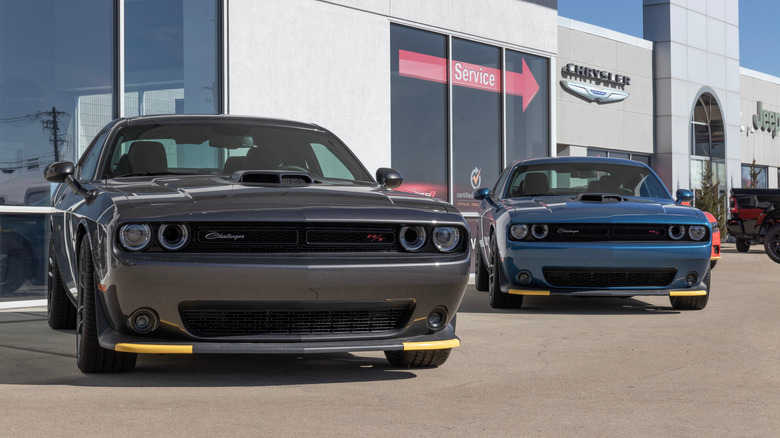
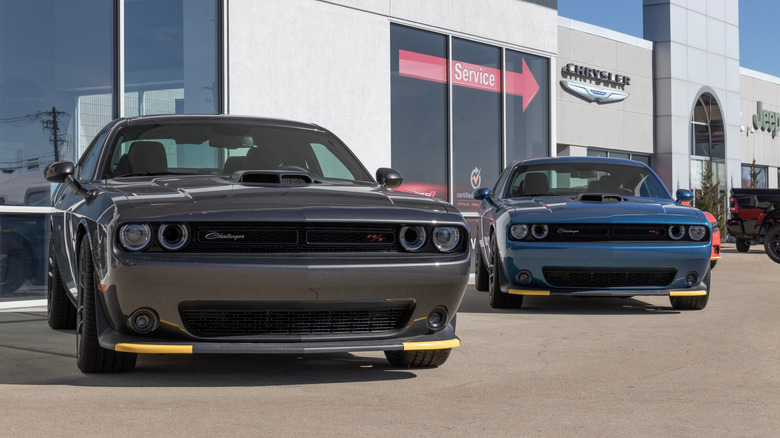
But in the modern era, especially, there can be notable differences between car and truck engines, even if their displacement and general engine architecture are the same. The modern HEMI V8 used in Dodge muscle cars and Ram pickups is a good example of this, with different versions of the same engines used in performance cars and pickups. Most of the differences between truck and car engines involve how and when the engines deliver their horsepower and torque. 

A car engine may produce more peak horsepower than an equivalent truck engine, but the truck engine will often provide more torque or deliver the same amount of torque at lower revs. Just how much difference there is between the two will vary by automaker, and some brands, like Ford, offer V8 engines designed from the ground up for trucks that share nothing with their car counterparts.

The different flavors of V8s
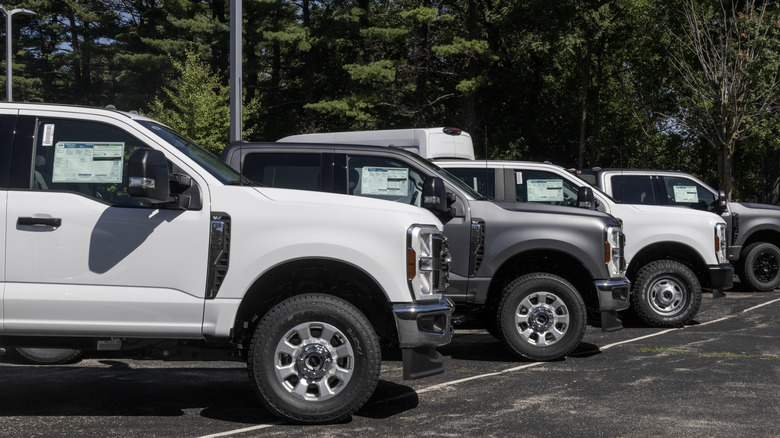
Ultimately, the main difference between car and truck engines is rooted in the difference between horsepower and torque. While horsepower matters in a truck, when it comes to pulling a trailer or carrying a heavy load, it’s the torque that’s important — and the lower in an engine’s powerband that torque comes, the better it is. Thus, the popularity of ultra-torquey, but relatively low-horsepower turbodiesel engines for large pickups. Peak horsepower, meanwhile, takes prominence in a sports car where engine speeds are higher. 

Even within the same V8 family, there can be notable differences in car and truck engines. In GM’s V8 lineup, the 401-hp 6.6-liter L8T truck engine is designed for low-speed torque, with 464 lb-ft of torque at 4,000 RPM. The Chevrolet Corvette’s smaller, 495-hp 6.2-liter LT2 V8 is part of the same family and easily bests the L8T in peak horsepower, yet it barely edges the L8T in torque. It also needs to rev much higher to generate its torque, with its 470 lb-ft coming at 5,150 rpm. 

Ford’s Super Duty 7.3-liter Godzilla V8 takes this concept even further. Not only is the Godzilla much larger than the 5.0 Coyote V8 in the Mustang GT, but it also uses an entirely different design with an overhead-valve, single-camshaft design compared to the 5.0’s dual overhead cams and 32 valves. At 480 hp, the 5.0 beats out the 430-horsepower Godzilla, but the 7.3 takes the torque crown, with 475 pound-feet to the Mustang’s 415 lb-ft.

The curious case of the Nissan 240SX
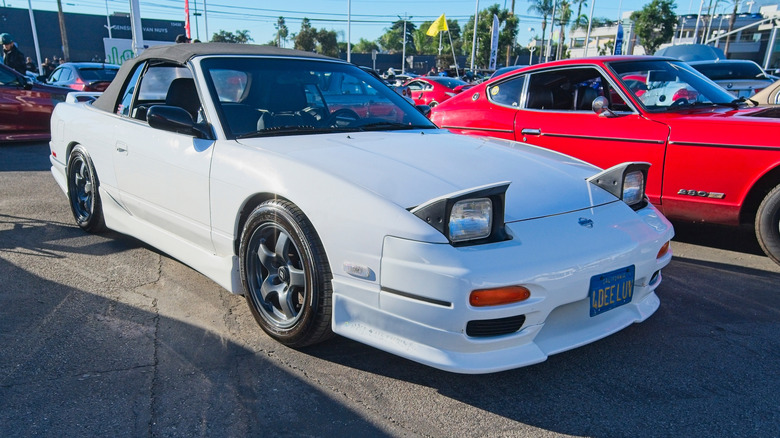
So what happens, then, if you put a pickup truck engine into a sports car? Look no further than the North American-market Nissan 240SX from the 1990s. When the S13 Nissan Silvia and 180SX debuted in the Japanese home market, the cars were available with high-horsepower turbocharged four-cylinder engines — first the 1.8-liter CA18DET and later the legendary SR20DET. This, combined with a great chassis and tons of aftermarket support, helped the S13 become a smash hit among enthusiasts.

However, when it came time to export the car to America, Nissan decided to forgo the turbo engines in favor of the naturally aspirated 2.4-liter KA24 engine used in Nissan pickup trucks. Though the USDM engine was larger than its JDM counterpart and produced a decent amount of torque for its size, the KA24 only made 140 hp and, more importantly, lacked the high-revving sports car feel many expected from the 240SX. 

Fortunately, the SR20DET was an easy swap, and Nissan’s decision to go with a truck engine didn’t entirely detract from the many features that helped the 240SX become a legendary drift car in the years and decades that followed. Even then, though, one can’t help but wonder what would’ve happened had Nissan given the U.S. market 240SX the turbocharged performance engine it deserved.  


Source link

Leave a Reply

Subscribe to Our Newsletter

Get our latest articles delivered straight to your inbox. No spam, we promise.

Recent Reviews


We may receive a commission on purchases made from links.

Michelin is a French multinational company that many consumers consider to be one of the most satisfying major tire brands. This firm makes several tire models that offer comfort, performance, all-terrain prowess, and everything in between — including cutting-edge products like the $42,000-per-set Michelin Pilot Sport PAX that it developed specifically for the Bugatti Veyron. Aside from its own tires, Michelin also owns other tire brands that you might be familiar with, including BFGoodrich, Achilles, and Corsa.

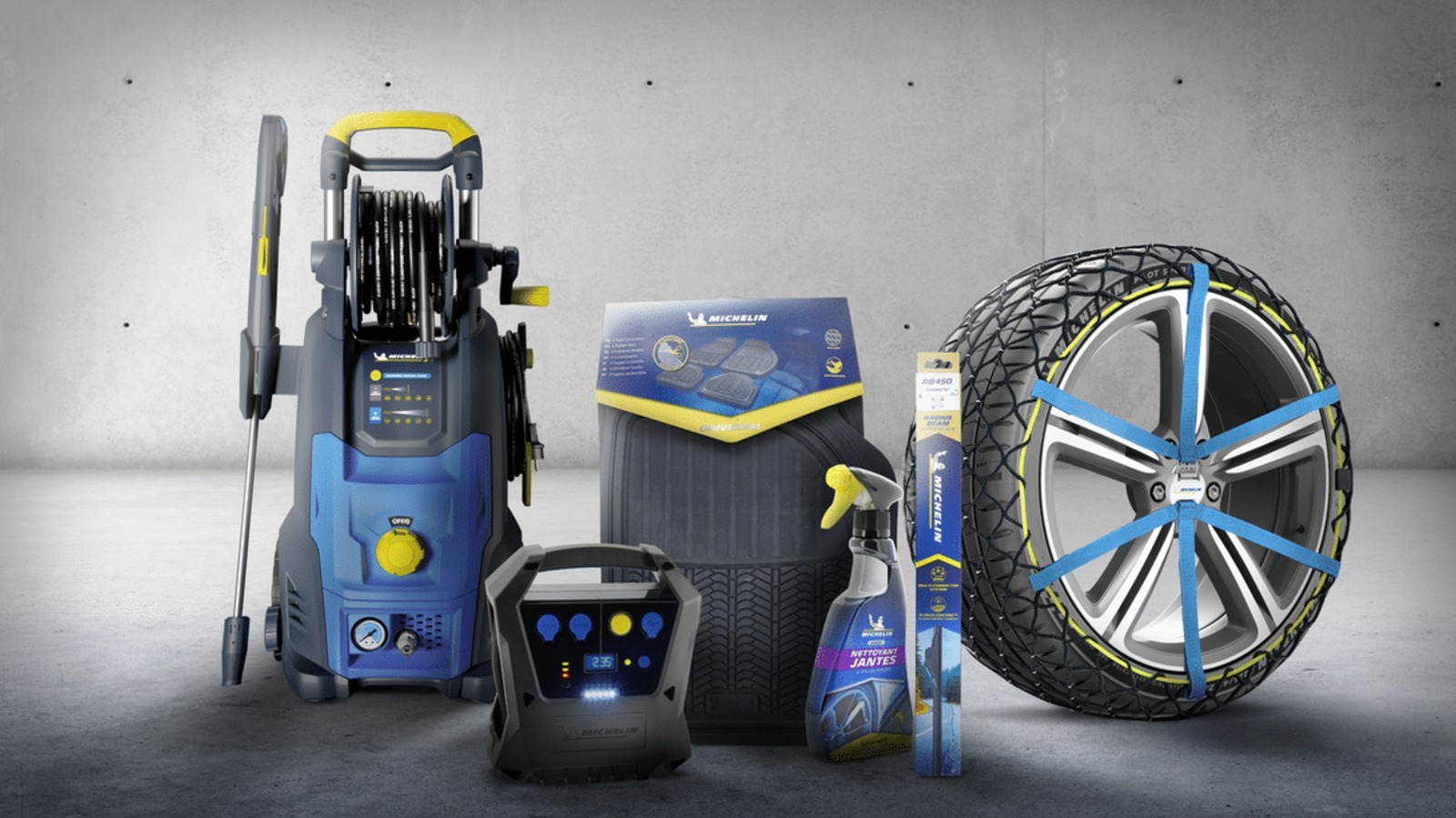
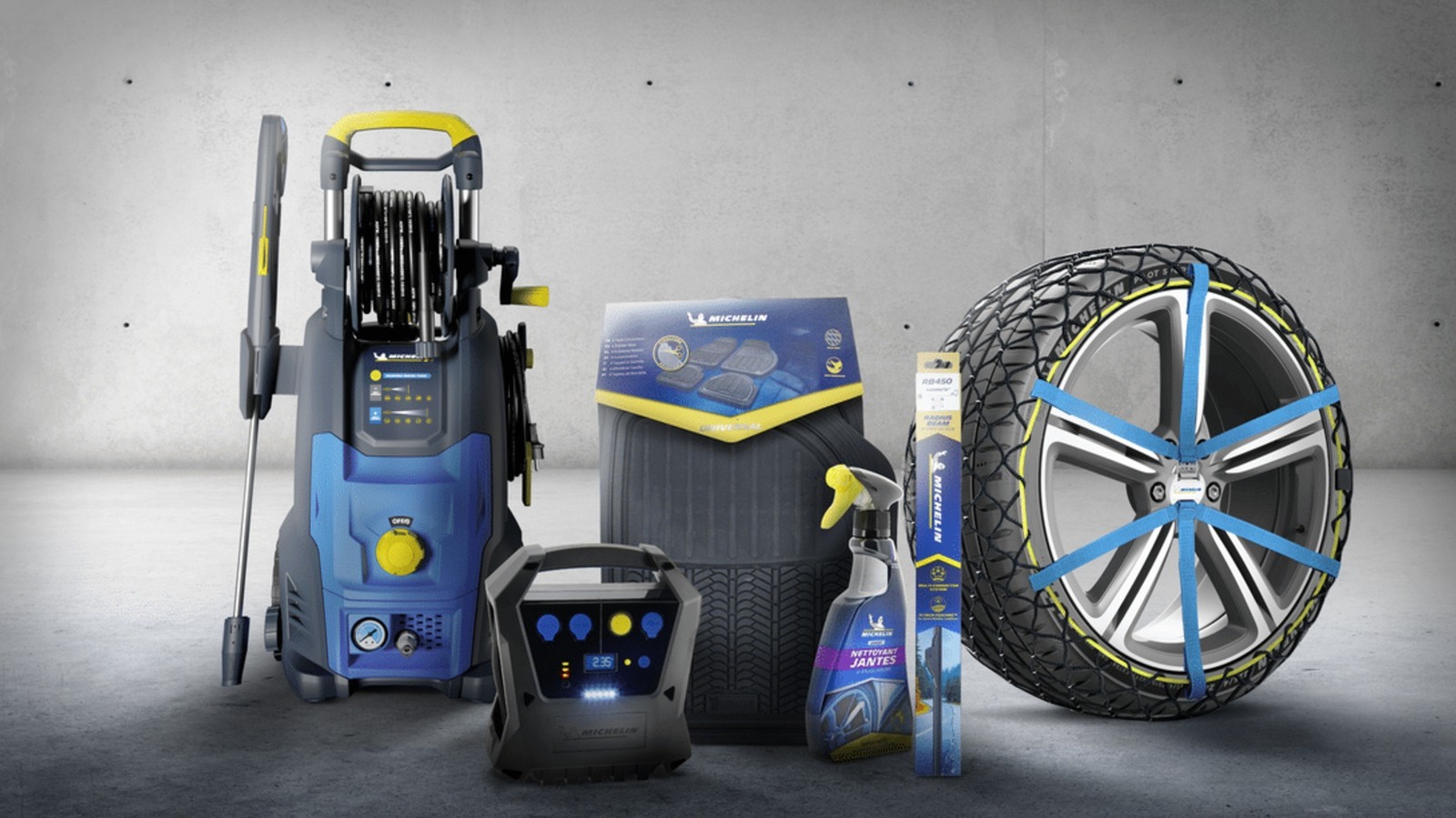
While tires are what Michelin is known for, the company has put its name to more than the rubber that wraps around your car’s rims. In fact, the company sells several other products that aren’t tires. So, we’re listing a few Michelin-branded items that you can buy online and in retail stores. While they might not all be made of rubber or even related to vehicles, these tools and accessories can come in handy when keeping your car — and even yourself — in good shape.

Michelin tire inflator

Since Michelin is primarily known for its tires, it makes sense for the company to sell a Michelin-branded tire inflator as well. That way, if you get a flat on one of the Michelin tires on your car or want to regularly top up your car’s tire pressure to maintain optimum performance, you can use a Michelin-branded pump to fill up your tires. The company actually sells several types of inflators on its Amazon page, but it only offers a single motorized unit — the Michelin Micro Tyre Inflator, which is available on Amazon for $98.99.

This little device is only slightly wider than an iPhone 17 and weighs about 400 grams, or 14 ounces. This means it’s easy to store in your car and to move to whichever tire needs topping up. More importantly, it takes power from a 12-volt socket, allowing you to run it using your car’s battery. It also has a USB port for charging your phone (or any other USB device) in case of an emergency.

Some users say that the device is slow, taking about 12 minutes to bring a tire from 10 to 32 PSI, but that’s not unexpected given its small size. Still, it should be good enough for regular weekly maintenance if you know your car’s proper tire pressure, or in case of an emergency. Its biggest downside is that you need a power source to run it, but having a dead battery and a flat tire simultaneously is likely a rare occurrence in many modern cars.

Michelin mini fridge

Taking a road trip during the summer can get you thirsty, and there’s no better way to quench that thirst than by drinking a cool can of soda (or your beverage of choice). If you want to ensure that you’ll always have a cold drink ready while you’re driving on the freeway, Michelin’s mini fridge will help you with that. This nifty little refrigerator is available on Amazon for just $99.99 and can be connected to either 110V AC or 12V DC power, ensuring that it will work on both your desk and in your car.

The mini fridge measures 6.9 x 9.45 x 10 inches (17.5 x 24 x 25.4 cm), meaning it can easily fit on a garage shelf or office desk. It should also be small enough to put on the floor of your car. Despite that relatively small size, it’s large enough to fit six 350-ml cans or four 500-ml bottles, and it will keep these items at a chilly 32 degrees Fahrenheit or 18 degrees Celsius. It also has an LED light on the door, so it can double as a night light if necessary.

Aside from keeping your drinks (and other food items) below room temperature, it also has a few other creature comforts. These include a removable shelf and door basket for flexibility and easy cleaning, as well as a retractable carry handle and a self-locking door to make transportation easier.

Michelin car floor mats

Heavy-duty car floor mats are often made from rubber for durability and water resistance, and since Michelin is in the business of rubber, it makes sense for the company to offer exactly that. So, if you want to protect your vehicle’s floor from dirt, dust, and mud, the company can help you with its Michelin all-weather car floor mats. This four-piece package is available on Amazon for $49.99 and comes in either black or tan.

The surface of these floor mats is specially designed to trap debris, snow, and water, preventing them from ruining the carpet on your vehicle. The mats have a cleat backing that grips your car’s floor and prevents them from slipping. The front row mats also come with what Michelin calls a Gripclip Retention System, allowing them to clip into your vehicle’s safety clips and adding even more reassurance that they won’t accidentally slip while you’re driving and pose a hazard to your safety.

These mats are universal and will work in most vehicles. However, they’re also easy to customize: If you find them a bit too large for the footwell of your tiny hatchback, you can use a pair of scissors to trim the edges for a perfect fit.

Michelin Stealth Ultra wiper blades

While Michelin’s Stealth Ultra wiper blades aren’t generally considered among the best windshield wipers, they appear to be a pretty good choice given their four-star rating on Amazon. These wipers cost $49.99 and are available in various size combinations for all sorts of cars. This ensures that no matter what vehicle you’re driving, you can probably find a set that will fit your needs.

These Michelin wipers are curved to conform to the shape of your windscreen for a clean, streak-free wipe. The company’s Amazon listing claims that these are designed to “withstand rain, wind, snow, mud, dust, or any other debris that might hamper your windshield’s visibility.” While you might think that windshield wipers are pretty simple items, and that you can just purchase any generic wipers off the internet, you must remember that they’re essential so that you have the best visibility possible during inclement weather. So, for your safety, consider investing in a set from a reputable brand like Michelin.

Michelin work boots

Michelin is known for making rubber tires to put on your car’s “feet,” but did you know it also makes shoes for the driver’s feet? The company makes sports & outdoor footwear, as well as shoes for work and safety. For this example, we have the Michelin HydroEdge Steel Toe waterproof work boot, listed for $210 on Amazon and at Georgia Boot. This shoe is available in U.S. sizes from 7.5 up to 14, ensuring that no matter what size you wear, you can get a Michelin work boot for yourself.

As the name suggests, this pair of shoes has steel toes to protect your feet from accidental impacts and is fully waterproof to help keep your feet dry, even in supposedly severe conditions. It also meets ASTM F2413 standards for electrical protection, meaning it has fully insulating soles to protect you from electrical hazards at work. Michelin also added what it calls an Advanced Rear Suspension system to its heel, ensuring proper shock absorption when you walk.


Source link