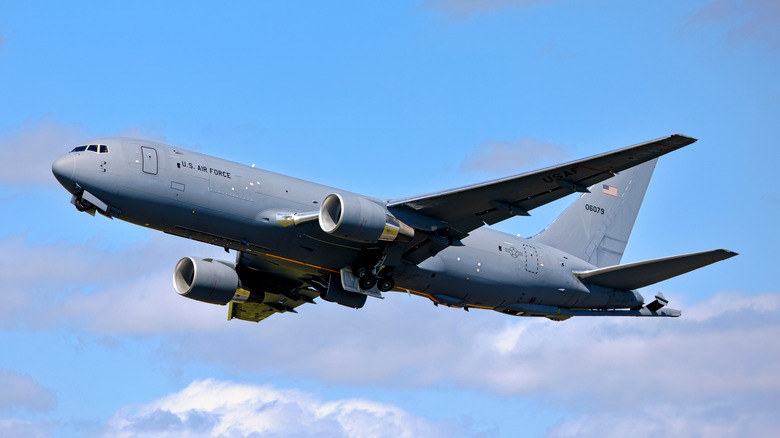

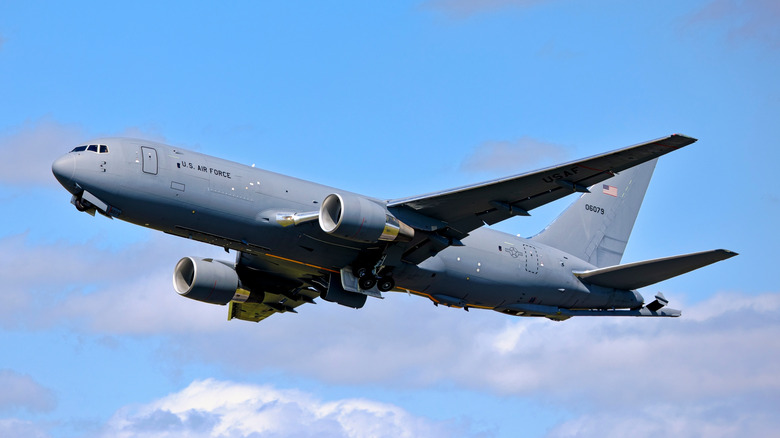
Even as the face of modern air power has evolved, the aerial tanker, in many ways, remains the backbone of the United States Air Force. Tankers can refuel planes in flight, expanding other planes’ combat range exponentially. This allows aircraft to conduct marathon missions and fly thousands of miles from their bases, or to remain on station in combat areas for extended periods.
Given the tanker’s everlasting strategic importance, it’s not surprising that the National Defense Authorization Act has called for an increase in the inventory of the USAF’s active tanker aircraft over the next few years. However, for a variety of reasons, including the trouble-plagued rollout of the new KC-46 Pegasus, building up the fleet in a short time frame is not going to be an easy task.
This need for a larger tanker inventory and the wait time for new KC-46 deliveries means that the planned retirement for some aging KC-135s is going to be put off through 2027 and beyond, keeping these legacy aircraft in the sky for longer than anticipated. Additionally, this comes on top of added pressure on the tanker fleet from recent combat operations in Iran, which have seen American tankers being both destroyed and damaged in accidents and missile attacks.
Out with the old, in with the new? Not so fast
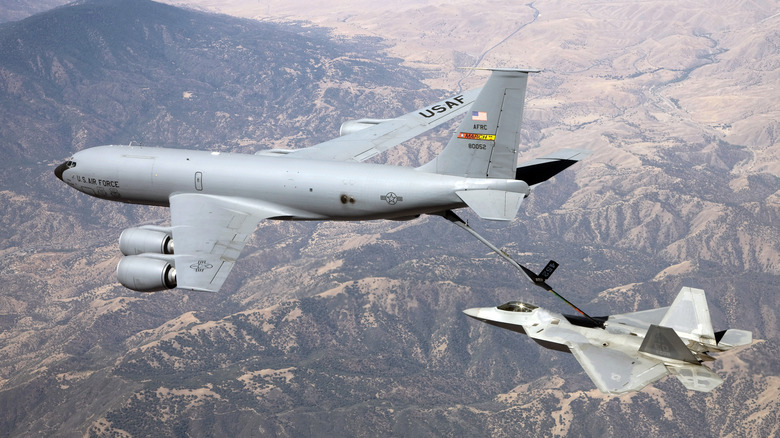
Even if tankers are civilian aircraft designs that are adapted for military use, rather than ground-up designs, that doesn’t make them any less crucial to the Air Force — nor does it necessarily make them any faster or easier to build. It’s that second part, especially, that puts America’s tanker fleet in such a tight situation at the moment, with congressional demands calling for an annual increase in the number of active planes.
Recent years have seen some big changes across the Air Force’s tanker fleet, including the retirement of the long-serving KC-10 Extender. The Air Force’s efforts to replace those retired KC-10s and its aging, but still operating KC-135 tankers with the Boeing KC-46 have faced continued production delays and issues. Amidst these troubles, a FY2026 congressional defense mandate has called for an increase in the active tanker fleet from 466 planes to 478 planes for fiscal year 2027 and eventually 502 planes by fiscal year 2029.
Ideally, the USAF would hit those targets simply by putting brand-new planes into service, but there’s no way to do that with new KC-46 deliveries alone, as Boeing currently only has the capacity to deliver around 20 new planes per year. While previous plans called for each new KC-46 delivery to be balanced out with a retired KC-135, the USAF will now be keeping KC-135s will be kept in service longer to bolster its numbers.
Iran combat puts extra stress on the tanker fleet
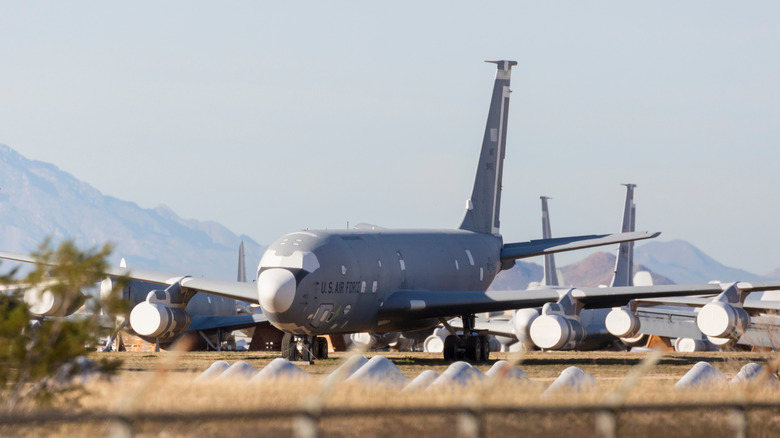
The venerable KC-135 Stratotanker is one of America’s longest-serving military aircraft, having been in service for over 60 years. Thanks to this updated government mandate, the Stratotanker doesn’t seem like it will be disappearing from American air bases anytime soon.
If all of this wasn’t enough to put a strain on the Air Force, the U.S.’ military operations during the Iran War have put further stress on America’s tanker fleet. While the U.S. has not lost any tankers to enemy fire as of mid-2026, a total of seven KC-135s were damaged in the spring. These include two aircraft that were involved in a deadly mid-air accident and several planes that were damaged during missile strikes on bases. In response, the USAF pulled a mothballed KC-135 out of its vast Arizona boneyard in May 2026 and put it back into service.
Heading into 2027 and beyond, the United States Air Force (along with aircraft makers like Boeing) will have to continue trying to raise the number of active tankers in its fleet to hit the benchmarks set for the coming years. This has to take place while it formulates longer-term tanker plans, including future aerial refueling systems and the ongoing — but currently slowed — phasing out of the aging KC-135 fleet.

Stephan is the sports journalist for the Maple Grove Report.