


The U.S. military must retain a wealth of data, regarding everything from classified information on troop movements and strategy to the catering logistics of feeding huge numbers of servicepeople at a time. The Army Data Operations Center (ADOC), which became operational in early April 2026, is a recent initiative aimed at helping the broader military manage this issue.
This new center will not focus on gathering data and intelligence. As Lieutenant General Jeth Ray explained, reports the U.S. Army, “commanders are not short on data […] we have tons of data on our battlefield and in our enterprise.” What the ADOC is intended to do, instead, is refine the process through which servicepeople obtain the specific data they need, and get it to them promptly at the time they need it.
There are some fascinating ways that the U.S. Air Force is using AI, and this is another example among the broader military. AI and software experts are being implemented in the ADOC across a trio of teams. One is referred to, reports Defense Scoop, as the FINISH Cell, comprised of data engineers with the expertise to resolve problems with accessing or making use of specific information. Another always-on group takes calls for assistance whenever they are placed and routes them towards those who can potentially offer a solution, while the final piece of the puzzle, according to the outlet, is “the data integration cell, focused on ADOC authorities, policy review and how the entity can host AI models.” The new ADOC kicked off with a six-month trial of the scheme, to run until approximately October 2026.
The task of monitoring the U.S. military’s data difficulties
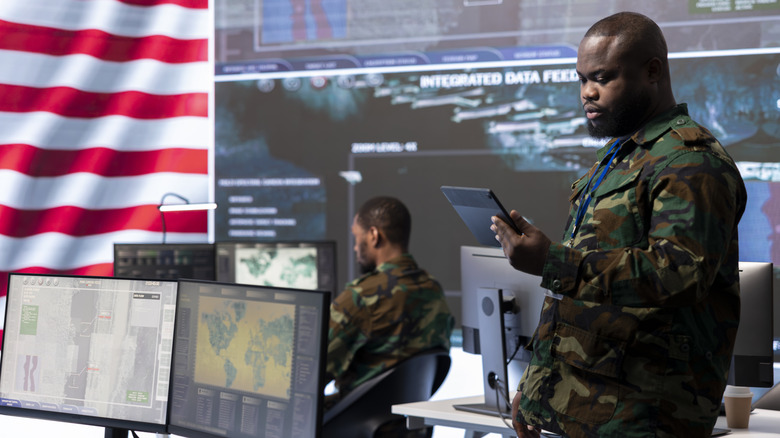
Technological advancements like AI can add additional systems and change the goalposts for familiar roles. As such, the ADOC is also slated to serve servicepeople who experience teething troubles with new systems. At the same time, different data storage methods have been and continue to be used by different branches of the military and roles within them, some of which won’t have been updated.
Experienced tech-tinkerers will know how many pesky compatibility issues can arise where outdated legacy systems are concerned, and so another key objective is to move away from the concept of data silos. These are defined by IBM as “isolated collections of data that prevent data sharing between different departments, systems and business units,” and it’s plain to see how important operations across the U.S. military could be made faster and more efficient if all of this information could be shared more freely.
This new trial of the ADOC is not the first time the U.S. has used such a system. Around 1950, for instance, a coordinated series of radar systems on the ground was devised that would become SAGE (Semi-Automatic Ground Environment air defense system), for detecting the presence of unfriendly aircraft and allowing a prompt reaction to them. Today, the ADOC has a similar utility in bringing systems together to share intelligence and hopefully streamline processes. As Army Cyber Command’s Lieutenant General Christopher Eubank puts it, reports U.S. Army, “by enabling seamless access to trusted, actionable data, ADOC ensures that our commanders and Soldiers are equipped to make precise, timely decisions.” After all, there are some very advanced machines like vehicles in America’s arsenal, but they’re only as effective as the coordination of the systems and personnel that power them.

Stephan is the sports journalist for the Maple Grove Report.