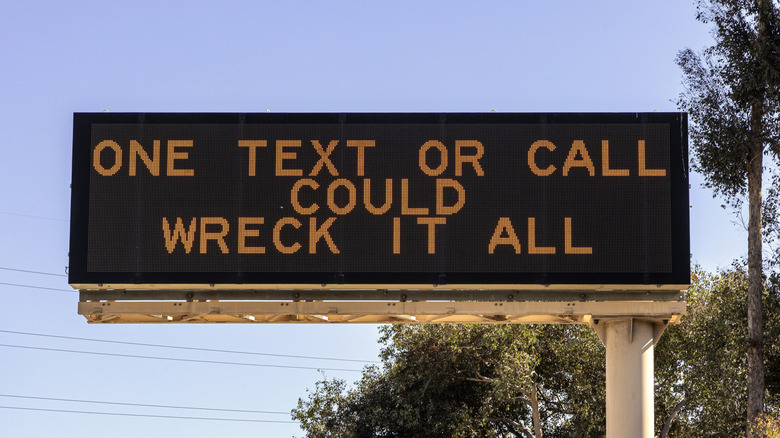

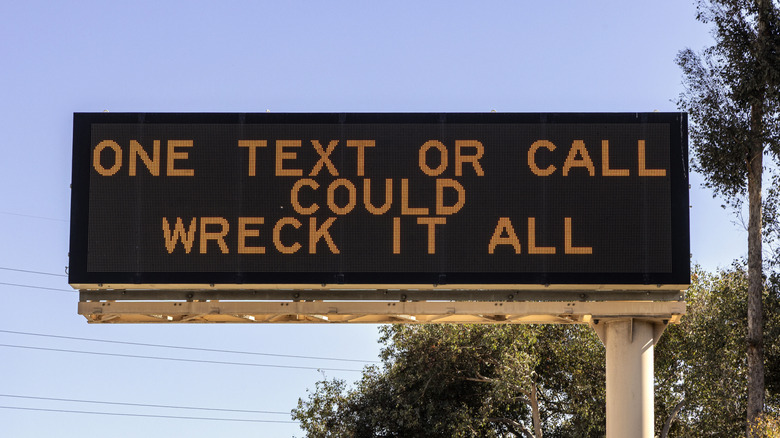
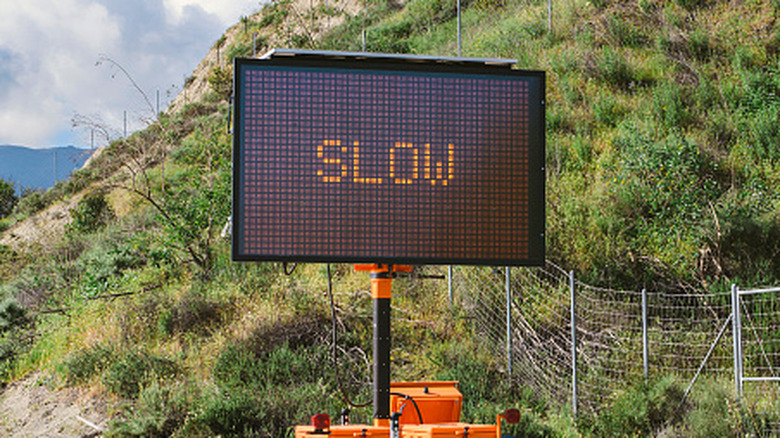
On highways, you’ll often spot one or more digital signs known as changeable message signs, or CMSs, displaying traffic-related information. Extreme weather, vehicles of interest to local authorities, changing driving patterns, and other notices are shown on them. Sometimes, on holidays or special occasions, these signs displayed fun, non-informational messages or informational notes featuring puns or rhyme schemes. However, this has changed somewhat in recent years, as the Federal Highway Administration has discouraged the use of funny or non-straightforward messages on these signs in the name of driver safety.
The signage guidelines are found in the 11th edition of the FHWA’s Manual on Uniform Traffic Control Devices. In the revised edition, the FHWA recommends against the use of CMSs for dropping pop culture references, telling jokes, or delivering messages with double meanings. The concern the FHWA raises is that the displays could distract drivers, causing them to take their minds off the road in hopes of understanding what they’re reading. This opens the door for potentially dangerous driving errors. Also, some drivers might not understand the message, which could make the signs less effective. Still, it’s not outright illegal to use these messages, but the FHWA discourages them.
They might not be as bad as the most confusing traffic signs out there, but concerns about distracting or unclear CMS messages are understandable. That’s why the FHWA has made it clear how messages should be delivered through these signs, so that drivers can quickly get the information they need to be safe on the road.
How the FHWA wants CMS messages to limit distractions
As mentioned, reducing driver distraction is the heart of the FHWA’s updated CMS recommendations. After all, distracted driving is a huge problem in the United States. According to data from the National Highway Traffic Safety Administration, in 2024 alone, 315,167 individuals were injured in crashes involving distracted drivers, and 3,208 lost their lives. Granted, CMSs are just one of countless sources of distraction behind the wheel, but puns and pop culture references don’t help. That’s why the FHWA has thoroughly explained proper formatting for its CMS notices going forward.
The Manual on Uniform Traffic Control Devices says the key to CMS formatting is getting to the point as effectively and efficiently as possible. Instead of using funny or indirect language, these signs should only display the necessary information in a quick and concise manner. An example the guide gives is “UNBUCKLED SEAT BELTS FINE + POINTS,” which reminds drivers that they can be fined or get points on their license if they drive without a seat belt. If the message requires multiple sections, the Manual on Uniform Traffic Control Devices is also specific about timing, so that drivers can read the full message without it disappearing too quickly or staying on the screen for too long.
Whether it’s one of the states with the most dangerous roads or one with pretty average roadways, traffic safety isn’t something to take lightly anywhere. As fun as gimmicky digital highway signs can be, if they impair driver awareness, the attempted humor just isn’t worth it.

Stephan is the sports journalist for the Maple Grove Report.