
Even before the recent nationwide rise in gas prices in response to geopolitical circumstances in the Middle East, fuel economy has always been one of the biggest factors that buyers consider when choosing a new vehicle. Whenever gas prices go up, the differences in fuel efficiency ratings between different models matter more to people.
Yet even with elevated fuel prices, the popularity of pickup trucks in America seems unlikely to fade. And while these vehicles may not be as efficient as your average sedan or crossover, recent fuel economy gains have been impressive. So which trucks are the most efficient? If you’re looking for maximum pickup truck efficiency overall, Rivian is the truck brand that gets the win, but its all-electric models are not directly comparable to internal combustion models.
When it comes to traditional pickup trucks with internal combustion engines, a few models come out on top in the fuel economy rankings, though their efficiency is heavily dependent on which engine option you choose. Thanks in particular to the growth of the hybrid truck market, many of these pickups have far better MPG figures than you might assume — we’ve highlighted the standouts below.
Ford Maverick
Sure, you could put an asterisk next to the Ford Maverick’s inclusion in this list because it’s not a “real” body-on-frame pickup and instead uses a more car-like unibody platform with front-wheel drive being the standard drivetrain layout. Buyers don’t seem to mind, though, and the Maverick has been an absolute hit as far as sales figures go.
When it comes to gasoline use, the Maverick is the most fuel-efficient pickup choice out there, by a significant margin. In its front-wheel-drive hybrid form, the Maverick delivers an incredible 38 MPG combined rating from the EPA, with the all-wheel-drive hybrid version coming in just behind that. Maverick buyers can also opt for non-hybrid models with the more powerful 2.0-liter turbocharged engine, and though the fuel efficiency ratings for the 2.0 Maverick aren’t as high, they are still quite good by pickup truck standards.
As our testing has found, though, there’s more to the Ford Maverick than just great MPG. The truck has also won over buyers who like its compact size, and the Maverick’s affordable price tag is another huge draw at a time when many feel that pickup truck prices are ballooning out of control. When looking for a sensible truck, the potential to save serious money at the gas pump is just one part of the Maverick’s compelling formula.
Chevy Silverado 1500 and GMC Sierra 1500
One might assume that full-size half-ton pickup trucks would be pretty far down a list like this, well behind the smaller mid-size trucks, but that’s not actually the case. Per the EPA’s fuel economy ratings, the truck that comes in second place to the Ford Maverick for fuel efficiency is the Chevrolet Silverado 1500, along with its GMC twin, the Sierra 1500.
More specifically, it’s the Silverado and Sierra powered by the stellar 3.0-liter Duramax inline-six turbodiesel engine. When equipped with this engine, the two-wheel drive Silverado and Sierra 1500 both deliver a combined EPA rating of 25 MPG. The engine’s stout horsepower and torque numbers aside, this is a number that was formerly unheard of when it comes to full-size pickups.
However, when talking about fuel efficiency and saving money on gas, it’s important to note that diesel prices are often higher than gasoline, and even more so under current conditions. You can, of course, get Silverados and Sierras with gasoline engines like the 2.7-liter turbocharged four-cylinder. Despite its lower fuel economy rating, the gas 2.7 could end up being cheaper to fuel than the more efficient turbodiesel models, and even the EPA’s official estimates show the expected annual fuel costs of the two engines are nearly identical.
Ford F-150
The Ford F-150 pickup isn’t just a perennial bestseller, depending on powertrain options, it can also be one of the most fuel-efficient trucks on the road. When equipped with its available hybridized 3.5-liter V6 engine, the F-150 PowerBoost is actually the most fuel-efficient non-diesel full-size truck you can buy right now.
The F-150 PowerBoost has an EPA combined rating of 23 MPG, which includes an especially high rating of 22 MPG in city driving — and better yet, that’s the rating for a four-wheel drive model. The Chevy and GMC Duramax diesel half-ton trucks might have the edge in pure fuel efficiency, but per the EPA, the gasoline-powered F-150 Hybrid should be significantly cheaper to fuel up than a comparable Duramax truck.
In our review of the 2025 F-150 Hybrid, we found the added efficiency of the F-150’s hybrid option to be well worth its extra cost, which also buys you a nice bump in horsepower and a fairly substantial boost in torque over the non-hybrid 3.5 EcoBoost F-150. Ford of course, offers other less efficient powertrains in the F-150, including the Raptor R’s gas-guzzling supercharged V8 — but when it comes to balancing performance and fuel economy, the PowerBoost version is hard to beat.
Toyota Tacoma
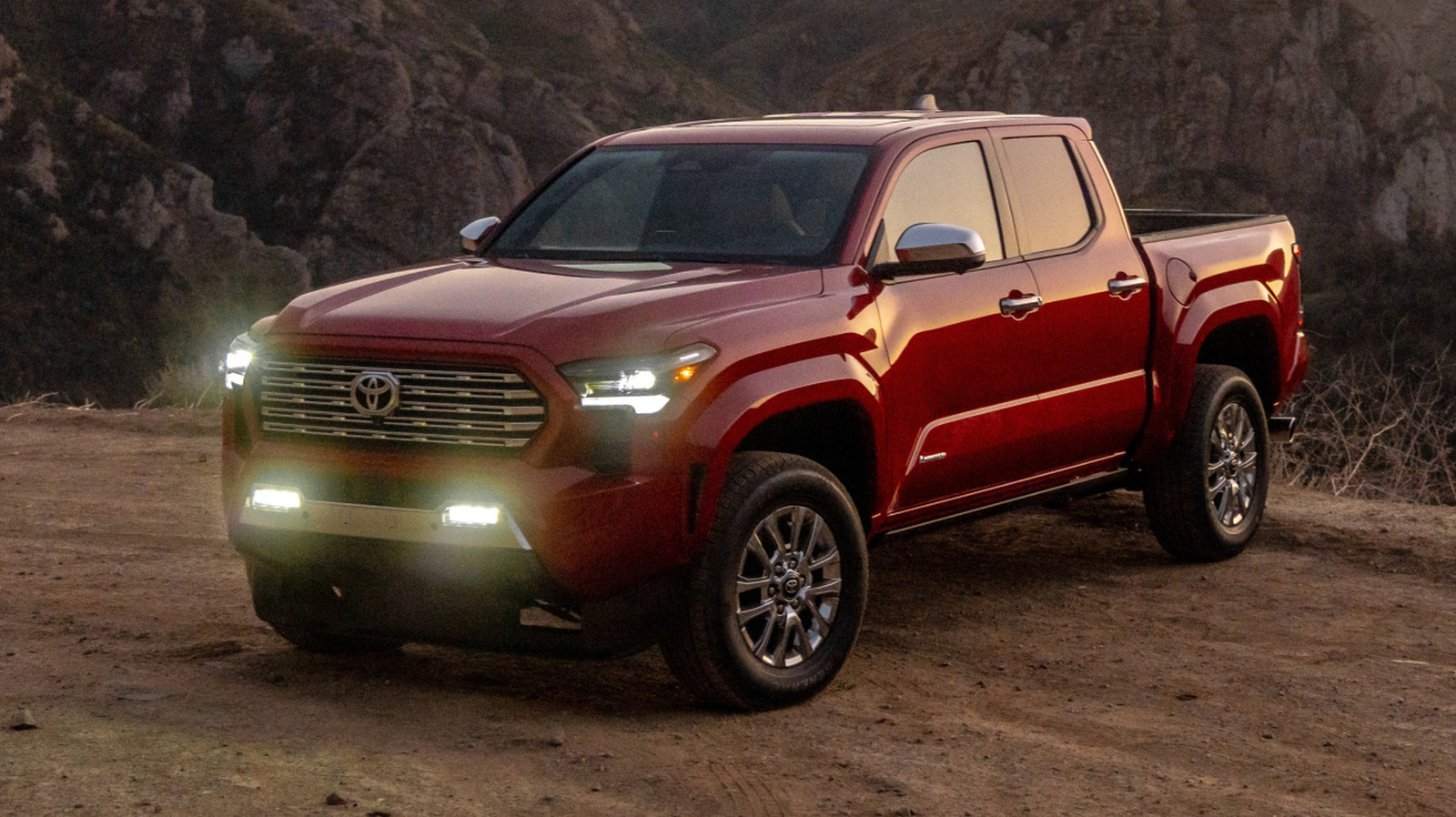
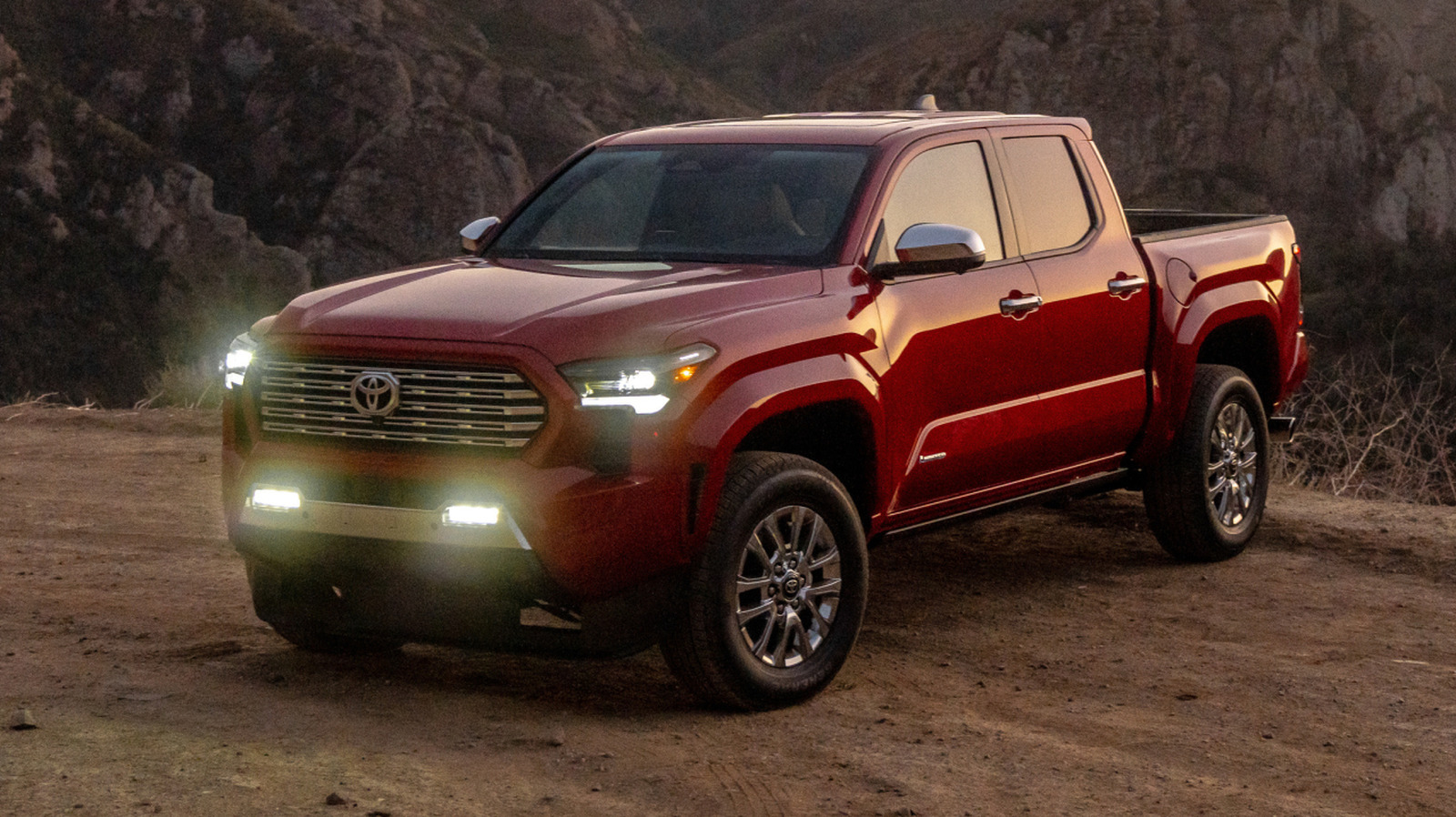
If you are in the market for a mid-sized pickup truck and place a high value on fuel economy, the Toyota Tacoma is going to be difficult to top. Toyota currently offers the Tacoma with two different engines — a standard 2.4-liter turbocharged four-cylinder or a hybrid i-Force Max version of that same engine, which is available on the truck’s upper trim models.
Toyota has been greatly increasing hybrid options across its vehicle lineup in recent years, but the hybrid Tacoma is less about raw fuel efficiency and more about the added horsepower and torque compared to the non-hybrid version. In our review of the 2024 Toyota Tacoma TRD Pro, we found the engine’s impressive 326 hp and 465 lb-ft of torque to be a significant improvement over the base, non-hybrid versions.
However, if you’re simply looking for the most fuel-efficient Tacoma, there actually isn’t a massive difference between the Tacoma Hybrid 4WD’s 23 MPG combined EPA rating, and the non-hybrid 4WD model’s 21 MPG combined rating. If you factor in the added cost of the hybrid powertrain, the money-saving math probably won’t work out in the hybrid’s favor, but that’s not surprising. As mentioned a moment ago, the i-Force Max version of the Tacoma is more about driving performance than saving money at the pump.
Ford Ranger
Not to be overlooked between the compact Ford Maverick and the larger F-150 is the mid-sized Ford Ranger, which also offers strong fuel-efficiency numbers for its class. Unlike some of the other trucks on this list, the Ranger gets these numbers not from a hybrid or upmarket turbodiesel powertrain, but with its base 2.3-liter turbocharged EcoBoost four-cylinder.
In its two-wheel-drive spec, the 2.3-liter Ranger earns an EPA rating of 23 MPG combined, which, for the money, is about as good as you’ll find in any body-on-frame pickup truck on sale right now. Our review of the current generation Ranger XLT found that the truck’s real-world economy backs those numbers up, which we found very impressive for a non-hybrid, base engine. Those looking for more power from their Ranger can opt for the larger 2.7-liter EcoBoost V6 engine, but as you’d expect, that drops overall fuel economy numbers by a few miles per gallon.
Beyond that, there’s the much more powerful Ford Ranger Raptor, which, not surprisingly, drops that combined EPA rating down even further to 17 MPG. Given recent electrification trends, perhaps at some point Ford will add a hybrid Ranger option similar to the F-150, which would likely take the Ranger’s already-strong fuel economy numbers to a new level.
Methodology
When putting this list together, we used official EPA fuel ratings as our primary source to pick five of the best-performing, current pickup trucks with internal combustion engines. We also used our first-hand experience on most of these models to back up the selection with real-world fuel economy and performance observations. We all allowed current truck models with either gasoline, hybrid, or turbodiesel engines.

Stephan is the sports journalist for the Maple Grove Report.