These Are The 2 Trendiest Destinations In Europe This Summer According To Tripadvisor


Share The Article

If you’re thinking of heading across the pond this summer, and you’re not exactly sold on the idea of maddening crowds in Barcelona, or paying upwards of $1,000+ a night in Amalfi, we might have just have the perfect alternative for you.

Well, Tripadvisor does.
These Are The 2 Trendiest Destinations In Europe This Summer According To Tripadvisor Summer
🍋

Italy Budget

The $95 Amalfi?

Tap to Reveal

The Secret

Tropea offers dramatic cliffs & blue water at 90% less than Positano. Local bars serve full aperitivos under $10.

Tap to Close

🏺

Spain Pivot

Basque Discovery

Tap to Reveal

The Culture

Northern Spain’s unique green zone. World-class food (pintxos) and art without Barcelona’s tourism chaos.

Tap to Close

According to their latest Summer Travel Index, two European destinations have been growing in popularity at a faster rate than all the others. This doesn’t mean they’re jam-packed by your usual clout-chasing Instagrammers, but it does mean this is maybe your last chance to check them off the list before they get real big.

Think of it as that perfect window to visit somewhere that’s not necessarily a hidden gem anymore, yet has an exciting enough social scene, and cultural appeal, without having fully given in to mass tourism:

Tropea, Italy

Probably the trendiest summer spot in Italy right now, Tropea is a bit like Amalfi before the star-studded beach clubs and cruise ships came.
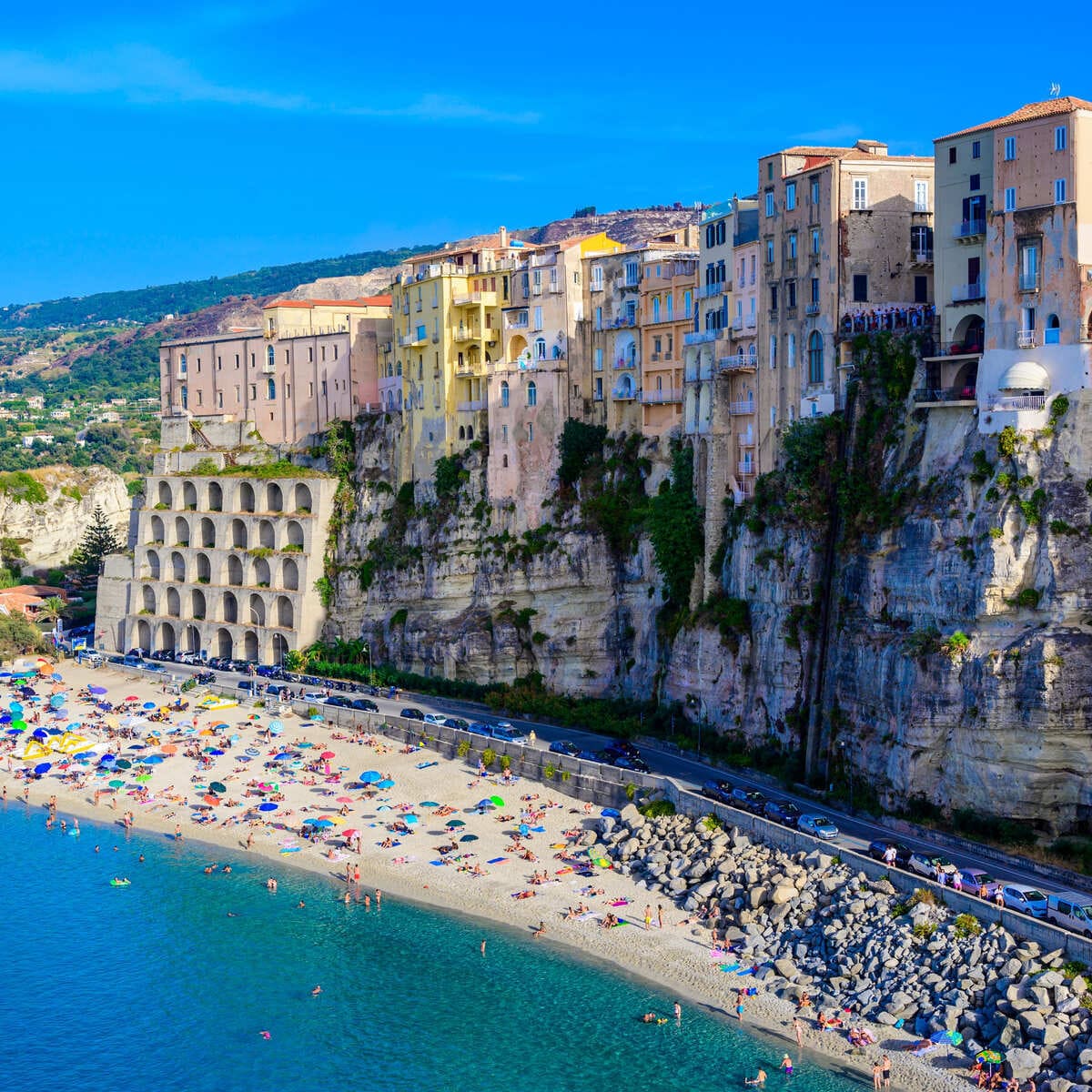
Tropea Beach Town In The South Of Italy

Heading to Europe this year? Don’t be denied boarding! Check the latest entry requirements here.

As Tripadvisor’s latest metrics indicate, Tropea is the second-fastest rising destination in Europe right now, and given the fact that more and more travelers are looking for more authentic, off-the-beaten-path experiences, away from the tourist hotspots and crowds, we can’t say we’re too surprised.

For starters, the setting is kinda mindblowing.

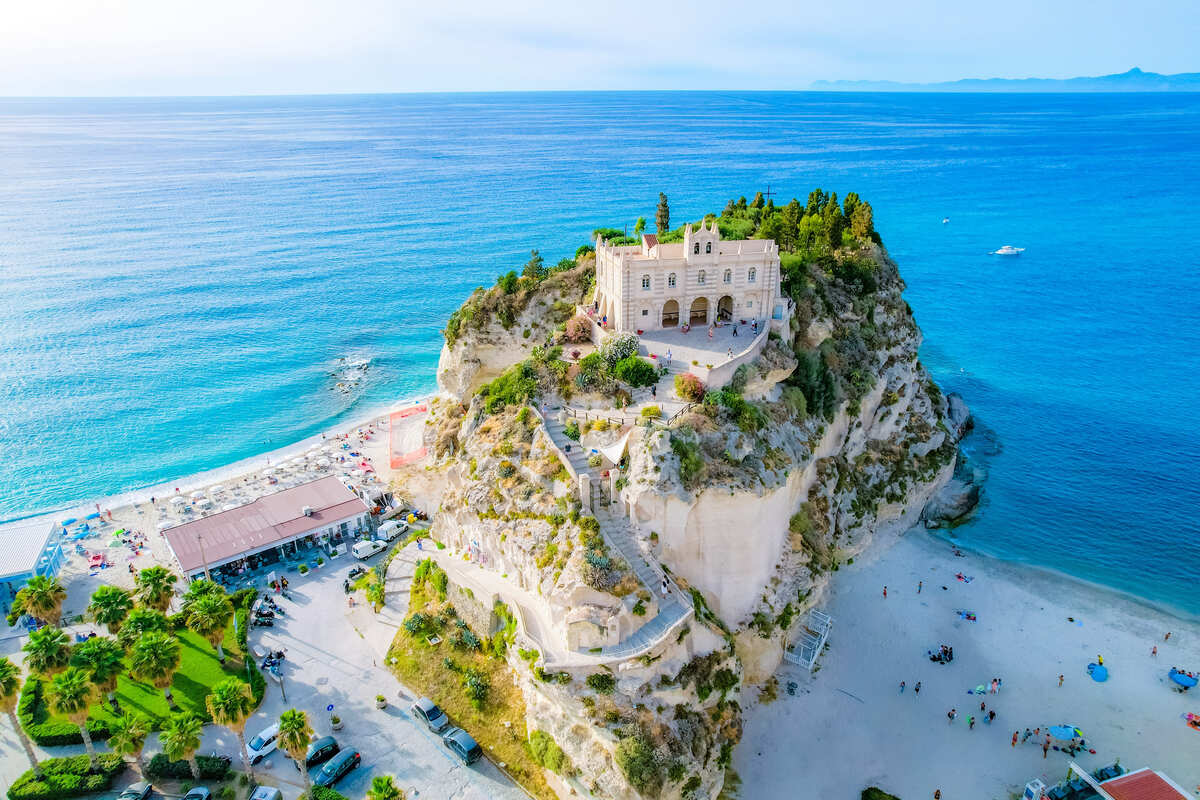
The town literally sits perched on a coastal cliff overlooking a long stretch of sandy beach and the clearest blue waters. Your classic Southern Europe postcard, minus the hefty price tag.

Sitting down for an aperitivo in Tropea will set you back by under $10 if it’s a chill, local bar, and we’re talking a full charcuterie board presentation and a Campari soda, while staying overnight costs on average $95 across most mid-range hotels.

It’s not Albania-cheap, if you know what we mean, but compared to your average Italian tourist dump town, it’s a pretty good deal.

Panoramic View Of Tropea, Italy

Now, Tropea Beach itself isn’t exactly crowd-free.

It actually gets swarmed with sunbathers and swimmers in summer, but there’s a key difference here: while beach clubs in Positano are largely frequented by American show-offs, Tropea’s Spiaggia della Rotonda and its laid-back waterfront bars largely cater to local crowds.

Let’s be real, even if you go way off the map somewhere like Bosnia this season, it’s probably not gonna be totally quiet and untouched.

The real move is going where locals actually hang, where you’ve got no choice but to fire up Google Translate or dust off your Italian, ordering pasta with a side of cipolla rossa (their surprisingly sweet red onion) at some random trattoria, because at least it’ll feel legit Italian.

Also, doesn’t that tiny church on a rock promontory boasting views of the townscape just look like something straight ouf ot a postcard?

Bilbao, Spain
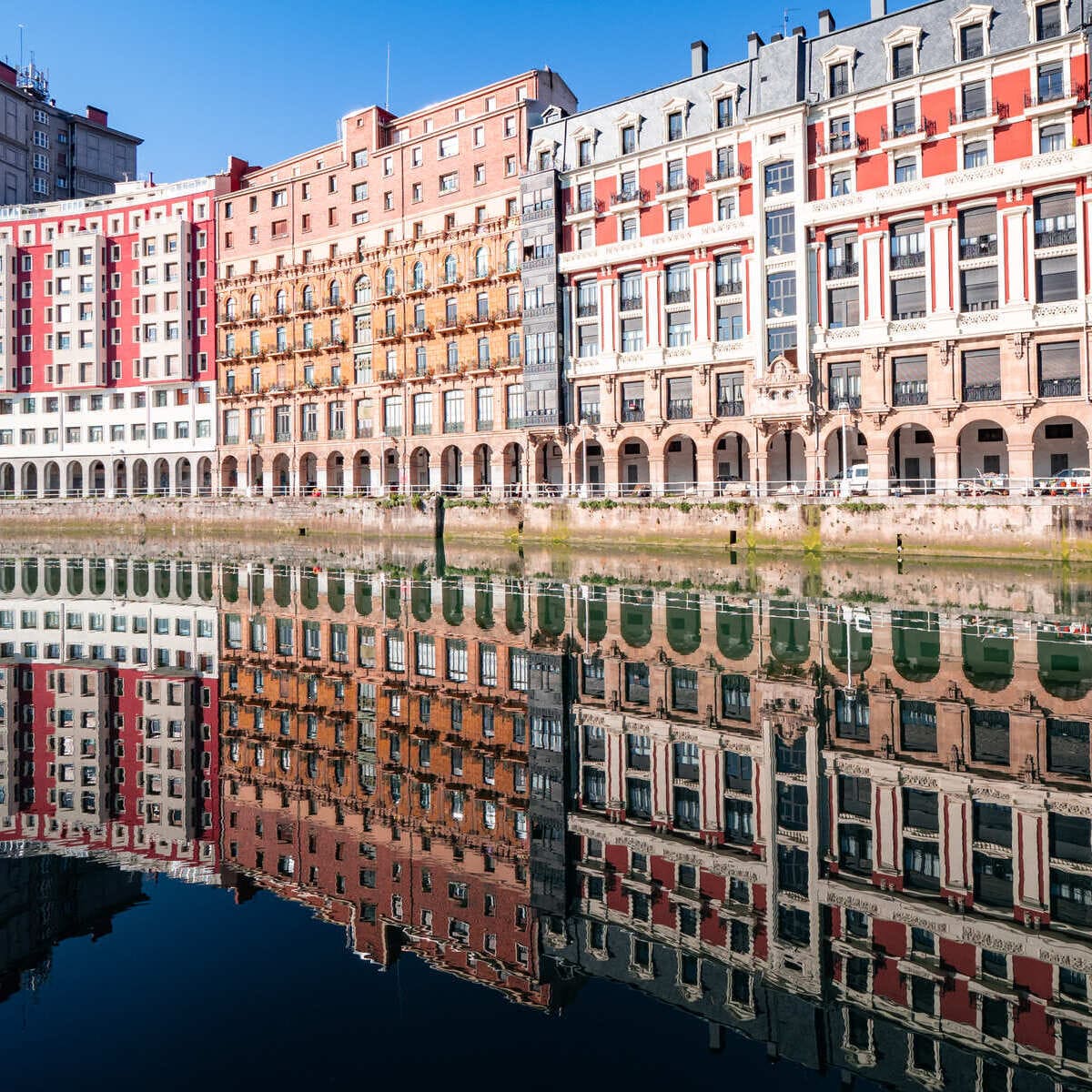
Beautiful Waterfront In Bilbao, Spain

Number one trendiest European city this summer, based on Tripadvisor’s assessment, Bilbao has actually been the hot topic for a few months now.

With places like Barcelona, Madrid, and Mallorca crumbling under the weight of mass tourism, earlier this year, United Airlines boldly decided to expand to the much-overlooked Northern Spain market and add Bilbao flights to spread demand beyond the usual hotspots.

It’s proven to be the right call, as Bilbao is now on the radar of hundreds of thousands of Americans booking nonstop flights there from Newark.

Though Bilbao isn’t a beach city, per se, lying a bit further inland from the Basque Coast, it has that Southern European, Basque flair, with a picture-perfect Old Town dotted with skinny townhouses and their ornate balconies, a myriad of tapas bars dishing out pintxos and txakoli, and a summery feel that’s hard to beat.

Bilbao Waterfront, Basque Country, Spain

Barcelona may have Sagrada Família, yet Bilbao is home to the landmark Guggenheim Museum Bilbao, a steel and titanium-clad masterpiece housing art pieces by famous artists like Jackson Pollock and Andy Warhol, and it has proper, easy-going vibes without the added La Rambla chaos.

No, it’s not in the Mediterranean, but it’s within short driving distance of some of the most beautiful beach towns on the Atlantic side of Europe, like Donostia (also called San Sebastián) and Hondarribia, where colorful seaside buildings and gorgeous golden sands await.

Just make sure you test the waters prior to diving right in, as again, this is the Atlantic. It’s always, ahem, a tad chillier than the Med.


Source link

Leave a Reply

Subscribe to Our Newsletter

Get our latest articles delivered straight to your inbox. No spam, we promise.

Recent Reviews


The Government’s ‘Company Accounts and Tax Online’ (CATO) filing service allows small companies with the simplest affairs to file their company accounts and corporation tax return simultaneously with Companies House and HMRC. However, if you run a small business and use this service things are about to change.

The Government is closing the CATO portal on 31 March 2026. After that date, companies will no longer be able to file their company accounts and corporation  tax returns for free via CATO. You’ll need to either use commercial software or work with a professional accountant to do it for you. For the many micro‑entities and small companies that currently file on their own, this is a significant shift.

Some businesses may still be able to use a free web‑filing service from Companies House for micro‑entity or dormant accounts, but that only covers the filing of your statutory accounts – not your corporation tax return to HMRC – and that service is also expected to close in the near future. So, it makes sense to address both needs together when planning how you navigate the CATO closure.

Acting early to make life easier

Although CATO shuts on 31st March, many companies and their directors won’t feel the impact until months later, when their next filing deadline comes around. If you wait until that crunch point, you may find yourself:

  • choosing and learning new software under deadline pressure
  • hurriedly migrating or re‑entering data
  • settling for “whatever works right now”, even if it’s not a good long‑term fit.

And the reality is that all of these things increase the risk of making mistakes, filing incorrect data or even filing late, all of which could lead to penalties or in extreme cases being struck off.

If you usually use the Government’s free service and your filing deadline falls between now and 31 March, it’s business as usual for this year. Now is the time to start preparing for the transition. We recommend getting your filings in as early as possible this year to avoid a last-minute rush. This also gives you the space to begin exploring how a professional accountant or bookkeeper can support your business through these changes. Preparation is the key to a successful, stress-free transition next year.

If your filing deadline falls not long after the 31st March, say April, May or June then it would be worth giving some thought, if practical, to trying to file a little earlier this year in order to avoid rushed decisions. If you could file before the 31st March in order to utilise CATO then you’ve effectively bought yourself  a year to make the right long term decision that’s the right strategic fit for you and your business. This isn’t going to be possible in all cases but it’s certainly worth thinking about!   

Regardless of how or when you plan to file your next set of accounts and tax return, the Government is encouraging all CATO users to ensure they download and save all their previously submitted accounts and tax returns via the portal before it closes. After the 31st March you won’t be able to access your historical submissions and you may find you need them in the future. The government has provided instructions on how to do this here.

Why an accountant or bookkeeper is still best practice

For many small businesses, the best route through this change will be to work closely with an accountant or bookkeeper. They can:

  • guide you through software choices and setup
  • help you understand whether your affairs really are “simple enough” to keep doing it yourself or whether it’s time to get expert help from a professional
  • advise on the most suitable approach for your size and sector
  • make sure your bookkeeping, accounts and tax all join up smoothly.

The right software choice and set up coupled with good digital record keeping throughout the year can lead to a streamlined, stress free year end process that’s more about review and approval than last minute data entry, re-keying of data and stressful reconciliations. An experienced advisor can design and run that system with you, as hands on or as hands off as needed, so you stay compliant and confident without needing to become a tax or software expert yourself.

Whilst CATO’s closure is undoubtedly frustrating for many, it’s also a timely reminder to take a step back and make sure your whole set up and year‑end process is fit for the future. Take the opportunity now to talk to an accountant or bookkeeper and put a simple, joined-up plan in place – so when the portal disappears, you’re already one step ahead.

Was this article helpful?

YesNo


Source link