
Follow ZDNET: Add us as a preferred source on Google.
ZDNET’s key takeaways
- Plug-in solar systems are an alternative to large, professionally installed rooftop solar.
- The US regulatory system for utilities wasn’t built for plug-and-play solar setups, so it’s taking time for state laws to catch up.
- Thus far, only Utah has legalized plug-in solar in the US, allowing small systems of up to 1,200w to plug directly into a traditional outlet.
Plug-in solar has risen in popularity among sustainability fans in recent years, but the practice isn’t yet legal in all of the United States. If you’ve been thinking about joining the plug-in solar bandwagon, here’s what you should know.
What is plug-in solar?
Plug-in solar systems, also known as balcony solar, are easy, plug-and-play solar panels that include an inverter and small battery. The system connects to a home’s standard 120-volt outlet and automatically flows the electricity from the battery to the nearest running appliance.
These systems are small and portable, and aren’t meant to replace grid electricity or dependency on utility companies. Instead, they generate anywhere between 200W and 1,800W, but are an easy solution to reduce energy costs with an affordable investment.
Also: Switch to plug-in solar? My advice after testing the DIY energy tech at home
Instead of going on rooftops and requiring professional installation, plug-in solar systems can easily go on a balcony, backyard, or a patio.
“Historically, solar adoption has been tied to homeownership, but that’s not a reflection of today’s housing realities,” Solar Energy Expert from Wolf River Electric, Justin Nielsen, commented on the matter. “More than a third of Americans rent, and that number is even higher in urban areas where sustainability is most urgent. If we’re serious about transitioning to renewable energy, we need scalable solutions that work for everyone, not just those with rooftops.”
The backyard solar consumer only pays for the system, bypassing installation costs, permits, and inspections.
Where is plug-in solar legal?
A microinverter, like the one pictured above, is the brains of the plug-in solar operation.
Adrian Kingsley-Hughes/ZDNET
In the US, plug-in solar systems are only legal in the state of Utah. HB 340 legalized plug-in solar systems of up to 1,200W that can plug in directly to a standard outlet. The law in Utah doesn’t require traditional utility interconnection agreements, enabling users to enjoy a truly plug-and-play system.
Across the world, there are multiple countries that have not only legalized plug-in solar but have popularized it, like Germany. Balcony solar systems became popular in Germany because the government largely encouraged distributed energy and clean energy solutions.
The European country also has high electricity prices and many apartments and compact urban housing units. Germany’s success inspired Republican lawmaker Raymond Ward to introduce HB 340. The bill was intentionally narrow and low-cost to ensure support. It avoids subsidies and mandates, caps systems at 1,200W, and requires UL-certified equipment and anti-islanding protections.
Even with a narrow bill, Utah pioneered the legalization of plug-in solar in the US and has inspired dozens of states to introduce similar bills.
What states are working to legalize plug-in solar?
After Utah legalized plug-in solar in 2025, as many as 30 states have introduced bills to do the same. Several of these states are close to passing plug-in solar laws, including Virginia, which has already signed it into law, which will be effective on July 1, 2026.
States like Colorado and Maine approved legislation in 2026, and others, like California, New York, Vermont, Hawaii, and Maryland, have active bills currently.
Once plug-in solar is legalized in California, efforts to move bills forward will likely snowball across the country — as will the availability of such systems in the US. California has an estimated population of over 39 million residents, and is already a large solar market in the country.
Also: EcoFlow’s new backyard solar energy system starts at $599 – no installation crews or permits needed
“These units are small and mobile enough that millions of Californians can use them to save on affordable clean energy where rooftop systems aren’t appropriate,” San Francisco Senator Scott Wiener said when the Senate voted to pass the Plug And Play Solar Act SB 868 this week. “The cost of electricity has risen to absurd levels, and plug-in solar is an easy way families can lower costs.”
California electricity costs to customers have increased by almost 40% between 2022 and 2025, making the state the second-highest electricity rates in the US, trailing Hawaii.
Why is plug-in solar not legal in most US states?
There is no single national approval process for backyard solar in the US. Electrical connectivity rules are mostly handled at the state level by local utilities and public utility commissions, so each state must pass legislation and update utility rules to legalize plug-in solar.
“Broader adoption requires strong policy backing and consumer education,” Nielsen said. “What we need now are updated local ordinances, incentive programs that include renters, and a push to normalize these systems. That’s how we build a cleaner, more inclusive energy grid.”
American utilities and electrical regulators have slowed the widespread legalization of backyard solar setups because they worry about grid instability, backfeeding during outages, overloaded circuits, uncertified inverters, and fire risks.
Unlike Germany, the US has narrowed its focus on legislation for permanent solar panel systems, like rooftop solar arrays and commercial solar installations. Years ago, Germany and other European countries solved many of the concerns that worry US regulators by standardizing equipment and regulations.
US utilities also have multiple requirements for any device that can send electricity back into the grid, regardless of the amount of energy returned.
Also: How I boosted my portable solar panels’ power by up to 30% – 11 expert-approved tips
Most plug-in solar systems are too small to be able to send electricity back into the grid, as homes consume all the solar energy without leaving overages. However, the possibility is there, so the legislature has to regulate them.
A device that can send electricity back to the grid typically requires multiple permits, interconnection agreements, inspections, and utility approval, which is everything that backyard solar setups seek to avoid.
There’s also the issue that utility companies resist changes that may result in consumers bypassing them altogether, as that cuts down on utility revenue. With plug-in solar, utilities face the risk of losing small amounts of electricity sales, visibility, and control.
Does plug-in solar work to save on utility bills?
Millions of backyard solar setups in Germany have proven that the system works. However, plug-in solar systems help offset your home’s constant electricity usage; they don’t power your whole house.
These systems work best when powering devices that are constantly consuming electricity, such as a fridge, Wi-Fi equipment, TVs, smart home devices, and HVAC fans.
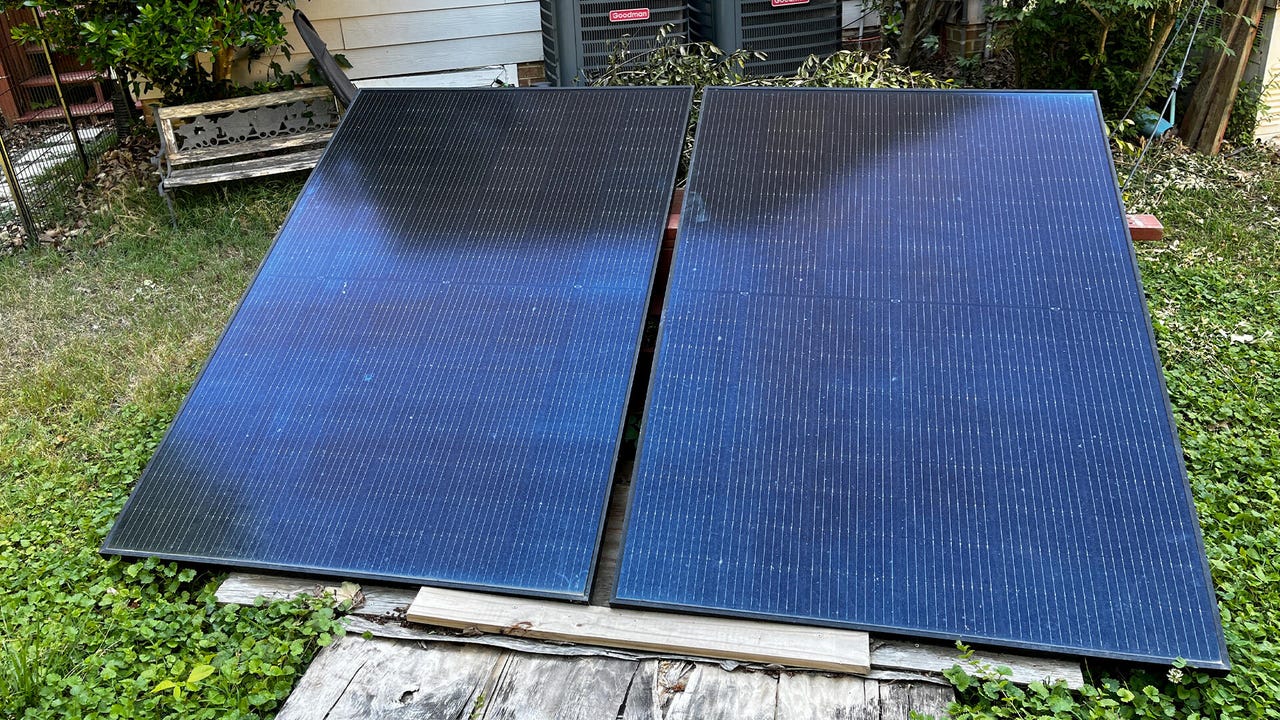
A typical plug-in solar system like the one I have at home with two 410W panels will harness between 3 and 5kWh daily, or 90-150kWh monthly. Depending on your electricity rate, this can translate to anywhere between $13 and $35 in monthly savings.
Also: I spent two years testing wind power at home – here’s why solar is still my preferred source
Instead of running your home on solar and fully replacing the grid, plug-in solar helps reduce the amount of energy your home consumes.
Backyard solar also offers cheaper, smarter inverters, easier installations, and very few safety incidents compared to rooftop solar arrays.
Why is plug-in solar so popular?
Plug-in and backyard solar systems have become so popular mainly because they’re a more affordable alternative to traditional solar panel installations. The systems are also modular and portable, so consumers choose the size of their setup and can bring it along when they move.
“Community solar programs let renters benefit from solar without physical installation,” Nielsen added. “Balcony systems empower individuals to generate their own electricity, even in high-rise buildings. Also, apartment-wide installations are proving economically viable for developers who think long-term.”
Even a small 600W to 800W system can noticeably trim electricity bills, especially for users with time-of-use billing and expensive evening electricity.