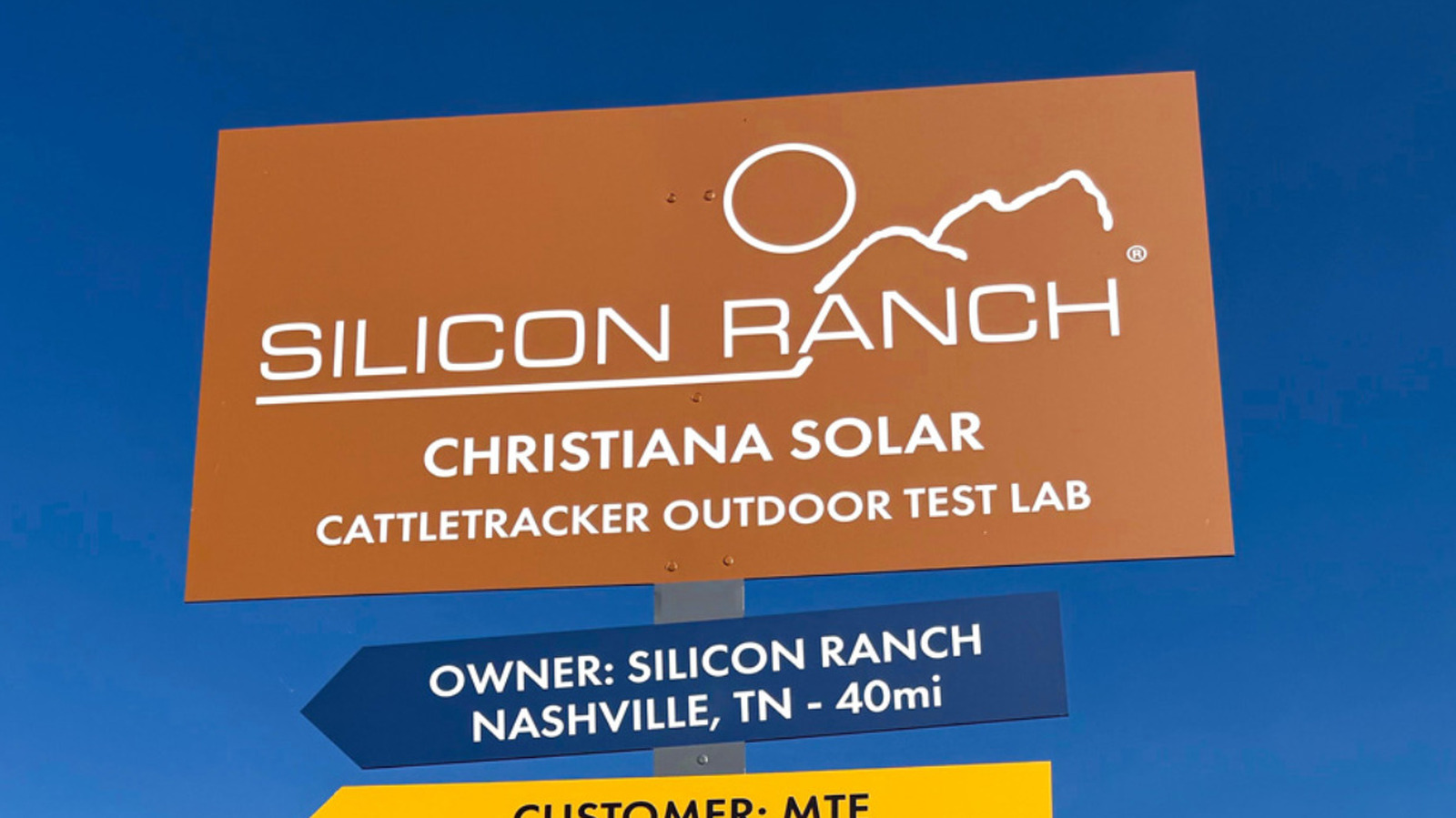

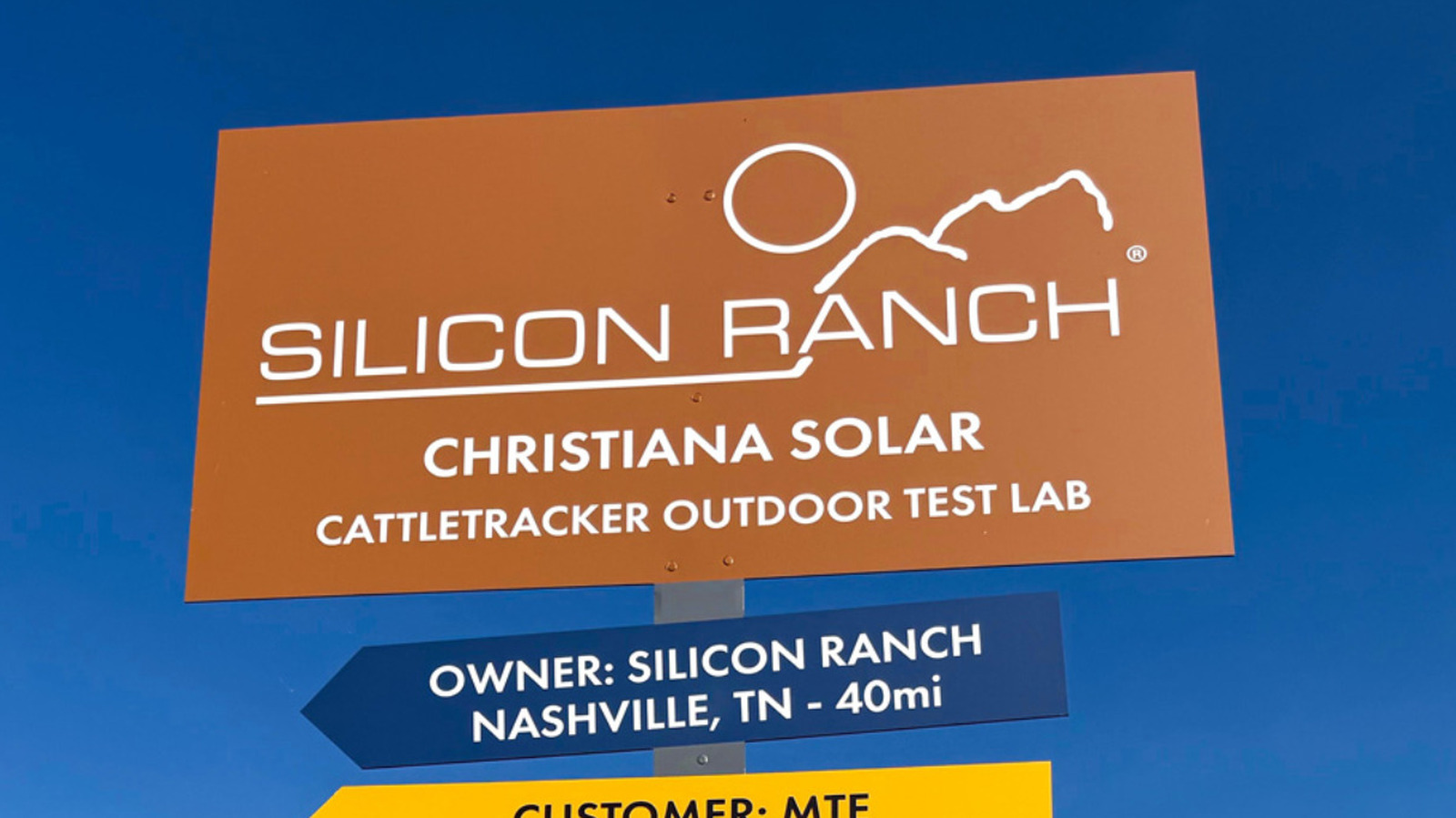
“Agrivoltaics” is a term you may never have heard before. But thanks to Silicon Ranch, there’s a good chance you’ll be seeing it a lot more over the coming years. Agrivoltaics, also known as dual-use solar, is the practice of growing crops or raising livestock beneath or between solar panels — and it’s the mission statement of Nashville-based Silicon Ranch to create healthier air, water, and soil by bringing agrivoltaics to the main stage. One of its dual-use solar farms in central Tennessee is a perfect example.
Rather than limiting land to solar power production, Silicon Ranch’s 40-acre farm in Christiana, Tennessee, is also home to 10 mother cows and their calves. It’s the first of its kind, having debuted in April 2026. Most agrivoltaics endeavors thus far feature crops or small sheep, and while we may be able to 3D print a wagyu steak, there are still eight times more cattle ranches than sheep ranches in the U.S — and Silicon Ranch believes larger livestock, like cattle, can and should coexist with solar panels.
It’s not just a proof of concept, either. These solar panels provide a host of benefits to the soil, the environment, and even the cows that graze between them.
Dual-use solar: benefits for farm, cattle, and environment
Many farmers take great pride in their land — for some, it was passed down through generations, a sort of keepsake that needs constant care. For others, it’s quite literally the fruits of their labor. So convincing farmers that solar grazing (the process of allowing livestock to roam between installed solar panels) is a boon, rather than an excuse to pillage perfectly good topsoil, can be difficult. But Silicon Ranch has already observed a number of benefits.
Solar panels soak up the sun and provide shade beneath them, which actually accomplishes a few important things in the context of farming and livestock upkeep. First, it shields the soil and crops from excessive sunlight, preventing the topsoil from drying out as quickly. This moisture retention could reduce the need for irrigation and the severity of droughts in more arid areas. Second, it gives the cattle a nice place to rest; think about being in the sun all day – spotting a tree (or in the cattle’s case, a solar panel) with a shady underbelly is like an oasis in a desert. Like the land beneath them, this shade reduces the cattle’s necessary water consumption, and it also cuts back on the livestock’s heat stress.
As for the environment, you probably already know the benefits of solar power — it’s one of the most effective ways to reduce carbon emissions and air pollution while still providing a steady stream of power.
How Silicon Ranch implemented agrivoltaics
The dual-use solar farm in Christiana doesn’t just have static solar panels installed in the typical rotating to near-vertical fashion, which would leave the cattle with almost no room to graze beneath them, defeating the purpose of the installations. And they’re certainly quite different from the types of solar panels you’d install on your roof. Instead, it makes use of some pretty clever technology developed by Silicon Ranch called “CattleTracker.”
When it’s time for the cattle to graze near the solar panels, workers use software to shift the angle of the panels to nearly horizontal, creating space for the cows to roam. Because this reduces the efficiency of the solar panels to a degree, farmers rotate the herd between enclosures every couple of days to allow sections of solar panels to operate at optimal production (roughly 5 megawatts of electricity).
While it is still in the early stages of development and dispersion, Silicon Ranch is undoubtedly at the forefront of what could become a new – and lucrative – standard for farmers.

Stephan is the sports journalist for the Maple Grove Report.