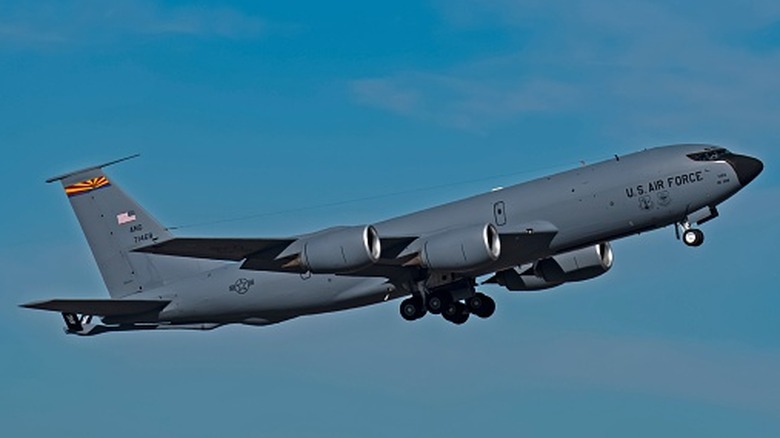

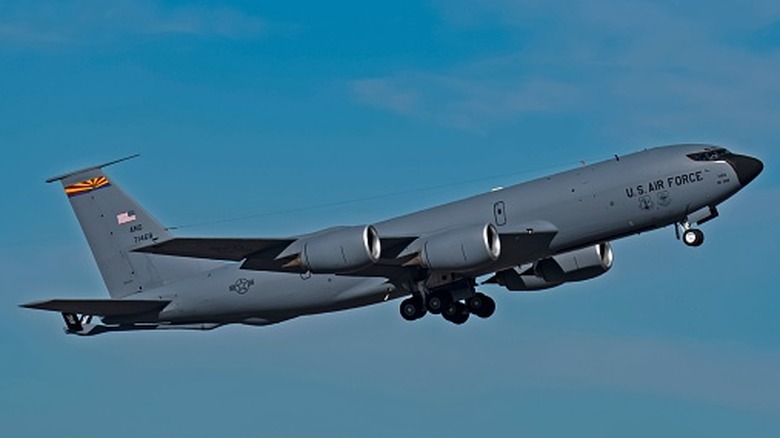
Aerial tankers might not have the same heroic image as jet fighters or the same firepower heavy bombers do, but their strategic importance is unrivaled in the day-to-day operations and movement of the United States military. When supported by tankers, military planes can be quickly refueled in flight, giving them what’s effectively an infinite range. Recently, this was demonstrated in grueling long-distance missions like 2025’s Operation Midnight Hammer, where B-2 Spirit Bombers flew a marathon 36-hour mission to strike targets in Iran from Whiteman Air Force Base in Missouri.
The ability to safely and effectively refuel from these airborne tankers is pivotal for new aircraft entering service with the U.S. Air Force. That’s where a plane known as the Ghost Tanker comes in. To outsiders, this single California-based KC-135R might look like any other tanker in the USAF fleet, but it packs a host of special equipment used to test new warplanes and certify their ability to take fuel in the sky. This ability is a crucial part of modern flight testing, and it is what makes the Ghost Tanker one of the single most important aircraft in the USAF arsenal.
The Ghost Tanker is a tanker unlike any other
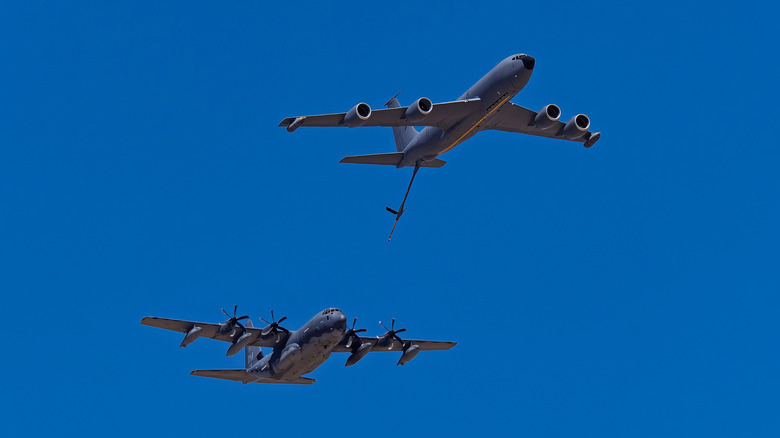
The Boeing KC-135 Stratotanker is one of the USAF’s longest-serving military aircraft, and this airborne tanker has been flying for more than 60 years. To this day, it remains a strategically important plane, supporting the latest and most advanced experimental aircraft as they’re certified for use.
The Ghost Tanker is part of the United States Air Force Reserve’s 370th Flight Test Squadron, which is based at California’s historic Edwards Air Force Base. Its primary mission is to support the 412th Test Wing by providing aerial refueling for aircraft that are being tested. The Ghost Tanker is one of the most important planes in the unit, and the only dedicated test tanker in the USAF. Its name comes not from any official Air Force designation, but from the “Ghost” callsign the plane uses during its missions.
For the most part, the Ghost Tanker operates the same way any other KC-135 tanker would, but its primary mission isn’t simply to refuel other planes. The Ghost Tanker is loaded with cameras, instruments, and telemetry systems that capture precise data about how aircraft perform while connected to its boom. This all makes complete sense when you think about it. The Air Force rigorously tests new aircraft before putting them into service, and the ability to operate with tankers and connect to the boom is a pivotal capability.
The KC-135R is the unsung hero of flight testing
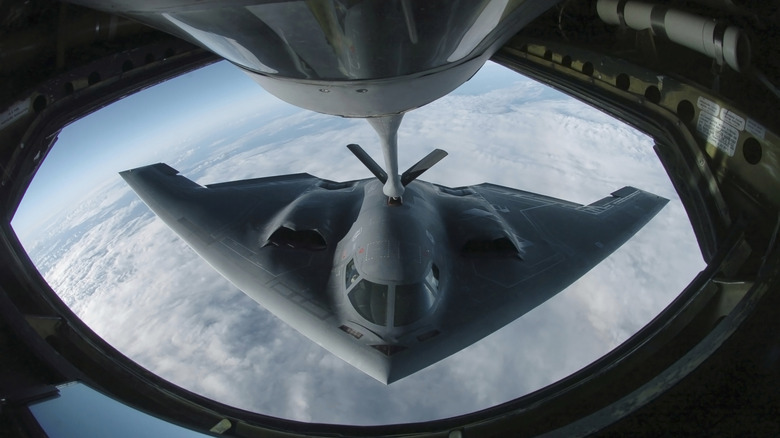
While it may be commonplace today, refueling a plane in the sky is far from simple. As such, getting a new warplane certified with the Ghost Tanker is not an easy or quick process. It typically involves months of flight testing, with refueling operations performed at a variety of speeds and flight levels. While doing this, the Ghost Tanker captures massive amounts of data about fuel loads, speeds, and weight distribution, which is relayed to ground-based engineering teams for analysis.
The boom operators onboard the Ghost Tanker are also trained to operate differently than they would in normal refueling. In some of its most recent work with the 370th Flight Test Squadron, the Ghost Tanker has been hooking up to the USAF’s state-of-the-art B-21 Raider to ensure this next-generation Stealth Bomber can fuel up on the go the same way its older counterparts can. Along with its dedicated aircraft certification missions, the Ghost Tanker can also act as a conventional tanker for test planes operating out of Edwards.
The Ghost Tanker could take on more ambitious roles in the future, as the USAF works to incorporate drones and more advanced technology into its refueling system. This is something that likely would have blown people’s minds back in the 1950s when the first KC-135 Stratotanker entered service.

Stephan is the sports journalist for the Maple Grove Report.