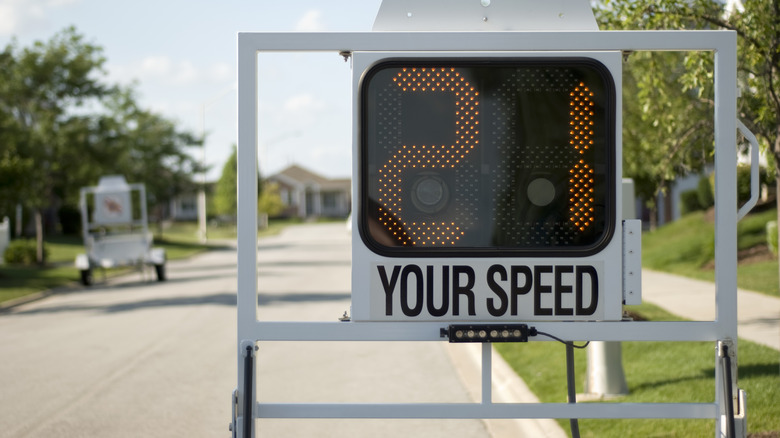

It’s up to every driver to maintain a safe speed while on the road, even if there isn’t a speed limit sign anywhere in sight. Electronic speed limit signs help remove any uncertainty, as you immediately get real-time feedback of just how fast you’re going. This system actually works through the use of radar sensors and not traditional traffic radar cameras, which can give you a ticket in one state, with no cops involved.
The radar technology in electric speed limit signs measures a driver’s speed and shows that information as they approach. The system is built directly into the sign itself and the setup is entirely self-contained. This means that both the detection and feedback functions are integrated into the same unit rather than having to rely on any external equipment. Because of this, the sign can continuously monitor approaching traffic and provide instant feedback, usually without interruption.
These electronic speed signs, also known as dynamic speed displays, may also have a flashing alert or warning message when drivers go above the speed limit. Dynamic speed displays are often seen mounted on portable trailers in work zones or installed as permanent signs in areas like school zones, or sharp curves. So instead of relying on law enforcement, the idea is to give drivers immediate information in an effort to raise awareness, and hopefully slow them down if needed.
How speed displays influence driver behavior
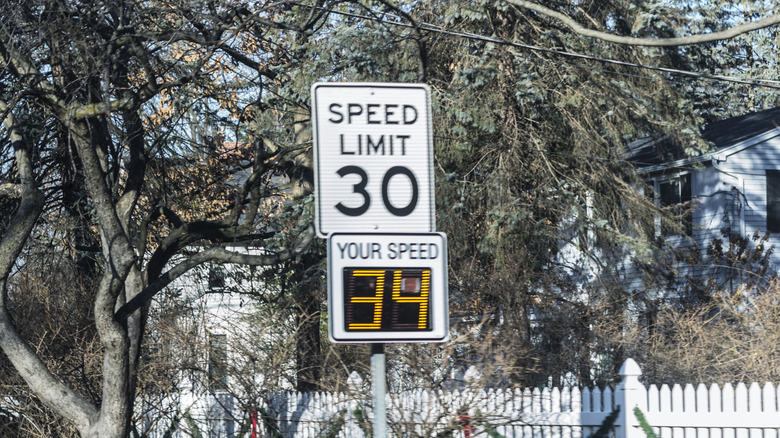
According to a study conducted by the Federal Highway Administration (FHWA), the installation of dynamic speed display signs in the U.S. has led to a clear reduction in vehicle speeds. It found that average speeds dropped by about 7 mph after signs were installed, and in some cases there were even more significant changes after the fact. Perhaps the most important finding is that the reductions in speed weren’t temporary and were actually maintained throughout a full year of observation.
The study also found that drivers tended to adjust their speed more consistently when they received immediate feedback from an electronic sign versus a regular limit sign, which may have a red border in some states. The system proved to be so effective that fewer drivers overall traveled at higher speeds where dynamic speed displays were present. This was especially true in locations where speed limits decreased from higher-speed rural highways into more urbanized areas.
Beyond showing that dynamic speed displays can reduce speeds, research conducted by the Kansas University Transportation Center examined why these systems seem more effective than traditional approaches. Earlier attempts to manage speeds using posted limits yielded only minimal results, but when a dynamic speed display system was introduced, speeds decreased as drivers received immediate feedback. This suggests the effectiveness of such devices is not just due to their visibility, but also to their ability to actively encourage driver awareness at the moment it is most needed.

Stephan is the sports journalist for the Maple Grove Report.