


When you take the batteries out of a remote, wireless computer mouse, or even battery-operated string lights, it’s not always easy to know exactly what to do with them. Some state governments and retailers say you’re best off recycling them, so you’re probably going to avoid throwing them straight in the nearest trash can.
However, actually finding a place to recycle them can be a pain, as you have to actually find an accessible drop-off location and find the time to take your old batteries all the way over there. So, there are good odds they just end up in your junk drawer or rolling around on your desk until you do something about them. This might apply to new batteries, too, if you’re the type who removes them from the packaging and puts them straight into a drawer, waiting for the time they’ll come in handy.
So, while it’s perfectly understandable to have batteries in a drawer around at home, it is something you should be careful about. Much like those old smartphones you keep stored in a drawer, both single-use and rechargeable batteries can pose a fire risk. This can happen if they’re ruptured, which usually happens if they get crushed, punctured, or damaged, but it also applies if the batteries are stored in a way that poses a risk of sparking. Sure, batteries don’t seem easy to damage at first blush — you’ll have noticed this if you’ve ever dropped a TV remote — but they could easily get damaged if they aren’t stored well, and sparks might fly easier than you think.
How to avoid battery-related disasters
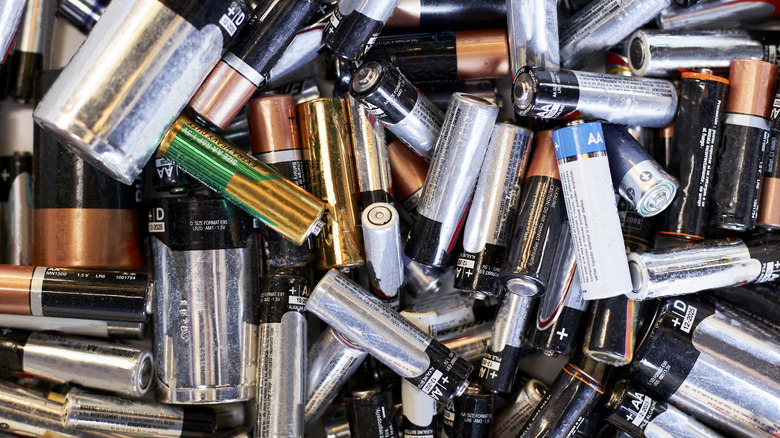
According to Energizer’s battery care guidance, there are a few things that you should do to store batteries safely. Some are fairly obvious — avoid actively puncturing or taking apart your batteries under any circumstances — while others are a little less expected. One suggestion is to avoid keeping your loose batteries with other metal objects, as this can actually short-circuit the battery. A short-circuited battery can heat up, causing it to leak or even catch fire.
The same logic applies to storing multiple batteries together. BCycle’s battery safety advice says that having battery terminals touching each other could result in sparks, which can, in turn, lead to a fire — especially if the batteries are being stored alongside flammable objects like paper. As a result, it suggests you tape over the terminals of your used batteries with clear sticky tape until you can dispose of them properly. The terminals are generally the top and bottom parts of the battery, but it will vary depending on what kind of battery you’re storing.
You should also keep an eye on the conditions in which you store your loose batteries. A lot of that comes down to temperature. Batteries should be kept cool and dry, but only at room temperature. You don’t actually want to freeze your batteries, and you should also make sure they don’t get too hot. At best, warm batteries start to lose capacity, but at worst, they can rupture or suffer from other damage.

Stephan is the sports journalist for the Maple Grove Report.