Threads of Legacy: HABI Opens National Piña and Abaca Weaving Competitions


Submission deadline: August 15, 2026.  Awarding ceremonies to be held during the 16th Likhang Habi Market Fair at Space One Ayala, Makati City

Mandaluyong City –  HABI: The Philippine Textile Council invites entries for two major textile contests: the 9th Lourdes Montinola Piña Weaving Competition and the 5th Eloisa Hizon Gomez Abaca Weaving Competition. This continues their longstanding dedication to preserving, celebrating, and promoting the art of Philippine handwoven textiles.

HABI 2026 COMPETITION

HABI 2026 COMPETITION

Held as the centerpiece events of the 16th Likhang Habi Market Fair from October 9 to 11, 2026, at Space at One Ayala, Makati City, the competitions honor the mastery, innovation, and cultural legacy passed down through generations of Filipino weavers.

Together, the competitions have become important platforms for recognizing excellence in piña and abaca weaving — traditions deeply woven into the nation’s history and identity, and sustained today by artisan communities across the archipelago.

“The most encouraging aspect of  these weaving competitions is the response of the weavers themselves — how they rise imaginatively to the challenge,” says Adelaida Lim, president emeritus of HABI. “Each entry piece is pure delight. I always look forward to the surprises.”

Aurora Pina
Aurora Pina
Bueak ag Dahon (Flowers & Leaves) Abaca
Hand Painted Abaca
Hand Painted Abaca
pina and abaca artistry

Honoring Masters, Preserving Traditions

Named after educator, cultural advocate, and author of the landmark book Piña, the Lourdes Montinola Piña Weaving Competition celebrates the extraordinary craftsmanship and evolving artistry of pineapple fiber weaving.

Entries are accepted in the following categories:

  • Liniwan — plain weave demonstrating fineness, uniformity, and technical excellence
  • Pure Piña — highlighting the beauty and creative potential of pure piña fiber
  • Natural Fiber Blends — encouraging innovation through combinations of piña with silk (seda), jusi, cotton, or abaca

All entries must measure at least two meters in length.

The Eloisa Hizon Gomez Abaca Weaving Competition was established through the initiative of Dom Martin Gomez, OSB — formerly haute couture designer Gang Gomez — and his siblings, in honor of their mother’s lifelong dedication to Philippine textiles and traditional attire.

The competition welcomes entries in these categories:

  • Resist Dye on Abaca — featuring ikat and related resist-dye techniques
  • Abaca Craft — showcasing craftsmanship through macramé, crochet, tatting, bobbin lace, and related techniques
  • Abaca Nipis — recognizing fineness, uniformity, and weaving skill in sheer abaca cloth

All entries must be made from 100% abaca fiber and measure at least two meters in length.

abaca weaving competition
Abaca Weaving Competition
Pina Cloth
Pina Cloth

Awards and Recognition

Winners in each category will receive cash prizes and special citations. Separately, the competition also confers two special distinctions: the Nadres Young Weaver Award and the Filip + Inna Innovation Award, each recognizing excellence in distinct aspects of weaving practice and innovation.

Entries will be evaluated by an esteemed panel of experts in fashion, textile arts, heritage conservation, and academe, including the heirs of Lourdes Montinola and Eloisa Hizon Gomez.

Last year’s competitions drew outstanding entries from weaving communities nationwide. Winners of the 8th Lourdes Montinola Piña Weaving Competition included Rosemarie Loveras (Liniwan), Melanie Palmon (Pure Piña), and Raquel Eliserio (Natural Fiber Blends). 

At the 4th Eloisa Hizon Gomez Abaca Weaving Competition, honors went to Ulaniban Laginan (Resist Dye on Abaca), Myra Iledan and Arlene Yamog (Abaca Craft), and Arnie I. Almero (Abaca Nipis).

All accepted entries will be exhibited at the 16th Likhang Habi Market Fair, offering the public an opportunity to experience the richness and continuing evolution of Philippine textile traditions.

The awarding ceremony for the Piña competition will be held on October 10, while the Abaca competition will be held on October 11.

“What is exciting are the different and higher quality designs that come from past tradition enhanced by modern ideas of decoration,” says Maribel Ongpin, HABI Chairman Emeritus.

“We hope that many traditional weavers will join and that many younger weavers will be inspired to join, too.  The combination of young and old, tradition and innovation, is always exciting,” she adds.

The competition is open to all Filipinos residing in the Philippines. Interested parties can send their creations to the Habi office at 962 May Street, Mandaluyong City before the deadline on August 15, 2026. 

Full competition details and entry forms are available on the HABI website at www.habiphilippinetextilecouncil.com .  

Additional inquiries may be directed through HABI’s social media accounts
Facebook – https://www.facebook.com/HABICouncil OR
Instagram https://www.instagram.com/habicouncil 

About HABI: The Philippine Textile Council

Founded in 2009, HABI: The Philippine Textile Council is a nonprofit organization dedicated to preserving, promoting, and innovating the Philippines’ rich textile traditions. Through fairs, exhibitions, research, and advocacy, HABI works closely with weaving communities, designers, and educators to uplift the handwoven textile industry and ensure these cultural treasures continue to thrive for generations to come.

Key Aspects of HABI:

  • Mission: To revive traditional textile skills, promote the use of local fibers, and integrate indigenous fabrics into modern, everyday life.
  • Key Activities:
    • Likhang HABI Market Fair: An annual event (often held in October) featuring the best weavers and artisans from across the Philippines.
    • Advocacy & Education: Conducts training on weaving and natural dyes, such as Abaca weaving training and the resurgence of pure cotton usage.
    • Research & Documentation: Works with communities to document traditional techniques and designs, producing documentaries like “Threaded Traditions”.
  • Significance: HABI was formed to fill the void left by a dedicated textile society in the Philippines, addressing the decline of the handloom industry and raising awareness of unique, locally woven textiles.
  • Recent Projects: Ongoing initiatives include providing skill-building workshops in regions like Catanduanes and promoting the certification of local piña weaving. 

HABI serves as a bridge between tradition and contemporary design, ensuring the rich heritage of Philippine weaving is preserved and honored.

Please follow #TeamOutofTown on Facebook, Twitter, Instagram, and Pinterest for more travel ideas.


Source link

Leave a Reply

Subscribe to Our Newsletter

Get our latest articles delivered straight to your inbox. No spam, we promise.

Recent Reviews


There are places in the world where everything feels accounted for. The roads are smooth, the signs are clear, and the experience has been carefully arranged long before you arrive. Adventure exists, technically, but only within boundaries that make it predictable. Nothing unexpected happens. Nothing pushes back.

And then there are places that still feel wild.

Not reckless. Not uncomfortable. Just untamed enough that you feel like a guest rather than a consumer. Places where the land doesn’t bend to human schedules, where weather sets the tone for the day, and where nature isn’t something you observe from a distance — it’s something you move through, adapt to, and occasionally surrender to. Traveling somewhere that still feels wild changes you in quiet, persistent ways. It slows your thinking. Sharpens your senses. Reminds you how small you are — and how good that can feel.

Alaska is the clearest example we know. But the feeling itself, the pull toward the wild, extends far beyond one place on the map.

The Absence of Predictability Is the Point

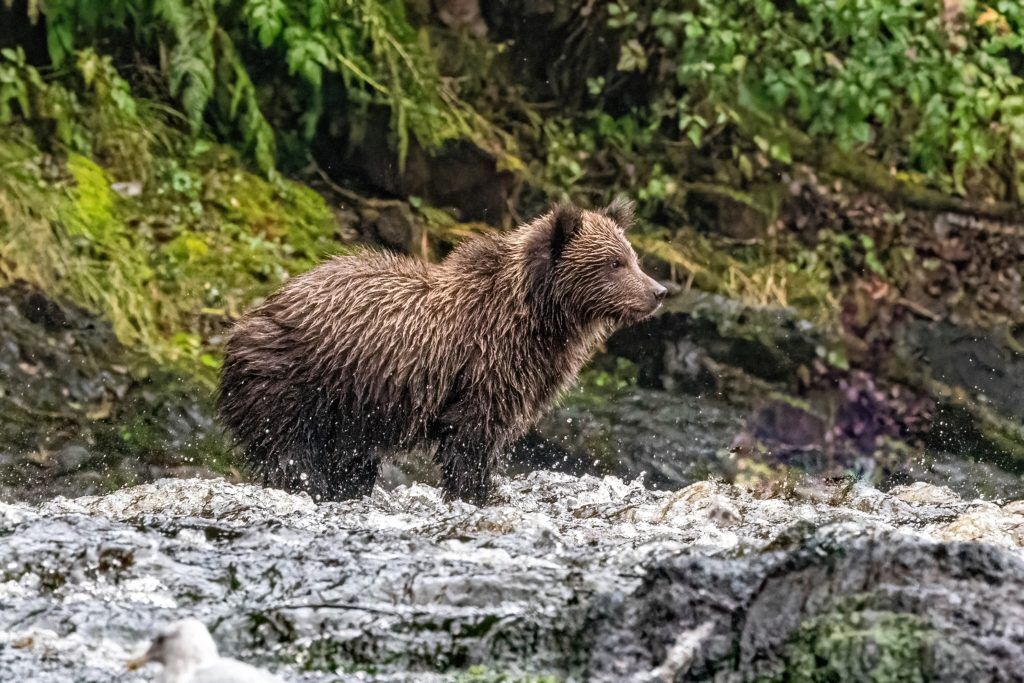
Baby bear Pavlovs Bay Alaska
Photo Credit: Jenn Coleman.

When you travel somewhere wild, certainty disappears almost immediately. Plans turn into loose outlines. Timelines soften. The assumption that you’re fully in control starts to fade — and that’s exactly where the experience opens up.

In Alaska, weather doesn’t politely cooperate. Flights wait. Boats adjust for tides. Trails change overnight. Wildlife appears on its own terms, not when you’re ready with a camera in hand. At first, this unsettles people. We’re trained to optimize travel, to squeeze value from every hour, to move efficiently from one highlight to the next.

Wild places resist that mindset. They force you to slow down and pay attention instead.

Instead of rushing, you find yourself watching clouds crawl across a mountain range or listening for the distant crack of shifting ice. You wait because someone has spotted a bear across the river, and suddenly waiting doesn’t feel like lost time — it feels like the entire point. In wild places, patience isn’t a virtue. It’s a requirement.

Nature Isn’t a Backdrop — It’s the Main Character

Endless Adventures Await-Moose - Alaska Glacier Lodge Palmer Alaska
Photo Credit: Jenn Coleman.

In many destinations, nature plays a supporting role. It’s something you admire between meals and museum visits, a scenic pause before moving on to the next activity.

In wild places, nature is the storyline.

In Alaska, the scale alone recalibrates your perspective. Mountains don’t rise politely in the distance; they loom. Glaciers don’t shimmer passively; they groan, fracture, and move. Rivers aren’t decorative — they’re powerful, cold, and very much alive. Wildlife isn’t something you visit. It’s something you encounter, often unexpectedly, and always on its own terms.

That reality changes how you move through the world. You speak more quietly. You scan the horizon. You learn to read the land not just for beauty, but for meaning — wind direction, cloud movement, water levels. You stop expecting nature to perform for you and start allowing it to lead.

Comfort Looks Different in the Wild

View from my room Homer Inn and Spa
Photo Credit: Jenn Coleman.

Traveling somewhere wild doesn’t mean giving up comfort, but it does redefine what comfort actually means. Luxury here isn’t about excess or polish. It’s about warmth after cold. Shelter after exposure. A solid meal after a long day outside.

Some of our most memorable places to stay in Alaska weren’t remarkable because of opulence, but because of where they were. Remote enough that silence felt complete. Close enough to the land that stepping outside meant being fully immersed — weather, wildlife, and all. Comfort in wild places is practical and intentional, and because of that, it feels deeply satisfying.

You notice and appreciate the basics more. Dry socks. Hot coffee. A sturdy roof during a storm. These aren’t assumed; they’re earned. And because you’re more present, they land differently. They feel grounding in a way that polished luxury sometimes doesn’t.

Your Senses Wake Up

Matanuska Glacier, Alaska
Photo Credit: Deposit Photos.

One of the quieter gifts of wild travel is how it reactivates your senses. In daily life, we filter relentlessly just to get through the day — noise, movement, light, information. Wild places strip that filter away.

You smell rain before it arrives. You hear ice shifting miles off. You notice how light changes minute by minute. In Alaska, even the air feels sharper, cleaner, alive. You become aware of your body in space — where you step, how fast you move, what’s happening around you.

This heightened awareness isn’t stressful. It’s calming. It pulls you into the present without effort or instruction. It’s mindfulness without the app, presence without performance.

You Remember What Adventure Actually Means

Hatcher Pass - Gold Cord Lake Trail Alaska
Photo Credit: Jenn Coleman.

Somewhere along the way, adventure became a marketing word. But real adventure, especially in wild places, isn’t about adrenaline or bragging rights. It’s about curiosity, humility, and uncertainty.

Adventure means not knowing exactly how the day will unfold. It means trusting guides and locals. It means adapting instead of controlling. In Alaska, that might look like hiking through mist, unsure if the clouds will lift. Kayaking through ice-dotted water where seals surface nearby. Boarding a small plane knowing weather could change everything.

And when things don’t go according to plan, that doesn’t diminish the experience — it becomes the story. Wild places remind you that the goal isn’t perfection. It’s participation.

Time Feels Different Out Here

Yllas Ski Resort Finland
Photo Credit: Jenn Coleman.

Wild destinations stretch time in ways that are hard to explain until you experience them. Days feel full without feeling rushed. Hours pass unnoticed when you’re fully engaged. Evenings arrive gently, not abruptly.

Without constant stimulation or packed schedules, your nervous system settles. You sleep more deeply. Wake earlier. Feel less urgency to check your phone. In Alaska, the light itself reshapes time, lingering late into the evening in summer, quietly reminding you that clocks are human inventions, not natural laws.

That shift doesn’t disappear when you leave. You return home more aware of how often urgency is manufactured — and more protective of your time because of it.

You Feel Like You’ve Earned the Experience

Kayaking Glacier Bay Alaska
Photo Credit: Jenn Coleman.

There’s a quiet satisfaction that comes from traveling somewhere that isn’t effortless. Wild places often require extra steps — small planes, ferries, long drives, patience. But effort creates investment.

When you arrive, you don’t feel like you stumbled into the experience. You chose it. And that choice creates respect — for the land, for the people who live there, and for the experience itself. In Alaska, simply reaching some destinations comes with stories before the stay even begins.

Wild travel doesn’t hand itself to you. It asks something in return.

Why We’re Drawn to the Wild Now More Than Ever

Waterfall Cove Alaska
Photo Credit: Jenn Coleman.

The pull toward wild places isn’t accidental. After years of constant connectivity, crowded destinations, and carefully curated experiences, many travelers are craving something real. Something grounding. Something that doesn’t ask them to perform.

Wild places offer perspective. They remind us that the world is bigger than our inboxes, that discomfort isn’t dangerous, and that awe still exists — no explanation required. Alaska sits at the heart of this longing, but it isn’t alone. You feel it in remote coastlines, high deserts, northern forests, and far-flung mountain towns around the world.

What unites them isn’t geography. It’s restraint. These places haven’t been overly softened or simplified. They still ask you to meet them where they are.

What You Take Home From a Wild Place

Hikers hiking, enjoying the view of Famous Patagonia Mount Fitz
Photo Credit: Deposit Photos.

You don’t return with just photos. You come back quieter, more observant, and more comfortable with uncertainty. You gain a clearer sense of what you actually need — and what you don’t.

Traveling somewhere that still feels wild recalibrates your sense of scale and self. It reminds you that not everything needs improvement, explanation, or monetization. Some things are powerful simply because they exist.

And once you’ve felt that — once you’ve stood somewhere that didn’t care whether you were there or not — it changes how you travel going forward. You start seeking places that ask something of you. Places that feel alive. Places that leave room for surprise.

Because wildness, in the end, isn’t something you conquer.

It’s something you experience — and carry with you long after you’ve left.

Hi! We are Jenn and Ed Coleman aka Coleman Concierge. In a nutshell, we are a Huntsville-based Gen X couple sharing our stories of amazing adventures through activity-driven transformational and experiential travel.


Source link