
For the better part of a decade, Turkey has been trying to build a jet that would let it break free of its dependence on the U.S. — and has reportedly spent an estimated $10-12 billion in doing so. It’s largely been successful, too — though there’s one wrinkle in the whole scheme, that it still flies on an American engine.
Back in 2019, the country got kicked out of the F-35 program after it bought the S-400, a Russian air-defense system the Pentagon saw as a security risk. Making matters worse was the fact that Turkey was actually one of the countries that helped build the F-35. That’s when it decided to take the independent route and went ahead and built its own. The indigenous fighter project actually began three years before the eviction, but the country had to put things on the fast track.
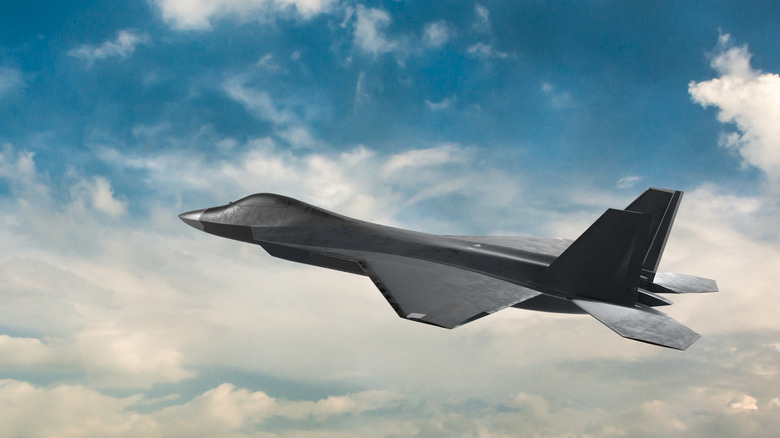
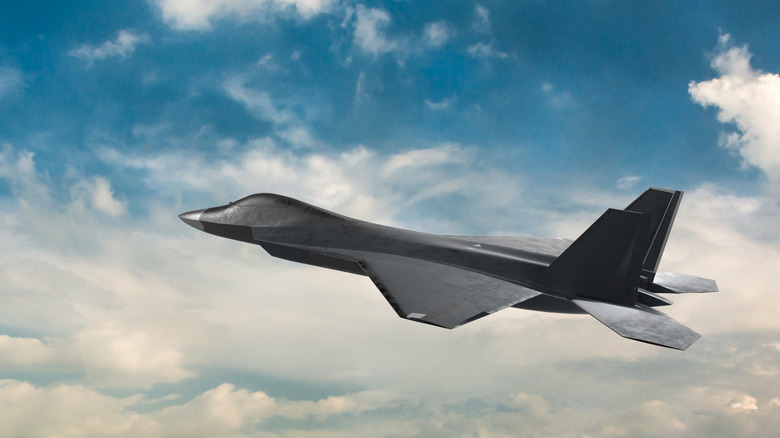
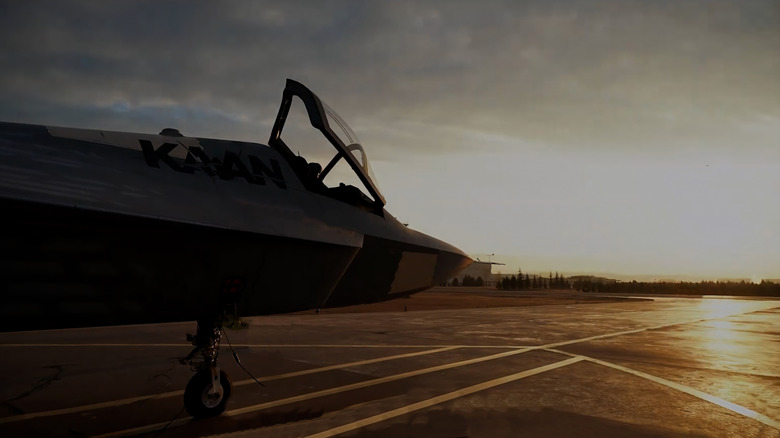
The jet is called the Kaan (translates to “ruler”), and powering it will be one of the jet engines made by General Electric, the F110. It’s the same family found inside the newer F-16s. The whole point, besides independence, is to retire the country’s aging fleet of more than 200 F-16s sometime in the 2030s. That said, while a demonstrator version took flight in February 2024, actual deliveries are not scheduled to begin until 2028. Even then, the project will still be tied to Washington because the engine is something Turkey just hasn’t figured out.
The F110 was only ever a stopgap
Turkey didn’t opt for the F110 because it was the best fit, but rather because it was available and familiar. It was merely supposed to be a stopgap and never meant to actually stick around. But for now, the plan is locked in, and if everything goes well, the first 20 Block 10 jets are set to leave the line, powered by the American engine.
The reason why it can’t be a permanent choice, though, comes down to two things. The first is stealth. The F110 is an off-the-shelf unit with none of the infrared masking or shaped nozzles a low-observable jet needs. The second, arguably more important, factor is the thrust. The F110 tops out at nearly 29,500 pounds of thrust, which is respectable for a fourth-gen fighter, but a bit underwhelming for the Kaan.
So, the newer Kaans will be fitted with the homegrown turbofan called the TF35000, which is being developed by Tusaş Engine Industries (TEI). It’s not only supposed to hit that 35,000-pound mark, but it will do so with the ability to supercruise, allowing it to cross the sound barrier without lighting the afterburner. Unfortunately for Turkey, the new engine is still on the drawing board, and the goal is to drop it into later Kaan blocks by around 2032.
More hurdles to overcome?
Until then, the engine needs will be met by the U.S. Even so, there are troubles with that supply. So far, Turkey has taken delivery of the first 10 units, which are just enough to cover the prototypes. There’s a second contract for another 80 units, but it’s stuck in talks because it too is affected by Turkey’s move to procure military hardware from Russia. Turkish officials have said that things could be green lit by 2026, but as of this writing in June 2026, it yet to happen.
Regardless, Ankara has dismissed any doubts surrounding the deal. Haluk Görgün, who runs the country’s defense procurement body, has said that its Kaan project is not tied to U.S. engines. One export customer is counting on that, too. Indonesia has already ordered 48 of these jets under the condition that it will only take a version free of US-controlled parts, meaning it will have to wait for the TF35000 as well.
Engine woes aside, when the Kaan finally makes it to the Turkish Air Force, it will put Turkey in the exclusive club capable of designing their own stealth jets, which includes the likes of the U.S., Russia, China.

Stephan is the sports journalist for the Maple Grove Report.